Flower Delivery in Kamyshin: Timing, Areas and What Arrives at the Door
Kamyshin sits on the Volga, far enough from Moscow that most people assume fresh flowers are either impossible to get quickly or arrive half-wilted from a long journey. Neither is true. With the right preparation and a clear understanding of how delivery actually works in this city, you can send a bouquet that looks just as good as anything you would find in a Saint Petersburg flower market — and have it at someone's door within hours of ordering.
Which Parts of Kamyshin We Reach and How Fast
Kamyshin is a compact city by Russian standards, which works in your favour when it comes to delivery times. The central districts around Lenin Street and the waterfront area are the easiest to reach, and orders placed before midday typically arrive within one to two hours. Residential areas further from the centre, including the districts near the textile factory and the northern residential blocks, are fully covered but may sit closer to the two-hour mark during busy periods like weekends or the days around major holidays.
The surrounding settlements and villages within roughly fifteen kilometres of the city boundary can also be reached, though it is worth checking at the time of order, since road conditions along Volga-side routes change noticeably between summer and the freeze months of November through March. In winter, ice on secondary roads can add twenty to thirty minutes to a delivery, so building in a small buffer when the temperature drops below minus ten Celsius is simply good planning.
One thing that often surprises people ordering from outside Russia is that Russian addresses frequently include a building number, a corpus number and an apartment number — all three matter. If you are sending to a large residential complex, leaving a phone number for the recipient and a note about which entrance to use saves everyone time and ensures the flowers arrive in good condition rather than waiting in a cold stairwell.
Bouquets we can deliver

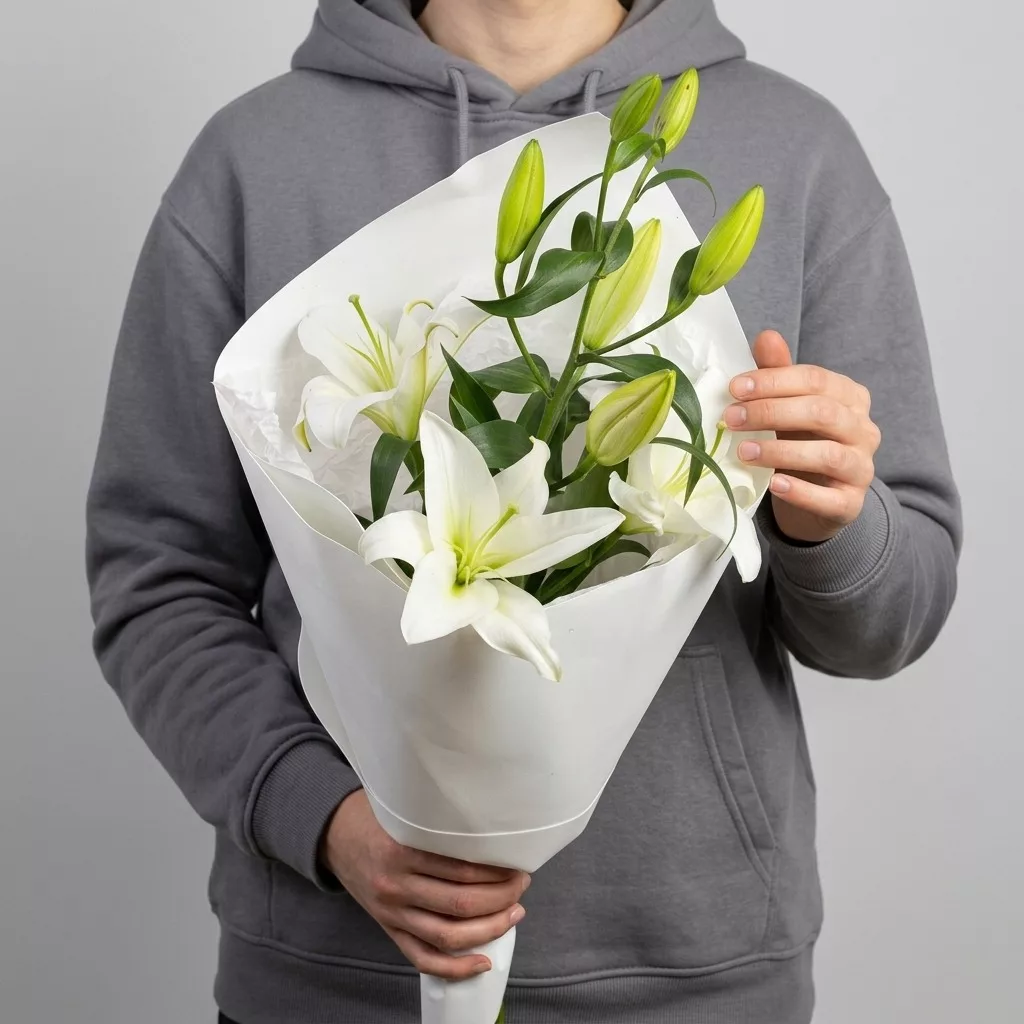
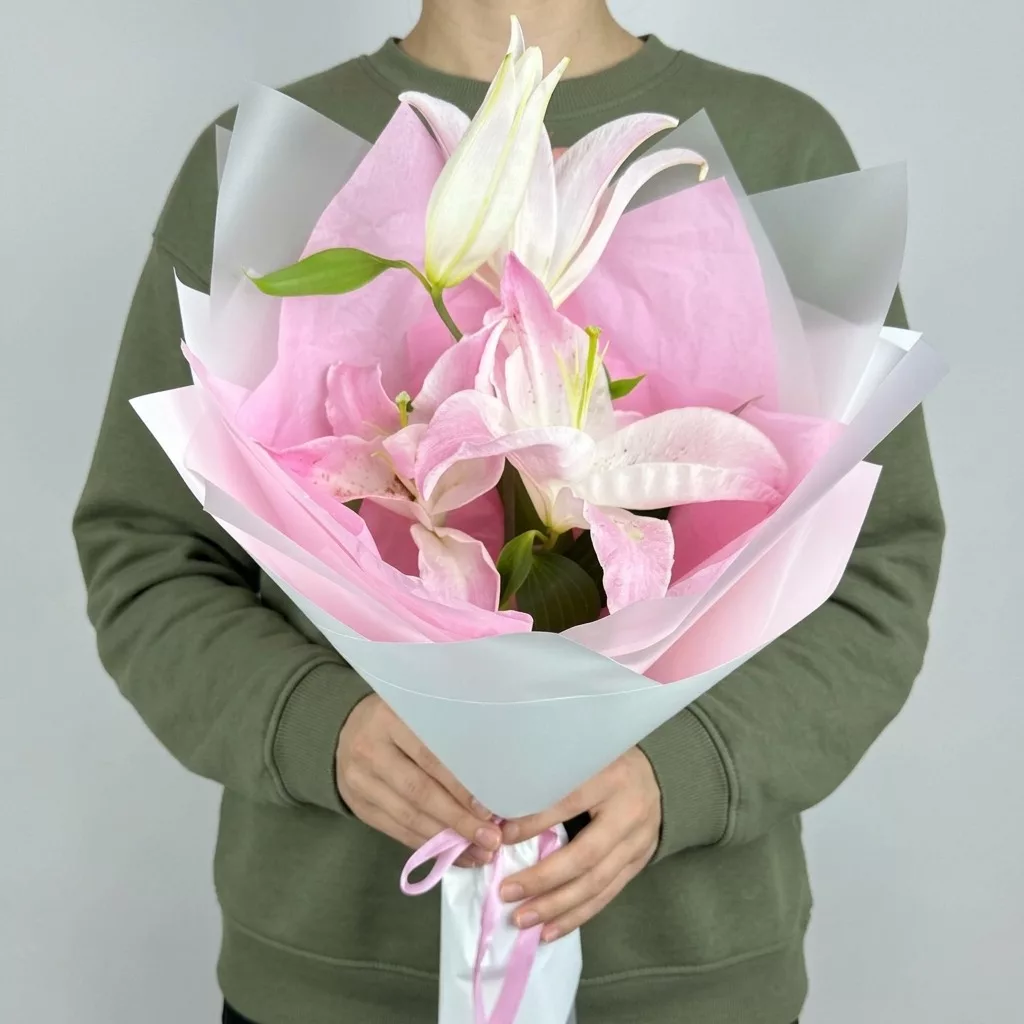
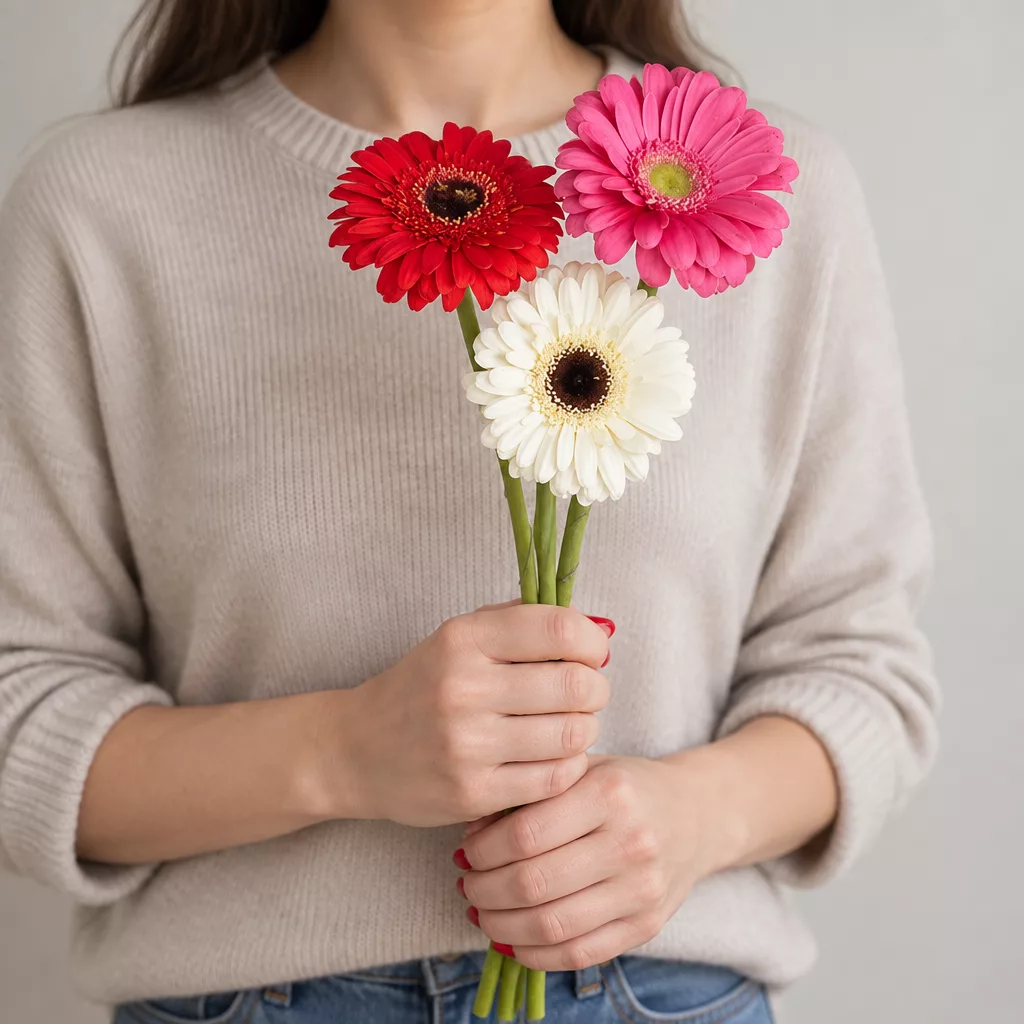
Choosing the Right Flowers for the Kamyshin Climate
The Volga region has a continental climate with real extremes: summers push above thirty-five degrees Celsius and winters regularly fall to minus twenty. Both ends of that range affect which flowers travel well and which do not. In July and August, delicate blooms like garden roses with many petals, sweet peas and anemones are vulnerable to heat during transport. Sturdy choices for summer delivery include spray chrysanthemums, alstroemeria, eustoma and sunflowers, all of which handle warmth without wilting in the first hour.
In winter, the concern flips. Tropical flowers like bird of paradise or anthurium suffer in the cold and can show dark bruising on petals after even a short exposure to freezing air. Roses, tulips and carnations are more forgiving, but they still need to be wrapped in insulating kraft paper and placed in a thermal sleeve for any journey below minus five. A good florist never skips this step, even for a short drive.
Spring and autumn are the most forgiving seasons for flower delivery in Kamyshin. Temperatures sit in a range where almost any variety travels well, and the local preference in these months tends toward tulips and hyacinths in spring, and dahlias or spray roses in autumn. If you are choosing for someone who grew up in the Volga region, these seasonal flowers tend to feel personal and considered rather than generic, which matters more than you might expect when the bouquet is meant to mark something meaningful.
What to Send for Different Occasions in Kamyshin
Russian gifting culture places a lot of weight on the number of flowers in a bouquet. An odd number — five, seven, nine, eleven — is the standard for celebrations and happy occasions. Even numbers are traditionally reserved for solemn events, so sticking to odd numbers for birthdays, anniversaries, promotions and new arrivals is a simple rule that shows you understand the context, even if you are ordering from abroad.
For a birthday, a mixed bouquet built around garden roses paired with alstroemeria and eucalyptus stems gives a full, generous look without requiring an enormous budget. The eucalyptus adds fragrance and volume and lasts well past the roses, which means the arrangement stays presentable for longer. For a romantic occasion, red or deep burgundy roses remain the classic choice in Russia, but a bouquet of peonies in season — late May through June — feels more personal and is often more appreciated by someone who receives flowers regularly.
For a colleague or a teacher, which are very common gifting scenarios in Russian culture, a single-variety bouquet of white or cream eustoma looks polished and professional without being overly intimate. Teachers in particular receive flowers several times a year — at the start of the school year in September, at Teacher's Day in October and at the end of the year in May — so something that stands apart from the usual red carnation is always welcome. A wrapped bouquet of pale pink spray roses with a few stems of waxflower hits that balance well.
Ordering by Budget: What Each Range Actually Gets You
Budget shapes not just the size of a bouquet but the variety of flowers, the quality of the wrapping and whether the arrangement includes supporting foliage or stands alone. At the lower end, a tight posy of five to seven stems — carnations, alstroemeria or single-variety tulips — is a genuinely lovely gift when assembled with care. The mistake people make at this range is trying to stretch it across too many different flower types, which results in a sparse, unfinished look. Fewer varieties done well always beats many varieties done poorly.
In the mid range, you gain access to garden roses, eustoma and seasonal statement flowers. A bouquet of nine garden roses with ruscus foliage and a few stems of waxflower is a solid, crowd-pleasing choice that photographs well and lasts five to seven days with basic care. This is also the range where presentation upgrades — a kraft paper wrap, a satin ribbon, a small card — stop being extras and become part of the package.
At the higher end, the difference is volume and the presence of premium varieties: peonies when in season, large-headed garden roses, orchid stems or a structured arrangement that includes both flowers and foliage in deliberate proportions. These bouquets make a strong visual impression at the door, which matters when the delivery itself is the gesture — a surprise at a workplace, a gift for a significant birthday. For Kamyshin, where a large bouquet arriving at an apartment block tends to draw warm attention from neighbours, the visual impact is part of the gift.
Keeping Flowers Fresh After Delivery in Kamyshin
What happens in the first thirty minutes after a bouquet arrives determines how long it will last. The single most important step is a clean diagonal cut on each stem — about two centimetres from the bottom — made with a sharp knife rather than scissors, which crush the stem tissue and restrict water uptake. This should be done immediately before placing the flowers in water, not ten minutes later. If the recipient is not used to handling fresh flowers, a short note with the bouquet explaining this step is genuinely useful.
Water temperature matters more than most people realise. Cold or room-temperature water suits most cut flowers. Tulips are an exception and actually prefer cold water, which slows their growth and keeps them upright longer. Roses and alstroemeria do well in room-temperature water with a small sachet of flower food dissolved in it — this sachet is usually included with delivery and should not be skipped.
In Kamyshin's summer heat, placing the vase away from direct sunlight and away from the warm air rising off radiators or air conditioning units makes a significant difference. A north-facing windowsill or a cool interior corner extends vase life by two or three days compared to a sunny kitchen counter. Changing the water every two days and re-cutting the stems at the same time keeps the arrangement looking fresh through the full expected vase life, which for a well-handled mixed bouquet is typically seven to ten days.
Same-Day Delivery in Kamyshin: What the Timeline Looks Like
Same-day delivery is the standard expectation when you order before a certain cut-off point, and understanding that timeline prevents disappointment. Orders placed before noon local Kamyshin time — which runs on Moscow time, three hours ahead of Central European Time — are the most straightforward to fulfil within a one-to-two-hour window. The flowers are assembled fresh at the point of order, not pulled from a standing stock, which is why the timing from order to assembly to dispatch is predictable.
Orders placed in the early afternoon can still arrive the same day, but the window extends slightly, particularly if there is a cluster of deliveries in the same part of the city. Late afternoon orders, placed after five in the evening, are best confirmed for a specific time slot rather than assumed to arrive within the hour. Being specific about a preferred delivery window when you place the order — rather than leaving it open — is the most reliable way to hit a meaningful moment, such as a birthday dinner or the end of a working day.
One detail that catches people out when ordering from outside Russia: the recipient's phone number is not optional. Couriers in Russian cities routinely call ahead to confirm the address, check which entrance to use in large residential complexes and coordinate with building security in office environments. A missing or incorrect phone number is the single most common reason a delivery is delayed. Double-checking this before you confirm the order takes ten seconds and saves significant stress.
Making the Delivery Feel Like a Proper Gift
A bouquet arriving at a door is already a gesture, but small additions turn it into a memory. A handwritten card is the most underrated element of flower delivery in Russia. Russians have a strong culture of written congratulations — formal, warm and personal — and a printed slip with a generic message feels noticeably different from a few genuine lines. If you are ordering from abroad and writing in English, that itself can be touching; you do not need to translate.
Wrapping style is the second thing the recipient sees after the flowers themselves. Kraft paper with a contrasting ribbon — white ribbon on dark paper, or a deep green ribbon on natural paper — gives a florist-quality presentation that holds up through delivery. Transparent cellophane wrapping is common but tends to look commercial rather than considered. If presentation matters for your occasion, it is worth specifying at the time of order.
For a surprise delivery to a workplace or a public location in Kamyshin, a brief note to the recipient just before the bouquet arrives — something as simple as a message saying to expect something — adds to the moment rather than diminishing it. The anticipation of the last few minutes before a surprise arrives is its own kind of pleasure. And for a home delivery, coordinating with a family member to make sure someone is present is far more reliable than hoping the recipient happens to be home. A wilting bouquet left in a stairwell because no one answered the door is the one outcome worth a small amount of planning to avoid.
Sending flowers to Kamyshin is straightforward when you understand the city's geography, its climate and the small cultural details that make a bouquet feel genuinely considered rather than functional. The Volga summer and winter both require some thought about which varieties travel well, but the range of flowers that work across the year is wide. Get the address right, include the recipient's phone number, choose an odd number of stems and let the wrapping do some of the work — and what arrives at the door will feel like it was put together with care, because it was.
Frequently asked questions
How early in the day should I place an order to guarantee same-day delivery in Kamyshin?
Orders placed before midday reach central districts around Lenin Street and the waterfront within one to two hours. For addresses further out, near the textile factory or the northern residential blocks, place your order by ten in the morning to give the courier enough time, especially in winter when secondary roads can add twenty to thirty minutes to the journey.
Which Kamyshin districts are hardest to reach and how does that affect my bouquet?
The outer residential blocks and settlements within fifteen kilometres of the city boundary take longer and are worth confirming at the time of order. The main concern is not distance but road condition: Volga-side routes become unpredictable between November and March, so if you are sending to one of those areas in winter, build in extra time and choose hardier flowers such as chrysanthemums or spray roses over delicate open blooms.
What details do I need to provide when sending to a large residential complex in Kamyshin?
Russian addresses in multi-building complexes require the building number, the corpus number and the apartment number — all three. Adding the recipient's phone number and noting which entrance to use is not optional courtesy, it is what gets the flowers to the door in good condition rather than sitting in a lobby while the courier tries to navigate an unfamiliar block.
How does Kamyshin's summer heat affect which flowers I should order?
Temperatures above thirty-five degrees Celsius mean that open, water-heavy blooms like hydrangeas and garden roses wilt faster between the florist and the door. In summer, choose tighter-budded flowers — alstroemeria, carnations, eustoma — that travel better in heat. A bouquet that arrives looking fresh matters more than one that looked spectacular in a photograph but opened too fast in transit.
Can flowers be delivered to the Volga waterfront area or public meeting points in Kamyshin?
The waterfront and central public areas are among the easiest parts of the city to reach and couriers are familiar with them. If you are arranging a surprise meeting rather than a home delivery, confirm the exact location and a time window with the florist, and make sure the recipient knows to expect something so the flowers are not left waiting in direct sun or cold wind.
Ready to send flowers?
Pick the city, choose the bouquet, and a local florist takes it from there.
Choose a city →