Sending Flowers to Kaspiysk? Here Is What to Expect
Kaspiysk sits right on the Caspian shore, close enough to Makhachkala that the two cities feel like one long stretch of boulevards and family addresses. If someone you love lives there and you want fresh flowers at their door today, the good news is that delivery is real, reliable and faster than most people assume. The questions worth asking before you order are about timing, temperature and what the recipient will actually see when the door opens — and that is exactly what this article covers.
Which Parts of Kaspiysk Receive Deliveries and How the Route Works
Kaspiysk is a compact city of roughly 120,000 people, and its street grid is straightforward enough that courier navigation rarely causes delays. Deliveries reach central districts, the coastal neighbourhoods along the Caspian embankment, the residential blocks near the industrial zone to the north, and the quieter streets closer to the Makhachkala border in the west. There is no part of the city that is considered out of reach.
Because Kaspiysk and Makhachkala share a continuous urban boundary, the route from the assembly point to a Kaspiysk address is treated as a single metropolitan delivery rather than a long-distance transfer. This matters for freshness: the bouquet spends less time in transit than it would if the cities were separated by open road.
When you place an order, the system assigns a courier based on current load and the recipient's district. Addresses near the railway station or the central market tend to be the easiest to reach at any hour. Peripheral streets near new construction zones can occasionally add ten to fifteen minutes during peak times, so if the occasion is time-sensitive — a birthday dinner, a surprise arrival — it is worth noting the district in the order comments.
The courier carries the bouquet upright in a temperature-controlled bag, which matters especially in summer when Kaspiysk afternoons can reach 35 degrees Celsius. That detail alone separates a bouquet that looks showroom-fresh at the door from one that arrives wilted and apologetic.
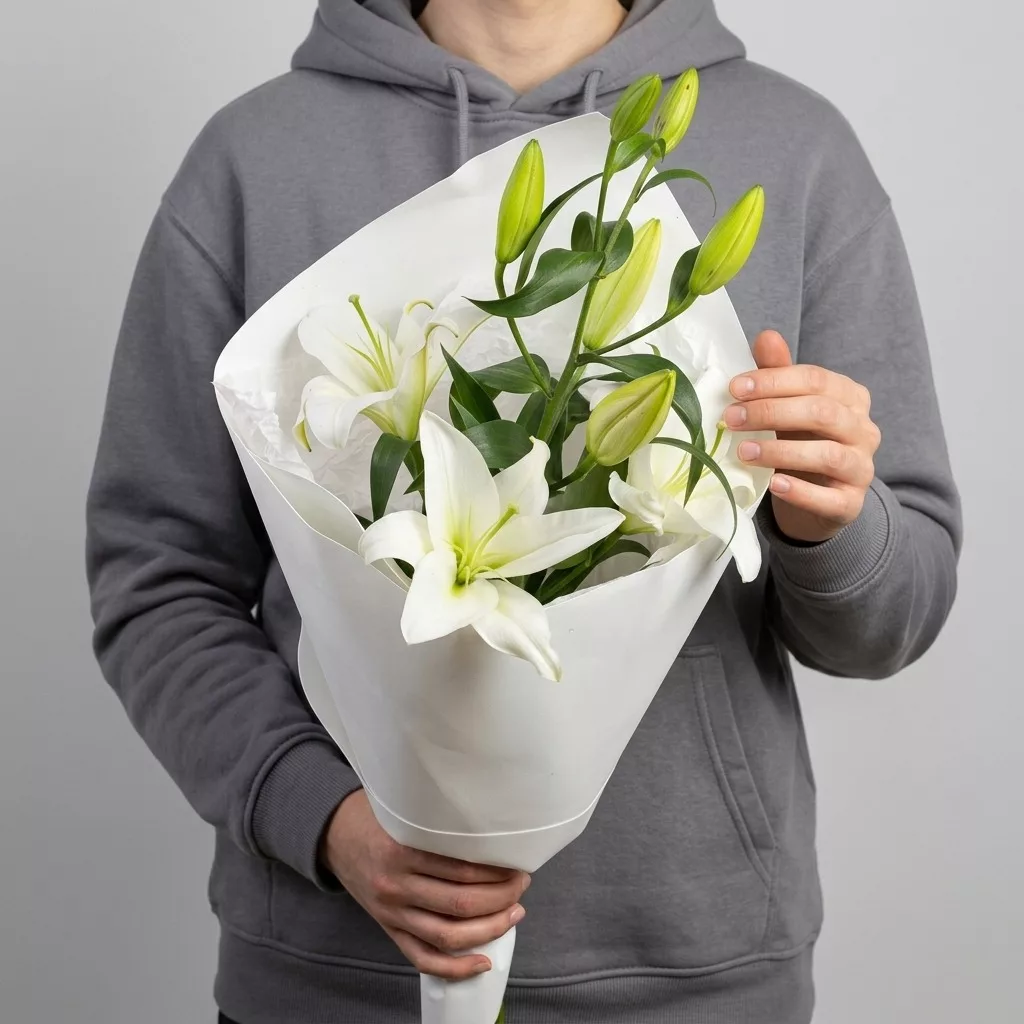
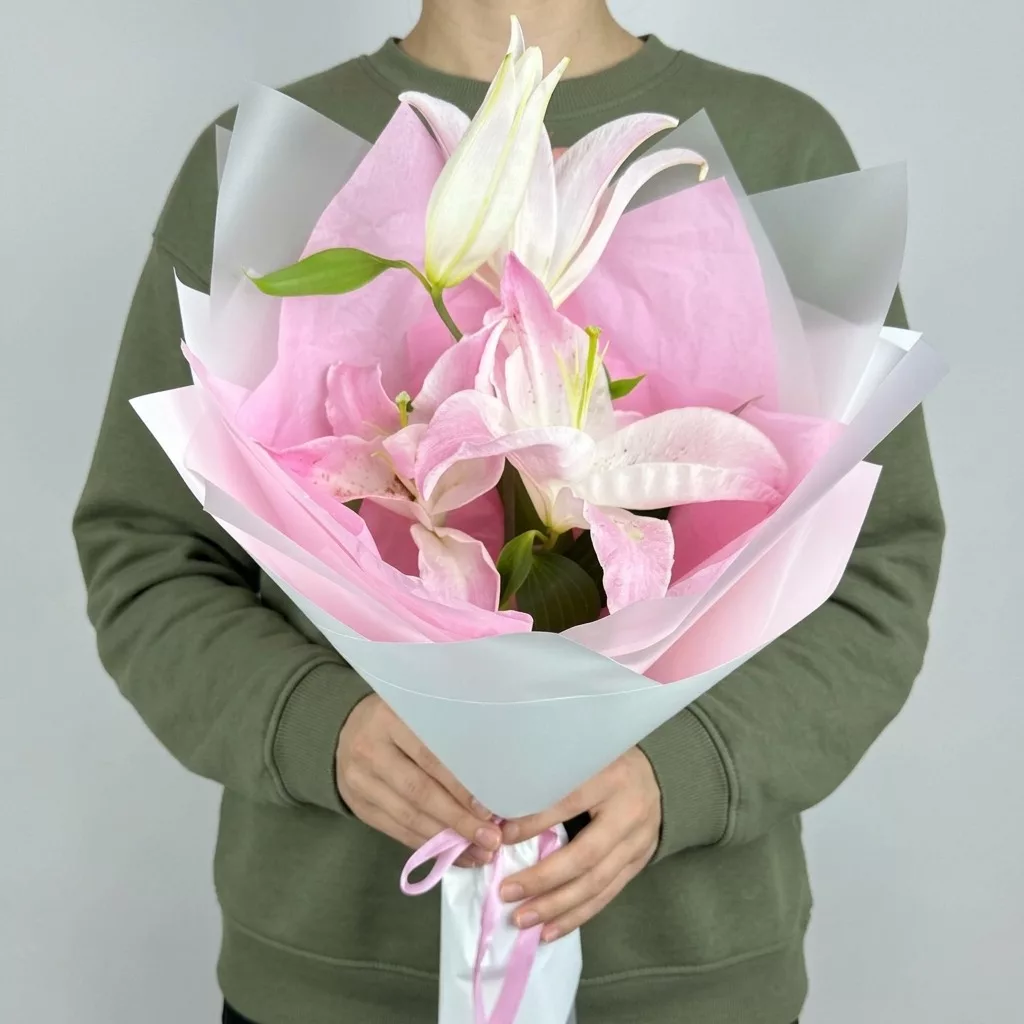
Bouquets we can deliver


Delivery Timing: What the Windows Mean and How to Use Them
The standard delivery window in Kaspiysk is one to two hours from the moment your order is confirmed. That window is not a vague promise — it reflects the actual transit time from bouquet assembly to the recipient's address, accounting for current courier availability and traffic on the main arteries between the two cities.
Orders placed before noon on weekdays tend to move fastest, because morning traffic in the Makhachkala-Kaspiysk corridor clears by mid-morning and couriers have the most flexibility. Evening orders between 17:00 and 20:00 can take closer to the two-hour end of the range, especially on Fridays when road density increases.
If you need the flowers to arrive at a specific moment — say, before a family gathering starts at 19:00 — order with a buffer of at least ninety minutes rather than exactly two hours. Real life adds small variables: a door code that does not work, a recipient who steps out briefly, a building with an unmarked entrance. Giving yourself that cushion means the surprise lands on time.
Same-day delivery is available for orders placed up to a cutoff in the early evening; the exact cutoff shifts slightly by season because assembly requires daylight-quality lighting for colour-matching. For next-day delivery, you can schedule a precise one-hour arrival slot, which is useful for workplace deliveries where the recipient has a known schedule. Scheduling a morning delivery to an office in Kaspiysk's administrative district, for example, ensures the flowers are seen by colleagues — which is often half the point.
Choosing Flowers for the Kaspiysk Climate and the Recipient's Home
Kaspiysk has a semi-arid climate with hot, dry summers and mild winters. In July and August, outdoor temperatures regularly exceed 30 degrees Celsius, and even interiors without air conditioning stay warm. This makes flower selection genuinely consequential: some varieties handle heat gracefully, others collapse within hours.
Roses are the most requested flower year-round, and they travel well if the stems are properly hydrated and the bouquet is kept cool in transit. Garden roses with a high petal count, such as David Austin-style varieties, are more heat-sensitive than standard hybrid tea roses and are better suited to cooler months — October through April in Kaspiysk's calendar. In summer, opt for tighter bud roses that will open gradually in the recipient's home rather than fully open blooms that are already at their peak when packed.
Chrysanthemums are an excellent warm-weather choice. They are robust, long-lasting and available in a wide colour range. A spray chrysanthemum arrangement in white and terracotta tones looks sophisticated and survives a Kaspiysk summer apartment beautifully. Alstroemeria is another reliable option — it lasts ten to fourteen days in a vase and does not wilt dramatically if the room is warm.
For winter deliveries, ranunculus and tulips arrive from Dutch growers in good condition and feel genuinely seasonal. Avoid tropical flowers like anthuriums for outdoor-adjacent spaces in summer; the dry Caspian air is harder on them than humid coastal climates. When in doubt, ask for a mixed bouquet built around one anchor flower and complementary greenery — it tends to be more forgiving than a mono-variety arrangement in extreme temperatures.
Occasions That Matter in Kaspiysk and What to Send for Each
Dagestan, of which Kaspiysk is part, has a strong culture of celebration and gift-giving. Birthdays, weddings, the birth of a child, graduations and even successful exam results are all occasions where flowers are expected and genuinely appreciated. If you are sending from another city and are unsure of local customs, the safest framing is simply generosity: a full, lush bouquet reads as respect and warmth regardless of the specific occasion.
For a birthday, colour is your main tool. Bright, warm palettes — coral, orange, yellow, hot pink — feel celebratory and photograph well, which matters because the recipient will almost certainly share the image with family. A monochrome white bouquet is elegant but can feel understated for a milestone birthday in this cultural context; save it for sophisticated recipients who you know prefer restraint.
For a new baby, soft colours and gentle textures work well: white and blush roses, cream ranunculus, eucalyptus. Avoid strongly scented flowers like lilies in rooms where a newborn sleeps — the fragrance can be overwhelming in a small space.
For professional occasions — a promotion, a business anniversary, a thank-you to a colleague — structured arrangements work better than loose garden-style bouquets. Think clean lines, one or two dominant flowers, and neutral or white tones with a single accent colour. This reads as deliberate and considered rather than decorative.
For romantic gestures, red roses remain the clearest signal in Russian and Dagestani culture, but a bouquet that mixes red roses with white freesia and dark greenery feels more personal and less generic than a dozen red stems alone.
Budgets and What They Actually Buy in Terms of Volume and Impression
Flower budgets in Russia are often misunderstood by people ordering from abroad. The perception is that flowers are expensive and that a meaningful bouquet requires a large spend. In practice, the relationship between budget and impression depends far more on composition and presentation than on sheer stem count.
At a modest budget, a well-chosen five-stem rose bouquet with quality greenery and a clean ribbon wrap makes a strong impression if the roses are fresh and fully hydrated. What undermines a small bouquet is not its size but poor stem selection — flowers that are already half-open, or greenery that is yellowing. Freshness is the non-negotiable variable at any price point.
At a mid-range budget, you can move into mixed arrangements: roses combined with lisianthus, which adds a ruffled, peony-like texture at a lower cost, or a tulip-and-ranunculus combination in spring. These arrangements look abundant without requiring a large number of premium stems.
At a higher budget, the options expand to include peonies in season (May through June), large-headed garden roses, or structured arrangements in a ceramic vase that becomes part of the gift. A bouquet delivered in a vase removes one logistical problem for the recipient — finding something suitable to put the flowers in — and adds perceived generosity.
One practical note: odd numbers of flowers are traditional in Russian gift-giving. Even numbers are associated with sympathy contexts. If you are ordering a set quantity, choose five, seven, nine or eleven rather than six, eight or ten. This is a small detail that locals notice and appreciate.
How to Care for Flowers After Delivery in a Kaspiysk Home
The moment the flowers arrive, the recipient's choices in the next thirty minutes determine how long the arrangement lasts. Most people receive flowers, admire them, and set them on a table without doing anything to the stems. That is the most common reason a bouquet that looked perfect at delivery looks tired two days later.
The first step is a clean diagonal cut across each stem — about two centimetres from the bottom — using a sharp knife rather than scissors. Scissors crush the stem's vascular tissue; a knife keeps it open. The cut should happen while the stems are submerged in water, or immediately before placing them in the vase, to prevent air bubbles from blocking water uptake.
Fill the vase with cool water, not room temperature. In a warm Kaspiysk apartment in summer, cool water slows bacterial growth and keeps the flowers hydrated longer. Change the water every two days and re-cut the stems each time. Remove any leaves that sit below the waterline — they decompose quickly and cloud the water.
Keep the bouquet away from direct sunlight and away from fruit bowls. Ripening fruit releases ethylene gas, which accelerates flower aging. A windowsill that catches afternoon sun in a south-facing Kaspiysk apartment is the worst possible spot for roses or tulips.
With these steps, roses typically last six to eight days, chrysanthemums ten to fourteen days, and alstroemeria up to two weeks. Tulips are shorter-lived — four to six days — but they continue to grow and move in the vase in a way that feels alive and dynamic, which many recipients find charming rather than disappointing.
Making the Order Go Smoothly: Details That Actually Matter
Most delivery problems trace back to incomplete address information or an unreachable recipient — not to the flowers themselves. Kaspiysk has a mix of older Soviet-era apartment blocks with complex entrance and floor numbering, and newer residential developments where building numbers are not always clearly marked from the street. A complete address includes the street name, building number, corpus or block number if applicable, apartment number, floor, and any door code for the entrance.
If you are sending a surprise, it is worth having a backup plan for contact. The courier will call the recipient before arrival; if the recipient does not answer, the delivery cannot be completed. For a genuine surprise, you can list yourself as the secondary contact and coordinate with someone who is physically near the recipient — a family member, a colleague — who can open the door without spoiling the moment.
The message card is often an afterthought, but it matters. A handwritten-style card that arrives with the flowers is the first thing the recipient reads, and it sets the emotional context for the entire gift. Keep it specific: a reference to a shared memory, the reason you are sending flowers on this particular day, or simply a sentence that sounds like you rather than a greeting card template.
Finally, check the delivery confirmation message after placing your order. It will include the estimated arrival window and the courier's contact number. If anything about the address was entered incorrectly, catching it in the first few minutes after ordering is far easier than correcting it once the courier is already on the road.
Kaspiysk is close, connected and perfectly reachable for same-day flower delivery — the distance from the assembly point is short enough that what you order in the morning can be at a door before lunch. The variables that actually shape the experience are the ones you control: choosing the right flower for the season and the recipient, giving a complete address, and letting the person receiving the bouquet know how to keep it looking its best. Get those details right and a flower delivery to Kaspiysk becomes one of the most direct ways to make someone feel genuinely remembered, from wherever you happen to be.
Frequently asked questions
Can I send flowers to Kaspiysk on the same day I order?
Yes, same-day delivery is available for orders placed before the evening cutoff. The bouquet is assembled fresh after your order is confirmed and reaches the recipient within one to two hours. For time-sensitive occasions, place your order at least ninety minutes before you need the flowers to arrive, and include a complete address with entrance codes.
What flowers hold up best in Kaspiysk's summer heat?
Chrysanthemums and alstroemeria are the most heat-tolerant options and last well in warm interiors. If you want roses in summer, choose tight-bud varieties rather than fully open blooms. Avoid large-petalled garden roses and tropical flowers like anthuriums during July and August, as the dry Caspian heat shortens their vase life significantly.
Is it true that flower quantities should be odd numbers in Russia?
Yes, this is a genuine and widely observed custom. Odd numbers — five, seven, nine, eleven — are associated with celebration and gifting. Even numbers carry a different cultural association that locals notice. When placing an order, choose an odd stem count to make sure the gesture lands exactly as intended, especially if the recipient is from Dagestan or broader Russian culture.
What should I do if the recipient is not home when the courier arrives?
The courier will call ahead before arrival. If the recipient does not answer, the delivery cannot be completed and the order will need to be rescheduled. To avoid this, add a secondary contact number in the order comments — a family member or neighbour who can receive the flowers. For workplace deliveries, a colleague's number works well as a backup.
How long will the bouquet stay fresh after it arrives?
With proper care — a diagonal stem cut, cool clean water changed every two days, and placement away from sunlight and fruit — roses last six to eight days, alstroemeria up to two weeks, and chrysanthemums ten to fourteen days. The biggest factor is that first cut on arrival: most recipients skip it, which is the single most common reason flowers fade faster than expected.
Ready to send flowers?
Pick the city, choose the bouquet, and a local florist takes it from there.
Choose a city →