Sending Flowers to Kolomna? Here Is What to Expect
Kolomna sits about 115 kilometres southeast of Moscow, and when you want to send someone there a bouquet that arrives fresh and on time, a few things are worth knowing before you order. The city has its own rhythm — weekend markets, white-stone kremlin walks, the kind of unhurried afternoons that make a surprise delivery feel genuinely special. This article walks you through timing, seasonal choices, presentation ideas and the small details that turn a flower order into something the recipient actually remembers.
Which Parts of Kolomna We Reach and How Quickly
Kolomna is a mid-sized city with several distinct districts: the historic centre around the kremlin, the newer residential areas of Kolychevo and Gorodishche, and the quieter streets of Staraya Kolomna. We deliver across all of them, and the courier route is planned so that flowers spend as little time in transit as possible. For central addresses and the main residential neighbourhoods, delivery typically takes one to two hours from the moment you confirm your order.
Kolomna's road network is straightforward compared with larger cities, which works in your favour. There are no chronic bottlenecks that add unpredictable delays, though weekend afternoons near the kremlin area can slow things slightly in summer when foot traffic is high. If you are sending to an address on the outskirts or in a newer development zone, add a small buffer and choose a two-hour window rather than the tightest slot.
The recipient does not need to be standing at the door. Our courier will call ahead, so the person has a few minutes to come down if they live in a block of flats. If no one answers, we hold the bouquet and rearrange rather than leaving it in a hallway where temperature and time will damage the flowers. Kolomna winters are cold enough that a bouquet left in an unheated entrance for even thirty minutes can suffer, so that call is not just courtesy — it protects what you paid for.
Bouquets we can deliver

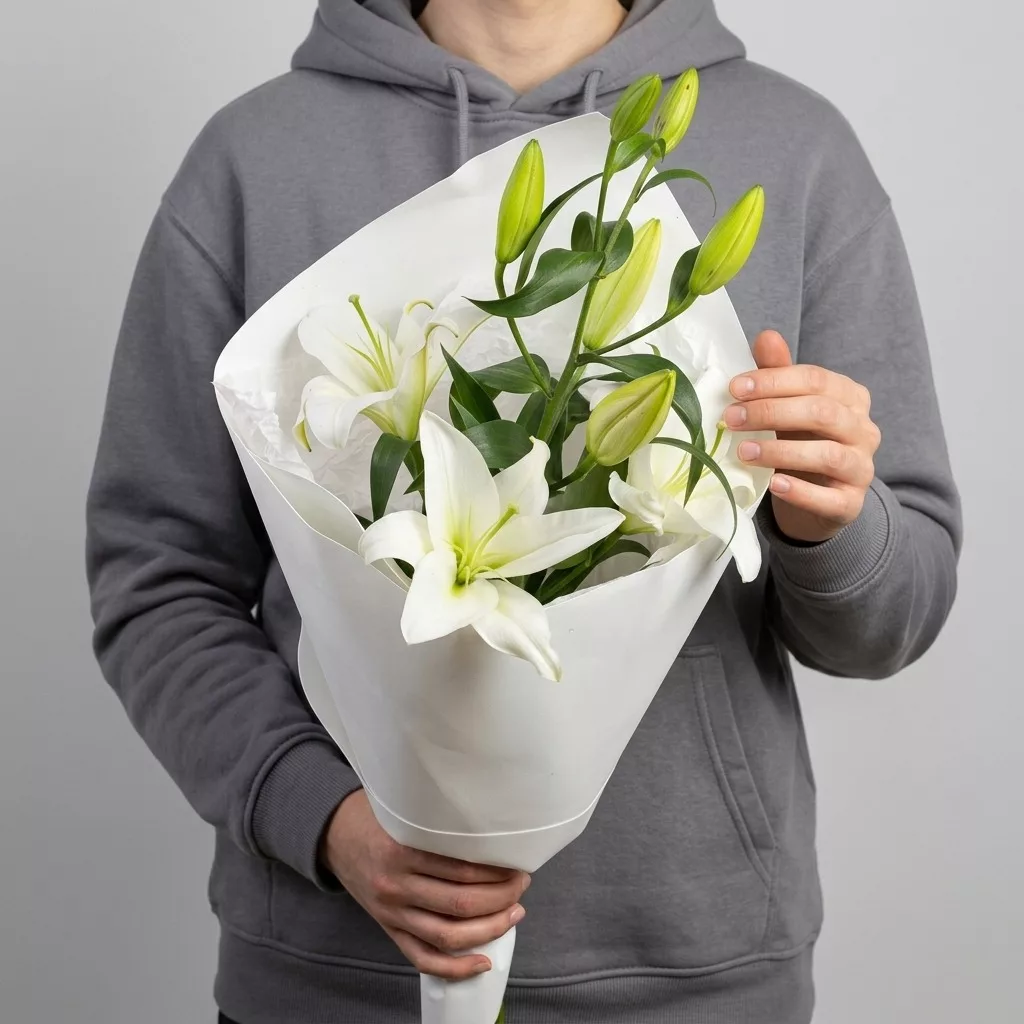
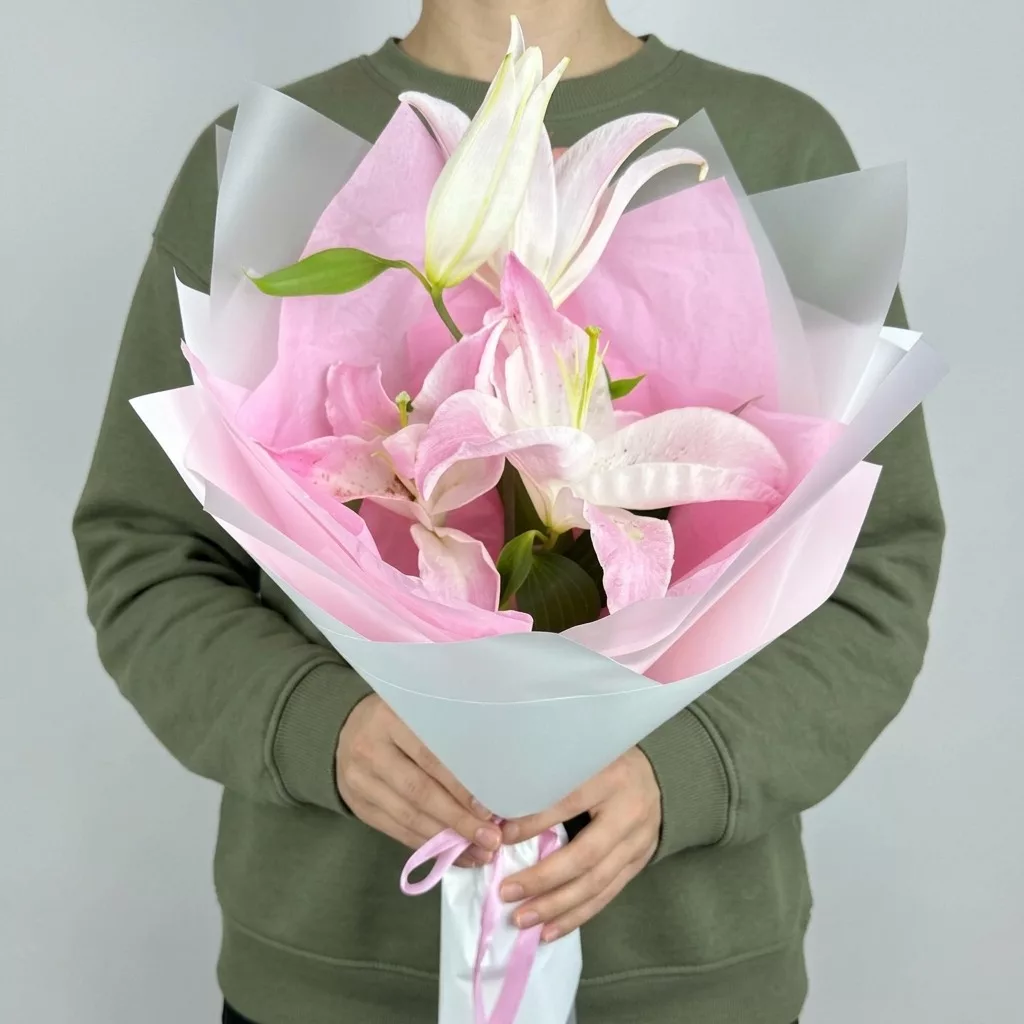
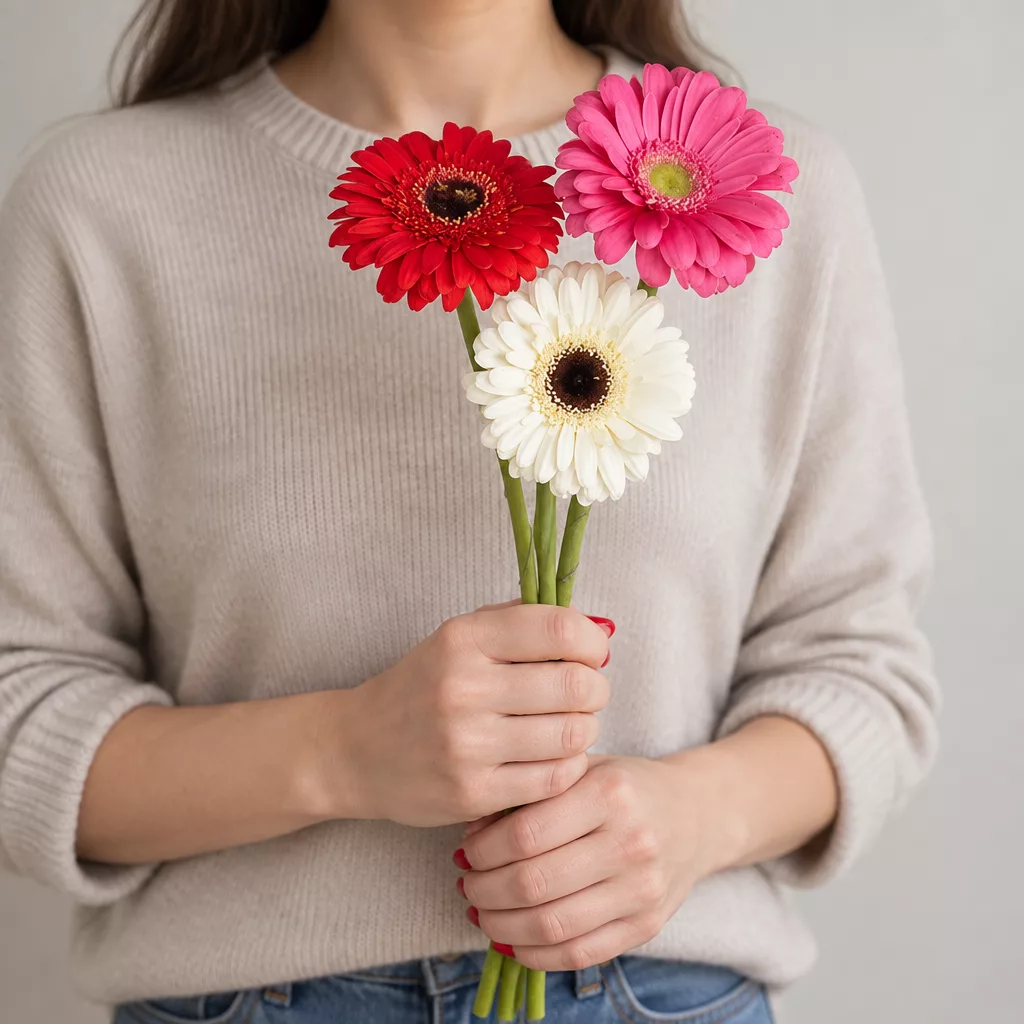
Choosing by Occasion: Who Is Receiving and What Will They Feel
The right starting point is not the flower itself but the person and the moment. A bouquet for a colleague's promotion reads differently from one sent to a mother on her birthday, even if both contain roses. For professional occasions, cleaner compositions work better: single-variety arrangements of white or blush spray roses, lisianthus in pale violet, or a structured bunch of calla lilies. They look considered without being overly personal.
For romantic occasions, texture and warmth matter more than formality. Combining garden roses with ranunculus adds depth that a single-variety bunch cannot achieve. Deep red garden roses with dusty miller and a few stems of eucalyptus feel luxurious without being theatrical. If the person you are sending to appreciates something a little unusual, try a mix of protea with peach spray roses — it is striking and holds well for several days.
For celebrations that lean joyful rather than romantic — a friend's new flat, a child's recital, a grandmother's name day — colour does the work. Sunflowers with orange gerbera and yellow solidago read as genuinely happy. Tulips in mixed colours, especially in spring when they are at their seasonal best, carry the same energy with a lighter touch.
Russian recipients generally appreciate generous volume. A bouquet that looks full and rounded is received better than a sparse one, even if individual stems are high quality. If you are unsure, err on the side of fullness rather than minimalism — it reads as care and generosity, which is exactly the feeling you want to land.
Seasonal Flowers and What Kolomna's Climate Means for Your Order
Kolomna experiences a continental climate with cold winters that regularly drop below minus fifteen Celsius and warm summers that push past thirty. This matters for flower delivery because temperature stress is one of the main reasons bouquets arrive in worse condition than expected. In January and February, roses and hydrangeas are particularly sensitive to cold shock — moving from a warm van to minus twelve air and back again causes petals to bruise faster than they would in spring.
In winter, we wrap bouquets in insulating kraft and keep the van temperature stable throughout the route. Even so, if you are ordering in January, choosing flowers with naturally sturdy petals is wise. Chrysanthemums, alstroemeria and carnations handle cold transitions better than open garden roses or delicate anemones. This is not a compromise — a well-made chrysanthemum arrangement can be genuinely beautiful, and it will still look fresh five days after delivery.
Spring is the most rewarding season to send flowers to Kolomna. Tulips, hyacinths and ranunculus are at their best from late February through April, and the variety available is wide. Summer brings sunflowers, gerbera, lisianthus and the peak of garden rose season. Autumn is the moment for dahlias, which have extraordinary colour range and vase life of seven to ten days if cared for properly.
If you are ordering in July or August, ask for flowers that have not fully opened yet — tight buds travel better in heat and will open beautifully over the following two days once they are inside. A bouquet that arrives slightly closed is not a problem; it is actually a sign the flowers were picked at the right stage.
Bouquet Sizes and Combinations Worth Knowing
The number of stems in a Russian bouquet carries cultural meaning that is worth understanding if you are not familiar with the tradition. Odd numbers are given to living recipients — seven roses, eleven tulips, fifteen mixed stems. Even numbers are reserved for mourning, so a bouquet of ten flowers would be an uncomfortable gift in any celebratory context. We follow this automatically, but if you are building a custom order, keep it in mind.
For a compact everyday bouquet, fifteen stems of a single variety with seasonal greenery is a reliable format. It fits in most vases, does not overwhelm a small flat and feels personal without being excessive. For a birthday or anniversary where you want impact, twenty-five or thirty-one stems with a mixed composition — say, garden roses as the focal flower, spray roses for texture and eucalyptus for structure — creates something that photographs well and feels like a real gesture.
Combinations that consistently work well together: white lisianthus with pale pink roses and silver brunia; sunflowers with orange gerbera and green button chrysanthemums; purple eustoma with lavender and white freesia. Freesia, by the way, adds scent that many other flowers lack, and for a recipient who appreciates fragrance, even three or five stems tucked into a larger arrangement make the whole bouquet feel different when it is unwrapped.
Avoid combining flowers with very different water needs in one arrangement — succulents and roses, for example, require opposite care and one will always suffer. A good florist thinks about what lives together, not just what looks good in a photograph.
Packaging, Presentation and the Moment of Receiving
In Russia, how a bouquet is wrapped is almost as important as what is inside it. A loosely wrapped bunch feels careless; a well-packaged bouquet signals that someone thought about it. We use kraft paper for a natural, warm look and add tissue paper inside to protect petals during transit. For special occasions, we can add ribbon and a handwritten card — the card is worth including even if the message is short, because the recipient keeps it.
Kolomna has a mix of Soviet-era apartment blocks and newer buildings. In older blocks, lifts are sometimes small and hallways narrow, which means a very wide bouquet can get damaged on the way up. If the address is a high-floor flat in an older building and you are ordering something large, a slightly taller rather than wider composition travels better through those spaces.
If the delivery is a surprise, you can leave delivery instructions asking the courier to knock and step back, giving the recipient a moment before they see who sent it. This small detail changes the experience of receiving entirely — there is a pause, a question, then the bouquet and then the card. That sequence is part of the gift.
For corporate addresses — offices in Kolomna's business district or administrative buildings — we recommend arrangements that come in their own water source or a box design rather than a traditional bouquet. Not every office has a vase, and a bouquet sitting in a mug for a day loses much of its appearance. A box arrangement with floral foam stays presentable on a desk without any additional effort from the recipient.
Care Instructions to Pass Along With the Bouquet
A bouquet that arrives in perfect condition can deteriorate within twenty-four hours if it is not cared for correctly. Including care instructions with the delivery — either printed on the card or as a separate note — is something we always recommend, because most people simply do not know the basics and feel awkward asking.
The first step is always a fresh diagonal cut on each stem, made with a sharp knife rather than scissors. Scissors crush the stem tissue and reduce water uptake. Cut about two centimetres off, hold the stem under water as you cut if possible, and place immediately into a clean vase. Dirty vases harbour bacteria that shorten vase life significantly — this is one of the most common and most avoidable mistakes.
Water temperature matters more than most people realise. Lukewarm water, around twenty Celsius, is absorbed faster than cold water for most flowers. The exception is tulips and hyacinths, which prefer cold water and will actually grow toward light and flop if kept too warm. Change the water every two days and re-cut the stems each time.
Keep the bouquet away from direct sunlight, radiators and fruit bowls. Ripening fruit releases ethylene gas, which accelerates petal drop in roses and carnations noticeably. A cool room — between sixteen and twenty Celsius — extends vase life by several days compared with a warm one. Roses in good condition should last seven to ten days with proper care; alstroemeria and chrysanthemums can reach twelve to fourteen days. Tulips are shorter-lived at five to seven days but make up for it in visual impact.
Ordering Tips That Make the Whole Process Smoother
The most common source of delivery problems is an incomplete address. Kolomna has several streets with similar names, and block numbers in older residential areas are not always logical from the outside. When you place your order, include the full street name, building number, block or korpus number if there is one, flat number and floor. If the building has a door code, add it. A courier who cannot enter a building will call, but every minute spent waiting outside is a minute the flowers are not in water.
If you are sending to someone at work, confirm that they will actually be at that address during the delivery window. Office schedules in Kolomna, as elsewhere, shift around meetings and remote days. A bouquet delivered to an empty desk in a closed office is a problem that is entirely avoidable with one quick check.
Order at least two to three hours before you want the flowers to arrive, and for same-day delivery on a Saturday — when demand peaks — placing your order before noon gives you the most flexibility in choosing a time slot. Evening deliveries, between six and nine, are popular for birthday surprises, so those slots fill earlier than morning ones.
If you are not certain about the recipient's taste, white and green arrangements are universally safe. They read as elegant rather than neutral, and almost no one dislikes them. A bouquet of white lisianthus, white spray roses and eucalyptus is one of the most reliably well-received combinations we make, regardless of age, occasion or personal style. When in doubt, light and fresh is always the right call.
Kolomna is the kind of city where a flower delivery feels like a real event — the streets are quiet enough that a knock at the door with a bouquet in hand is noticed and remembered. Whether you are sending to the historic centre or a residential neighbourhood on the edge of town, the principles are the same: choose for the person and the moment, pay attention to season and temperature, and give the recipient everything they need to keep the flowers looking their best for as long as possible. A good bouquet is not just what arrives at the door — it is what the person sees on their table three days later.
Frequently asked questions
Which Kolomna districts take longer to reach and should I order earlier for them?
Addresses in newer development zones on the outskirts, particularly parts of Kolychevo and Gorodishche further from the main roads, benefit from an earlier order window. For the historic centre and established residential streets the standard window is reliable. If you are unsure which category your recipient's address falls into, a two-hour delivery slot gives the courier comfortable margin.
What seasonal flowers work well for a Kolomna delivery in winter when cold transit is a concern?
Roses, chrysanthemums and alstroemeria handle cold transit better than delicate open blooms like anemones or garden ranunculus. In winter we recommend bouquets built around these sturdier stems, with foliage that insulates rather than wilts. A tight bud on a rose will also open beautifully indoors over two or three days, which means the recipient enjoys the arrangement longer.
How should I choose between a single-variety bouquet and a mixed arrangement for someone in Kolomna I know only through work?
A single-variety bouquet reads as considered and unambiguous, which suits a professional relationship where you want warmth without overstatement. White or cream roses, or a clean bundle of freesias, travel that tone well. Mixed arrangements feel more personal and celebratory, so save those for people you know well enough to match the combination to something they actually love.
Can the bouquet be left with a neighbour or building concierge if the recipient is briefly unavailable?
The courier will call ahead to give the recipient time to come down. If there is genuinely no answer, we rearrange delivery rather than hand the bouquet to an unknown third party. Flowers left in an unheated entrance or with someone unfamiliar with care instructions lose condition quickly, so we protect the arrangement rather than simply offload it.
How long will the flowers last once they arrive, and what should I tell the recipient to do first?
Most bouquets stay fresh for five to seven days with basic care. Tell the recipient to trim the stems at an angle as soon as the bouquet arrives, place them in clean cool water away from direct heat sources, and change the water every two days. In Kolomna's centrally heated winter interiors this matters more than in summer, as dry warm air shortens vase life noticeably.
Ready to send flowers?
Pick the city, choose the bouquet, and a local florist takes it from there.
Choose a city →