Sending Flowers to Kupino: Timing, Choices and What to Expect
Kupino sits in the Novosibirsk region, and when you want to send flowers there — for a birthday, an anniversary, or simply to tell someone you are thinking of them — the distance feels like an obstacle. It does not have to be. With the right preparation and a florist who understands long-distance delivery, a fresh, well-composed bouquet can arrive at a door in Kupino looking as though it was assembled that morning. This article walks you through every practical detail: how delivery works, which flowers survive the journey best, what the recipient will actually see when the door opens, and how to keep the arrangement beautiful for as long as possible afterward.
Understanding the Geography: Where Kupino Is and Why It Matters
Kupino is a town of roughly 22,000 people in the south of the Novosibirsk region, positioned on the flat steppe near the border with Kazakhstan. It is not a metropolitan hub, which means that flower delivery here requires more planning than a same-day order to central Moscow or Saint Petersburg. The distance from the nearest large flower wholesale market is significant, and that distance directly affects which varieties arrive in good condition and which do not.
The steppe climate adds another layer of complexity. Summers in Kupino are genuinely hot — temperatures regularly exceed 30 degrees Celsius in July and August — while winters are deeply cold, often dropping below minus 25 degrees Celsius. Both extremes are hard on cut flowers. Heat accelerates wilting and bacterial growth in stems; severe frost can freeze petals and turn them translucent and soft within minutes of exposure.
Knowing this geography helps you make smarter choices. It is not a reason to avoid sending flowers — it is a reason to choose the right flowers and the right timing. A bouquet of garden roses or sweet peas, which are already delicate under ideal conditions, will struggle in a July heatwave if the packaging is not designed for temperature control. Sturdier varieties, proper hydration before dispatch, and insulated packaging change the outcome entirely. When you order with these factors in mind, the recipient in Kupino receives something genuinely beautiful, not a wilted reminder that distance is hard.
Bouquets we can deliver


Delivery Timing: What One to Two Hours Actually Means for Kupino
Turboflora's one-to-two hour delivery window applies to Saint Petersburg and the immediate surrounding area. For Kupino, the logistics are different, and being honest about that is part of giving you a good experience. Orders to Kupino are dispatched on a scheduled basis, and the delivery window you should plan around is typically same-day or next-day depending on when you place the order and the specific address within the town.
The practical rule is this: orders placed before noon local time have the strongest chance of same-day arrival. Orders placed in the afternoon may be scheduled for the following morning, which in many cases is actually preferable — a morning delivery catches the recipient at home, creates a genuine moment of surprise, and means the flowers are not sitting in a warm hallway for hours before anyone notices them.
For time-sensitive occasions — a birthday on a specific date, an anniversary dinner — place your order at least 24 hours in advance. This gives the team time to source the freshest stems available, condition them properly, and arrange dispatch so that the bouquet arrives with maximum vase life remaining. Last-minute orders are sometimes possible, but they carry more risk of substitution if a specific variety is unavailable.
If you are sending flowers for a morning occasion, say a birthday breakfast surprise, specify that in the order notes. The delivery team will do everything possible to honour a time preference, and clear communication from your side makes coordination straightforward. Kupino is reachable; it simply rewards a little advance planning.
Choosing Flowers for the Person and the Moment, Not Just the Distance
Before you think about which flowers survive long journeys, think about who is receiving them and what you want them to feel. A grandmother celebrating her seventieth birthday in Kupino will respond to something very different from a colleague receiving a thank-you arrangement or a partner marking an anniversary. The emotional logic of the bouquet matters more than the logistics, and the logistics can be solved around almost any choice if you plan ahead.
For warmth and celebration — birthdays, family milestones, welcome-home moments — chrysanthemums, spray roses, and alstroemeria are excellent anchors. They are not second-choice flowers; they are genuinely long-lasting, visually full, and available in colours that range from deep burgundy to pale cream. Alstroemeria in particular opens gradually over several days, which means the recipient gets a bouquet that actually improves after arrival.
For romance — anniversaries, declarations, Valentine's season — roses remain the clearest signal, and they travel well when cut correctly and kept hydrated. Choose varieties with tighter buds rather than fully open blooms; they will open beautifully in the recipient's home over one to two days. Red, blush pink, and white are universally understood in Russian culture as romantic gestures.
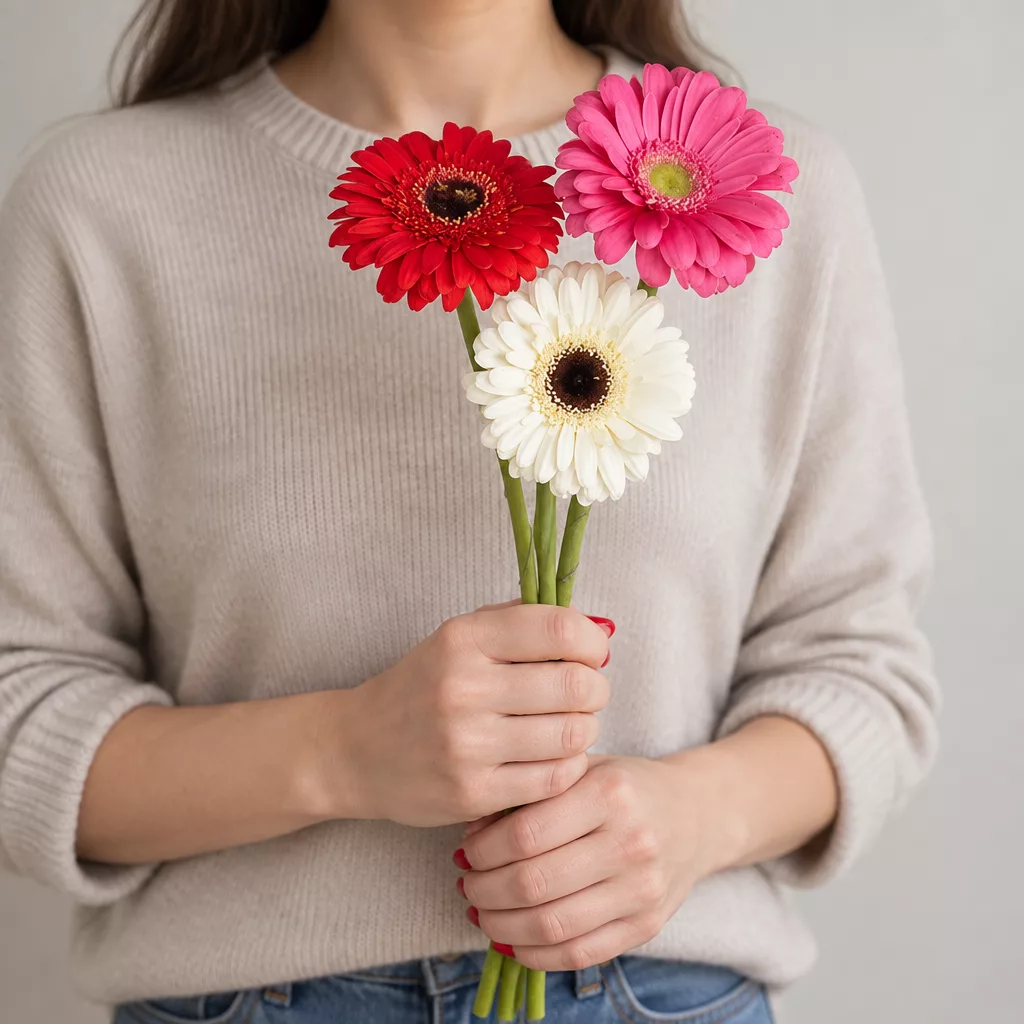
For friendship and appreciation, mixed seasonal bouquets with sunflowers, gerbera, or statice feel generous without being overly formal. These combinations are forgiving of minor temperature variation and tend to look abundant even after a journey. Ask for greenery like ruscus or eucalyptus to be included — it adds structure and keeps the arrangement from looking flat on arrival.
Seasonal Realities: What Grows, What Travels, What Thrives in Each Month
Russia's flower market is heavily import-dependent, drawing from Ecuador, the Netherlands, Colombia, and Kenya for the bulk of its roses, lilies, and carnations year-round. This means that for Kupino, seasonality is less about what is locally grown and more about what is moving through the supply chain efficiently and arriving in good condition at the point of dispatch.
In winter, from November through March, sturdy varieties are your safest choice. Chrysanthemums, carnations, and standard roses hold up well in cold transit when packaged correctly. Lilies are a strong winter option because the cold actually slows their opening, meaning they arrive as buds and bloom in the warmth of the recipient's home over three to five days — a lovely experience for the person receiving them. Avoid tropical flowers like anthuriums or bird of paradise in deep winter; they are cold-sensitive and can show dark patches after exposure to frost.
In summer, the calculus reverses. Heat is the enemy, and flowers that are already fully open will not survive a warm vehicle without proper insulated packaging. Order bouquets with a higher proportion of buds and tight blooms. Sunflowers are a wonderful summer choice — they are heat-tolerant, visually generous, and deeply associated in Russian culture with warmth and happiness. Gerbera daisies also travel well in summer when stems are cut cleanly and kept dry at the base.
Spring, particularly April and May, is the most generous season. Tulips, freesia, and ranunculus are all moving through the market in large quantities, prices are reasonable, and the moderate temperatures are kind to delicate petals. If you have flexibility on timing, a spring order to Kupino gives you the widest range of beautiful options.
Packaging and Presentation: What the Recipient Actually Sees
The moment the door opens is the moment that matters most. Everything before it — the order, the sourcing, the transit — exists to serve that single instant when someone in Kupino sees what you sent them. Presentation is not decoration on top of the flowers; it is part of the gift itself, and it communicates the same care that the flowers do.
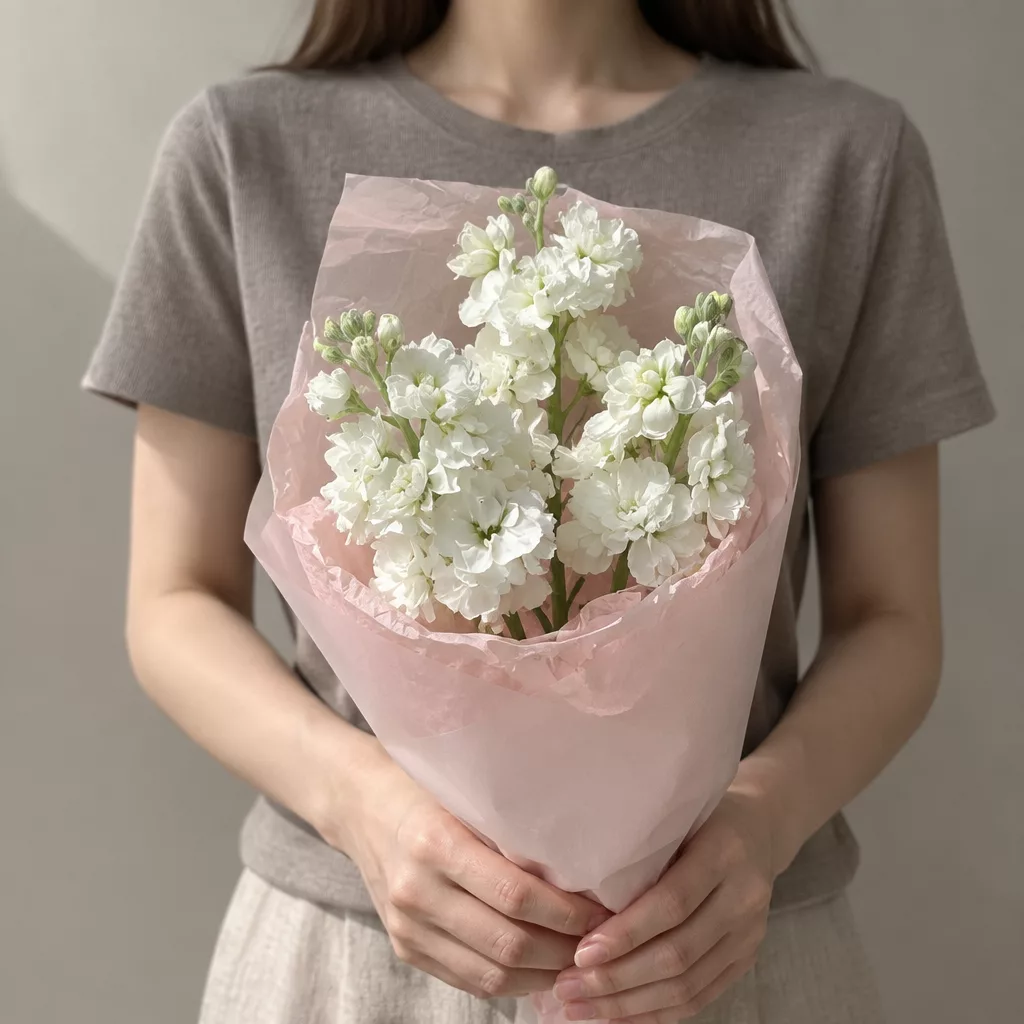
For long-distance delivery, bouquets are wrapped in layers that serve both protection and aesthetics. An inner layer of soft tissue or kraft paper keeps stems moist and petals separated. An outer layer — typically a structured sleeve of kraft, velvet paper, or a gift box for premium arrangements — protects against physical pressure and gives the recipient something beautiful to unwrap rather than a package to tear open.
If you are sending flowers for a significant occasion, consider requesting a gift box format rather than a traditional bouquet wrap. Box arrangements have become genuinely popular in Russia over the past decade, particularly for birthdays and anniversaries. The flowers sit in floral foam inside a decorative box, which means the recipient does not need a vase immediately — the arrangement is self-contained and can be placed on a table or windowsill exactly as received.
A handwritten card is a small detail that carries disproportionate weight. In Russian culture, a personal message — even a short one — transforms a commercial transaction into a genuine gesture. If you are writing in English for a Russian-speaking recipient, consider adding a transliteration or asking for help with a simple phrase. The effort is always noticed and almost always appreciated.
Care Instructions: Helping the Recipient Keep Flowers Fresh Longer
One of the most useful things you can do when sending flowers to anyone — but especially to someone receiving a long-distance delivery — is to include clear care instructions. Many people in Russia, particularly older generations, have their own traditional methods for keeping flowers fresh, some of which are genuinely effective and some of which are not. A short, friendly note with practical advice is a gift within a gift.
The first step on arrival is recutting the stems. After transit, the cut ends seal slightly, reducing water uptake. The recipient should cut one to two centimetres from each stem at a diagonal angle, ideally under running water or while the stems are submerged. This sounds technical but takes about two minutes and dramatically extends vase life.
The vase should be clean — bacteria in a dirty vase are the primary cause of premature wilting — and filled with cool, fresh water. Warm or room-temperature water encourages bacterial growth. If a flower food sachet was included with the bouquet, it should be dissolved in the water before the flowers go in. These sachets contain a mild biocide and a sugar source that genuinely extend vase life by two to four days.
Place the arrangement away from direct sunlight, heating radiators, and fruit bowls. Ethylene gas released by ripening fruit — particularly apples and bananas — accelerates the aging of cut flowers noticeably. A cool spot with indirect light, such as a north-facing windowsill or a dining table away from a radiator, is ideal. Change the water every two days and recut stems each time. With this routine, a well-conditioned bouquet of roses or chrysanthemums should last seven to ten days.
Common Mistakes to Avoid When Ordering to a Remote Address
Sending flowers to a town like Kupino is straightforward when you know what to watch for. The mistakes that cause disappointment are almost always avoidable, and they tend to fall into a small number of patterns that experienced florists see repeatedly.
The first and most common mistake is leaving the address incomplete. Kupino has apartment buildings, private houses, and some addresses that require a gate code or a specific entrance number. A delivery that cannot reach the door because of a missing entrance code or an unclear building number will be delayed, and in summer heat, delay is the enemy of fresh flowers. Double-check the full address, including apartment number, floor, and any access notes, before you confirm the order.
The second mistake is choosing the most visually dramatic flowers without considering their fragility. Large-headed peonies, for example, are stunning but they open very quickly and are sensitive to both heat and physical pressure. If you love peonies, order them in bud form and in a season when temperatures are moderate. The same applies to open garden roses — beautiful in a florist's cooler, but vulnerable in transit.
The third mistake is not communicating the occasion clearly. If the flowers are for a birthday, say so. If the recipient is elderly and lives alone on a high floor with no lift, mention that. If the delivery needs to happen before a specific time because the recipient leaves for work at eight in the morning, include that in the notes. The more context you provide, the better the team can plan the delivery to match the real situation on the ground in Kupino.
Kupino is not the easiest destination for flower delivery, but it is absolutely reachable, and the flowers that arrive there carry exactly the same meaning they would carry anywhere else — perhaps more, because the effort behind them is visible. Choose varieties suited to the season, give the address in full, order with a day's notice when you can, and pass along the simple care tips to the recipient. The person opening the door in Kupino will see a fresh, thoughtfully assembled bouquet, and they will know that someone in another city took real care to make that moment happen.
Frequently asked questions
Can flowers really arrive fresh after traveling to Kupino?
Yes, when the right varieties are chosen, stems are properly conditioned before dispatch, and insulated packaging is used for temperature-sensitive seasons. Sturdy flowers like chrysanthemums, spray roses, and alstroemeria are specifically selected for long-distance delivery because they maintain their appearance and water uptake well over the time required to reach Kupino.
What is the best time of year to send flowers to Kupino?
Spring — April and May — offers the widest variety and the most forgiving transit temperatures. Winter orders work well with cold-tolerant varieties like carnations and lilies, which actually benefit from cool transit. Summer orders are manageable but require insulated packaging and a preference for tight buds over open blooms to survive the heat.
How far in advance should I place a flower order for Kupino?
At least 24 hours in advance is the reliable standard, especially for specific dates like birthdays or anniversaries. This allows time to source the freshest available stems, condition them properly, and schedule dispatch for the best possible arrival window. Same-day orders placed before noon may be possible but carry a higher risk of variety substitution.
Does the recipient need to be home to receive the delivery?
Ideally yes, because cut flowers should not sit in an unheated hallway or outside a door in extreme temperatures. If the recipient cannot be home, it helps to provide a trusted neighbour's contact or a building concierge who can accept the bouquet and place it in a cool indoor spot. Include this information clearly in the delivery notes when ordering.
Can I include a message card with the flowers sent to Kupino?
Absolutely, and it is strongly recommended. A personal message card is included with every order and can be written in English, Russian, or a combination. In Russian gift-giving culture, a handwritten note adds significant warmth to the gesture. You can write your message when placing the order, and it will be printed or handwritten and attached to the bouquet before dispatch.
Ready to send flowers?
Pick the city, choose the bouquet, and a local florist takes it from there.
Choose a city →