Flower Delivery in Kurtamysh: Timing, Choices and What Arrives
Kurtamysh sits quietly in the Kurgan region, and sending flowers there from Saint Petersburg feels like a long reach — but the distance does not have to mean a wilted bouquet or a missed moment. Whether you are surprising a mother on her birthday, congratulating a colleague on a new job, or simply telling someone far away that you are thinking of them, the right arrangement chosen with care can arrive fresh, full and exactly as you imagined it. This guide walks you through everything that matters: when to order, what to choose for the season and the person, and how to make sure the flowers last once they land.
What Delivery to Kurtamysh Actually Looks Like
Kurtamysh is a small town of roughly twenty thousand people in the Kurgan Oblast, located in the southern Urals region. It is not a major logistics hub, which means delivery works differently here than it does in a large city. Orders are routed carefully so that flowers travel in climate-controlled conditions and reach the recipient in the best possible state.
Expect a delivery window rather than a precise minute. For most orders placed before noon, same-day delivery is achievable, though the exact timing depends on the route, road conditions and the season. Winter in the Kurgan region is genuinely cold — temperatures can drop well below minus twenty Celsius — and that affects how bouquets are packed and transported. Every arrangement leaving for Kurtamysh in winter is wrapped in insulating kraft layers and placed in a thermal sleeve to protect petals from freezing air.
In summer the concern shifts to heat. Flowers sitting in a warm vehicle without proper cooling can wilt in under an hour. Arrangements are packed with moisture-retaining materials and kept away from direct sun during transit. This is not a detail to skip over — it is the difference between a bouquet that opens beautifully on the table and one that droops before it is even unwrapped.
The person placing the order does not need to be in Kurtamysh or even in Russia. Orders can be placed online from anywhere, with the recipient's address and a preferred delivery window. A short message to the recipient confirming the delivery is coming is always a good idea, especially if they live in a private house rather than an apartment block.
Bouquets we can deliver

Choosing Flowers for the Person, Not Just the Occasion
The occasion matters, but the person matters more. A bouquet for a woman in her sixties who grows her own garden will land differently than one for a twenty-year-old who has never kept a plant alive. Starting from who will receive the flowers — their personality, their home, their taste — makes every choice easier and more meaningful.
For someone warm and domestic, peonies, garden roses and lisianthus in soft blush or cream tones feel like a natural extension of their world. These varieties have a full, rounded shape that reads as generous and unhurried. For someone more modern in their taste, a structured arrangement with protea, anthurium or calla lilies in a single bold colour makes a stronger visual statement without trying too hard.
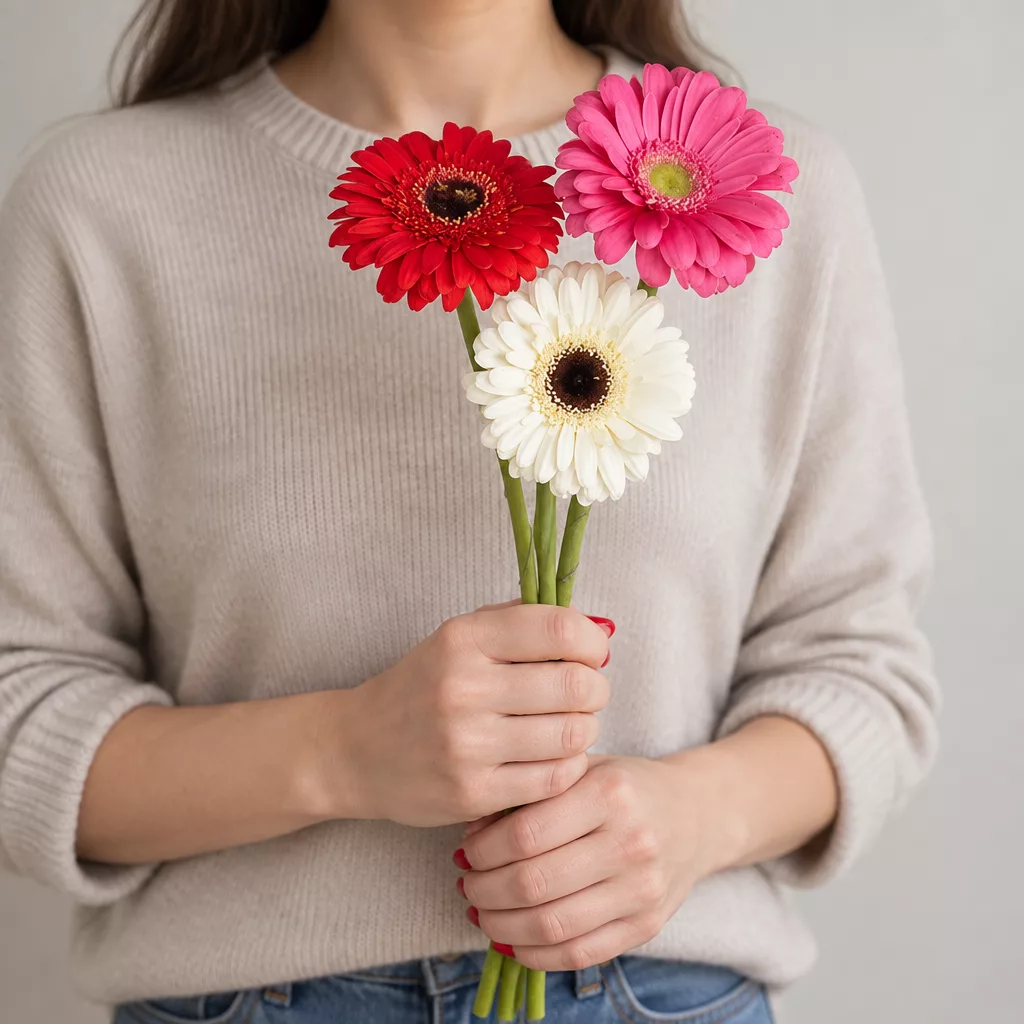
For children or younger recipients, sunflowers and bright gerberas bring immediate joy. They are unpretentious, colourful and practically impossible to dislike. Paired with a few stems of solidago or waxflower for texture, they become something more considered than a simple bunch.
For a man — which is more common in Russian culture than many outside the country might expect — a compact arrangement of tropical foliage, orchids or a single variety like alstroemeria in a deep burgundy or orange reads as confident and intentional rather than overly sentimental. In Russia, giving flowers to men is entirely normal, particularly for birthdays and professional milestones.
When you are not certain of the recipient's preferences, neutral palettes almost always work. White, ivory and pale green combinations feel fresh without being cold, and they suit any interior from a small Kurtamysh apartment to a larger private home.
Seasonal Availability and What That Means for Your Order
Flowers are a seasonal product, even when greenhouses and global supply chains make it easy to forget that. Knowing what is genuinely at its best in each season helps you order something that will last rather than something that is technically available but past its peak.
In late spring and summer, from roughly May through August, peonies, ranunculus, lisianthus and spray roses are at their finest. Peonies in particular have a very short peak season — usually three to four weeks in late May and early June — and ordering them outside that window means getting flowers that have been stored longer and will open and fade faster. If you are ordering in July or August, garden roses, eustoma and hydrangea are stronger choices.
Autumn brings chrysanthemums, dahlias and celosia into their best form. Chrysanthemums are often underestimated: a full bunch of pompom or spider chrysanthemums in rust, gold or deep burgundy looks genuinely striking and lasts remarkably well, often ten to fourteen days in a clean vase with fresh water.
Winter is the season of roses, alstroemeria, carnations and tropical imports like orchids and anthurium. These varieties are bred and grown specifically to travel long distances and hold up in cold conditions. A bouquet of long-stemmed roses in deep red or soft pink, wrapped in white kraft paper with a satin ribbon, is a classic winter arrangement that photographs beautifully and stays fresh for up to a week.
Asking about what is freshest on the day you order is always a reasonable thing to do. A florist who knows their stock will steer you toward what will actually look best on arrival.
Budget Ranges and What Each One Gets You
Flower arrangements span a wide range of investment, and understanding what changes at each level helps you spend confidently rather than guessing.
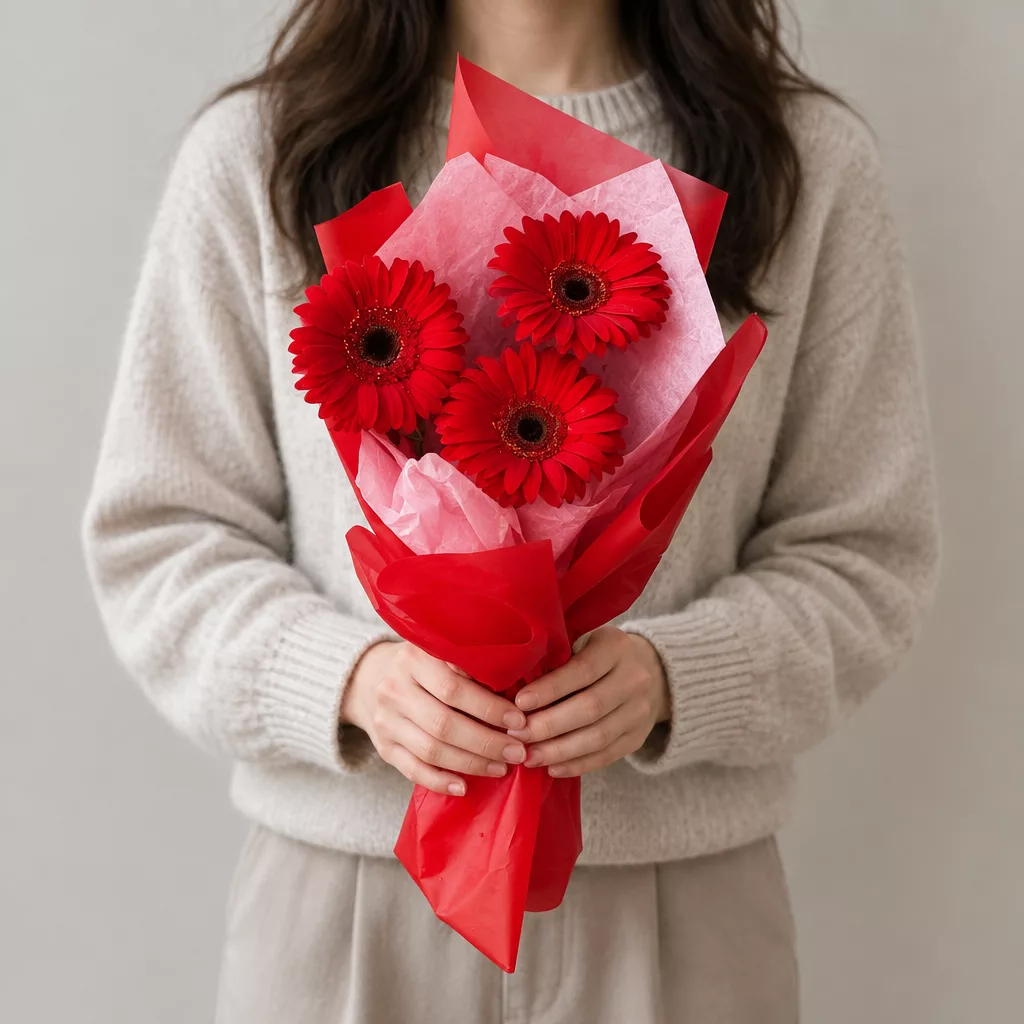
At the entry level, a single-variety bouquet — perhaps ten stems of alstroemeria or a bunch of bright gerberas — is simple, cheerful and entirely appropriate for casual occasions like a colleague's birthday or a thank-you gesture. These arrangements are honest and unpretentious, and they work especially well when the relationship is warm but not deeply close.
Moving into the mid range opens up combinations. This is where you can pair roses with eucalyptus, add a few stems of lisianthus for frilled texture, or bring in a contrasting accent flower like a single protea or a stem of waxflower. The arrangement starts to feel considered rather than assembled. For most personal occasions — birthdays, anniversaries, new baby congratulations — this range hits the right note without overreaching.
At the upper end, the change is in volume, variety and presentation. Think of a full, domed arrangement of garden roses, peonies, ranunculus and sweet peas in a coordinated palette, wrapped in layered tissue and kraft paper with a wax seal. Or a tall, architectural piece with calla lilies, anthuriums and tropical foliage that fills a room. These arrangements make an impression that the recipient will remember and photograph.
Presentation is part of the value at every level. A well-wrapped bouquet — paper chosen to complement the flowers, ribbon tied with intention, a handwritten card — elevates even a modest arrangement. The unwrapping is part of the moment, and it is worth thinking about.
How Russian Flower Customs Work, Plainly Explained
If you are sending flowers to Kurtamysh from outside Russia, a few local customs are worth knowing. They are not complicated, but getting them right shows care and avoids an awkward moment.
The most well-known rule is the odd-number tradition. In Russian culture, even numbers of flowers are associated with mourning and are brought to funerals. For any celebratory or affectionate occasion, the bouquet should contain an odd number of stems — five, seven, eleven, fifteen and so on. This matters more with individual stems than with large mixed arrangements, but it is a good habit to keep in mind when specifying quantities.
Colour carries meaning too, though less rigidly than the number rule. Yellow flowers have a complicated reputation in Russian folk tradition — some older recipients associate them with separation or bad luck — so it is worth avoiding a purely yellow arrangement unless you know the recipient well and know they are unbothered by the association. Mixed bouquets that include yellow as an accent rather than the dominant colour are generally fine.
Red roses are understood universally as romantic. Sending a dozen red roses to a colleague or a distant relative can create unintended awkwardness. For non-romantic occasions, pink, white, coral or mixed-colour roses read as warm and celebratory without the romantic charge.
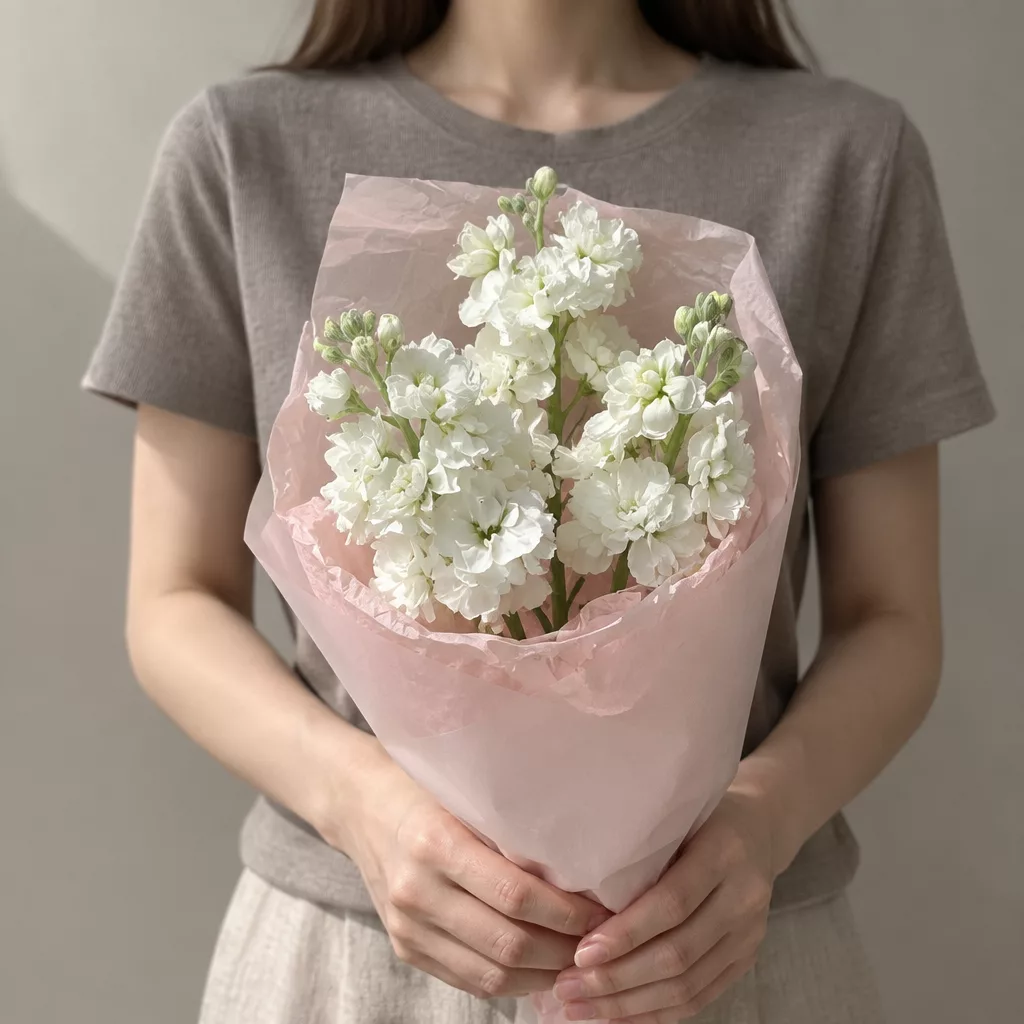
White flowers are appropriate for almost any positive occasion — they are associated with purity and celebration, not mourning, in everyday Russian gifting culture. A white and green arrangement is one of the most universally safe and elegant choices you can make when you are uncertain of the recipient's preferences.
Keeping Flowers Fresh After Delivery in Kurtamysh
The bouquet arriving is only the beginning. How the recipient handles the flowers in the first hour determines whether they last three days or ten. Passing along simple care instructions with your order — either in the card message or as a separate note — is a small gesture that makes a real difference.
The first step is always a fresh cut. Using sharp scissors or a knife, the stems should be trimmed at a diagonal angle — this increases the surface area drawing water and prevents the flat end from sitting flush against the vase bottom, which blocks uptake. Cutting two to three centimetres from the bottom of each stem is enough.
Water temperature matters more than most people realise. Room temperature water is the right choice for almost all cut flowers. Ice water slows water uptake for tropical varieties like anthurium and bird of paradise, and boiling water, sometimes suggested in old advice, damages stem tissue. Change the water every two days and rinse the vase at the same time to prevent bacterial build-up, which is the main reason flowers fade prematurely.
Keep the vase away from direct sunlight, radiators and draughts. In Kurtamysh winters, the area near a window can be much colder than the rest of the room — cold enough to damage petals overnight. The centre of a warm room, away from heat sources and cold glass, is the ideal spot.
Remove any leaves that fall below the waterline before placing the flowers in the vase. Submerged leaves rot quickly and introduce bacteria into the water. A clean vase, fresh water and trimmed stems are the three things that extend vase life more than anything else.
When to Order and How to Time It Right
Timing an order for Kurtamysh requires a little more planning than ordering to a large city, but it is not complicated once you understand the rhythm. The key is building in enough lead time for the arrangement to be prepared and routed without being rushed, because rushed floristry shows in the result.
For a specific date — a birthday, an anniversary, a graduation — placing the order at least twenty-four hours in advance gives the best results. This allows the right flowers to be selected at peak freshness and the arrangement to be built with care rather than speed. Orders placed the same morning for same-day delivery are possible, but the flower selection may be more limited depending on what is freshest in stock that day.
For winter deliveries, add extra buffer time. Road conditions in the Kurgan region in January and February can be unpredictable, and a delivery window of several hours is more realistic than a single hour slot. Communicating this to the recipient in advance — letting them know flowers are coming and roughly when — means they will be home to receive them rather than leaving the bouquet on a cold doorstep.
Morning deliveries are generally preferable to late afternoon ones. Flowers delivered in the morning give the recipient the whole day to enjoy them, and the cooler morning temperatures in most seasons are kinder to the arrangement during the final leg of transit.
If the recipient lives in a private house rather than an apartment building, include clear address details and a phone number. A brief call before the final approach saves time and ensures the flowers reach the right hands rather than sitting uncollected.
Sending flowers to Kurtamysh is a gesture that crosses a real distance, and that distance makes it more meaningful, not less. The person receiving the bouquet knows that someone thought carefully enough to arrange something beautiful specifically for them, from far away. Choosing the right variety for the season, respecting the local customs around numbers and colours, and passing along a few simple care tips are the details that turn a delivery into a memory. Turboflora handles the logistics and the freshness — your part is simply knowing who the flowers are for and what you want them to feel when they open the door.
Frequently asked questions
Can I order flowers to Kurtamysh from outside Russia?
Yes. Orders can be placed online from any country. You will need the recipient's full address in Kurtamysh, their phone number for delivery coordination, and a preferred delivery window. Payment is processed securely online. The recipient does not need to do anything in advance except be available to receive the bouquet.
How are flowers protected during delivery in cold Kurtamysh winters?
Every winter arrangement is wrapped in insulating kraft paper and placed in a thermal sleeve before transit. This protects petals from freezing air during the final delivery stage. Tropical varieties like orchids and anthurium are particularly sensitive to cold and receive extra insulation. We do not leave bouquets on doorsteps in freezing temperatures without confirming the recipient is present.
What is the best flower choice for a birthday delivery to an older woman in Kurtamysh?
Peonies, garden roses or lisianthus in soft pink, cream or blush tones are consistently well received by older recipients. These varieties feel warm, generous and familiar. Pair them with eucalyptus or ruscus for a full, rounded shape. Avoid purely yellow arrangements out of respect for the traditional colour associations in Russian gifting culture.
Why do Russian bouquets always have an odd number of flowers?
In Russian tradition, even numbers of flowers are associated with mourning and are brought to funerals. For any celebratory occasion — birthdays, anniversaries, congratulations — an odd number of stems is the correct choice. This applies most strictly to single-variety bouquets with individually counted stems. Large mixed arrangements are less rigidly counted but still follow this principle.
How long will the flowers last after delivery to Kurtamysh?
Most arrangements last five to ten days with basic care. Trim the stems diagonally on arrival, use room temperature water, change the water every two days and keep the vase away from radiators and direct sunlight. Chrysanthemums and alstroemeria tend to last longest, often up to two weeks. Peonies and ranunculus are shorter-lived but more dramatic while they last.
Ready to send flowers?
Pick the city, choose the bouquet, and a local florist takes it from there.
Choose a city →