Sending Flowers to Lyubertsy? Here Is What to Expect
Lyubertsy sits close enough to Moscow that most people assume delivery is straightforward — and it is, once you know a few things about timing, the right flowers for the season, and what makes a bouquet actually survive the journey. Whether you are sending a birthday surprise to a friend in a high-rise on Oktyabrsky Prospekt or congratulating a colleague on a new baby, this guide walks you through everything a first-time sender needs to feel confident before placing an order.
Which Parts of Lyubertsy We Reach and How Quickly
Lyubertsy is a compact city directly southeast of Moscow, and Turboflora covers the full municipal area — from the older central districts around the railway station to the newer residential blocks in Kotelniki and the Lyubertsy fields development zone. Delivery typically takes one to two hours from the moment your order is confirmed, and that window holds on most days of the week.
Rush hours on the Novoryazanskoe highway and the approach roads through Zhulebino can add time during weekday mornings and Friday evenings. If the occasion is time-sensitive — a birthday dinner that starts at seven, for example — placing your order by mid-afternoon gives a comfortable buffer. Same-day orders placed before noon almost always arrive well within the standard window.
One thing worth knowing: Lyubertsy has a number of gated residential complexes where couriers must call ahead and wait at a security barrier. When you fill in the address, add the building entrance code or intercom number if you have it. This single step removes the most common cause of a short delay. If the recipient lives in a newer high-rise development, noting the exact building number in a complex that shares one postal address will also help the courier find the right door without phoning around.
Bouquets we can deliver

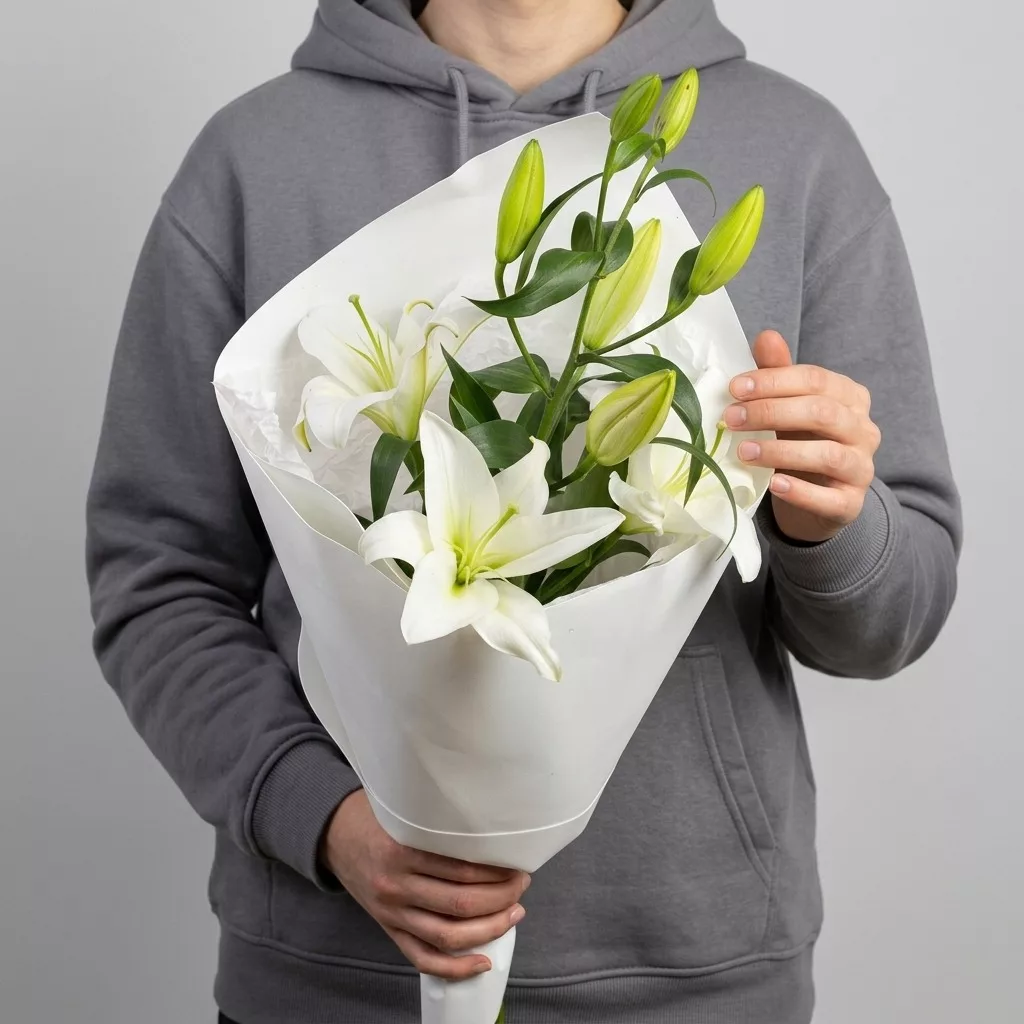
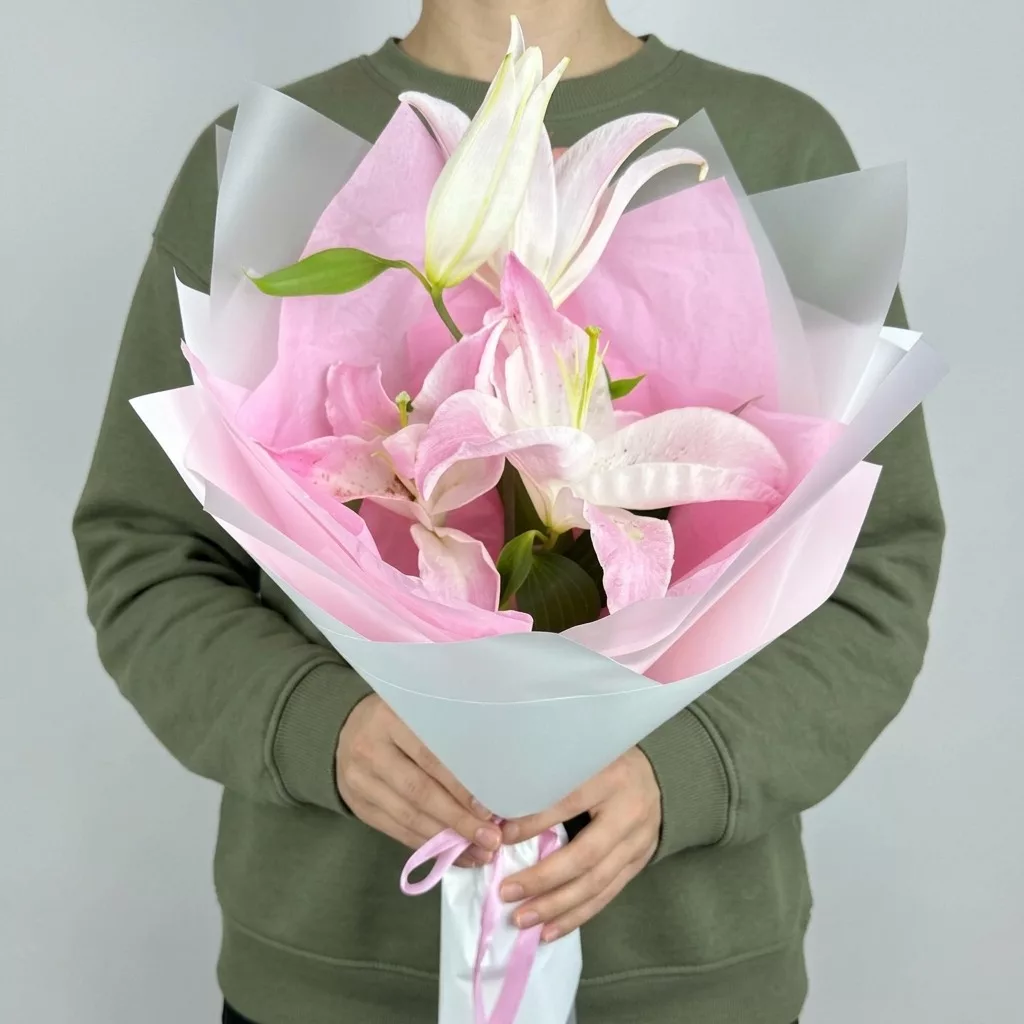
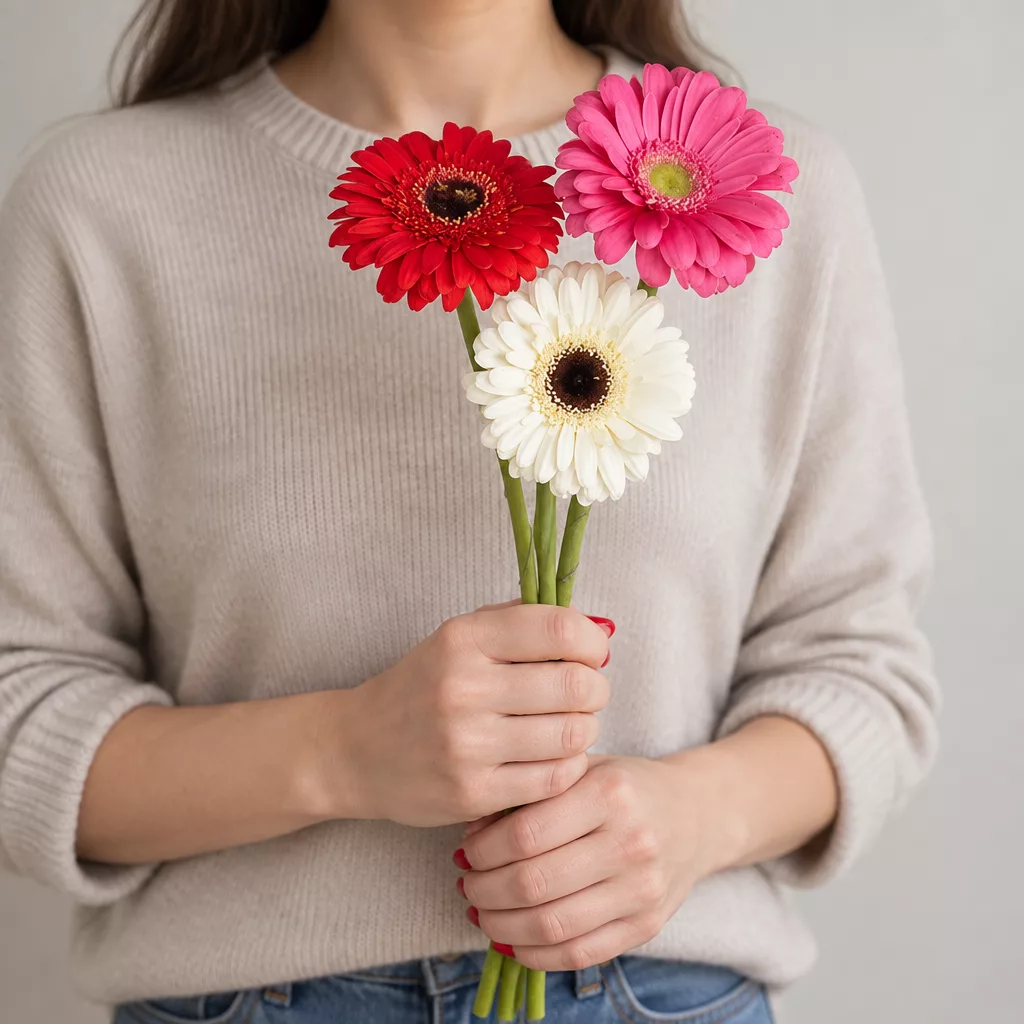
Choosing Flowers for the Person, Not Just the Occasion
Before you scroll through varieties, spend thirty seconds thinking about the recipient. A woman in her sixties who keeps a tidy home will likely appreciate a structured, classic arrangement — think garden roses paired with lisianthus, or a tight cluster of peonies in season. A younger recipient who follows interior trends might love something looser and more textural: ranunculus mixed with eucalyptus branches, or a monochrome bouquet of white tulips with silvery dusty miller.
For men — and bouquets for men are genuinely popular in Russia, especially for professional milestones — anthuriums, tropical foliage, or bold single-variety arrangements in deep burgundy or orange tend to land better than mixed pastel bouquets. Do not let the idea of a male recipient steer you toward something generic. A confident, well-made bouquet of garden roses in a single rich colour is always appropriate.
Children's celebrations call for something bright and uncomplicated. Gerberas in yellow, coral and orange are reliable here — they are sturdy, cheerful and immediately recognisable even to a child who has never received flowers before. Avoid delicate blooms like sweet peas for a child's party; they wilt faster and can feel anticlimactic by the time cake is served. The goal is always to match the energy of the moment, not just fill a vase.
Seasonal Flowers That Travel Well to Lyubertsy
The journey from our studio to Lyubertsy is short, but temperature matters more than distance. In January and February, roses, chrysanthemums and carnations handle the cold reliably. Tulips and hyacinths are also available in winter and travel well if the courier bag is insulated — they are actually more cold-tolerant than many people expect, since they are spring bulb flowers by nature.
From April through June, peonies are the standout choice for Lyubertsy deliveries. They are enormously popular in Russia for this period, and for good reason: they are generous, fragrant and look impressive even when the recipient has a modest vase. Order peonies in bud rather than fully open — they will bloom beautifully within twenty-four hours at room temperature and last five to seven days from that point.
Summer brings sunflowers, lisianthus and a wider range of garden roses. These all tolerate warm car interiors reasonably well, but avoid ordering flowers with very fine petals — anemones, for instance — during a July heatwave, as they are sensitive to temperature swings above twenty-five degrees Celsius. In autumn, dahlias and spray chrysanthemums come into their own. They are hardy, long-lasting and available in colours that suit the season without feeling clichéd. Whatever the month, our florists condition every stem before it leaves the studio, which makes a measurable difference to vase life after delivery.
Bouquet Sizes and What Actually Fits the Situation
Flower counts in Russia are traditionally odd numbers for celebratory occasions — seven roses, nine stems of lisianthus, fifteen mixed blooms. Even numbers are reserved for mourning, so if you are ordering a birthday or congratulatory bouquet, the florist will naturally follow this convention. You do not need to count; just know that if you request a specific number, an odd figure is the culturally appropriate choice for a happy event.
For a first-time gift to someone you do not know extremely well — a new colleague, a teacher, a neighbour — a medium-sized bouquet of nine to eleven stems is a safe and generous-feeling choice. It is substantial without being overwhelming, and it fits most standard vases without the recipient needing to improvise with a bucket.
Larger arrangements of twenty-five or more stems are well-suited to milestone birthdays, anniversaries or professional achievements. They make a genuine visual impression when the door opens, which is often exactly the point. However, if the recipient lives alone in a small flat, consider whether they have enough vases or containers for a very large arrangement. A beautifully composed medium bouquet with interesting foliage and two or three complementary varieties often creates more lasting pleasure than a large single-variety bunch. Volume is not the same as impact — composition and freshness matter far more.
How to Write a Card That Feels Personal, Not Formal
In Russia, a handwritten card or printed note accompanying flowers carries real weight. It is not a formality — it is often the part the recipient keeps. When you place your order, you will have space to write a message, and it is worth taking two minutes to make it specific rather than generic.
Instead of 'Happy Birthday, best wishes,' try something that references a shared memory, a quality you admire in the person, or a small private joke. Even one concrete detail — 'I remember you said peonies were your favourite, so here they are' — transforms a lovely bouquet into a genuinely personal gesture. Florists notice when cards are warm and specific, and it sets the tone for how the whole delivery feels.
If you are sending to a Russian-speaking recipient and you are writing in English, that is completely fine — many recipients will find it charming, and our team can add a transliterated version if you ask. Conversely, if you want to write in Russian but are not confident with the language, keep it short and sincere. 'S dnyom rozhdeniya' — Happy Birthday — followed by your name is always sufficient and never feels lazy when the flowers themselves are beautiful.
Avoid overly formal or corporate-sounding language in personal cards. Phrases like 'Please accept this floral arrangement as a token of our esteem' belong in a business letter, not with a bouquet of garden roses. Write the way you would speak if you were handing the flowers over in person.
What Happens If Nobody Is Home When the Courier Arrives
This is the question most first-time senders forget to think about, and it is worth planning for before you place the order. If the recipient is not home, our courier will call them directly. In most cases, the recipient can give a neighbour's name, a building concierge, or ask for a short wait. Couriers carry the order for a reasonable window before the situation needs to be resolved another way.
If you want the delivery to be a surprise and you are worried the recipient might not be home, the best approach is to have a rough sense of their schedule before ordering. Midday on a weekday works well for recipients who are retired or work from home. Early evening — between five and seven — catches most working adults shortly after they return. Weekends are generally reliable across the board.
One practical tip: if you are sending to a workplace address in Lyubertsy, confirm that the office is open and that someone at reception can accept the delivery. Many offices in Russia have a reception desk that will hold a bouquet safely. Make sure the recipient's full name and department are in the delivery notes, not just the company name. Flowers left at a front desk without a clear name can cause confusion in a large building, and no one wants their bouquet sitting in an entrance hall for an hour while people try to figure out who it belongs to.
Keeping Your Flowers Fresh After They Arrive
A bouquet that arrives in perfect condition can last anywhere from five to ten days depending on the variety, and a few simple steps at the recipient's end make a real difference. The first thing to do is cut the stems — about two centimetres at a diagonal — before placing them in water. This reopens the vascular tissue that closes during transport and lets the flowers drink immediately. Use a clean vase and cool water, not warm.
Remove any leaves that would sit below the waterline. Submerged foliage rots quickly and introduces bacteria that shorten the life of the whole bouquet. Change the water every two days and re-cut the stems at the same time. This sounds like more effort than it is — it takes about three minutes and noticeably extends how long the flowers look their best.
Keep the bouquet away from direct sunlight, radiators and fruit bowls. Ripening fruit releases ethylene gas, which accelerates petal drop in roses and tulips especially. A cool room — around eighteen to twenty degrees Celsius — is ideal. In winter, do not place the vase near a heating unit even if the room feels comfortable to you; the air directly around a radiator is much drier and warmer than the rest of the room.
Tulips will continue to grow in the vase and lean toward light, which some people find charming and others find untidy. If you want them to stand straight, rotate the vase a quarter turn each day. Roses and lisianthus are more static and need only the water changes to perform well across their full vase life.
Lyubertsy is a city where people mark occasions the same way they do everywhere — with something beautiful handed over at a door, left on a desk, or carried into a kitchen where someone is already waiting. Getting flowers there on time and in good condition is not complicated when you know the address details to include, the varieties that suit the season and the journey, and the small customs that make a Russian floral gift feel genuinely considered. Turboflora handles the logistics and the freshness; your job is simply to think about the person on the other side of the door.
Frequently asked questions
Can I order flowers for same-day delivery to Lyubertsy if I place the order in the morning?
Yes. Orders placed before noon almost always arrive within the standard one-to-two-hour window. If you need delivery by a specific time in the evening, placing your order in the early afternoon gives the best buffer. Include the recipient's phone number so the courier can coordinate arrival if needed.
What should I do if I do not know the exact flat number of the person I am sending to?
Add as much detail as you can — the building number, entrance number and the recipient's phone number. Our courier will call ahead. For gated complexes in Lyubertsy, an intercom code or the name of a concierge who can accept the delivery removes almost all uncertainty and prevents any delay at the gate.
Are there flowers I should avoid ordering in summer for a Lyubertsy delivery?
Flowers with very fine or thin petals — anemones and sweet peas, for example — are sensitive to temperatures above twenty-five degrees Celsius and can arrive looking tired in a heatwave. Roses, chrysanthemums, gerberas, sunflowers and lisianthus all travel well in warm weather and are reliable summer choices.
Why do Russian bouquets traditionally use odd numbers of stems?
Odd numbers are associated with celebration and life in Russian custom, while even numbers are reserved for mourning occasions. When you order a congratulatory or birthday bouquet, our florists follow this convention automatically. You do not need to specify — just know that requesting nine or eleven stems rather than ten is the culturally appropriate choice.
How long will the flowers last after delivery, and does the type of flower make a big difference?
Most fresh bouquets last five to ten days with basic care — fresh water every two days and a clean diagonal cut on the stems. Chrysanthemums and carnations tend toward the longer end; tulips and ranunculus are shorter. Keeping flowers away from radiators, direct sun and fruit bowls extends vase life noticeably for almost every variety.
Ready to send flowers?
Pick the city, choose the bouquet, and a local florist takes it from there.
Choose a city →