Flower Delivery in Magnitogorsk: Timing, Areas and What to Order
Magnitogorsk sits far enough from Moscow that most people assume fresh flowers are hard to come by — a small selection, long waits, wilted stems by the time they arrive. That assumption is wrong. Turboflora delivers across Magnitogorsk within one to two hours, with the same bouquets you would order in any major Russian city: roses cut that morning, lush peonies in season, hand-tied arrangements that look exactly as pictured. Whether you are sending a birthday surprise to the Left Bank or a congratulations bouquet to a colleague near Metallurgov Avenue, this article walks you through every practical detail so your flowers arrive looking their best.
Which Parts of Magnitogorsk We Reach and How Quickly
Magnitogorsk is a long, narrow city divided by the Ural River into the older Left Bank and the newer Right Bank. Both sides are fully covered by Turboflora, including the residential districts around Leninsky and Pravoberezhny, the areas near Magnitogorsk State Technical University, and the quieter streets on the outskirts toward Agapovka Road. Delivery time is one to two hours from the moment you confirm your order. That window holds for most central addresses; homes at the very edge of the city map may sit at the upper end of that range, so placing your order an hour earlier than you think you need to is always a sound habit. Timing also depends on what you order. A ready-made bouquet from the daily selection ships fastest. A custom arrangement — say, a long-stemmed red rose bundle in a kraft wrap with eucalyptus — takes a little longer to assemble, so factor that in when you choose. If the occasion has a fixed moment, such as the start of a school assembly or the exact time a flight lands, tell us in the order notes. The courier will adjust the route to hit that window as closely as possible. Magnitogorsk traffic is generally lighter than in Moscow or Saint Petersburg, which works in your favour. Mid-morning and early afternoon slots are the smoothest. Friday evenings before public holidays see the highest demand, so ordering the day before is the single most reliable thing you can do to guarantee a precise arrival time.
Bouquets we can deliver

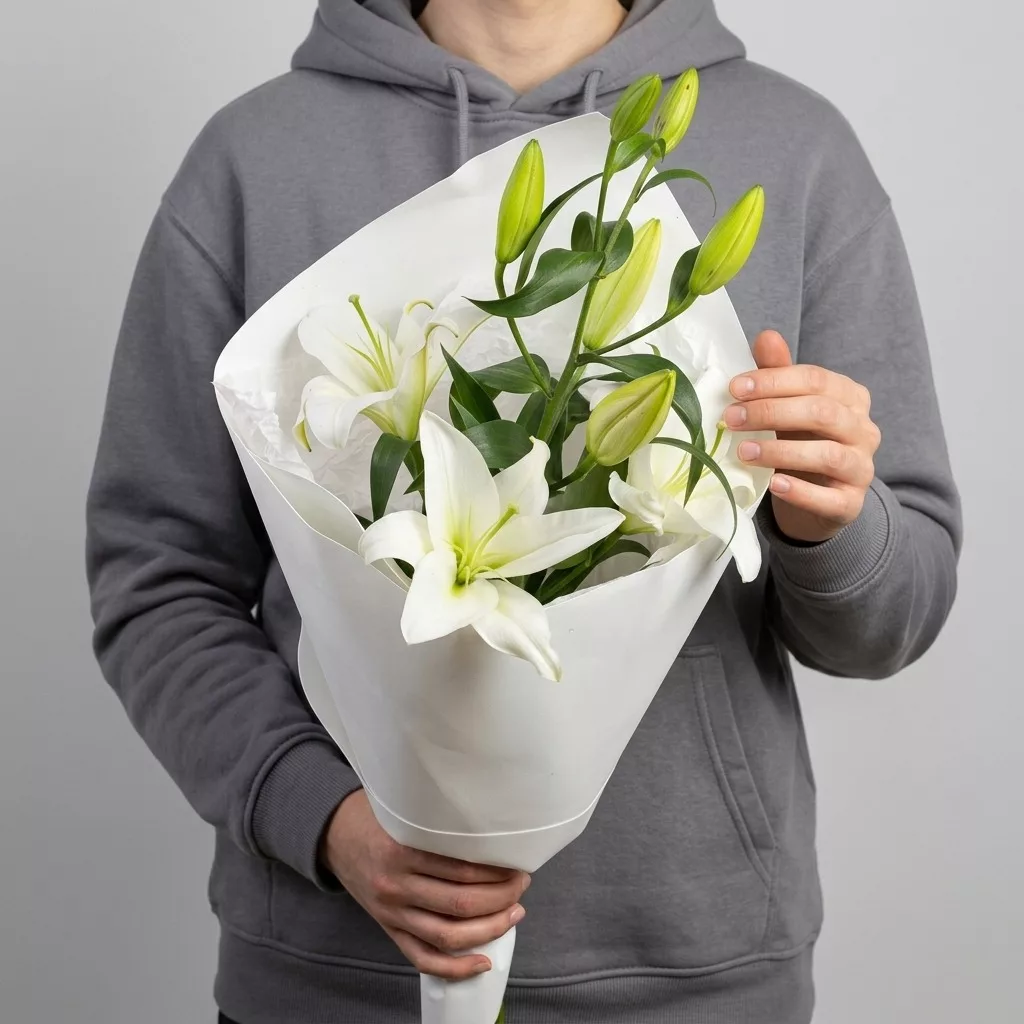
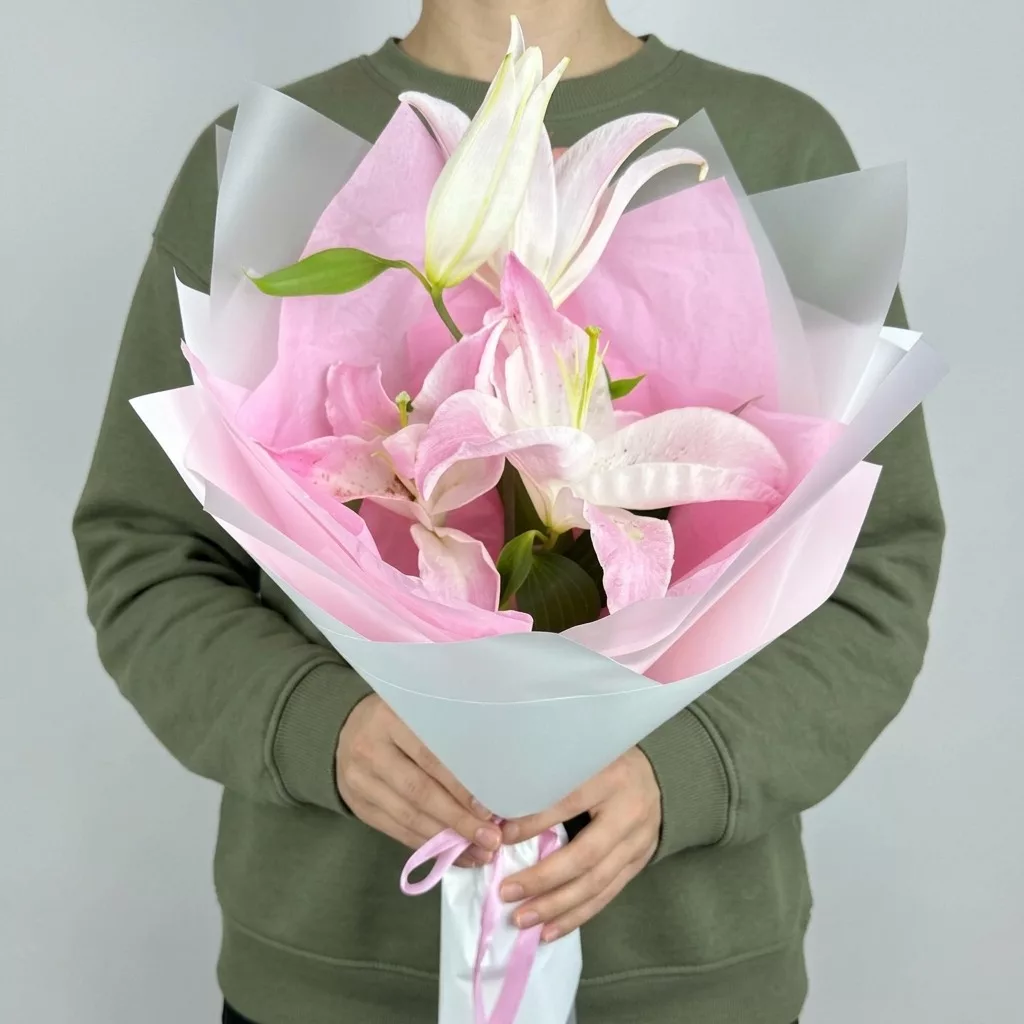

Reading the Recipient Before You Choose the Flowers
The best bouquet for Magnitogorsk is the same as the best bouquet anywhere: one chosen for the person receiving it, not for the sender's convenience. Start with a simple question — what does this person's home or desk look like? Someone who keeps succulents on the windowsill and prefers clean lines will love a tight, architectural arrangement of white spray roses and dark eucalyptus stems. Someone who fills their kitchen with colour and warmth will respond to a loose, garden-style mix of ranunculus, lisianthus and seasonal greens. Age matters less than personality, but it is worth noting that in Russian culture a single variety presented in abundance — thirty red roses, a full arm of white chrysanthemums — carries a strong, clear message and is always read as generous and intentional. Mixed bouquets read as thoughtful and personal. Neither is wrong; they simply say different things. For a first delivery to someone you do not know well, a medium-sized arrangement of roses in a soft colour — blush, cream or coral — is the safest choice because it suits almost any interior and any relationship. For a close friend or partner, go further: add garden roses, sweet peas when they are in season, or a stem or two of fritillaria for something genuinely unexpected. The presentation layer matters as much as the flowers. A kraft paper wrap with a satin ribbon reads as relaxed and modern. A classic round bouquet in cellophane with a bow reads as celebratory and traditional. Both are available; choose the one that fits the moment.
Seasonal Flowers and What Grows Well in the Ural Climate
Magnitogorsk winters are serious — temperatures drop well below minus twenty Celsius and the air is dry. That matters for flower delivery because cold damages petals faster than almost anything else. Turboflora uses insulated packaging for cold-weather orders, but you should still know which varieties travel best. Roses, alstroemeria and chrysanthemums are the most cold-tolerant cut flowers and hold their shape even when moved quickly between a warm vehicle and a cold entrance hall. Tulips and ranunculus are more delicate and need to move from cold to warmth gradually. In deep winter, a bouquet of tulips left on a cold doorstep for ten minutes will droop; placed in a warm room, they recover within the hour. Spring in Magnitogorsk arrives later than in central Russia — late April and May bring the first tulips and hyacinths, and by June you will find peonies at their peak. Peonies are enormously popular in Russia for birthdays and graduations, and for good reason: a single large peony bloom is as generous in appearance as a dozen smaller flowers. Summer opens up garden roses, lisianthus and sunflowers. Autumn is the season for dahlias and ornamental grasses, which photograph beautifully and last well in a vase. If you are ordering for a specific date and want a particular variety, check availability in the order notes or message us directly. We will tell you honestly whether that flower is at its best right now or whether a close alternative would serve the moment better.
Choosing by Occasion: What the Moment Calls For
Different occasions in Russia carry different unwritten expectations around flowers, and knowing them saves you from a well-meaning but slightly off-note choice. Birthdays are the most common delivery occasion and the most flexible: almost any flower works, and the emphasis is on volume and colour. A birthday bouquet should look abundant — even a modest budget should be spent on one generous arrangement rather than two small ones. Teacher appreciation days, which fall on the first of October and again at the end of the school year, traditionally call for more formal, classic choices: white and yellow chrysanthemums, neat gerberas or a structured rose bouquet. These are given publicly, often in a classroom, so understated elegance works better than anything wild or avant-garde. Anniversaries call for something more personal. If you know the recipient's favourite flower, lead with it. If you do not, roses in a deep, saturated colour — burgundy, deep coral, rich pink — signal romance and seriousness more clearly than pastels. New baby congratulations in Russia are typically sent to the mother rather than placed in the hospital room, so a soft, feminine arrangement of white and blush flowers delivered to the home a day or two after the birth is both practical and well-timed. For professional milestones — a promotion, a business opening, a successful project — a large, structured bouquet in the company's colours or in neutral whites and greens reads as respectful and polished without being overly personal.
Bouquet Sizes and Budget: Making Every Rouble Count
The size of a bouquet in Russia is read as a direct signal of how much the occasion matters to you. This is not mercenary — it is cultural shorthand, and understanding it helps you spend your budget where it has the most impact. A small bouquet of five to seven stems is a warm, personal gesture for a close friend or a quiet thank-you. It works best when the flowers are premium: a few garden roses with garden greens, or a tight cluster of sweet peas in season. A medium bouquet of fifteen to twenty-five stems is the standard for birthdays and most celebratory occasions. This is the range where combinations shine: roses with lisianthus, tulips with muscari, dahlias with eucalyptus. The variety creates visual depth that a single-stem bouquet cannot. Large arrangements of thirty stems or more are reserved for significant moments — milestone birthdays, major professional achievements, grand romantic gestures. At this scale, presentation becomes as important as the flowers themselves: a structured round bouquet, a cascading hand-tied arrangement, or a hatbox filled with blooms all read very differently even with the same flowers inside. If your budget is limited, the smartest move is to choose one statement flower and support it with inexpensive but beautiful greenery: eucalyptus, ruscus, or seasonal branches. A dozen spray roses wrapped tightly with eucalyptus looks more intentional and generous than a loose mix of many varieties at the same price. Spend on quality stems rather than quantity, and the bouquet will still make the impression you want.
What Happens After Delivery: Keeping Flowers Fresh Longer
A bouquet delivered in Magnitogorsk in January has already survived a cold journey. Giving it the right start indoors makes the difference between flowers that last three days and flowers that last ten. The first step is always a fresh diagonal cut — about two centimetres off each stem — made under running water or in a bowl. This removes any air bubble that formed during transport and lets the stem drink immediately. Use a clean vase, not one rinsed quickly from last time; bacteria in the residue are the most common reason flowers fade early. Fill it with cool, not cold, water and add the flower food sachet that comes with the bouquet. That sachet contains a mild acidifier and a sugar source; it is not decorative and it genuinely extends vase life by two to three days. Place the vase away from radiators, which are running hard in a Magnitogorsk winter, and away from direct sunlight. Roses and chrysanthemums prefer cool rooms; they last noticeably longer in a hallway or a north-facing room than on a warm kitchen counter. Change the water every two days and re-cut the stems each time. Remove any leaf that sits below the waterline before it rots. Tulips are the exception to most rules: they continue to grow after cutting, sometimes by several centimetres, and they move toward light, so rotate the vase daily if you want them to stay upright. Peonies bought in tight bud will open fully over two to three days in a warm room — place them somewhere slightly warmer than the rest of the house if you want them open for a specific moment.
Ordering From Outside Magnitogorsk: What to Know
A significant share of flower deliveries in Magnitogorsk are placed by people who are not in the city themselves — family members in Moscow or Saint Petersburg sending a birthday bouquet, colleagues arranging a congratulations delivery for a remote team member, or partners marking an anniversary from a distance. Ordering remotely is straightforward, but a few details make it go more smoothly. The most important is the recipient's full address including the entrance number and flat number. Magnitogorsk has many large residential blocks where the entrance matters as much as the street — a courier who arrives at the wrong entrance of a twelve-entrance building loses time and the recipient misses the surprise. If you are not certain of the entrance, include a phone number for the recipient and note in the order that the courier may call. Most recipients are happy to be called; only a genuine surprise delivery requires the courier to navigate without contact. Include a card message in Russian if you can, or write it in English and we will transliterate it for you. A handwritten card in the envelope is a detail that recipients in Russia notice and remember — it signals that the order came from a real person, not a automated reminder. Time zones matter when ordering from western Russia: Magnitogorsk runs two hours ahead of Moscow. An order placed at nine in the morning Moscow time arrives in Magnitogorsk mid-morning, which is ideal. An order placed at eight in the evening Moscow time falls outside delivery hours, so schedule it for the following morning or use the advance-order option to set the delivery for the next day.
Magnitogorsk is not a city where fresh flowers are hard to find or slow to arrive. With the right order placed at the right time, a bouquet of roses, peonies or ranunculus can be at someone's door within an hour, looking exactly as it did when it left our hands. The details that matter most are simple: know the recipient's address precisely, choose varieties suited to the season and the temperature, give the flowers a fresh cut and clean water on arrival, and pick a presentation that fits the occasion rather than defaulting to whatever is easiest. Do those things and the flowers will do the rest.
Frequently asked questions
Can I order flowers for delivery in Magnitogorsk if I am in Moscow?
Yes, and it is one of the most common ways people use Turboflora. Place the order on the website, enter the Magnitogorsk address carefully with the entrance and flat number, and note that Magnitogorsk is two hours ahead of Moscow time. The bouquet is assembled and delivered locally within the one-to-two-hour window after your order is confirmed.
What flowers hold up best in Magnitogorsk's cold winters?
Roses, chrysanthemums and alstroemeria are the most cold-tolerant and travel well even in deep winter. Tulips and ranunculus are more sensitive to temperature swings but recover quickly once they are in a warm room with fresh water. All winter deliveries use insulated packaging to protect petals during the journey from vehicle to door.
How far in advance should I order for a specific delivery time?
For most addresses, two to three hours of lead time is comfortable. For Friday evenings before public holidays or the first of September — a major flower-giving date in Russia — ordering the day before is strongly recommended. If you need delivery at an exact moment, such as the start of a celebration, note the required time in the order comments.
Is it appropriate to send flowers to a colleague in Magnitogorsk for a professional occasion?
Absolutely. Flowers for professional milestones are common and well-received in Russian workplace culture. Choose a structured, neutral arrangement — whites, creams or greens — rather than something intensely romantic in colour. A large, neat bouquet of white roses or a mixed arrangement with lisianthus reads as respectful, generous and appropriate for a business context.
How long will the flowers last after delivery?
With proper care — a fresh diagonal cut, clean cool water, flower food and a spot away from radiators — roses and chrysanthemums typically last seven to ten days. Tulips last five to seven days. Peonies, if delivered in tight bud, open over two to three days and then hold for another four to five. Changing the water every two days and re-cutting stems each time makes a visible difference.
Ready to send flowers?
Pick the city, choose the bouquet, and a local florist takes it from there.
Choose a city →