Flower Delivery in Mezhdurechensk: Timing, Areas and What Arrives Fresh
Mezhdurechensk sits deep in the Kemerovo region, surrounded by the Kuznetsk Alatau mountains, and the people who live here celebrate love, birthdays and milestones just as warmly as anywhere in Russia. When you want flowers to reach someone in this city — a colleague at the mining office, a mother in a quiet residential block, a partner you cannot be with today — what you need most is honesty about timing, freshness and what the bouquet will actually look like when it arrives. This article gives you exactly that.
Which Parts of Mezhdurechensk We Reach and How Quickly
Mezhdurechensk is a compact city, but it has distinct districts that each require slightly different routing. The central area around Stroiteley Avenue and the Lenin Square neighbourhood is the easiest to reach, and orders there typically arrive within one to two hours of confirmation. The residential districts further toward the Tom River bank and the areas near the Raspadskaya mine infrastructure take a little longer, especially during morning and evening shift-change traffic when roads through the city centre slow down noticeably.
When you place an order, you will be asked for a specific street address including the building and flat number. In Russian apartment buildings, the entrance number — called a podyezd — matters a great deal, because a large block can have six or eight separate staircases. Providing this detail upfront saves the courier from calling the recipient to ask, which can ruin a surprise. If you are sending to a workplace, include the floor and any reception instructions.
We deliver seven days a week, including public holidays, because flowers are most needed precisely on those days. Same-day delivery is available for orders placed before the daily cutoff, and next-morning delivery is an option for late-evening orders when you want the bouquet to arrive with breakfast. The courier carries the bouquet upright in a temperature-controlled bag, which matters enormously in Mezhdurechensk winters when outdoor temperatures regularly fall below minus twenty Celsius.
Bouquets we can deliver

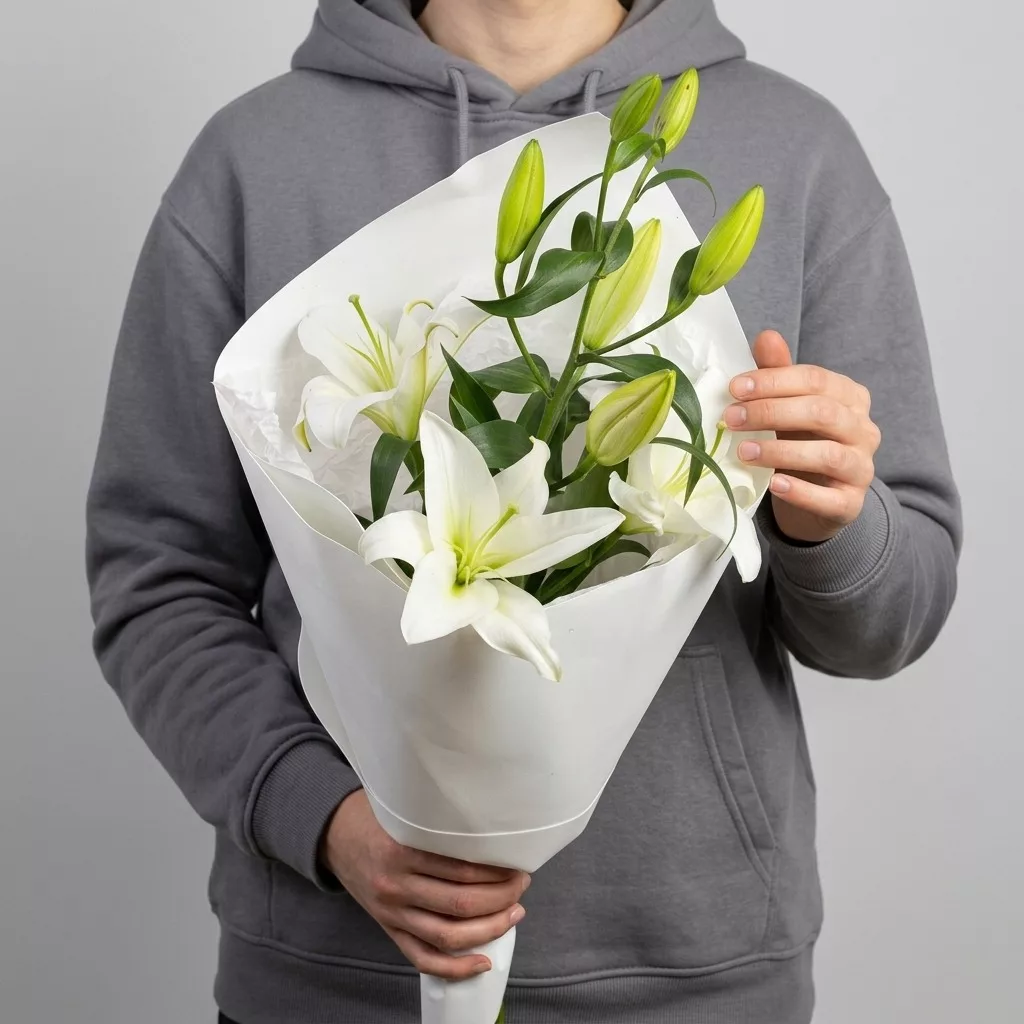
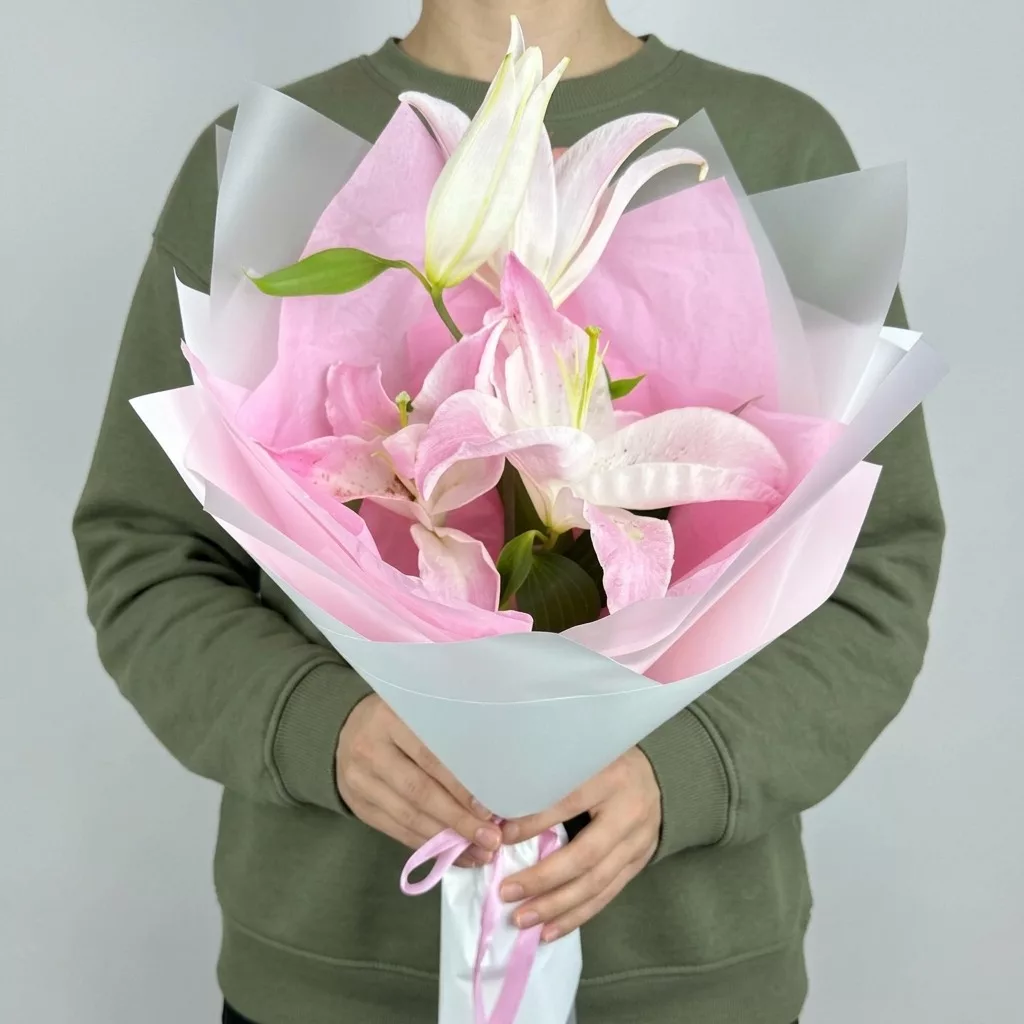
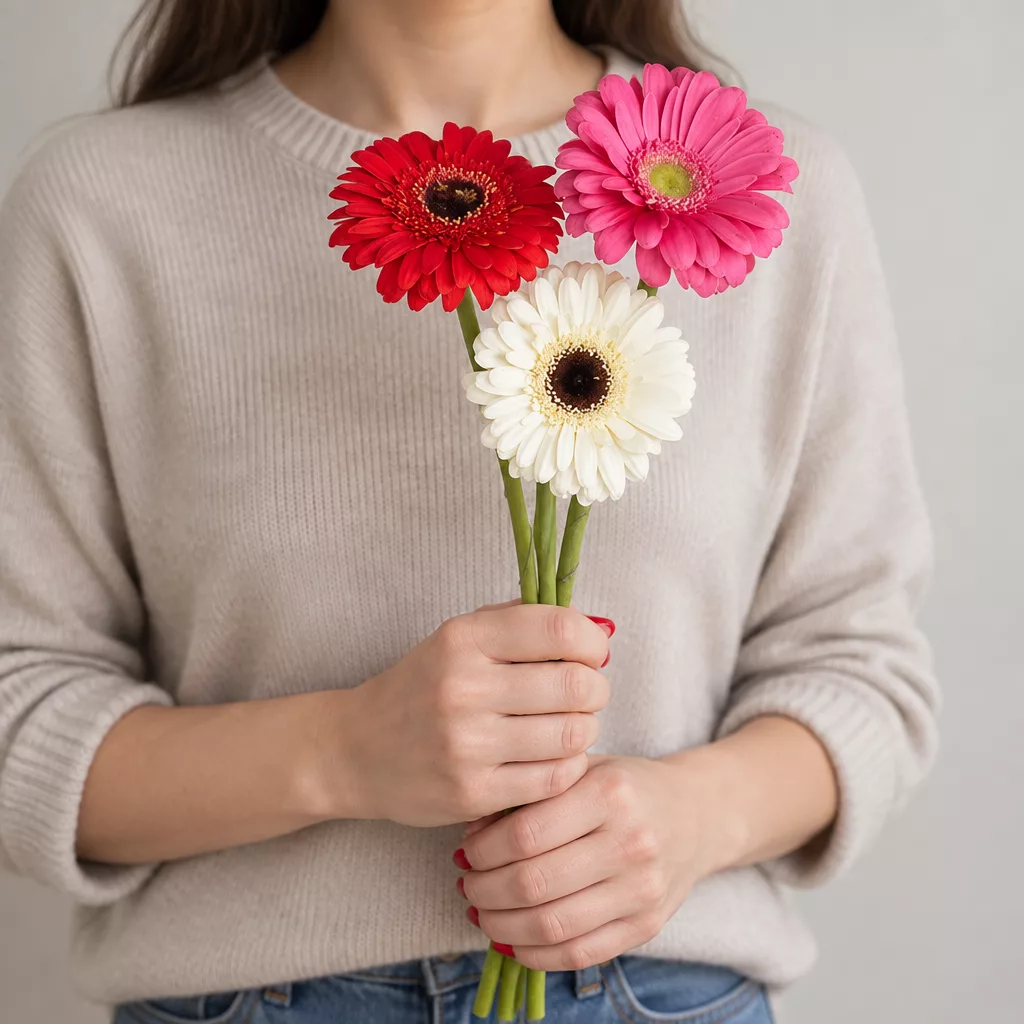
What the Siberian Climate Does to Flowers — and How We Handle It
Mezhdurechensk has one of the more demanding climates in western Siberia. Winters are long, genuinely cold and dry, while summers can be surprisingly warm with bright, intense light. Both extremes affect cut flowers in ways that many people do not think about until they see a bouquet arrive wilted or with petal edges burned by frost.
In winter, the biggest risk is cold shock. Roses, tulips and gerberas are particularly vulnerable: even a few minutes of exposure to minus fifteen or colder can cause the petals to turn translucent and collapse within hours of being brought indoors. We wrap every winter bouquet in several layers of insulating kraft paper and place it inside a sealed thermal sleeve before the courier steps outside. The sleeve is only removed once the flowers are safely indoors and have had ten to fifteen minutes to adjust to room temperature gradually.
In summer, the challenge reverses. Direct Siberian sun through a car window can raise the temperature inside a vehicle to over forty Celsius within minutes, which accelerates water loss and causes carnations and alstroemeria to open too fast. Our couriers use insulated bags with ice packs during the warmest months, and we time dispatch to avoid leaving flowers sitting in a parked vehicle during the midday heat.
Spring and autumn are the most reliable seasons for delivery because temperature swings are moderate. If you are planning a surprise for late January or early February — common for pre-Valentine orders — please allow a slightly wider delivery window so the courier can take the proper care with wrapping without rushing.
Choosing the Right Flowers for the Person and the Moment
The best bouquet is not the most expensive one — it is the one that matches the person receiving it. Start with what you know about them: do they prefer something bold and dramatic, or soft and understated? Do they have a home full of plants, which suggests they will enjoy something unusual, or do they keep things simple, which means classic roses or chrysanthemums will feel exactly right?
For a birthday, consider a bouquet built around spray roses combined with eucalyptus and a few stems of waxflower. The spray roses give the loose, garden-gathered feeling that photographs beautifully, and the eucalyptus adds a clean scent without overpowering a small apartment. For a romantic occasion, single-variety bouquets of garden roses or peonies in season carry more emotion than a mixed arrangement — the repetition of one flower says something deliberate and considered.
For a colleague or a teacher — a common Russian tradition is to bring flowers to educators on Knowledge Day in September and on Teacher's Day in October — a neat, wrapped bouquet of alstroemeria or freesia is appropriate because it is neither too intimate nor too casual. Freesia in particular has a light, sweet fragrance that works well in an office environment without being overwhelming.
If the recipient is a man, which is less common but entirely natural in Russian culture for milestone birthdays or professional achievements, think about tropical stems like bird of paradise or anthuriums, or a bold arrangement of sunflowers. These feel confident rather than fussy, which tends to suit the occasion well.
Budget Ranges and What Each Level Gets You
Flowers span a wide range of prices, and understanding what changes at each level helps you make a decision you feel good about rather than one you second-guess afterward. At the entry level, you are typically working with three to five stems of a single variety — tulips, carnations or standard chrysanthemums — wrapped simply with a ribbon and a card. This is a perfectly sincere gift, especially when the thought behind it is clear, and a single red tulip handed to someone at the door carries more feeling than a large impersonal arrangement.
In the mid range, bouquets begin to include complementary foliage, mixed varieties and more complex wrapping. A combination of garden roses with pittosporum foliage and a few stems of limonium creates something that looks considered and abundant without requiring a large spend. This is the most popular range for birthdays and anniversaries because it photographs well and fills a standard vase attractively.
At the upper end, you are choosing premium varieties — Dutch garden roses with high petal counts, peonies flown in from the Netherlands during their season, orchid stems or large-headed hydrangeas — and the bouquet is assembled with professional design logic rather than just volume. The stems are longer, the palette is more controlled and the wrapping is tailored to the flowers rather than generic.
One common mistake is choosing a very large bouquet when the recipient lives alone in a small flat. A compact, dense arrangement of five or seven premium stems will last longer, require only one vase and feel more intentional than a sprawling bouquet that is hard to display properly in a studio apartment.
How to Order and What Happens After You Confirm
Ordering through Turboflora is designed to take less than three minutes. You choose the bouquet, enter the delivery address with the building, flat and entrance number, select a delivery window and add a message for the card. The card message is printed and tucked inside the wrapping — it is not shown on the outside, so the recipient discovers it when they unwrap the flowers.
After confirmation, you receive a notification when the courier picks up the order and again when delivery is complete. If the recipient is not home, the courier will call them — this is standard practice in Russia, where it is considered polite to confirm before arriving rather than leaving flowers at a door unattended. If you are organising a surprise and do not want the courier to call ahead, you can note this in the order comments and we will coordinate timing more carefully.
For corporate orders — a common need in Mezhdurechensk given the large number of businesses serving the mining and energy sectors — you can request delivery to a reception desk with a note for a named employee. We recommend placing corporate orders at least three hours in advance to allow for any workplace access requirements.
If you need to change the delivery address after placing the order, contact us as soon as possible. Changes are usually possible if the courier has not yet departed, but once the bouquet is in transit, rerouting is difficult and may affect freshness. Getting the address right at the point of ordering is always the easier path.
Keeping the Bouquet Fresh Once It Arrives
A well-assembled bouquet delivered in good condition can last seven to twelve days with the right care, and the steps that make the biggest difference are simpler than most people expect. The most important thing is the first cut. Before placing the stems in water, cut one to two centimetres from the bottom of each stem at a forty-five degree angle using a sharp knife rather than scissors. Scissors crush the stem tissue and reduce water uptake. Do this under running water or while the stem is submerged to prevent an air bubble from blocking the cut end immediately.
Fill the vase with cool, clean water — not cold, not warm. Lukewarm water encourages premature opening, while very cold water slows uptake. Remove any leaves that would sit below the waterline, because submerged foliage rots quickly and introduces bacteria that shorten the life of every stem in the vase. Change the water completely every two days and recut the stems each time you do.
In Mezhdurechensk's heated winter apartments, where radiators run continuously and indoor air becomes very dry, misting the petals lightly with a spray bottle once a day helps roses and carnations stay open longer. Keep the vase away from direct heat sources and away from fruit bowls — ripening fruit releases ethylene gas, which accelerates petal drop in roses and tulips noticeably.
Tulips are a special case: they continue to grow after cutting and will lean toward the nearest light source. Rotating the vase a quarter turn each day keeps them upright. They also last longer in a cooler room, so a hallway or bedroom is better than a sunny kitchen windowsill.
Russian Flower Customs Worth Knowing Before You Order
If you are sending flowers to someone in Mezhdurechensk from outside Russia, a few local customs are worth understanding so that your gift lands exactly as intended. The most widely known rule is the odd-number convention: bouquets given as gifts should contain an odd number of stems — three, five, seven, nine and so on. Even numbers are associated with funeral arrangements, so a bouquet of twelve roses, however beautiful, would strike most Russian recipients as an uncomfortable choice. Our bouquets are assembled with this in mind by default.
Colour carries meaning in Russian floral culture, though perhaps less rigidly than the convention suggests in popular descriptions. Red roses are romantic and are understood as such universally. Yellow flowers — particularly yellow roses — have a historical association with separation or jealousy in older Russian tradition, though among younger people this association has faded considerably. If you are unsure, mixing yellow with white or peach tones in a combined bouquet neutralises any ambiguity while still creating a warm, sunny arrangement.
White flowers are appropriate for nearly every occasion and are considered elegant rather than sombre in a gift context. White peonies, white freesia and white tulips are all popular choices for birthdays and celebrations.
Giving flowers to men is entirely acceptable and is practised on significant birthdays — forty, fifty, sixty — and on professional milestones. The bouquet for a man tends to be simpler in structure: fewer varieties, stronger stems and less decorative foliage. A clean arrangement of sunflowers or a single-variety bunch of large-headed chrysanthemums works well and avoids any awkwardness about the gift feeling too feminine.
Mezhdurechensk may not be the first city that comes to mind when you think of flower delivery, but the people there deserve the same quality, care and reliability as anywhere else in Russia. Whether you are sending from across the country or ordering from the next street, the principles are the same: choose for the person, get the address right, protect the flowers from the cold and give them a clean vase and fresh water when they arrive. We handle everything between the assembly table and the door — what happens after that is the good part.
Frequently asked questions
Can you deliver flowers to Mezhdurechensk on the same day I order?
Yes, same-day delivery is available for orders placed before the daily cutoff time. Once your order is confirmed, the bouquet is assembled and dispatched within the hour. For late-evening orders, next-morning delivery ensures the flowers arrive fresh rather than sitting overnight.
How do you protect flowers from the cold during Mezhdurechensk winters?
Every winter bouquet is wrapped in insulating kraft paper and placed inside a sealed thermal sleeve before the courier goes outside. When the flowers arrive, they should be brought indoors and left in their wrapping for ten to fifteen minutes to adjust to room temperature gradually before unwrapping.
Do I need to include the entrance number when ordering to an apartment building?
Yes, and it makes a real difference. Large apartment blocks in Mezhdurechensk can have six or more separate staircases. Providing the entrance number, floor and flat number means the courier can deliver directly without calling the recipient, which is especially important when the delivery is a surprise.
Why do Russian bouquets always have an odd number of flowers?
Odd-numbered bouquets are the standard for gifts in Russian culture. Even numbers are traditionally associated with mourning arrangements. All Turboflora bouquets follow this convention automatically, so you do not need to count stems yourself — the florist handles it as a matter of course.
How long will the flowers last after delivery in Mezhdurechensk?
With proper care — a clean vase, a fresh diagonal cut on the stems, cool water changed every two days and a position away from radiators and fruit — most bouquets last seven to twelve days. Roses, carnations and alstroemeria tend toward the longer end; tulips and gerberas are shorter-lived but no less beautiful.
Ready to send flowers?
Pick the city, choose the bouquet, and a local florist takes it from there.
Choose a city →