Sending Flowers to Miass? Here Is Everything You Need to Know
Miass sits in the southern Urals, a city of lakes and mountain air where a bouquet arriving at the door can feel genuinely surprising — because fresh flower delivery here is still far from routine. Whether you are sending to a colleague in the industrial district, a relative near Lake Turgoyak, or a friend in one of the newer residential blocks, knowing what to expect from the process saves you stress and makes the gift land exactly as you imagined it.
Which Parts of Miass We Deliver To
Miass is a long, stretched city divided into several distinct zones: the older central district around Lenin Square, the Mashgorodok area where many engineering families live, lakeside addresses near Turgoyak, and the newer residential developments on the outskirts. Each of these zones has its own road logic, and delivery routes are planned accordingly so that a bouquet does not sit in a van while the driver navigates unnecessary detours.
We cover all residential and business addresses within the city limits, including private houses, apartment blocks, and office buildings. If your recipient lives in a gated community or a building with a closed entry system, it helps to include the entry code or a contact phone number in the order notes. A florist delivering alone cannot always reach a doorbell on the fourth floor without that information.
For addresses near Lake Turgoyak and the surrounding dacha settlements, delivery is available but timing may extend slightly compared to central Miass, simply because of the road distance. If you are sending to a dacha address, specifying the exact road name or landmark — not just a plot number — makes a real difference. Russian dacha addresses can be genuinely ambiguous, and a clear description prevents the kind of delay that leaves roses sitting in a warm car longer than they should.
Bouquets we can deliver

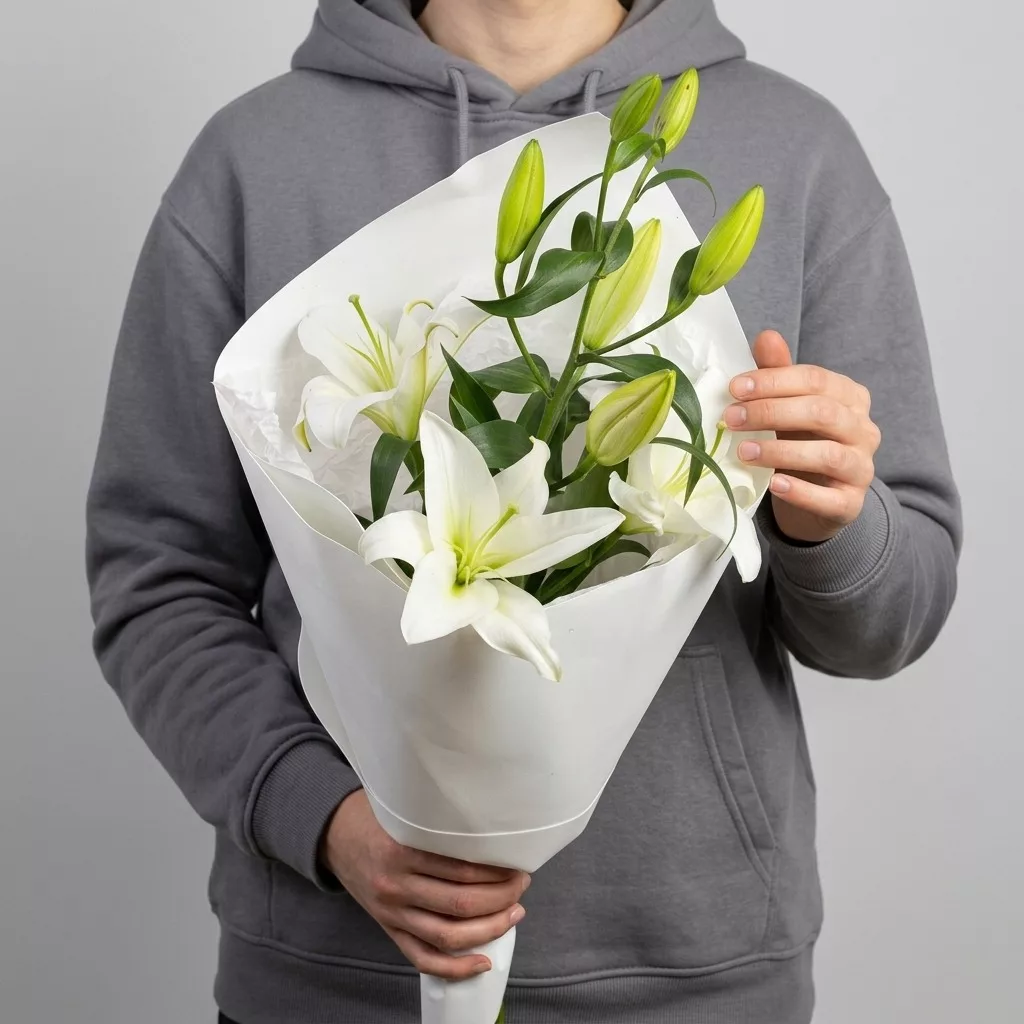
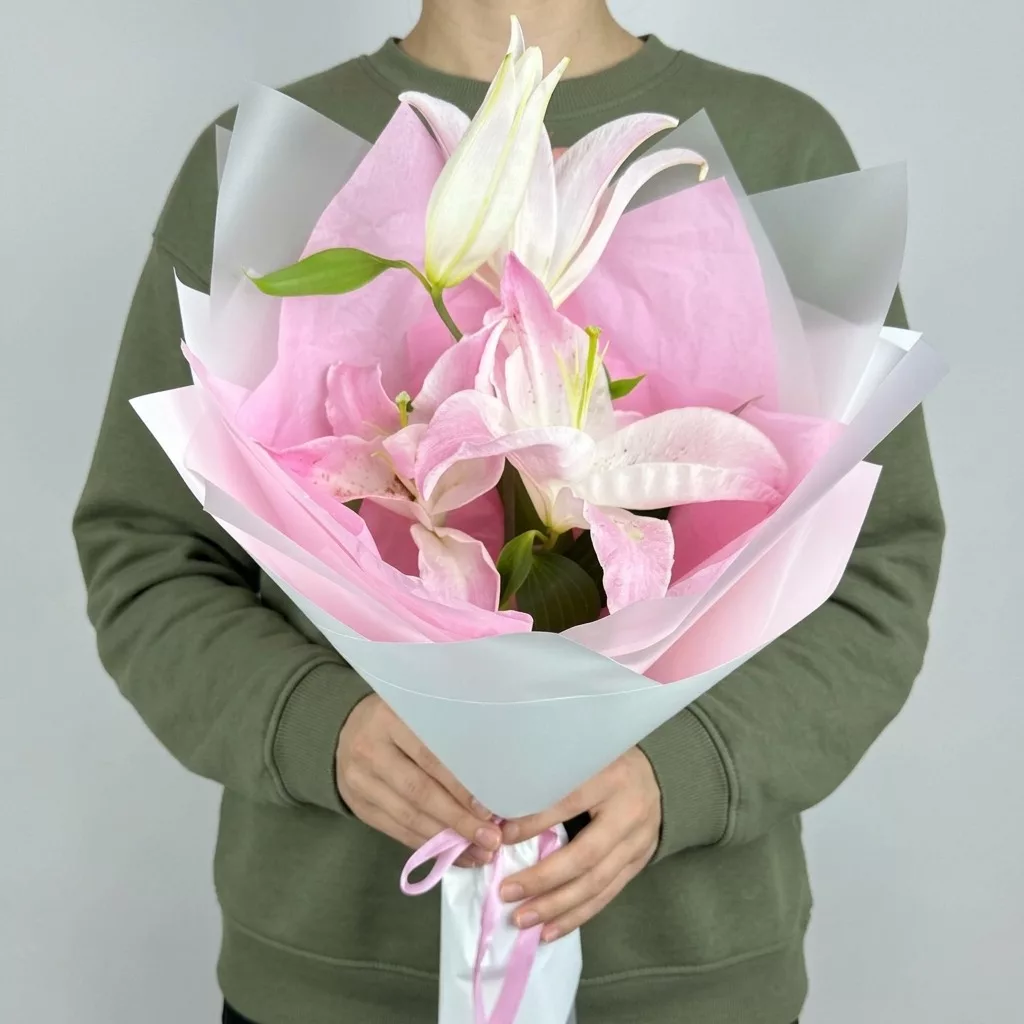
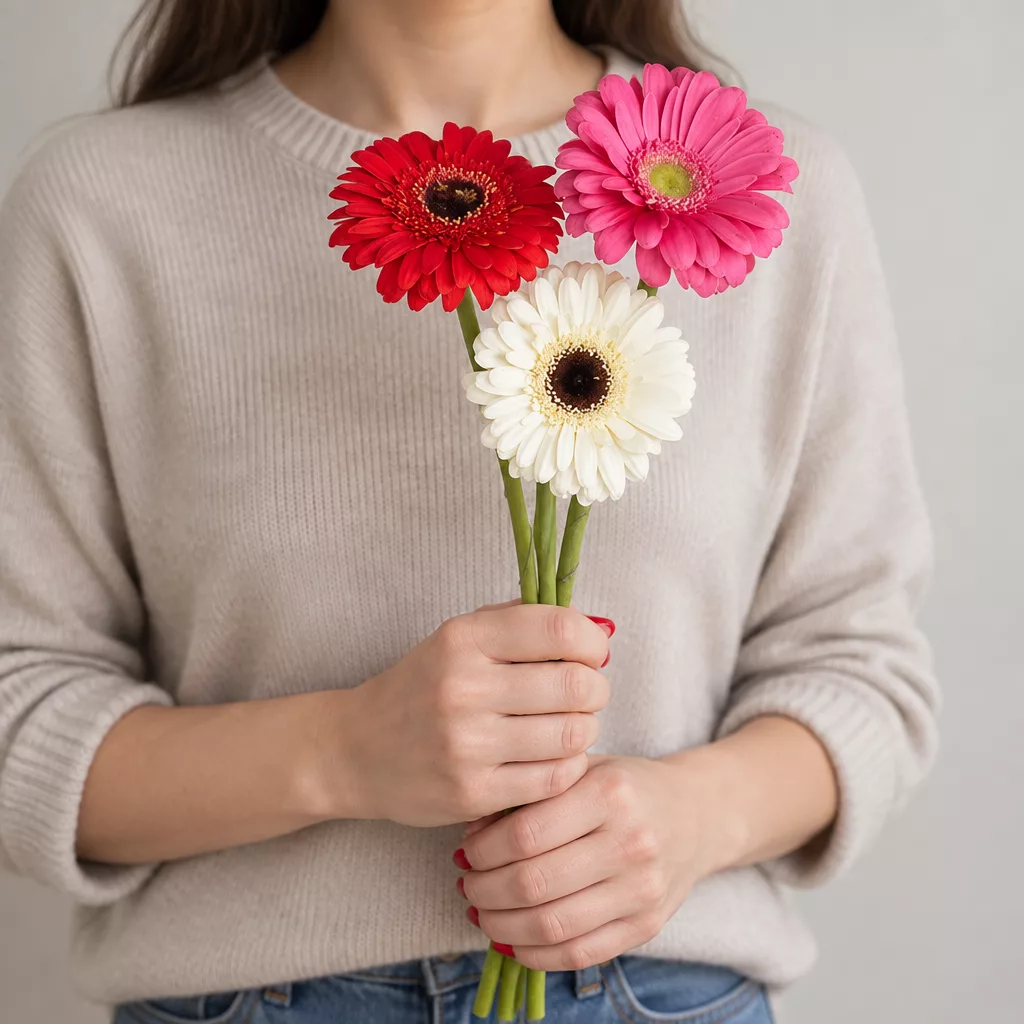
Timing: What One to Two Hours Actually Means Here
The one-to-two-hour delivery window is a real commitment, not a marketing phrase. In practice, for central Miass addresses the bouquet typically arrives closer to the one-hour mark. For peripheral addresses or orders placed during peak periods — the morning of March 8th, the evening before a major anniversary — the window stretches toward two hours, and occasionally slightly beyond if road conditions are difficult.
The Urals winter is not gentle. From November through March, Miass regularly sees temperatures below minus fifteen Celsius, and roads can become unpredictable after heavy snowfall. Flowers are transported in insulated packaging during cold months, which protects them effectively, but it does mean the driver moves more carefully. A tulip stem that freezes even briefly will collapse within hours of being placed in a vase, so that extra care in transport is not overcaution — it is the difference between a bouquet that lasts a week and one that wilts overnight.
In summer, the challenge reverses: heat above twenty-five Celsius stresses cut flowers quickly, particularly roses and peonies. Orders placed for midday delivery in July are handled with cooling materials inside the packaging. If you have a specific time window when your recipient will be home — say, between noon and two — include that in your order. We will do everything possible to match it, and it is far better than the bouquet sitting outside an apartment door in August sunshine.
Choosing Flowers for the Occasion, Not Just the Season
The most common mistake people make when ordering remotely is choosing flowers they personally like rather than flowers suited to the recipient and the moment. A dramatic arrangement of dark burgundy calla lilies is striking, but it can feel cold to a grandmother celebrating a birthday. Soft garden roses in peach and cream, perhaps combined with lisianthus and eucalyptus, read as warm and personal in a way that a monochrome statement piece does not.
For romantic occasions, garden roses remain the most universally appreciated choice in Russian culture. Red roses carry a very specific message — deep romantic love — and are understood as such by almost every recipient. If the relationship is newer or more playful, a mixed bouquet of spray roses in coral or blush, combined with chamomile-type flowers like matricaria, feels lighter and less declarative.
For professional milestones — a promotion, a work anniversary, a successful defense of a university thesis — chrysanthemums have a long tradition in Russia as flowers of respect and celebration. They are not considered funereal in everyday gifting contexts here, which sometimes surprises people from Western Europe. A full, round arrangement of white or yellow chrysanthemums with green foliage is a completely appropriate and well-received gift for a colleague.
For children and younger recipients, sunflowers, gerberas, and brightly colored ranunculus tend to land better than formal roses. The visual energy of those flowers matches the occasion without feeling overly serious.
Budget and What Each Range Gets You in Miass
Flower budgets in Russia are often misunderstood by people ordering from abroad. The expectation that a modest sum buys a modest bouquet and a generous sum buys an impressive one holds true, but the relationship between price and presentation depends heavily on what is in season locally at the moment of the order.
At the entry level, you are working with flowers that are widely available and travel well: standard roses, alstroemeria, statice, and seasonal fillers like gypsophila. These are not lesser flowers — alstroemeria in particular has excellent vase life, often lasting ten to fourteen days with proper care — but the arrangements are simpler in structure. A single-variety bouquet of alstroemeria in a bright color, wrapped cleanly, is a genuinely lovely gift.
In the mid range, the options expand to include garden roses, lisianthus, eustoma, and more considered foliage choices like ruscus or pittosporum. The florist can build combinations with more visual depth — a peony-rose bouquet in late spring, for example, or a warm autumn arrangement mixing orange roses with hypericum berries and dried cotton stems.
At the higher end, you are paying for both rarer varieties and more complex construction. Peonies when in season, David Austin-style garden roses, protea, orchid stems, and anthurium all appear at this level. These arrangements are genuinely architectural — they have shape and movement — and they make a strong impression when the recipient opens the door. If the occasion is significant, this investment is visible and felt.
What Happens When the Recipient Is Not Home
This is one of the most practical questions and one that catches people off guard. In Russia, it is not standard practice to leave a bouquet unattended outside a door — both for security reasons and because flowers left in a hallway in winter or summer deteriorate quickly. If the recipient does not answer, the driver will call the number provided in the order.
If no contact is made, the order is held and a second delivery attempt is arranged. You will be notified so you can coordinate. This is why providing a working phone number for the recipient is genuinely important, not just a formality. If you are planning a surprise and do not want the recipient called in advance, you can specify in the order notes that the driver should call you first — we will do that, and you can then guide the situation from your end.
For office deliveries, the process is usually smoother: a reception desk or a colleague can accept the bouquet. If you are sending to an office, mentioning the recipient's department or floor in the notes helps avoid confusion in larger buildings. Miass has several significant industrial and engineering facilities with large workforces, and a bouquet arriving at the main entrance of a big plant without a department name can take time to reach the right person.
For apartment buildings with a concierge or security post, similar logic applies. Note it in the order, and the driver will coordinate with whoever is at the desk.
Keeping the Bouquet Fresh After It Arrives
The florist's job ends at the door, but the life of the bouquet depends on what happens in the first thirty minutes after delivery. Most people know to put flowers in water, but the details matter more than people realize, and a few simple habits extend vase life significantly.
The first step is to cut the stems at an angle — about two centimeters from the bottom — using a sharp knife rather than scissors. Scissors crush the vascular tissue of the stem, reducing water uptake. A clean diagonal cut maximizes the surface area through which the flower drinks. Do this under running water or immediately before placing the stems in the vase, so no air bubble forms at the cut end.
Remove any leaves that would sit below the waterline. Leaves submerged in water decompose quickly and introduce bacteria that cloud the water and shorten the life of the whole arrangement. The water itself should be changed every two days. If a flower food sachet was included with the bouquet — which is standard practice — dissolve it in the first fill of water according to the instructions on the packet.
Keep the vase away from direct sunlight, heating radiators, and fruit bowls. Ripening fruit releases ethylene gas, which accelerates the aging of cut flowers noticeably. In Miass winters, central heating can make indoor air very dry, which stresses flowers quickly. A light misting of the petals — not the stems — with clean water once a day helps in particularly dry rooms. Roses and lisianthus respond especially well to this.
Little Details That Make the Delivery Feel Personal
A bouquet is a physical object, but what the recipient actually experiences is the feeling it creates when it arrives. The presentation layer — how the flowers are wrapped, what note accompanies them, whether the colors were chosen with intention — is what transforms a purchase into a memory.
Handwritten notes remain deeply valued in Russian gifting culture. Even a short message — four or five sincere sentences — carries more weight than the most elaborate arrangement delivered without any words. When you place your order, take a moment to write something specific to the person rather than a generic greeting. Mention a shared memory, name something you admire about them, or reference the occasion directly. The florist who delivers the bouquet is not reading your note; it is sealed for the recipient alone.
Color choices communicate before the recipient reads a single word. Warm tones — peach, coral, amber, soft yellow — feel celebratory and affectionate. Cool tones — white, lavender, pale blue through flowers like delphinium or agapanthus — feel elegant and considered. A mix of warm and cool tones creates visual interest and works well when you are uncertain about the recipient's preferences.
If you are sending for a birthday, asking for a bouquet that incorporates the recipient's favorite color — even if it is not a typical flower color — is always worth trying. A florist can often find a creative solution: a predominantly green arrangement using green trick dianthus and bells of Ireland, for example, or a deep purple combination built around lisianthus and veronica. These specific requests are what make a delivery feel genuinely thought through rather than simply ordered.
Sending flowers to Miass is straightforward once you understand the geography, the seasons, and the small customs that shape how a bouquet is received here. The city is fully reachable, the timing is reliable, and the range of flowers available covers everything from a simple single-stem gesture to a full occasion arrangement. What makes the difference between a good delivery and a genuinely memorable one is the intention behind the choices — the right flowers for the right person, a real note, and the knowledge that someone on the other end of that order took time to think about it.
Frequently asked questions
Can I order flower delivery to Miass the same day?
Yes, same-day delivery is the standard. Once your order is confirmed, the bouquet is assembled and dispatched immediately. For central addresses in Miass, arrival is typically within one hour. For addresses near Lake Turgoyak or on the outskirts, allow up to two hours. Ordering before midday gives you the widest choice of available flowers for that day.
What flowers are available for delivery to Miass in winter?
Roses, chrysanthemums, alstroemeria, lisianthus, and carnations are reliably available through the winter months. Peonies and some garden rose varieties are not in season locally but can be sourced. All winter deliveries use insulated packaging to protect flowers from temperatures that regularly drop below minus fifteen Celsius in the Miass area.
Is it possible to send flowers to a Miass address without telling the recipient in advance?
Absolutely — surprise deliveries are common and work well. Include your own phone number as the contact for the driver rather than the recipient's. The driver will call you if there is any issue at the door, and you can coordinate from there. Note the surprise preference clearly in the order comments so the team is aware from the start.
How long will the bouquet stay fresh after delivery in Miass?
Most bouquets last five to eight days with basic care: fresh water every two days, stems cut at an angle, and placement away from heat sources and fruit. Alstroemeria and chrysanthemums often exceed ten days. Roses and peonies are shorter-lived but can reach seven days if kept cool and the water is changed regularly.
Can I include a gift alongside the flowers, such as chocolates or a soft toy?
Yes, add-on gifts can be included with the bouquet at the time of ordering. Chocolates, small soft toys, and decorative candles are the most popular additions in Miass. These are placed with the bouquet and delivered together in one visit, so the recipient receives everything at once rather than in separate deliveries.
Ready to send flowers?
Pick the city, choose the bouquet, and a local florist takes it from there.
Choose a city →