Sending Flowers to Murom? Here Is Everything You Need to Know
Murom sits on the high western bank of the Oka River, quiet and unhurried, and the people who live there tend to receive gifts with the same calm warmth the city itself radiates. Whether you are ordering from Moscow, Saint Petersburg or from the other side of the world, getting fresh flowers to someone in Murom is entirely possible — and when it is done right, the bouquet arrives looking as though it was arranged around the corner. This guide walks you through timing, seasonal choices, presentation ideas and the small details that separate a memorable delivery from a forgettable one.
Which Parts of Murom We Reach and How Long It Takes
Murom is a compact city, and that works in your favour. The historic centre around Spaso-Preobrazhensky Monastery, the residential districts stretching toward the railway station, the newer neighbourhoods along Moskovskaya and Pervomayskaya streets — all of these fall within our delivery zone. We do not skip the quieter outskirts: areas near the industrial north and the southern residential blocks are covered equally. If you are unsure whether a specific address qualifies, the order form flags it immediately.
Delivery windows in Murom run from morning through late evening, and the standard timeframe from confirmed order to doorstep is one to two hours. That window holds on ordinary weekdays. On major gift-giving dates — February 14, March 8, and the days around New Year — we strongly recommend ordering at least four to six hours ahead, because courier routes fill up quickly and florists need time to source the freshest stems available that morning.
One thing worth knowing: Murom's road network is straightforward, which means there are few of the traffic surprises that can delay deliveries in larger cities. A bouquet ordered at noon for a 2 p.m. birthday surprise is a realistic plan on most days. The key is confirming the recipient's address precisely, including the entrance number and floor, because apartment buildings in Russian cities often have multiple entrances that are not obvious from the street.
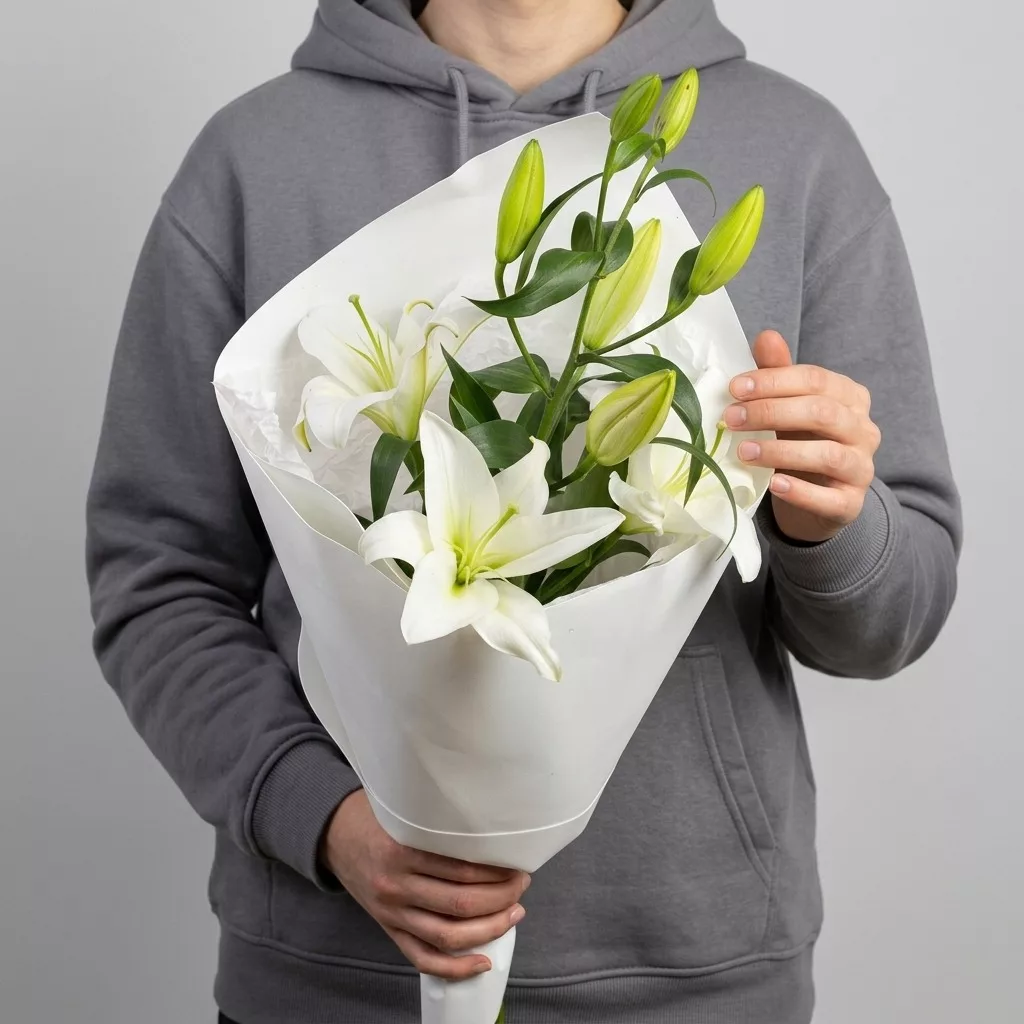
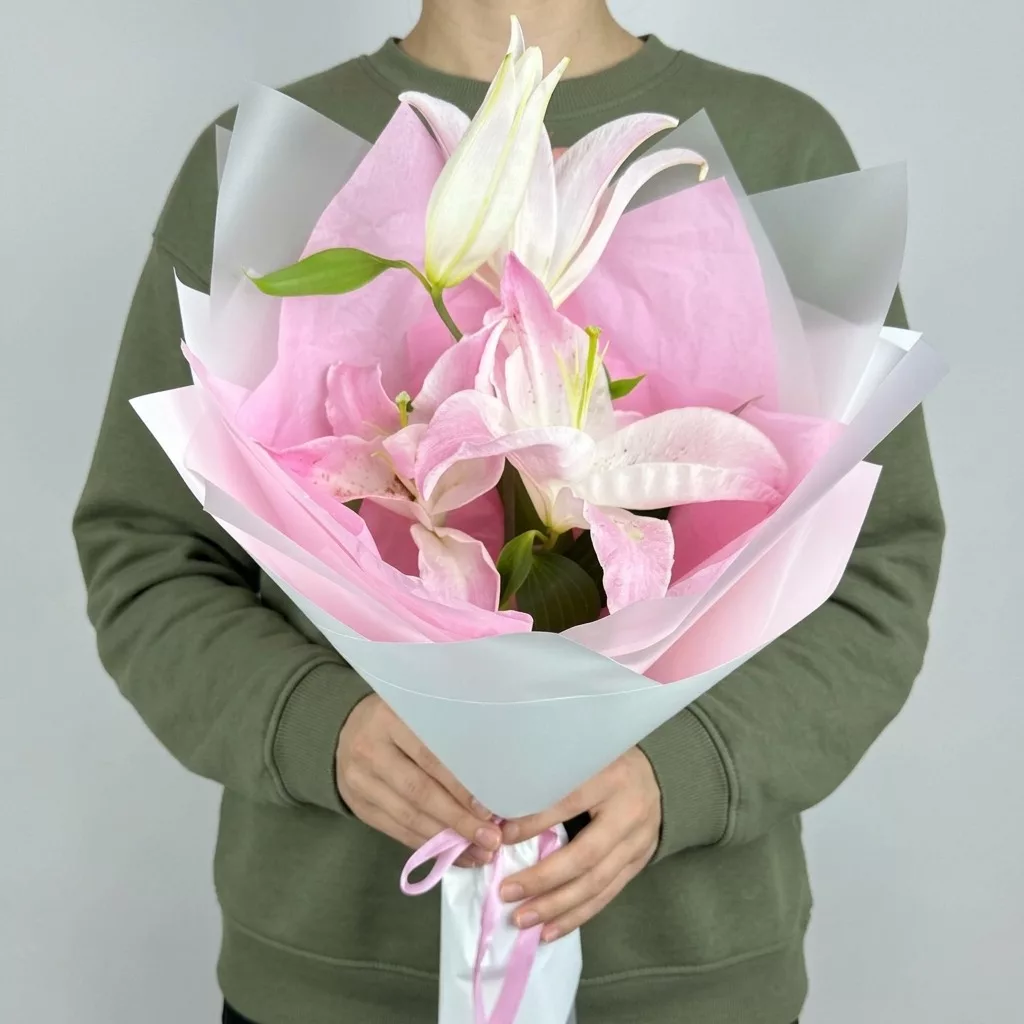
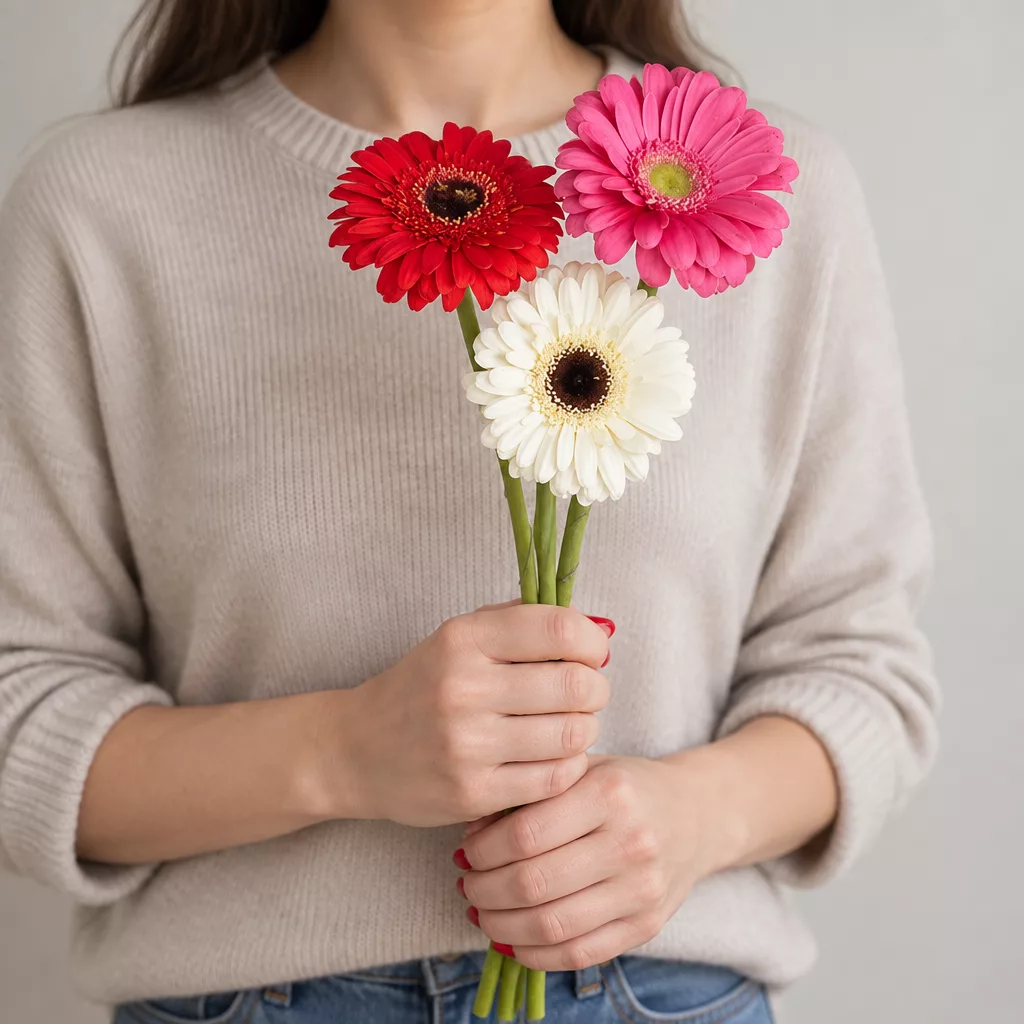
Bouquets we can deliver

Reading the Occasion Before You Choose the Flowers
The most common mistake people make when ordering remotely is choosing flowers they personally like rather than flowers that suit the recipient's moment. A colleague celebrating a promotion at work responds differently to a structured arrangement of white spray roses and eucalyptus than a grandmother does on her birthday, who might treasure a soft, rounded bouquet of garden-style dahlias and lisianthus in blush tones. Starting from the person and the feeling you want them to have is always more effective than starting from a colour.
For romantic occasions — anniversaries, declarations, simply wanting someone to feel seen — red and deep pink peonies in season, or long-stemmed garden roses in burgundy or coral, carry weight without needing explanation. Russian recipients understand the language of roses intuitively; a single variety presented in generous quantity reads as intentional and generous rather than plain.
For celebrations that are more social — a housewarming, a graduation, a friend's new job — mixed compositions with seasonal variety tend to land better. Think ranunculus paired with snapdragons and a few stems of ornamental grasses, or sunflowers combined with orange gerberas and solidago for a warm, energetic feel. These combinations say celebration without saying romance, which matters when the relationship is warm but not intimate. Taking thirty seconds to think about how the recipient will feel when the door opens shapes every choice that follows.
Seasonal Flowers That Thrive on the Journey to Murom
Murom has a continental climate with cold winters and warm summers, and that affects which flowers travel well at different times of year. In January and February, temperatures outside can drop to minus fifteen or colder. Tropical stems like anthurium and bird of paradise are vulnerable to cold shock during those brief moments between the courier's bag and the recipient's door. Hardy winter choices include chrysanthemums, alstroemeria, carnations and roses — all of which tolerate brief cold exposure without bruising or blackening at the petal edges.
Spring brings tulips, which are beloved across Russia and carry strong cultural meaning around March 8, International Women's Day. This is the single busiest flower day of the Russian calendar — more significant than Valentine's Day in terms of volume. Tulips in mixed colours or a single saturated shade like deep violet or flame orange make an immediate impression. Hyacinths add fragrance to a spring delivery, though they are best ordered for recipients who will be home to enjoy them rather than for office deliveries where scent can be overpowering.
Summer opens up the full palette: peonies in late May and June, dahlias from July onward, lisianthus, eustoma, and garden-style roses with loosely cupped blooms that look as though they were just cut from a country garden. Autumn calls for richly coloured compositions — deep orange roses, burgundy chrysanthemums, amaranthus and seasonal berries on branches. Matching the bouquet to the season is not just aesthetic; it also means the flowers are at their freshest and most resilient for the journey.
Choosing by Budget Without Losing the Feeling
Budget shapes what is possible, but it does not determine whether a bouquet feels generous or thoughtful — presentation and proportion do that. A modest budget spent on a single flower variety in an abundant quantity almost always reads better than the same money spread across too many mismatched stems. Fifteen white tulips wrapped simply in kraft paper with a satin ribbon is a complete, beautiful gift. Seven tulips surrounded by filler that adds bulk but not beauty is not.
At a mid-range budget, you gain access to combination bouquets that mix a hero flower with supporting varieties. A classic that works year-round: spray roses as the main element, complemented by waxflower or pittosporum for texture, and a single accent colour from a contrasting bloom like freesia or matthiola. This kind of composition photographs beautifully, which matters in an era when recipients often share their flowers on social media.
At a higher budget, the difference is usually in stem count, stem length and the use of premium varieties — garden roses with forty or more petals, peonies with full double blooms, or orchid sprays alongside more common flowers. It is also where custom colour palettes become possible: if the recipient's home has a particular aesthetic, or if you want the bouquet to match a party's colour scheme, a larger budget gives the florist room to curate rather than simply assemble. Whatever the amount, tell us who the flowers are for and what you want them to feel — that context is worth more than any extra stem.
Packaging and Presentation for a Russian Doorstep Delivery
In Russia, how a bouquet is wrapped carries almost as much meaning as the flowers themselves. An unwrapped bunch handed over at the door would feel unfinished to most Russian recipients. The wrapping is part of the gift. We use several approaches depending on the style of the arrangement: kraft paper with twine for a natural, artisan look; transparent cellophane with a satin ribbon for a classic celebratory feel; and fabric or linen wraps for arrangements that lean more toward a garden or vintage aesthetic.
For deliveries in cold weather, the outer packaging also serves a protective function. Stems are wrapped with insulating material inside the decorative layer, and water tubes or wet cotton padding keep the ends hydrated during transit. This is especially important for flowers with delicate petals like garden roses or peonies, which can show cold damage within minutes of unprotected exposure to sub-zero air.
If you are sending flowers as a surprise, the packaging conceals the contents completely — the recipient does not see what is inside until they unwrap it, which adds a moment of anticipation. You can include a handwritten card with a personal message, and for recipients who may not read Russian well, we can write the card in English or transliterate names so they read correctly in Cyrillic. Small details like this make the difference between a delivery that feels personal and one that feels transactional. Presentation is not decoration; it is communication.
Vase Life and Care Instructions for Murom Recipients
A beautiful bouquet that wilts in two days is a disappointment no matter how well it was chosen. Giving the recipient simple care instructions — either on the card or communicated through you — extends the life of the flowers significantly. Most people do not know that the single most important step is recutting the stems at a forty-five-degree angle before placing them in water. This reopens the vascular tissue that closes during transit and allows the flower to drink properly.
Water temperature matters more than most people expect. Lukewarm water encourages roses, chrysanthemums and alstroemeria to open and hydrate quickly. Cold water is better for tulips, which tend to grow toward light and open fast — cool water slows that process and keeps the arrangement tighter for longer. Change the water every two days and remove any leaves that fall below the waterline, as submerged foliage rots quickly and introduces bacteria that shorten vase life.
Placement in the room affects longevity significantly. Direct sunlight, radiators and draughts from open windows all accelerate wilting. In Murom winters, when central heating runs at full strength, the air indoors can be very dry. Placing the vase away from the radiator and misting the petals lightly once a day helps flowers like roses and gerberas stay fresh longer. Chrysanthemums are the most forgiving of all — they tolerate dry air and temperature variation better than most varieties and can last ten to fourteen days with basic care. Knowing which flowers are in the bouquet helps the recipient give each stem what it needs.
Making a Surprise Delivery Work Smoothly
Surprise deliveries are one of the most requested scenarios, and they require a little more planning than a standard order. The most important piece of information is not the recipient's address — it is their schedule. A surprise that arrives when someone is at work, at a school event or travelling lands flat, or worse, the flowers sit outside a door for hours. If you know the recipient will be home between certain hours, build the delivery window around that. If their schedule is unpredictable, a delivery to their workplace can actually be more reliable and more impactful — receiving flowers publicly, in front of colleagues, amplifies the emotional effect for many people.
For workplace deliveries in Murom, confirm the office address including the building entrance and whether there is a reception desk or security checkpoint. Many office buildings in Russian cities require visitors to check in before entering, and our couriers are prepared for this, but having the recipient's full name and the name of the organisation speeds the process significantly.
If you want the delivery to be a complete surprise with no advance warning to the recipient, avoid scheduling it for early morning, when people are often still getting ready and less prepared to receive guests at the door. Mid-morning or early afternoon tends to work better — the recipient is settled, the moment feels less rushed, and they have time to enjoy the flowers before the rest of the day takes over. A brief note from you, even just a few words, transforms a beautiful bouquet into a memory. Do not leave the card blank — it is the one part of the gift that is entirely yours.
Murom may not be the first city that comes to mind when you think about flower delivery, but it is a city where a well-chosen bouquet lands with real warmth. The people there appreciate a thoughtful gesture, and the city's manageable scale means your order reaches the right address at the right time without the complications of a larger urban environment. Choose for the person, match the season, trust the wrapping to do its work, and give the recipient a few words on the card. That combination, more than any individual flower, is what makes a delivery feel like it came from someone who genuinely cared.
Frequently asked questions
Can I order flowers for same-day delivery in Murom?
Yes, same-day delivery is available in Murom on most days. Place your order at least one to two hours before your preferred delivery window. On high-demand dates like March 8 or Valentine's Day, we recommend ordering four to six hours in advance to secure your preferred time slot and ensure the freshest flowers are reserved for your bouquet.
What flowers are best for delivery in Murom during winter?
In cold winter months, choose hardy varieties that tolerate brief temperature exposure without damage: roses, chrysanthemums, alstroemeria and carnations are all reliable. We package winter deliveries with insulating layers to protect petals during transit, but avoiding delicate tropical stems like anthurium reduces the risk of cold shock between the courier bag and the recipient's door.
Can I include a card with a message in English?
Absolutely. When placing your order, write your message in English and we will include it on the card exactly as you wrote it. If you would like the recipient's name written in Cyrillic as well, let us know and we will add a transliteration so the card feels personal and correct to a Russian reader.
How do I make sure a surprise delivery actually surprises the recipient?
Confirm the recipient will be at the delivery address during your chosen window. For home deliveries, mid-morning to early afternoon works best. For workplace deliveries, provide the full office address, building entrance details and the recipient's full name. Avoid scheduling surprise deliveries very early in the morning when people are less settled and less likely to enjoy the moment fully.
How long will the flowers last after delivery in Murom?
With basic care, most bouquets last five to eight days. Recut stems at a forty-five-degree angle before placing in water, change the water every two days and keep the vase away from radiators and direct sunlight. Chrysanthemums and alstroemeria last the longest, often ten to fourteen days. Tulips and peonies are shorter-lived but more dramatic while they are open.
Ready to send flowers?
Pick the city, choose the bouquet, and a local florist takes it from there.
Choose a city →