Sending Flowers to Navashino: Timing, Choices and What Arrives Fresh
Navashino is a quiet town on the Oka River, and when someone there is about to receive flowers from you, the distance between Saint Petersburg and Nizhny Novgorod Oblast should feel invisible to them. What matters is the moment the door opens — the scent, the colour, the sense that someone thought carefully. This article walks you through exactly how to make that moment work, from choosing the right arrangement for the occasion to understanding what travels well and what your recipient should do the minute the bouquet arrives.
Where in Navashino We Deliver and How the Route Works
Navashino sits in the south-west of Nizhny Novgorod Oblast, roughly 350 kilometres from Nizhny Novgorod city itself. The town is compact enough that a single courier run covers the central streets, the residential mikrorayons near the shipyard district, and the quieter outskirts along the Oka embankment. There is no postal-code maze to navigate — if your recipient lives or works in Navashino, we reach them.
Because Navashino is not a large metropolitan hub, deliveries are scheduled rather than instant. When you place your order, you select a delivery window and we route the bouquet accordingly. The flowers leave our Saint Petersburg facility packed in temperature-controlled conditions, and the final-mile handoff is handled with the same care as a city-centre delivery in the capital.
One practical point worth knowing: always provide a full address including the apartment or office number, and a working mobile number for the recipient. In smaller towns, couriers rely on direct contact more than they do in cities where building entrances are obvious. If the recipient is at work during the day, note that too — we can coordinate a handoff at an office entrance or ask the courier to call ahead so nothing is left unattended in cold weather.
Navashino experiences genuine Russian winters, with January temperatures regularly dropping below minus fifteen Celsius. That affects packaging choices, which we cover later, but it does not affect our ability to deliver.
Bouquets we can deliver

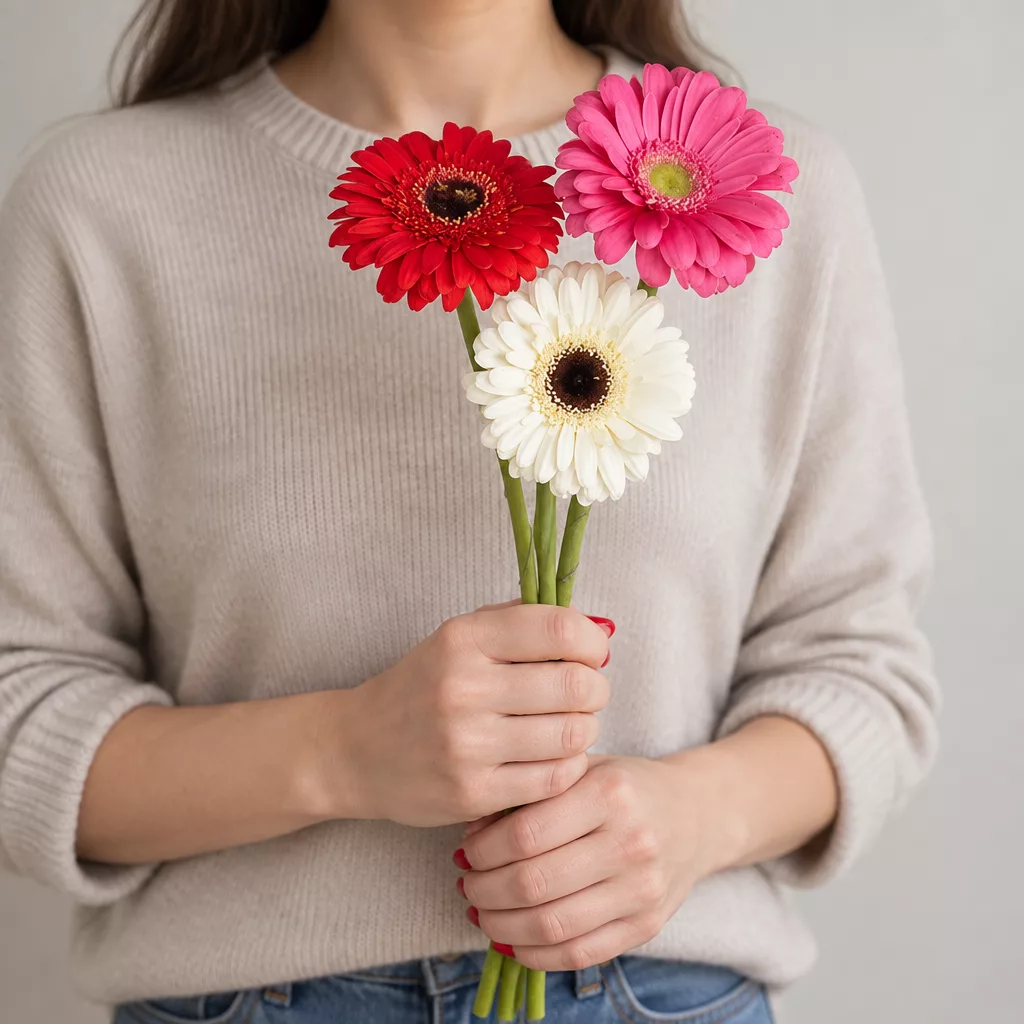
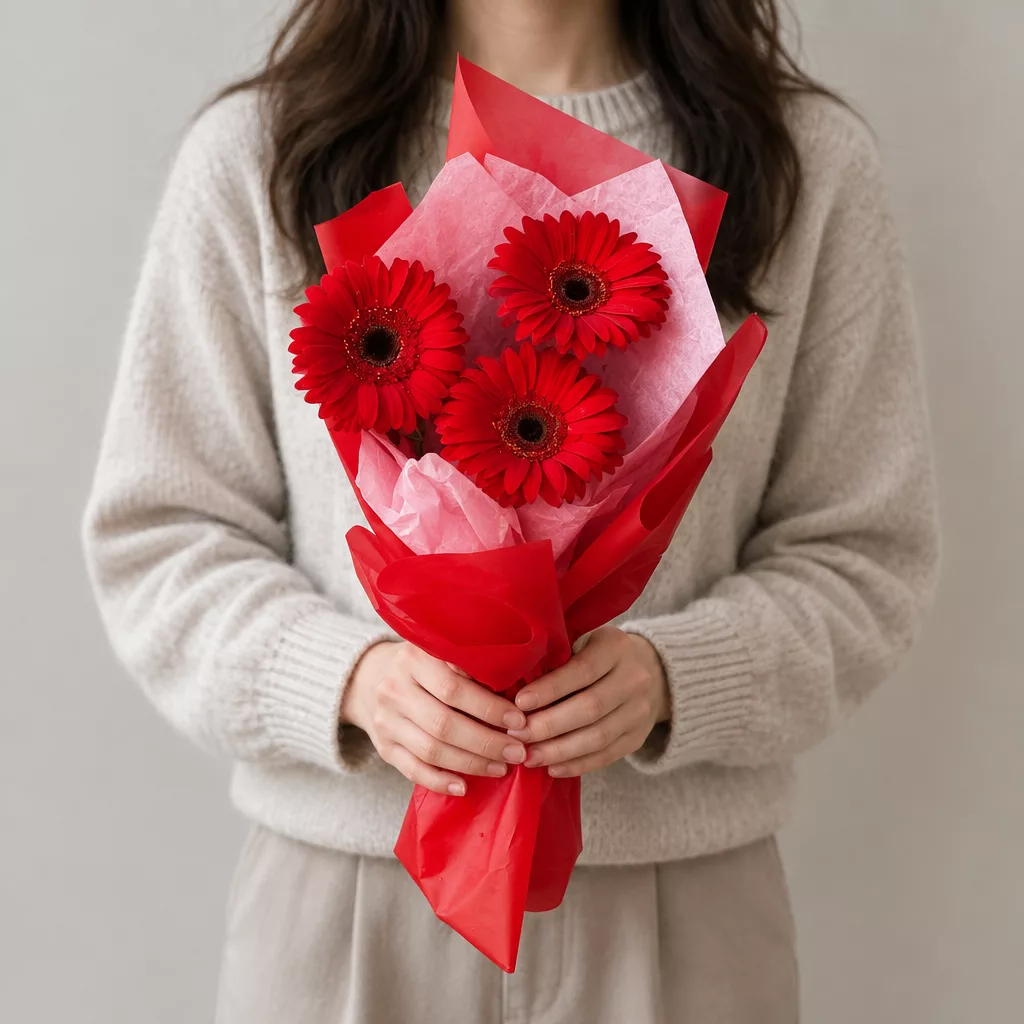
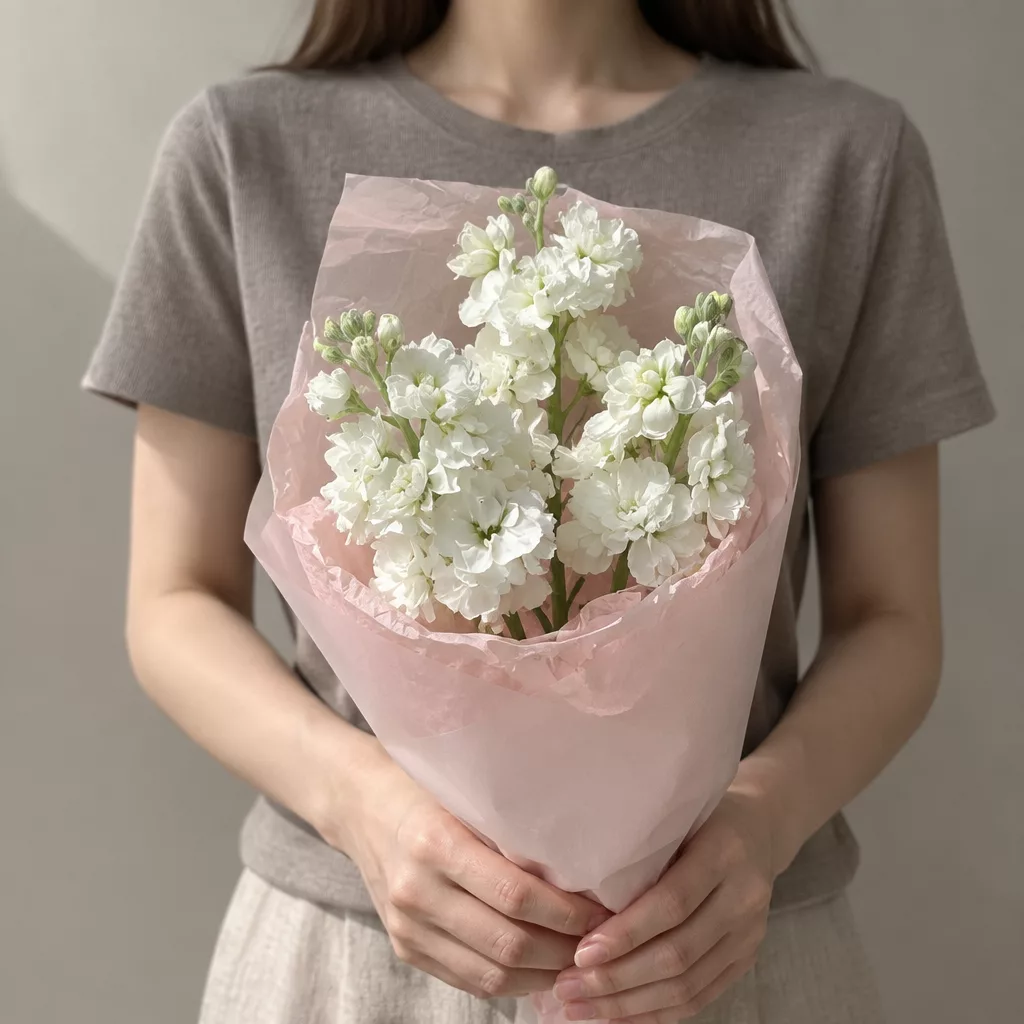
Choosing for the Occasion Before You Think About Flowers
Before you open any catalogue or think about roses versus tulips, start with the person and the moment. A bouquet for a birthday in your thirties feels different from one for a grandmother's anniversary. A gift for a colleague who just returned from maternity leave carries different emotional weight than flowers for a first date. Getting this right matters more than picking the most expensive option.
For close family — mothers, grandmothers, sisters — Russians traditionally lean toward abundance. A generous, rounded bouquet with soft colours reads as warmth and care. Peonies in season, garden roses, lisianthus and alstroemeria layered together create that full, generous feeling. If the recipient keeps a tidy home and prefers understatement, a structured arrangement of white spray roses and eucalyptus branches says the same thing more quietly.
For romantic occasions, single-variety bouquets of long-stem roses remain the clearest signal in Russian culture. Red for passion, pale pink or cream for tenderness. If you want to say something slightly more personal and less conventional, a mix of garden roses in blush and apricot tones with a few stems of waxflower feels modern without being puzzling to receive.
For professional occasions — a thank-you to a teacher, a congratulation on a promotion — mixed seasonal bouquets in yellow, white and soft orange are safe and genuinely appreciated. Avoid anything too intimate in colour or too loosely romantic in composition. Chrysanthemums, solidago and alstroemeria work well here: they are cheerful, long-lasting and read as respectful rather than personal.
What Travels Well on a Long Delivery Route
Not every flower handles a multi-hour journey equally. When you are sending to a town like Navashino rather than across Saint Petersburg, the choice of varieties genuinely affects what your recipient unwraps. This is not a reason to limit your choices dramatically, but it is worth understanding.
Roses, chrysanthemums, alstroemeria and carnations are among the most travel-resilient flowers available. Their stems are sturdy, their petals do not bruise easily, and they recover well after being in transit packaging. A bouquet built around these varieties will look composed and fresh when it arrives, even after several hours of movement.
Tulips are more delicate. They continue to grow after cutting — sometimes quite noticeably — and in warm indoor conditions they open fast. In winter this is less of an issue because the cold slows them down, but in spring and summer a tulip bouquet needs to go straight into water on arrival. If your recipient is someone who will be home to receive the flowers and put them in a vase immediately, tulips are a beautiful choice. If the bouquet might sit in an entrance hall for a few hours, choose something sturdier.
Delicate open blooms like anemones and ranunculus are seasonal and lovely but do best in cooler months when the ambient temperature during delivery is lower. In July or August, a bouquet built around garden roses and lisianthus will arrive in better condition than one relying on these more fragile varieties.
We pack all long-distance bouquets with aqua-gel sachets on the stem ends and insulating kraft paper to buffer temperature shifts. In winter, an additional thermal layer goes around the outer packaging.
Timing Your Order for Navashino
The single most common mistake people make when sending flowers to a smaller town is underestimating lead time. Navashino is not around the corner, and same-day delivery depends on when in the day you order and which delivery windows are still open. The earlier you place your order, the more flexibility you have over the time slot.
For a birthday delivery timed to arrive before the celebration — say, before a family dinner in the evening — placing your order in the morning gives us the best chance of hitting that window precisely. If you are ordering the night before for a next-day delivery, you have even more control: you can specify a two-hour window in the afternoon and we will build the schedule around it.
Russian name-day and birthday traditions often involve guests arriving in the early evening, so a delivery between three and six in the afternoon is frequently the most meaningful time to aim for. The recipient has the flowers in the house before the gathering, which is the point — flowers as part of the setting, not an afterthought.
For holidays like the eighth of March — International Women's Day, the biggest flower-giving day in Russia — order several days in advance. Demand across the country is enormous on that date, and Navashino is no exception. The same applies to Valentine's Day, though that occasion is somewhat less universally observed in smaller Russian towns than in major cities.
If you are sending flowers as a surprise, make sure the recipient will actually be reachable. A missed delivery in a small town is harder to reschedule quickly than in a city.
Budget Ranges and What Each One Gets You
Thinking in budget tiers is a practical way to approach a flower order, especially when you cannot see the finished bouquet in person before it goes out. Each tier has a logic to it, and knowing what to expect helps you choose with confidence rather than guessing.
At a modest budget, you are working with a single-variety bouquet or a small mixed arrangement. Five to seven stems of spray roses with foliage, or a neat cluster of alstroemeria — these are genuinely pretty and appropriate for a colleague, a neighbour or a light thank-you. They are not small gestures; they are correctly sized ones.
In the middle range, you gain volume and variety. A mixed bouquet of fifteen or more stems can include a focal flower — a garden rose or a peony in season — supported by complementary filler flowers and textured greens. This is the range where a bouquet starts to feel generous and considered. It suits birthdays, anniversaries and meaningful thank-yous.
At the higher end, you are working with premium varieties, greater stem count and more deliberate composition. Long-stem ecuadorian roses, peonies, ornamental branches, imported wax flower or eucalyptus, arranged with visible intention. This is the range for significant occasions: a milestone anniversary, a major professional achievement, a gesture that needs to carry real weight.
One note on Russian gifting culture: the number of flowers in a bouquet is often noticed. Even numbers are traditionally associated with mourning, so bouquets for celebrations are assembled in odd numbers — seven, nine, eleven, fifteen, twenty-one. We follow this convention automatically, but if you are assembling a custom order, it is worth keeping in mind.
What to Tell Your Recipient Before the Flowers Arrive
A small amount of preparation on the recipient's side makes a real difference to how long the bouquet lasts. You do not need to walk them through a floristry course, but a quick message with a few practical points is worth sending — especially if the person is not someone who regularly receives cut flowers.
Ask them to cut about two centimetres off the bottom of each stem at an angle as soon as the bouquet arrives, using a sharp knife or scissors rather than tearing. This reopens the stem's water channels, which can close slightly during transit. Then they should fill a clean vase with cool water and place the bouquet in it without delay.
In Navashino's cold winters, flowers arriving from outside will be chilled. Tell your recipient not to put them immediately next to a radiator or in direct sunlight. A cool room or a spot away from heating sources extends vase life significantly. Roses and chrysanthemums kept away from heat can last ten days to two weeks. Tulips and alstroemeria typically give seven to ten days with fresh water every two days.
Leaves that fall below the waterline should be removed — they rot quickly and cloud the water, which shortens the life of every stem in the vase. This is the step most people skip, and it makes the biggest difference after day three or four.
If you are sending flowers as a genuine surprise and cannot tip off the recipient, our courier will call ahead to confirm someone is home. We do not leave bouquets unattended outside in winter — cold that severe damages flowers within an hour.
Seasonal Flowers That Work Especially Well in Navashino
Navashino has a continental climate with cold winters and warm summers, and the seasons there are distinct in a way that Saint Petersburg's milder climate sometimes is not. This shapes which flowers feel right at different times of year, both practically and emotionally.
In late winter and early spring — February through April — tulips are the natural choice. They are the first real signal of warmth and they arrive from Dutch growers in abundance, keeping prices reasonable and quality high. Mixed tulip bouquets in pink, yellow, white and purple feel genuinely seasonal rather than forced. Narcissus and hyacinths are available too, though they are more fragile in transit and best for recipients who are definitely home to receive them.
From May onward, peonies begin their short season. If you have the chance to send peonies to someone in Navashino in late May or early June, take it — they are the most loved flower in Russia for this brief window, and a peony bouquet carries a particular emotional warmth that is hard to replicate with any other variety.
Summer into early autumn brings garden roses, lisianthus, sunflowers and dahlias. A sunflower bouquet in August feels exactly right for the season — generous, warm and unmistakably summer. Dahlias in deep burgundy or rust orange are beautiful in September and hold well in transit.
From October through January, the palette shifts toward rich jewel tones. Burgundy chrysanthemums, deep red roses, calla lilies and ornamental berries or branches create bouquets that feel warm against the cold outside. Amaryllis appears in December and makes a striking centrepiece flower for a winter celebration.
Sending flowers to Navashino from Saint Petersburg is straightforward when you know what to plan for. Choose varieties that travel well, give yourself enough lead time, think about the person and the moment before you think about the flowers, and pass on a few simple care tips to your recipient. The distance between cities disappears the moment the bouquet is in someone's hands — and that is exactly what it should feel like.
Frequently asked questions
Can you deliver flowers to a specific address in Navashino the same day?
Same-day delivery to Navashino is possible when orders are placed early in the day and a suitable delivery window is still available. Because Navashino is not a large city, slots fill faster than in metropolitan areas. For guaranteed same-day delivery, place your order before noon. For a specific time window, ordering the day before gives you the most control.
What happens to the flowers in very cold winter temperatures during delivery?
All bouquets sent to Navashino in winter are wrapped in insulating kraft paper and an additional thermal outer layer. Aqua-gel sachets keep stem ends hydrated throughout transit. Our couriers do not leave flowers unattended outside in freezing temperatures. If no one is home, the courier calls ahead to arrange a safe handoff time rather than risking cold damage.
Is it true that flowers in Russia should come in odd numbers?
Yes, this is a genuine and widely observed tradition. Even-numbered bouquets are associated with mourning in Russian culture and are typically brought to funerals. For any celebratory occasion — birthdays, anniversaries, congratulations — bouquets are assembled in odd numbers. We follow this automatically, but it is useful to know if you are ever putting together a custom request.
Which flowers last longest after delivery in Navashino?
Chrysanthemums, alstroemeria, carnations and spray roses are the most durable varieties after a long delivery route. Kept in a cool spot with water changed every two days, they regularly last ten to fourteen days. Tulips and lisianthus give seven to ten days. Delicate varieties like anemones and open ranunculus are shorter-lived and best sent in cooler months when temperatures help slow their opening.
Can I send flowers to Navashino as a surprise without telling the recipient?
Absolutely — surprises are one of the most common requests we handle. Provide a working mobile number for the recipient when you order. Our courier will call ahead before arriving to confirm someone is home, without revealing who the flowers are from. If the recipient is unreachable, we will contact you to arrange an alternative window rather than leaving the bouquet unattended.
Ready to send flowers?
Pick the city, choose the bouquet, and a local florist takes it from there.
Choose a city →