Sending Flowers to Nizhnevartovsk? Here Is What to Expect
Nizhnevartovsk sits deep in the Khanty-Mansiysk Autonomous Okrug, where winter temperatures can drop to minus thirty and the distance from major flower hubs is measured in flight hours, not road trips. Sending flowers here is absolutely possible, and when it is done right, the bouquet arrives looking as though it was assembled around the corner. This article walks you through timing, seasonal considerations, the best varieties to choose, and the small details that turn a delivery into a genuinely memorable moment.
Which Areas of Nizhnevartovsk Receive Deliveries
Nizhnevartovsk is a compact city by Russian standards, but its residential districts are spread across a wide grid that includes the central part around Lenin Avenue, the Energetikov and Neftyanikov neighbourhoods, and the newer residential blocks further toward the city limits. Deliveries reach all of these zones, including addresses near the Samotlor field area and the industrial outskirts where many oil workers live. If you are sending to a company office in the business district or to a hospital ward, those addresses are covered as well.
One thing worth knowing is that Nizhnevartovsk has several gated residential complexes where a courier needs a gate code or intercom number to get through. When you place an order, include that information in the delivery notes — it saves time and means the flowers do not wait in the cold while someone is tracked down by phone. A short wait in minus twenty is enough to stress even hardy varieties like chrysanthemums and alstroemerias.
If the recipient lives in a suburb or a nearby settlement outside the city boundary, confirm the exact address at the time of ordering. Some addresses on the outer edge of the city require a slightly longer delivery window, and it is better to plan for that than to rush a bouquet through difficult road conditions. The goal is always a bouquet that arrives in perfect condition, not just on time.
Bouquets we can deliver

Delivery Timing and What the 1–2 Hour Window Means in Practice
The one-to-two-hour delivery promise means that once your order is confirmed and the bouquet is assembled, a courier is on the way. In a city the size of Nizhnevartovsk, most addresses are reachable within that window under normal conditions. Rush-hour traffic on Lenin Avenue or unexpected road closures near the bridge can add a few minutes, and in heavy snowfall the same journey takes longer than it would on a clear day in June.
For time-sensitive occasions like a birthday morning surprise or flowers before a work event, placing the order at least two to three hours before the desired arrival time gives a comfortable buffer. If you are ordering same-day for an evening celebration, midday is a sensible cutoff to aim for. That window allows the florist to assemble a fresh bouquet rather than pulling one from a display that has been sitting out.
Night deliveries are a different matter. Late-evening orders depend on courier availability and should be confirmed in advance. Many people in Nizhnevartovsk work shift patterns tied to the oil industry, which means odd-hour celebrations are genuinely common. If your recipient finishes a night shift and you want flowers waiting, communicate that clearly when ordering — it is the kind of detail that makes the difference between a gift that lands and one that misses the moment entirely.
How the Siberian Climate Shapes Your Bouquet Choice
Nizhnevartovsk experiences a sharply continental climate. Winters are long and severe, with January averages around minus nineteen to minus twenty-two degrees Celsius and occasional dips well below that. Summers are short but genuinely warm, sometimes reaching thirty degrees. This range matters enormously for flower delivery, because what survives a ten-minute walk from a car to a front door in July can freeze solid in February.
In winter, roses are the variety that suffers most visibly from cold exposure. The outer petals, already the most delicate part of the bloom, turn translucent and collapse within minutes of freezing. Spray roses are slightly more resilient because their smaller blooms lose heat more slowly, but they are not immune. Alstroemerias, lisianthus, and chrysanthemums handle cold transit better than large-headed roses, which is worth knowing if the recipient lives in a building with a long outdoor path.
Couriers wrap bouquets in insulated kraft paper and use protective sleeves during cold months, but the recipient's side of the handover matters too. If you are sending to someone who might leave flowers in a cold hallway or a car while they finish an errand, choose sturdier varieties and mention it in the gift note. In summer, the concern flips: heat accelerates wilting, and a bouquet left in a warm car for thirty minutes on a July afternoon will look tired by the time it is unwrapped. Hydrangeas and garden roses are the most heat-sensitive and should be delivered straight to the door.
Choosing the Right Bouquet for the Occasion and the Person
Start from the recipient, not the flower name. A colleague celebrating a promotion responds differently to a structured arrangement of white lisianthus and eucalyptus than to a loose garden-style bunch of ranunculus and tulips — both are beautiful, but they say different things. The first reads as polished and professional; the second feels personal and warm. Knowing which register fits the relationship saves you from choosing by price alone.
For romantic occasions, deep red or burgundy roses remain the most universally understood gesture in Russian culture. If you want something less expected but equally meaningful, a combination of peonies in season, soft pink spray roses, and dusty miller has a lush, generous quality that feels genuinely celebratory. Peonies are available from late spring through early summer; outside that window, garden roses in blush or cream tones carry a similar softness.
For a mother, a grandmother, or a teacher — occasions where warmth and appreciation matter more than drama — freesias and alstroemerias mixed with greenery like ruscus or pittosporum make a bouquet that feels thoughtful rather than showy. Freesias also have a genuine fragrance, which many people in Russia associate strongly with celebration and spring, even when the ground outside is frozen.
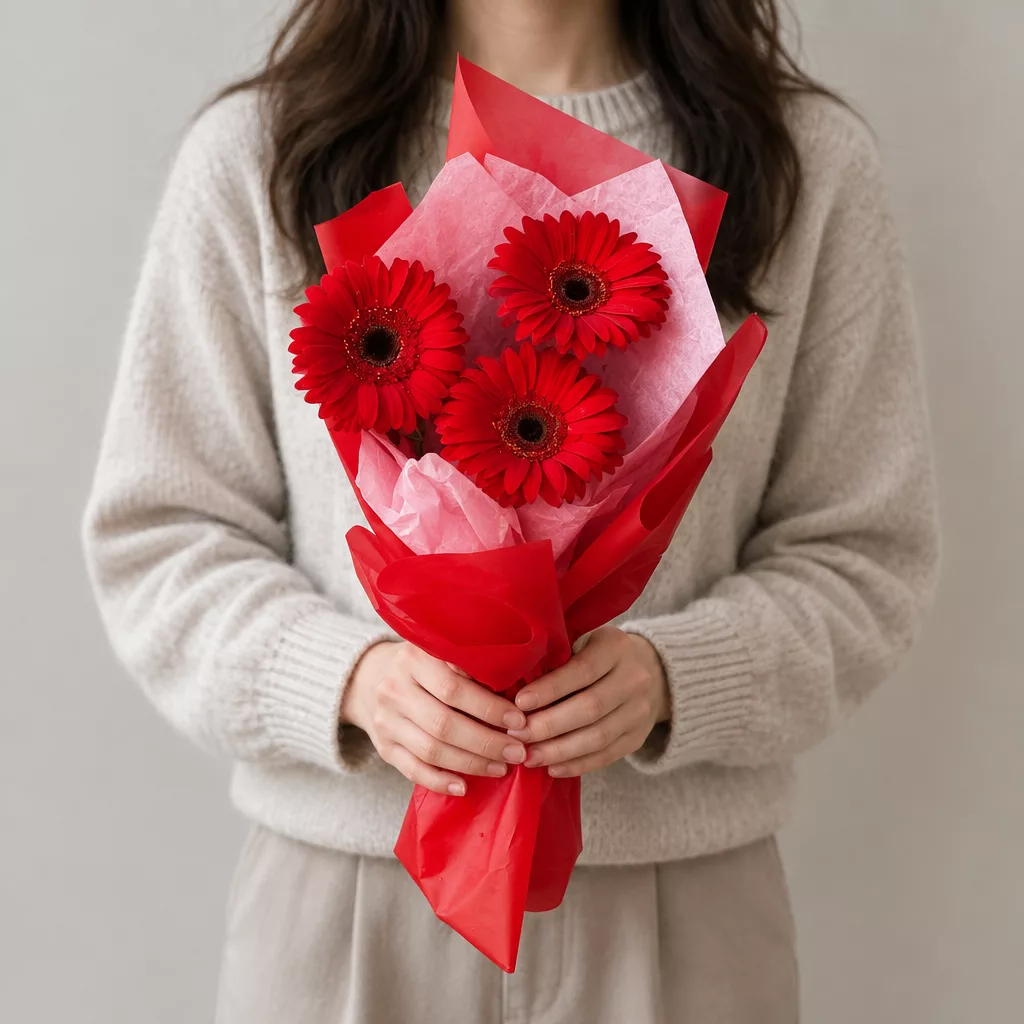
For children's events, bright gerberas in yellow, orange, and coral read as joyful and uncomplicated. They are also one of the more robust varieties for cold transit, which makes them a practical choice for winter deliveries in Nizhnevartovsk specifically.
Bouquets at Different Budget Levels: What Changes and What Stays the Same
The core of a well-made bouquet does not change with budget — what changes is the number of stems, the variety of supporting flowers, and the amount of greenery. A modest arrangement built around five or seven alstroemerias with a few stems of waxflower and some ruscus can be just as striking as a large mixed bouquet, provided the assembly is careful and the proportions work. Size alone does not determine impact.
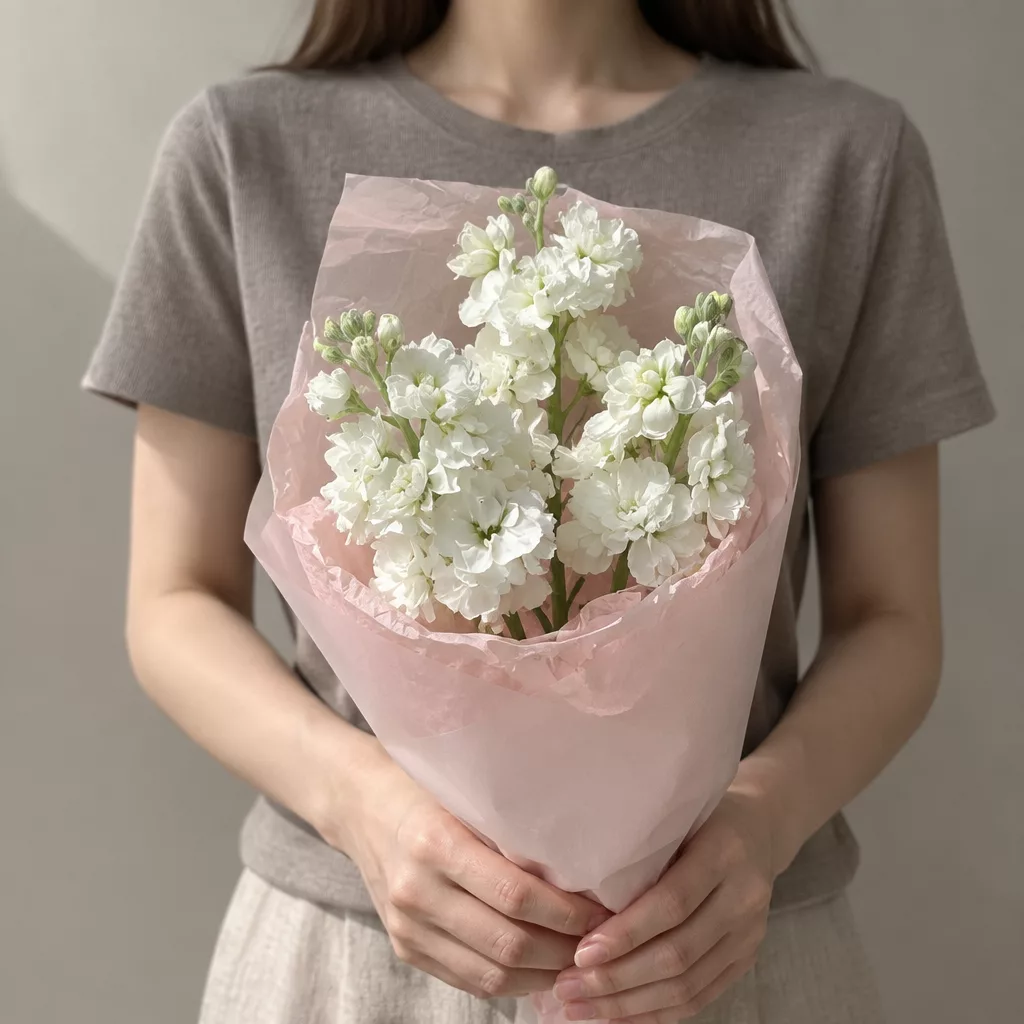
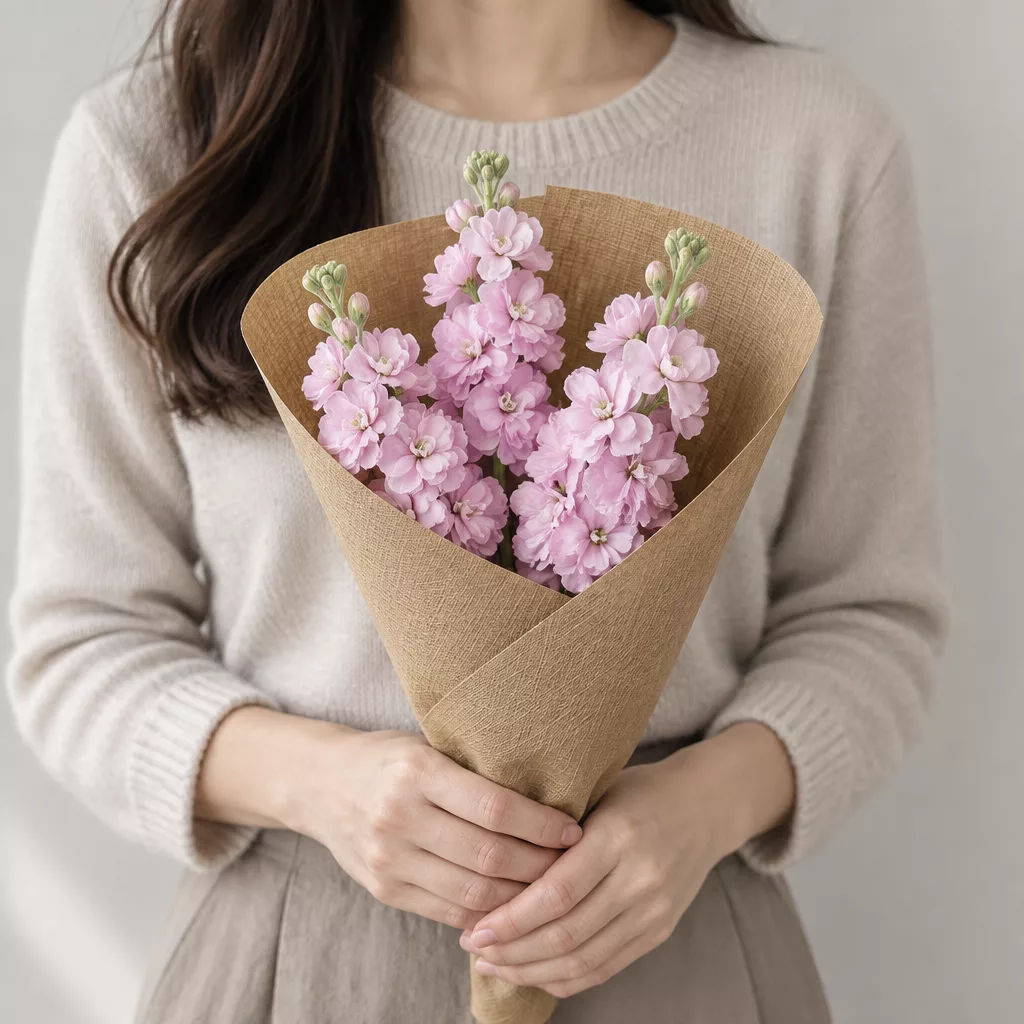
At a mid-range budget, you gain the ability to mix two or three focal flowers rather than relying on one. A combination of spray roses, lisianthus, and a few stems of matthiola creates layered texture and a subtle fragrance. Matthiola, sometimes called stock, is underused in everyday bouquets but brings a genuinely lovely scent and a soft, feathery silhouette that makes surrounding flowers look more luxurious.
At a higher budget, the composition can include premium varieties like garden roses, which have a different petal structure from standard roses — denser, more cupped, with a fuller look — or peonies in season. Large tropical leaves like monstera or palm fronds can be added for a dramatic, contemporary presentation. These elements are not just decorative; they also help insulate more delicate blooms during cold transit by acting as a natural buffer around the outer stems.
One common mistake at any budget level is over-ordering on stem count without considering the recipient's home. A very large bouquet in a small apartment with one narrow vase is harder to enjoy than a medium-sized bouquet that fits comfortably and can be displayed well.
Vase Life and Care in a Nizhnevartovsk Home
Heating in Nizhnevartovsk apartments runs from late September through May, and indoor temperatures during those months are typically kept high — often twenty-two to twenty-five degrees Celsius — because of the severe outdoor cold. This is a warm, dry environment that accelerates the aging of cut flowers significantly. A bouquet that might last ten days in a cooler European apartment will often last six to eight days here without careful attention.
The single most effective step is to keep the vase away from radiators and heating vents. In many Nizhnevartovsk flats, the radiator sits directly beneath the window, which is also the natural spot to display flowers. Moving the vase even half a metre away from the heat source can add two or three days to vase life. A north-facing windowsill, if available, is ideal — bright but not warm.
Change the water every two days and cut the stems at a diagonal each time, removing about a centimetre. This keeps the cut surface open and allows the flower to continue drawing water. Remove any leaves that fall below the waterline, as they rot quickly and cloud the water, which introduces bacteria that shorten the life of every stem in the vase.
Roses and lisianthus benefit from being placed in a cool room overnight — a hallway away from the main heating, or even a cool bathroom. Chrysanthemums and alstroemerias are more tolerant of warmth and require less special treatment. Gerberas do best in shallow water, no more than five centimetres, because their stems are prone to bending if submerged too deeply.
Small Details That Make a Delivery Feel Special in Nizhnevartovsk
Flowers arrive wrapped, which is part of the presentation. In Russian gifting culture, the wrapping itself signals care — kraft paper tied with ribbon, or a transparent sleeve with a coloured backing, communicates that the bouquet was assembled for this person specifically. When the recipient unwraps it, that moment of reveal is part of the experience, so the outer presentation is not just packaging but part of the gift itself.
A handwritten card makes a measurable difference. Many people order flowers and leave the message field blank, which is a missed opportunity. In a city where many residents work long shifts and may not see family as often as they would like, a few lines of genuine text — not just a name — give the flowers a voice. Even two sentences are enough. The florist can print or handwrite the message onto a card that is attached to the bouquet before it leaves.
Timing the delivery to a specific moment adds another layer. If the recipient is at work until six in the evening, a delivery that arrives at the office at five-thirty, visible to colleagues, carries a social warmth that a home delivery at seven does not. Conversely, if the person values privacy, a home delivery timed to when they will definitely be in avoids the awkwardness of flowers waiting with a neighbour.
For recipients who are new to Russia or unfamiliar with local customs, it is worth knowing that odd numbers of flowers are traditional for celebrations, while even numbers are associated with mourning. A bouquet of seven roses or eleven tulips fits the cultural expectation naturally, and most florists follow this convention by default.
Nizhnevartovsk is far from the flower-growing regions of Russia, but distance does not have to mean compromise. The right variety choices, a little attention to cold-weather handling, and a delivery timed to the recipient's day all combine to make the arrival of flowers feel genuinely considered rather than generic. Whether you are sending to a partner, a parent, or a colleague celebrating a milestone, the details are what people remember — not the stem count, but the feeling that someone planned this for them specifically.
Frequently asked questions
Can flowers really survive the cold during delivery in Nizhnevartovsk?
Yes, when handled correctly. Bouquets are wrapped in insulated paper and protective sleeves before leaving the shop. The key risk is exposure during the handover moment — a few minutes in severe frost is enough to damage delicate petals. Choosing cold-tolerant varieties like chrysanthemums or alstroemerias reduces that risk further, especially in January and February.
How far in advance should I order for a specific delivery time?
For a precise delivery window, ordering two to three hours ahead is a safe margin. Same-day orders placed by midday can usually be fulfilled for an evening delivery. For morning surprises or shift-end deliveries at unusual hours, it is worth contacting the shop directly to confirm availability and coordinate the timing carefully.
What flowers last longest in a warm Nizhnevartovsk apartment?
Chrysanthemums, alstroemerias, and lisianthus are the most durable in heated indoor environments. They tolerate dry warmth better than roses or hydrangeas. Keeping the vase away from radiators and changing the water every two days extends vase life noticeably. Freesias also hold well and add fragrance, which many recipients appreciate as much as the visual effect.
Is it possible to deliver flowers to an oil industry workplace or shift facility?
Yes, provided you supply a precise address and any access details such as a gate code, checkpoint name, or contact person on site. Industrial and shift facilities often have specific entry procedures, so the more information included in the order notes, the smoother the delivery. The courier will call ahead if there is any uncertainty about access.
Do Russian bouquets always have an odd number of flowers?
By strong tradition, yes. Odd numbers — five, seven, eleven, fifteen — are used for celebrations and gifts, while even numbers carry a funerary association in Russian culture. Most florists follow this convention automatically, so a standard bouquet will already respect it. If you are ordering a specific stem count, choosing an odd number is always the culturally appropriate choice.
Ready to send flowers?
Pick the city, choose the bouquet, and a local florist takes it from there.
Choose a city →