Sending Flowers to Novomoskovsk? Here Is What to Expect
You want flowers to arrive in Novomoskovsk looking the way they did when you chose them — stems firm, petals open just enough, the whole arrangement still carrying that faint green scent of a real florist's cooler. That is exactly what this article is about: the practical side of ordering, what the city's geography means for timing, how to pick the right bouquet for the person and the moment, and how to make sure those flowers last well beyond the first evening.
Getting to Know Novomoskovsk as a Delivery City
Novomoskovsk sits in the Tula region, a compact industrial city with a clear grid of central streets and quieter residential districts spreading outward toward the Upa River. The city is not enormous, which is good news for delivery: most addresses — whether in the historic centre near Lenin Square or in the newer mikrorayon blocks to the north and east — are reachable within a manageable window. There are no dramatic traffic bottlenecks the way a capital city creates, though the main arterial roads can slow down around factory shift changes in the early morning and late afternoon.
For someone ordering from outside the city, it helps to know that Novomoskovsk has a mix of address formats. Older buildings use the classic Russian system of street, house number, and korpus (a secondary building number on the same plot). Newer residential complexes sometimes add a podyezd (entrance number) and floor. Including all of these details when you place your order saves the courier from standing in a courtyard trying to guess which door to try, and it means the flowers arrive colder and fresher because the journey from van to recipient is shorter.
The city's climate follows the central Russian pattern: warm summers, cold winters, and a shoulder season in spring and autumn that can swing ten degrees in a single day. That temperature range matters for the flowers themselves, as we will come to later.
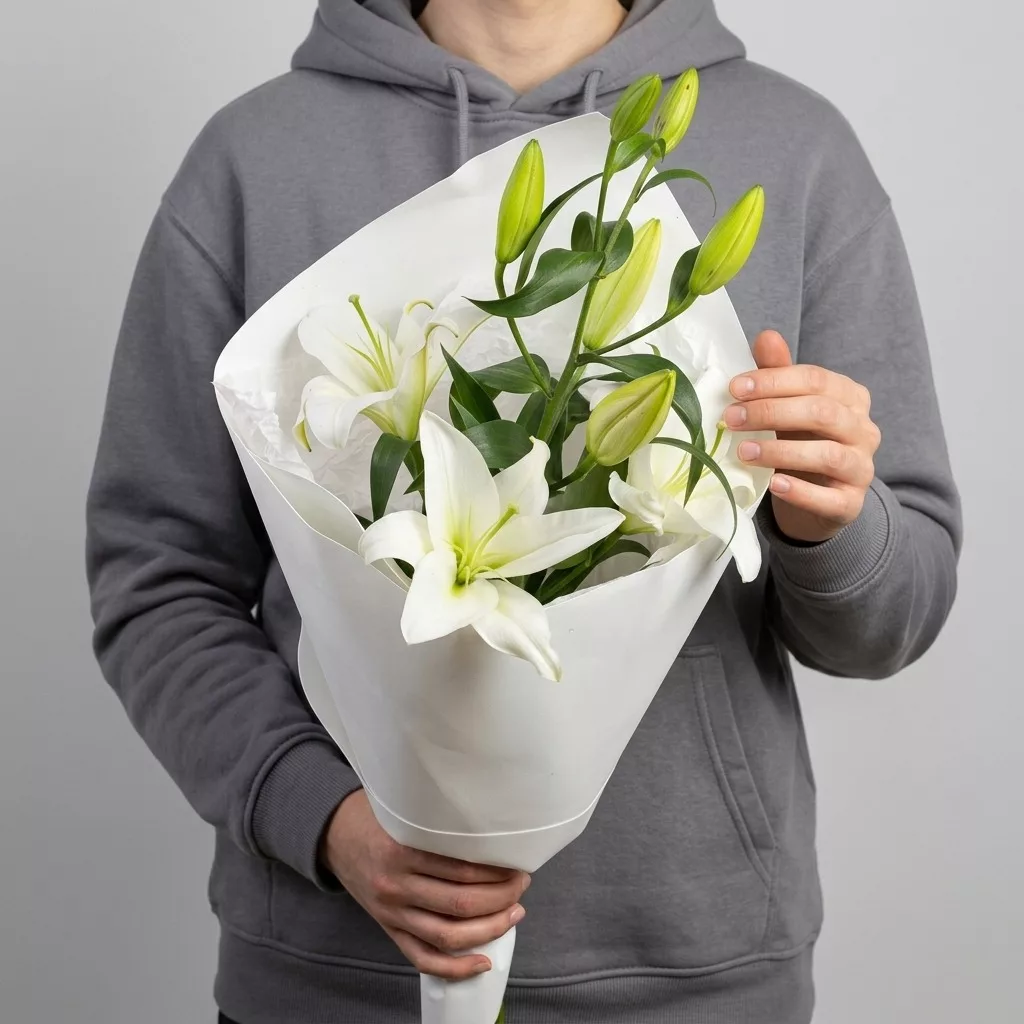
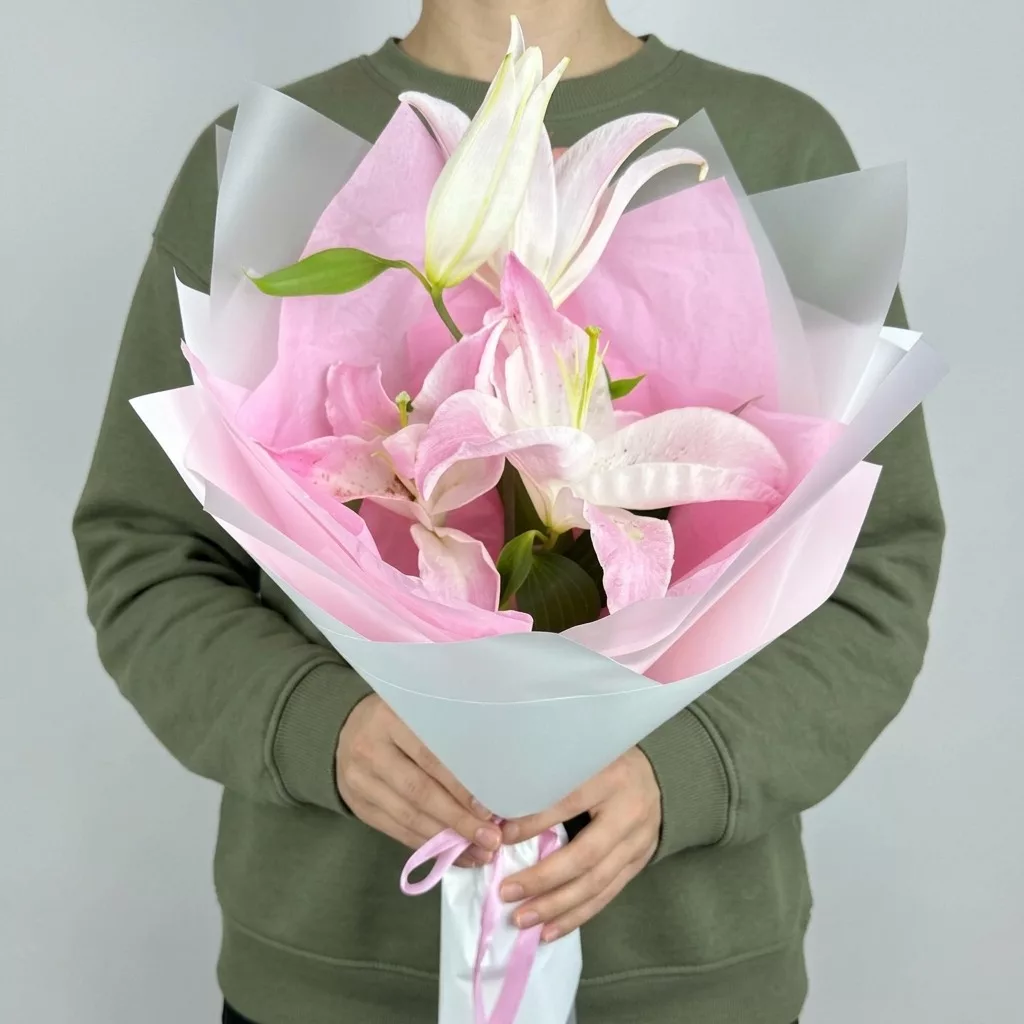
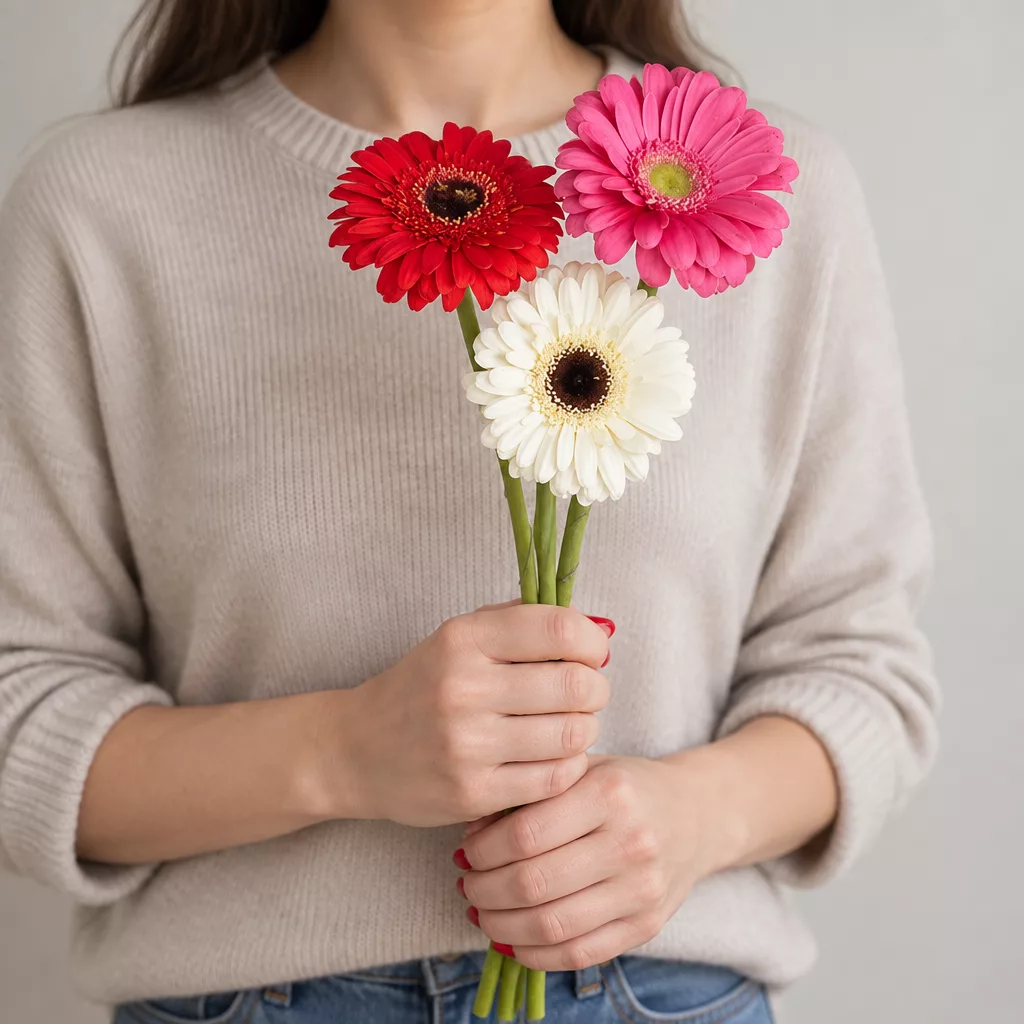
Bouquets we can deliver

Delivery Timing: What One to Two Hours Actually Means
The one-to-two-hour window is a real commitment, not a marketing phrase. It means that from the moment your order is confirmed and the bouquet is assembled, the courier is moving. In a city the size of Novomoskovsk, most central and mid-ring addresses fall comfortably within that window. Addresses at the very edge of the city or in outlying industrial zones may sit at the longer end, so if you are sending to somewhere less central, placing the order a little earlier in the day gives you the most comfortable margin.
Timing relative to the occasion matters more than most people realise. For a birthday, arriving an hour before the celebration starts is ideal — the recipient has time to put the flowers in a vase, feel the pleasure of them, and still be in that happy state when guests arrive. For a work delivery, midday tends to work better than early morning, when colleagues are still settling in and the moment can get lost. For a romantic occasion at home, early evening is almost always right.
If you need delivery at a specific time — say, exactly when someone finishes a meeting or steps off a train — note that in the order comments. The team works with time slots and will do its best to honour a precise window. The more detail you give, the better the result. Vague instructions like 'afternoon' are harder to pin down than 'between 15:00 and 16:00', so be as specific as you can.
Choosing the Right Flowers for the Person, Not Just the Occasion
The occasion tells you the mood; the person tells you the flowers. A birthday shared with a woman who loves bold colour calls for something entirely different from a birthday for someone whose home is full of pale linen and white ceramics. Start with what you know about the recipient, then let the occasion shape the scale and formality.
For someone warm and sociable, a mixed bouquet built around garden roses — varieties like David Austin-style soft-cupped blooms — combined with lisianthus and a few stems of eucalyptus reads as generous and personal without being stiff. For someone more understated, a single-variety arrangement of ranunculus or tulips in one tonal family often lands better than a mixed composition. Tulips in particular are beloved across Russia and carry no wrong associations — they work for colleagues, friends, mothers, and partners alike.
For a congratulatory moment — a promotion, a new home, a graduation — size and structure matter. Peonies when in season, or large-headed spray roses arranged with veronica and pittosporum, give that sense of celebration without tipping into excess. Chrysanthemums are a staple of Russian floristry and are genuinely beautiful in the right combination; do not dismiss them as old-fashioned. A modern arrangement of disbud chrysanthemums in cream or deep burgundy with dark foliage is striking and long-lasting, which makes it especially practical for a recipient who lives alone and wants the flowers to keep them company for a week.
Seasonal Availability and What That Means for Your Order
Flowers follow the calendar, and understanding that rhythm helps you order with confidence rather than disappointment. In late winter and early spring — February through March — tulips, hyacinths, and narcissi are at their best and most abundant. These are the flowers most associated with International Women's Day on the eighth of March, which is the single largest flower-giving occasion in Russia. If you are ordering around that date, placing your order a day or two in advance is strongly advisable, as demand across the country peaks sharply.
From May onward, peonies arrive and are worth seeking out while they last — typically through June. Their scent and the way their petals layer make them one of the most emotionally resonant flowers you can send. Summer brings an abundance of sunflowers, which are cheerful and genuinely sturdy in warm weather, as well as lisianthus, gerbera, and a wide range of spray roses. Autumn shifts the palette toward deeper tones: burgundy, rust, and plum. Chrysanthemums, dahlias, and hypericum berries come into their own.
Winter is rose and alstroemeria season by necessity — these are the varieties that travel and hold best in cold conditions. A well-made winter bouquet of garden roses in cream or blush with white waxflower and silver brunia is genuinely beautiful and not a compromise. The cooler ambient temperatures in Novomoskovsk during winter actually help cut flowers last longer once delivered, which is a small but real advantage for the recipient.
Presentation and Packaging: What Arrives at the Door
The moment the door opens is the moment that matters most. Everything before it — the order, the assembly, the drive — exists to make that moment work. A bouquet should arrive wrapped in a way that protects it without hiding it entirely. Kraft paper with a soft inner layer, tied with ribbon rather than sealed with tape, lets the recipient feel the texture and begin to sense the flowers before they are fully unwrapped. That small ceremony of opening is part of the gift.
For Novomoskovsk deliveries in cold months — roughly October through April — flowers travel in insulated packaging to protect them from temperature shock. Moving a bouquet from a warm van into minus-ten air and then immediately into a heated flat can stress the stems if they are not buffered. The packaging handles that transition. In summer, the concern reverses: flowers need to stay cool and away from direct sunlight during transit, which is why summer deliveries in the middle of a hot day benefit from ordering slightly earlier or later in the day when temperatures are lower.
If you are adding a card — which in Russian custom is almost always handwritten rather than printed — keep the message warm and direct. Russian recipients appreciate sincerity over formality in personal notes. A short, genuine sentence lands better than a long, careful paragraph. The florist team can write the card for you if you include the text in your order, and they will match the tone to the occasion.
Caring for the Bouquet After Delivery: Making Flowers Last
A bouquet that arrives beautifully can last five days or ten days depending almost entirely on what happens in the first hour after delivery. The single most important step is the cut. Stems should be trimmed at an angle — about two centimetres from the bottom — using a sharp knife rather than scissors, which crush the vascular tissue. Doing this under running water or while the stem is submerged prevents air bubbles from blocking water uptake. It takes thirty seconds and doubles the vase life of most varieties.
Water temperature matters more than most people expect. Lukewarm water encourages stems to drink quickly and is right for most flowers. Cold water is better for tulips and bulb flowers, which prefer a cool environment. Hot water is sometimes used by florists to revive wilting stems quickly, but it is not for everyday use. Change the water every two days and re-trim the stems each time.
Keep the vase away from radiators, direct sunlight, and fruit bowls. The ethylene gas that ripening fruit releases accelerates wilting in roses, tulips, and lisianthus noticeably. A cool room — around eighteen degrees Celsius — is ideal. At night, moving the vase to the coolest room in the flat can add a day or two of life. Roses and chrysanthemums are among the most forgiving varieties; ranunculus and sweet peas are the most sensitive and need the most care. Knowing which flowers you have received helps you decide how much attention they need.
Russian Flower-Giving Customs Worth Knowing Before You Order
If you are not from Russia and are sending flowers to someone there, a few customs are worth understanding so your gift lands exactly as intended. The most widely known rule is the odd number: bouquets are given in odd numbers — three, five, seven, nine, eleven stems — for celebratory occasions. Even numbers are associated with mourning, so a bunch of six roses, however beautiful, carries an unintended message. When in doubt, ask the florist to confirm the count before assembly.
Colour carries meaning too, though it is less rigid than the number rule. Red roses are romantic and unambiguous. Yellow flowers have a complicated reputation in some parts of Russia — traditionally associated with separation or jealousy — though younger recipients in cities often do not hold this view. White flowers are elegant and appropriate for most occasions. Mixed colours read as cheerful and informal. If you are unsure, a palette of blush, cream, and soft coral is universally safe and genuinely beautiful.
The scale of the bouquet signals the weight of the occasion. A small, neat arrangement of five stems is a warm and friendly gesture — right for a thank-you or a casual birthday. A large, structured bouquet of fifteen or more stems says this is a significant moment. Russians tend to appreciate generosity in flower-giving and rarely find a large bouquet excessive. When the occasion is important, it is better to err toward more than less. The recipient will remember the feeling of receiving something abundant.
Ordering flowers to Novomoskovsk is straightforward when you know what to expect at each step — from the address details that speed up delivery, to the seasonal varieties worth choosing, to the simple care routine that keeps a bouquet alive and beautiful for a week. The city is well within reach, the timing is real, and the flowers are assembled fresh for each order. Whether you are sending from across Russia or from the next street over, the goal is the same: that the person who opens the door feels, in that first moment, genuinely seen.
Frequently asked questions
Can I order flowers to Novomoskovsk for same-day delivery?
Yes. Orders placed with enough lead time — ideally at least two hours before you need the bouquet to arrive — are fulfilled the same day. For deliveries needed in the early morning, placing the order the evening before is the safest approach. The team will confirm your time window when the order is received.
What happens to flowers during delivery in very cold or very hot weather?
In winter, bouquets travel in insulated wrapping that buffers the temperature shift between the courier van and the cold outdoor air. In summer heat, deliveries are scheduled to avoid the hottest part of the day where possible, and flowers are kept away from direct sunlight in transit. Both measures protect stem integrity and petal condition on arrival.
Is it true I should only give an odd number of flowers in Russia?
Yes, this is a genuine and widely observed custom. Odd numbers — five, seven, nine, eleven — are for celebrations and gifts. Even numbers carry associations with mourning. Every bouquet assembled for a celebratory occasion is counted to respect this tradition, so you do not need to specify it separately unless you have a particular number in mind.
Which flowers last the longest after delivery in a home environment?
Chrysanthemums, alstroemeria, and carnations are the most resilient and routinely last seven to ten days with basic care. Roses last five to eight days with regular stem trimming and water changes. Tulips and ranunculus are shorter-lived — three to five days — but are so beautiful in their brief time that many people consider them worth it.
Can I include a handwritten card with the delivery?
Yes. When placing your order, include the text you want on the card in the comments field. The florist writes it by hand before the bouquet leaves the shop. Keep the message under three or four sentences for the best result — a short, warm note reads more naturally than a long one on a small card, and the flowers themselves carry most of the message.
Ready to send flowers?
Pick the city, choose the bouquet, and a local florist takes it from there.
Choose a city →