Sending Flowers to Novouzensk: Timing, Choices and What Arrives at the Door
Novouzensk sits in the Saratov region where the steppe air is dry, summers run hot, and winters bite hard — conditions that matter more than most people realise when you are sending fresh flowers to someone you care about. Whether you are marking a birthday from across the country or surprising a colleague on a work anniversary, the details of how a bouquet travels and arrives shape the whole experience. This guide walks you through exactly what to expect when ordering delivery to Novouzensk, from the moment you choose your flowers to the second they land in someone's hands.
Why Distance and Climate Shape Every Bouquet Going to Novouzensk
Novouzensk is a small city with a big steppe character. Summers regularly push past 35 degrees Celsius, and winters can drop to minus 25. Both extremes are hard on cut flowers, and anyone ordering from a city like Saint Petersburg or Moscow needs to understand that the journey itself is part of the equation. Heat accelerates the opening of roses and peonies, sometimes dramatically. Cold snaps can blacken delicate petals before the bouquet even reaches the door. This is not a reason to avoid sending flowers — it is a reason to choose wisely and to communicate clearly with whoever is receiving them.
The good news is that sturdy, well-conditioned stems travel far better than their reputation suggests. Chrysanthemums, alstroemeria, carnations and spray roses are all varieties that handle temperature swings with relative grace. Lisianthus, which looks almost identical to a garden rose but costs less and lasts longer, is another excellent traveller. Delicate garden tulips in peak summer, or open garden peonies in July heat, are the varieties most likely to disappoint — not because they are bad flowers, but because they are simply not built for that kind of journey in those conditions.
When Turboflora prepares a bouquet destined for Novouzensk, the conditioning process — keeping stems in water at a controlled temperature before packing — makes a measurable difference to vase life on arrival. A flower that has been properly hydrated before travel arrives looking as though it was cut that morning, even after a long road.
Bouquets we can deliver



Delivery Timing: What the Window Looks Like in Novouzensk
Turboflora's headline promise is one to two hours for delivery across Russia, and that figure is accurate for central Saint Petersburg addresses. For Novouzensk, the honest answer is a bit different, and transparency here matters more than a reassuring number. Novouzensk is not a metropolitan centre with couriers on every corner. Delivery timing depends on the day, the season, and the specific address — whether it is in the town centre or on the outskirts near the agricultural districts.
The practical approach is to order with a time buffer built in. If the occasion is a birthday dinner at seven in the evening, placing the order before noon gives the best chance of the flowers arriving before the celebration rather than after it. Morning deliveries in smaller cities tend to be more reliable than late-evening slots, simply because courier routes are more predictable earlier in the day.
For workplace deliveries — an office, a school, an administrative building — it is worth confirming the recipient's schedule before you order. In Russia, many organisations operate on shifts or have a lunch break between one and two in the afternoon when reception desks are unstaffed. A bouquet left at an unmanned desk in summer heat can lose half its freshness in an hour. Sending to a home address where someone will definitely be present is almost always the safer option. If you are unsure, a quick message to the recipient hinting that something is coming — without spoiling the surprise entirely — can save the flowers and the moment.
Choosing Flowers for the Person, Not Just the Occasion
In Russian culture, flowers carry specific weight. Odd numbers of stems are given to the living — even numbers are reserved for funerals — so a bouquet of eleven roses or seven tulips is the correct instinct, not a quirk. Red roses remain the universal romantic statement, but in Novouzensk as everywhere else in Russia, a thoughtful mix often lands better than a single-variety bouquet. A combination of blush spray roses, white alstroemeria and eucalyptus reads as warm and considered rather than generic.
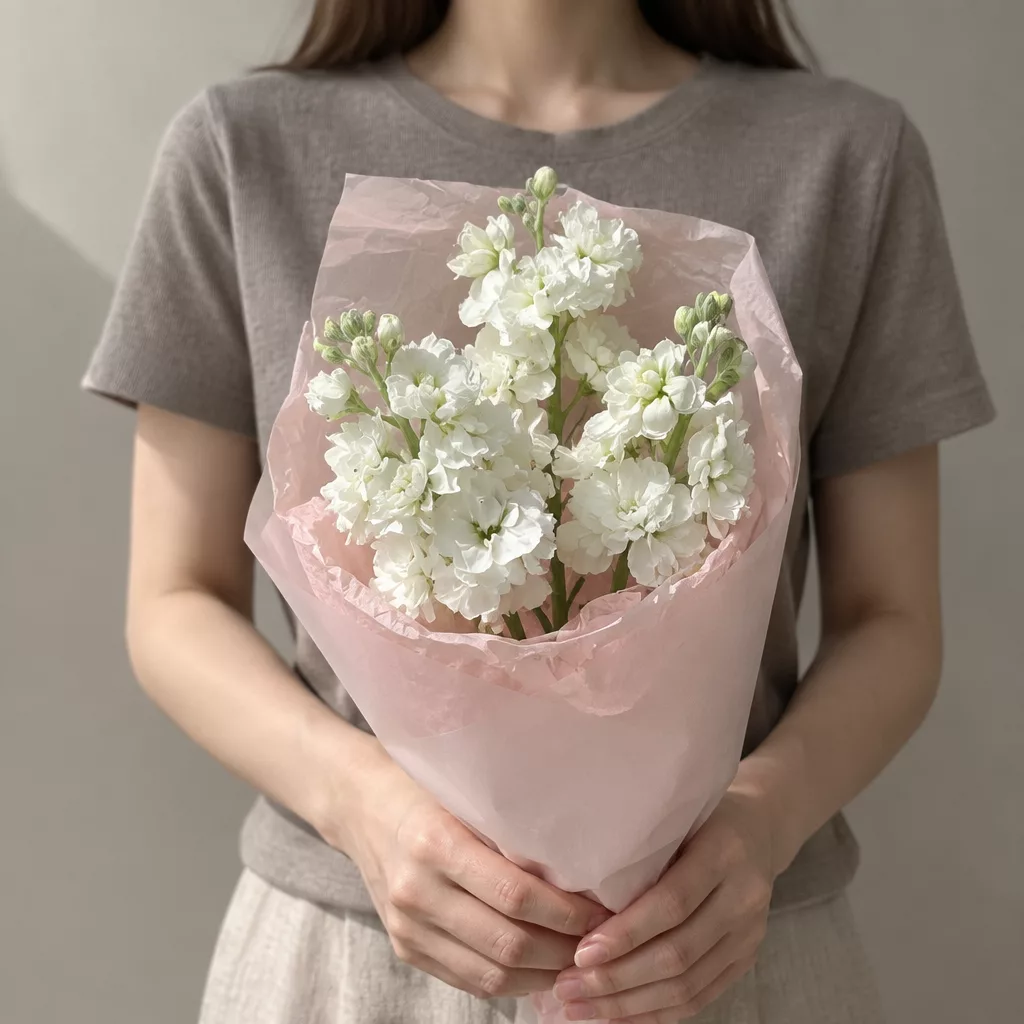
For a mother or grandmother, soft colours work well — cream, peach, lilac. Eustoma in these shades lasts up to two weeks in a vase, which makes it a genuinely kind choice for someone who will enjoy watching the flowers open over days rather than hours. For a younger recipient, something with visual energy — sunflowers paired with orange gerbera, or deep burgundy dahlias in season — tends to feel more personal and less like a default.
Think about the space the flowers are going into. A small apartment in Novouzensk may not have a large vase or a wide windowsill. A tall, architectural arrangement of gladioli looks spectacular in a hallway but becomes awkward in a compact kitchen. A lower, rounder bouquet of mixed seasonal flowers fits almost any home and photographs beautifully, which matters when the recipient will want to share the moment. Asking yourself where these flowers will live for the next week is one of the most useful questions you can bring to the ordering process.
Seasonal Sense: What Flowers Are at Their Best and When
Russia's flower market runs on imports for much of the year, but seasonal availability still shapes what is freshest and most affordable. In January and February, roses from Ecuador and Colombia dominate — they are long-stemmed, well-conditioned and genuinely beautiful in winter. Tulips arrive in volume from Dutch growers around late February, which is why they are so strongly associated with International Women's Day on the eighth of March, one of the biggest flower-giving occasions in the Russian calendar.
Spring and early summer bring ranunculus, anemones and the first garden peonies, which are in peak supply from May through June. These are the months when the most romantic, lush bouquets are possible at the best value. By July and August, peonies are finished, but dahlias, zinnias and sunflowers step in with their own warmth. These varieties also handle the Novouzensk summer heat better than soft spring flowers.
Autumn is underrated as a flower season. Chrysanthemums in rust, amber and cream look genuinely stunning and last longer than almost any other cut flower — up to three weeks with basic care. Hypericum berries, cotton stems and dried grasses add texture that photographs beautifully and suits the cooler light of October and November. In winter, the focus shifts back to roses, carnations and tropical varieties like anthuriums, which are bold, long-lasting and surprisingly well-suited to heated Russian interiors where the air tends to be very dry. Matching the flower to the season is not just about cost — it is about giving something that is genuinely at its best.
Presentation and Wrapping: How the Bouquet Should Look on Arrival
The way a bouquet is wrapped is not decoration — it is protection. For a delivery travelling to Novouzensk, the wrapping needs to hold moisture at the stem ends, shield petals from physical damage during transit, and insulate against temperature changes. Kraft paper with a water-soaked floral foam pad or wet cotton at the base is the standard for longer journeys. Cellophane alone, while visually clean, offers very little thermal protection and can trap condensation that leads to mould on petals over a long trip.
When the bouquet arrives, the recipient will usually find it wrapped tightly enough that it looks almost like a parcel. This is intentional. A loosely arranged bouquet that looks open and airy in a shop window is not built for road travel. The flowers should be unwrapped immediately and placed in water — this is the single most important thing the recipient can do in the first five minutes.
In Russia, it is common for the recipient to unwrap the bouquet themselves and then re-present it, sometimes placing it in a vase before guests see it. The wrapping paper is often saved — it is considered part of the gift. If you are sending flowers to someone who will be hosting a gathering, it is worth mentioning in your order note that the presentation on arrival matters, so the florist can choose wrapping that looks considered rather than purely functional. A ribbon in a colour that complements the flowers, or a simple note card tucked into the stems, adds the kind of personal detail that turns a delivery into a genuine gift.
Keeping the Flowers Fresh: Care Advice Worth Passing On
Most flowers arrive in better condition than people expect, and most flowers decline faster than they should — usually because of easily avoidable mistakes in the first twenty-four hours. The most common one is placing the bouquet in a warm room in direct sunlight. In a Novouzensk summer, a south-facing windowsill can reach temperatures that would wilt even the toughest carnation within hours. A cool, shaded spot away from radiators and draughts is the right environment.
The vase itself matters. It should be clean — residual bacteria from a previously used vase is one of the fastest ways to shorten stem life. Fill it with cool, fresh water and add the sachet of flower food that comes with the bouquet. This small packet contains a biocide, a sugar source and a pH adjuster, and it genuinely extends vase life by several days compared to plain water. If the sachet is lost or not included, a small pinch of sugar and a drop of bleach in a litre of water is a reasonable substitute.
Re-cutting the stems at an angle before placing them in water is the other step most people skip. Even a centimetre of fresh cut reopens the water-conducting vessels in the stem that sealed during transport. Use a sharp knife rather than scissors, which can crush the stem tissue. Change the water every two days, re-cut the stems each time, and remove any leaves that sit below the waterline — they decompose quickly and cloud the water. With this basic routine, alstroemeria will last ten to fourteen days, roses seven to ten, and chrysanthemums up to three weeks in a cool room.
Making the Order Feel Personal Even From Far Away
One of the most common anxieties about remote flower delivery is that the result will feel impersonal — a generic bouquet with a printed card that could have been sent by anyone. The antidote is specificity, and it costs nothing extra. When you place your order, use the note field to describe the recipient rather than just the occasion. Not 'birthday bouquet for my sister' but 'my sister loves soft colours, has a small flat, and her favourite flower is lavender' — that kind of detail gives the florist something real to work with.
In Russian gift-giving culture, the accompanying card carries significant weight. A handwritten message, even a short one, is valued more than an elaborate bouquet with a blank card. If you are sending from abroad or from another city, writing the message in Russian — even imperfect Russian — is noticed and appreciated. Simple phrases like 'S dnyom rozhdeniya' (happy birthday) or 'S lyubovyu' (with love) go a long way.
Timing the delivery to coincide with a specific moment also lifts the gesture. Flowers that arrive while guests are present feel celebratory in a way that a bouquet sitting in the hallway since morning does not. If you know the party starts at six, requesting a delivery window of five to five-thirty gives the flowers time to be arranged in a vase before anyone arrives. These small logistical choices — the note, the timing, the colour direction — are what separate a delivery that is remembered for years from one that is simply appreciated and forgotten.
Sending flowers to Novouzensk from anywhere in Russia is genuinely straightforward once you understand the variables that matter: the climate, the timing, the right varieties for the season, and the small care steps that keep a bouquet beautiful for days after it arrives. The distance is not the obstacle it might seem. A well-chosen, properly conditioned bouquet, ordered with a sensible time buffer and accompanied by a personal note, arrives as a real gesture — not a logistical afterthought. Turboflora handles the journey; you provide the intention behind it.
Frequently asked questions
Can I order flowers for same-day delivery to Novouzensk?
Same-day delivery to Novouzensk is possible when orders are placed in the morning, ideally before noon. This gives enough time to prepare the bouquet, condition the stems properly and route the delivery. Late-evening orders for the same day carry more risk in smaller cities, so building in a buffer is always the safer choice for time-sensitive occasions.
Which flowers travel best to Novouzensk in summer heat?
Chrysanthemums, alstroemeria, spray roses, carnations and lisianthus all handle summer temperatures significantly better than soft garden varieties. Avoid open peonies or garden tulips in July and August — they are beautiful but fragile in heat. A mixed bouquet built around one of these sturdy varieties will arrive looking fresh and last well in the recipient's home.
Is it true that bouquets in Russia must have an odd number of flowers?
Yes, this is a genuine and widely observed custom. Even numbers of stems are associated with mourning in Russian culture, so bouquets for celebrations, birthdays and romantic occasions are always composed with an odd count — seven, nine, eleven, fifteen and so on. Turboflora follows this convention automatically, so you do not need to specify it when ordering.
What should the recipient do with the flowers as soon as they arrive?
The single most important step is to unwrap the bouquet immediately and place the stems in cool, fresh water. Re-cutting the stems at an angle before placing them in the vase reopens the water-conducting tissue sealed during transit. Keep the flowers away from direct sunlight, radiators and draughts. Using the flower food sachet included with the bouquet will extend vase life by several days.
Can I include a personal message in Russian if I do not speak the language?
Absolutely — write your message in English and add a note in your order asking for it to be translated or transcribed into Russian on the card. Alternatively, simple Russian phrases are easy to find and deeply appreciated by recipients. Even a short 'S dnyom rozhdeniya' for a birthday or 'S lyubovyu' for a romantic gesture adds a warm, personal touch that a generic printed card cannot replicate.
Ready to send flowers?
Pick the city, choose the bouquet, and a local florist takes it from there.
Choose a city →