Sending Flowers to Oryol: Timing, Areas and What Arrives at the Door
Oryol sits in the heart of central Russia, a city that takes its celebrations seriously — birthdays marked with armfuls of roses, anniversaries where the bouquet has to be exactly right, and spontaneous gestures that cannot wait until tomorrow. When you are ordering from another city, or simply too busy to visit a shop, you want to know that what you picture in your head is what the recipient actually unwraps. This article walks you through how flower delivery in Oryol works in practice: which neighbourhoods we reach, what the timing looks like across different seasons, which flowers travel best, and the small details that make a real difference between a bouquet that lands beautifully and one that disappoints.
Which Parts of Oryol We Deliver To and Why It Matters
Oryol is a compact city by Russian standards, but it is divided by two rivers — the Oka and the Orlik — which means that crossing from one district to another sometimes adds meaningful time to a route. We cover all central districts, including Sovetsky and Zheleznodorozhny, as well as residential areas further out such as Zavodskoy and the neighbourhoods along Naugorskoye Highway. Industrial zones on the far eastern edge of the city may require an extra fifteen to twenty minutes, so if you are sending to an address there, booking with a small buffer is sensible.
Apartment buildings are the norm across most of Oryol, and our couriers are used to navigating entrance codes, intercoms and lifts. Private houses in the quieter outskirts sometimes have unmarked gates or courtyard addresses — when you place your order, adding a short landmark note in the delivery comment genuinely speeds things up. Something like 'green gate, house after the school' is far more useful than a postcode alone.
For corporate offices in the city centre, we recommend scheduling delivery for before 11 a.m. or between 2 p.m. and 4 p.m. to avoid the midday rush when reception desks are busiest. Timing the arrival well is half the impression the flowers make. A bouquet that appears at exactly the right moment — during a team meeting break, just as a birthday lunch is starting — lands with far more warmth than one that gets left on a desk unnoticed.
Bouquets we can deliver

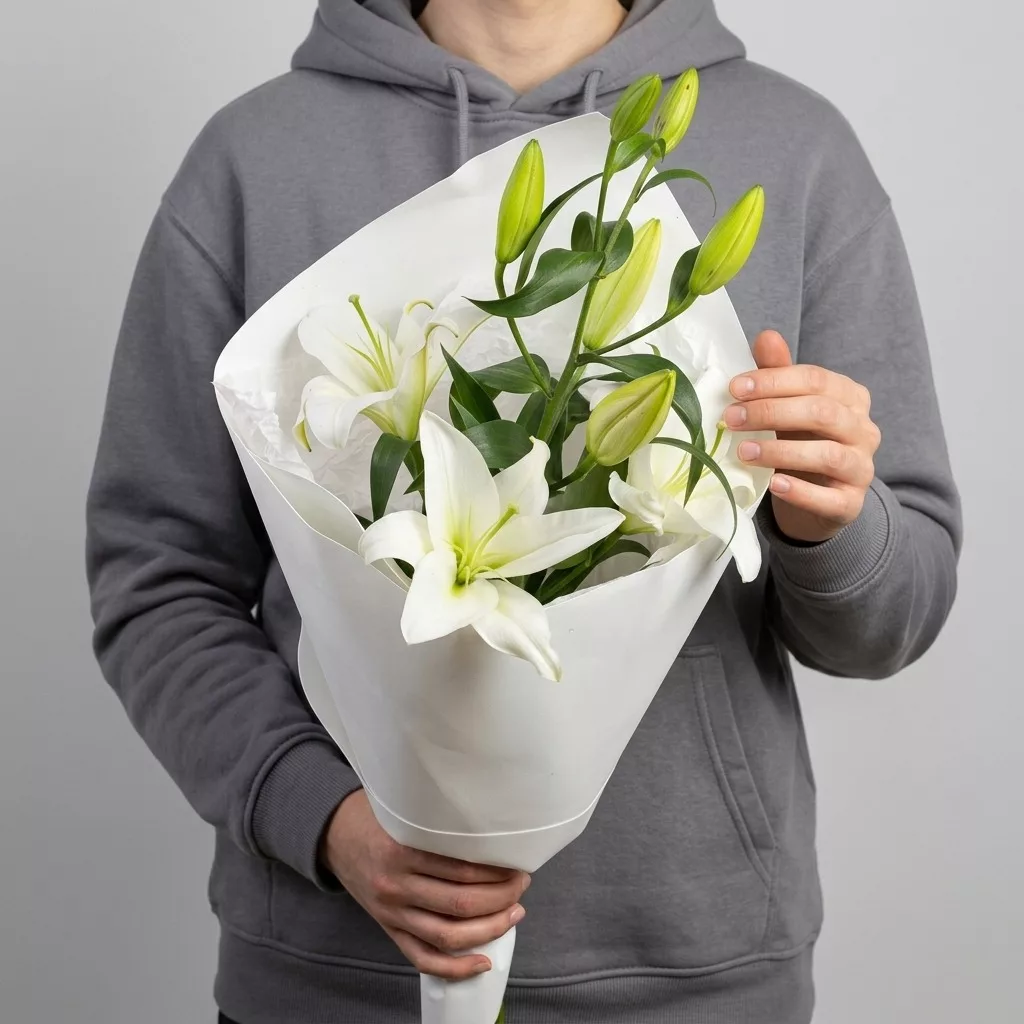
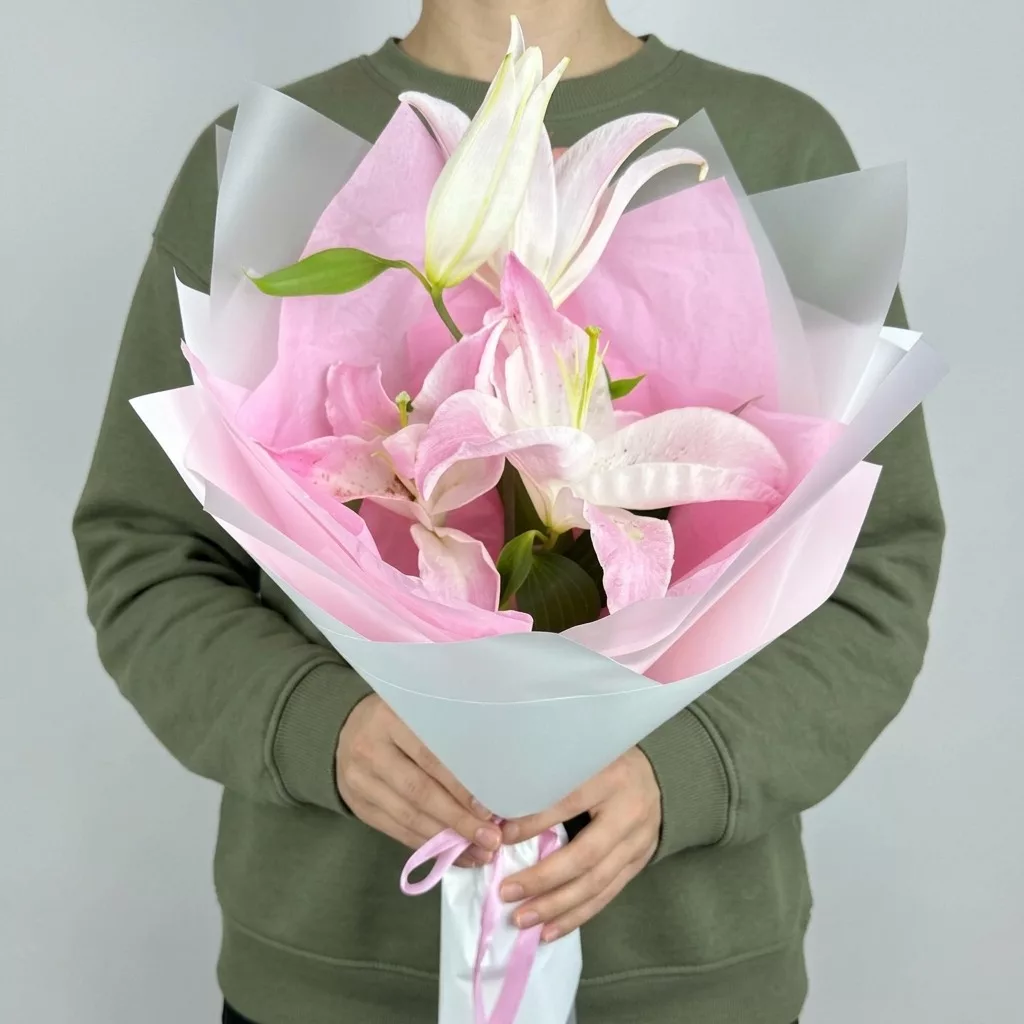

Realistic Timing: What 1–2 Hours Actually Means in Oryol
The one-to-two hour window is our standard for central Oryol, and in most cases the bouquet arrives closer to the shorter end of that range. The clock starts once your order is confirmed and the bouquet is assembled, not from the moment you start browsing. Assembly itself takes fifteen to twenty minutes for a standard bouquet, longer for a large arrangement with conditioning stems or a structured composition with foliage layers.
Rush hours in Oryol follow a predictable pattern: morning traffic builds between 8 and 9:30 a.m. around the main bridges and Lenin Square, and the evening peak runs from 5:30 to 7 p.m. If you are ordering for a specific moment — the end of a school performance, the arrival of a guest at a restaurant — give us a thirty-minute cushion around those windows and name the target time clearly in your order notes.
Same-day delivery is available for orders placed before 8 p.m. Orders placed after that time are scheduled for the following morning, with the first runs beginning at 8 a.m. For very early morning deliveries — say, flowers waiting at the door when someone wakes up on their birthday — the order needs to be placed the evening before. We prepare those bouquets fresh in the morning rather than overnight, so the stems are in peak condition when they arrive. That detail matters more than most people realise: a rose cut and conditioned at 7 a.m. and delivered by 9 a.m. will last several days longer than one that sat in a cold car through the night.
Choosing Flowers for the Person, Not Just the Occasion
The occasion gives you a starting point, but the recipient is the real brief. A colleague turning fifty at a formal office probably appreciates something structured and long-lasting — spray chrysanthemums, alstroemeria or lisianthus hold their shape well, look composed rather than fussy, and suit a professional setting without demanding a large vase. A close friend who has just moved into a new flat might love something loose and fragrant — garden roses mixed with eucalyptus and a few stems of waxflower feel like a housewarming rather than a transaction.
For romantic gestures, red roses remain the clearest signal in Russian culture, and no amount of trend-chasing changes that. But the way they are presented transforms the message. Fifty tightly wrapped stems feel formal and grand; fifteen roses in a soft wrap with a few sprigs of ruscus and a ribbon feel personal and considered. Think about where the person lives — a studio flat calls for a smaller arrangement that does not overwhelm the space, while a large home can carry a dramatic vase piece.
Children's celebrations in Oryol often include bright, cheerful combinations: gerberas in yellow and orange, sunflowers if the season allows, or ranunculus in mixed pastel shades. These are flowers that read as joyful rather than ceremonial. For a teacher receiving flowers at the end of a school year — a very common Russian custom — a hand-tied bouquet of mixed seasonal blooms in school colours, or simply in the teacher's known favourite colour, is always more personal than a formal arrangement. Ask someone close to the recipient if you are unsure: that one detail makes the difference.
How Oryol's Climate Affects Which Flowers We Send and When
Oryol experiences a genuine continental climate: cold winters that regularly drop below minus fifteen degrees Celsius, warm summers that can push above thirty, and transitional seasons that shift quickly. Each of those phases affects which flowers are practical to deliver and how they need to be handled in transit.
In winter, the main risk is cold shock. Tropical flowers — anthuriums, orchid stems, bird of paradise — are sensitive to temperatures below eight degrees and can blacken or collapse within minutes of exposure. Our couriers use insulated packaging during cold months, and bouquets are wrapped in protective sleeves before leaving the shop. Still, if you are sending in January or February, roses, tulips and carnations are more resilient choices than exotic tropical varieties. Tulips in particular are excellent winter flowers: they are robust, long-lasting and carry a sense of freshness that feels especially welcome when the city is grey.
Spring in Oryol arrives gradually, and late frosts are possible into April. This is when local tulips and daffodils come into season, and they are worth choosing — flowers that have not travelled far arrive in noticeably better condition. Summer opens up the full range: peonies appear in May and June, sunflowers run through July and August, and garden roses peak in midsummer. Autumn is the season for dahlias, asters and chrysanthemums, all of which are hardy enough to handle cooler temperatures without special protection. Matching the flower to the season is not just a practical choice — it is what a knowledgeable florist would always recommend.
Presentation Choices That Change How the Gift Feels
A bouquet is not just its flowers — the wrapping, the proportion and the finishing details shape the first impression completely. In Russia, flowers are typically presented unwrapped or with the wrapping folded back so the blooms are visible, rather than hidden inside a box or a closed bag. This is the cultural norm, and recipients expect to see the flowers immediately. A beautiful kraft paper wrap with a ribbon tied at the stems looks generous and considered; a clear cellophane sleeve is practical but reads as more casual.
For a significant birthday or anniversary, a round bouquet — what florists call a pavé arrangement, where blooms are packed closely at the same height — feels celebratory and substantial. It photographs well, which matters because recipients almost always take a photo to share. A hand-tied bouquet with longer stems and visible movement in the arrangement feels more relaxed and artistic, better suited to a creative friend or a spontaneous gesture.
Box arrangements are increasingly popular in Oryol for deliveries to offices and hospitals, because they stand without a vase and stay tidy on a desk. They also travel well — nothing shifts or leans in transit. If you are sending to someone who you know does not have many vases at home, a box arrangement is a quietly thoughtful choice that removes a practical problem.
Adding a small card is standard, and the message matters. We write it by hand on a card that travels with the bouquet. A short, specific message — two or three sentences that reference something real about the person or the occasion — is always more moving than a generic greeting. Do not leave the card blank to seem mysterious: in Russian custom, an unsigned bouquet creates confusion rather than intrigue.
What to Tell the Recipient Beforehand — and What to Keep Quiet
Surprises work beautifully when the recipient is at a known address and can receive the delivery. They become complicated when the person is travelling, working from a different location that day, or living somewhere with a locked entrance and no intercom. Before you order a surprise delivery, it is worth confirming — without revealing the secret — that the person will actually be home or at their office during the delivery window.
A useful approach is to ask a family member or colleague to quietly confirm the recipient's location for that day. This is common practice in Russia and people generally understand the implication without needing it explained. If the address is a workplace, letting a receptionist or a colleague know that a delivery is coming ensures the flowers are accepted and kept in a cool spot rather than left outside a door.
For deliveries to apartment buildings, we ask that you provide the intercom code or a mobile number the courier can call on arrival. In Oryol, many older residential buildings have intercoms that connect to the flat rather than to a building phone, and without the code, the courier may not be able to reach the recipient at all. This is the single most common cause of delayed deliveries, and it is completely avoidable with one line in the order notes.
If the recipient is not home when the courier arrives, we will call to arrange a second attempt or a revised drop-off time. We do not leave flowers unattended outdoors in any season — in summer the heat wilts them within an hour, and in winter cold damage is immediate. The bouquet stays with the courier until contact is made.
Keeping the Flowers Fresh After They Arrive in Oryol
The care the recipient gives the bouquet in the first two hours determines most of its vase life. This is worth including in a note with the flowers, especially if you are sending to someone who does not receive fresh flowers often. The basics are simple but they genuinely matter.
Cut the stems at an angle under running water or while submerged — this prevents an air bubble from blocking the stem and stopping water uptake. Remove any leaves that would sit below the waterline in the vase, because submerged foliage rots quickly and clouds the water with bacteria. Change the water every two days rather than topping it up, and rinse the vase each time. These three steps alone can add three to five days to the life of most bouquets.
Temperature is the other key variable. In a centrally heated Oryol apartment in winter, where rooms are often kept at twenty-two to twenty-four degrees, flowers deteriorate faster than in a cooler space. Placing the vase away from radiators and out of direct sunlight extends freshness noticeably. At night, moving the vase to a cooler room — even the hallway — helps significantly. Roses and tulips are particularly sensitive to warmth; gerberas and chrysanthemums are more forgiving.
Different varieties have different natural vase lives. Chrysanthemums and alstroemeria regularly last ten to fourteen days with good care. Roses typically give seven to ten days. Tulips are shorter at five to seven days but open beautifully as they age, often ending up more striking on day five than day one. Knowing this helps set expectations and appreciate the bouquet at every stage rather than only when it is at its most formal.
Ordering flowers for someone in Oryol is a genuinely warm gesture, and getting the details right — the timing, the variety, the presentation, the care note — is what turns a delivery into a memory. The city has its own rhythm, its own climate and its own way of receiving gifts, and working with those realities rather than against them is what we do every day. Whether you are sending from across Russia or from the next street, the aim is always the same: flowers that arrive in perfect condition, at the right moment, for exactly the right person.
Frequently asked questions
Can I order flower delivery to Oryol from another city in Russia?
Yes, you can place an order from anywhere in Russia through our website. You will need the recipient's full address including the flat number and intercom code, and a mobile number we can call on arrival. Orders placed before 8 p.m. Oryol time are delivered the same day; later orders are scheduled for the following morning.
What happens if the recipient is not home when the flowers arrive?
Our courier calls the recipient's number on arrival. If there is no answer, we try the number you provided as the sender. We do not leave flowers unattended — in summer heat or winter cold, an unattended bouquet deteriorates quickly. We arrange a revised delivery time and the flowers stay with the courier until contact is made.
Are there flowers I should avoid ordering in Oryol during winter?
Tropical flowers such as anthuriums, bird of paradise and orchid stems are sensitive to cold and can suffer damage when temperatures drop below eight degrees. In Oryol winters, roses, tulips, carnations and chrysanthemums are safer choices. We use insulated packaging for all cold-season deliveries, but selecting hardier varieties reduces any risk further.
How far in advance should I order for a specific delivery time?
For a precise delivery window — the end of a performance, a restaurant arrival — place your order at least three hours ahead and state the target time clearly in the notes. During peak traffic hours, morning between 8 and 9:30 a.m. and evening from 5:30 to 7 p.m., add a thirty-minute buffer to your preferred arrival time to account for Oryol's bridge crossings and city-centre congestion.
Is a box arrangement or a hand-tied bouquet better for an office delivery in Oryol?
A box arrangement is often the better choice for offices because it stands without a vase, stays tidy on a desk and travels without anything shifting in transit. It is also practical if the recipient has no vase at work. A hand-tied bouquet feels more personal and expressive, which suits a close colleague or a significant occasion where the visual impact of the flowers matters most.
Ready to send flowers?
Pick the city, choose the bouquet, and a local florist takes it from there.
Choose a city →