Sending Flowers to Petropavlovsk-Kamchatsky? Here Is What to Know
Petropavlovsk-Kamchatsky sits at the edge of Russia — volcanoes behind it, the Pacific in front, and a time zone that puts it nine hours ahead of Moscow. Sending flowers there feels like a small expedition, but it is entirely possible, and when a bouquet arrives on the other side of the country, the effect on the person receiving it is hard to match. This article walks you through what the delivery actually involves, which flowers travel well, and how to make sure the arrangement lands looking exactly as it should.
Why Distance Feels Different When You Are Sending to Kamchatka
Most people ordering flowers across Russia think mainly about city-to-city distance. Petropavlovsk-Kamchatsky changes that thinking immediately, because the geography is genuinely unusual. The city is not connected to the mainland road network, so everything — people, goods, flowers — arrives by air or sea. That single fact shapes everything about how a delivery is planned and timed.
For the person receiving the bouquet, none of this is visible. They open the door, they see the flowers, and what they feel is that someone thought of them from thousands of kilometres away. That emotional weight is exactly why it is worth understanding the logistics before you order, rather than after.
Kamchatka also has its own pace. The city is relatively compact, with around 180,000 residents, and local delivery within it once the flowers have arrived is straightforward. The challenge is the first leg — getting fresh stems from a major hub to the peninsula without losing condition. When that is handled well, the recipient gets a bouquet that looks as though it was assembled that morning, which, in the best-case scenario, it effectively was.
Understanding this upfront means you can set the right expectations for timing, choose varieties that are genuinely suited to the journey, and frame the delivery window honestly when you are coordinating a surprise. A little preparation on your side translates directly into a better experience for the person on the other end.
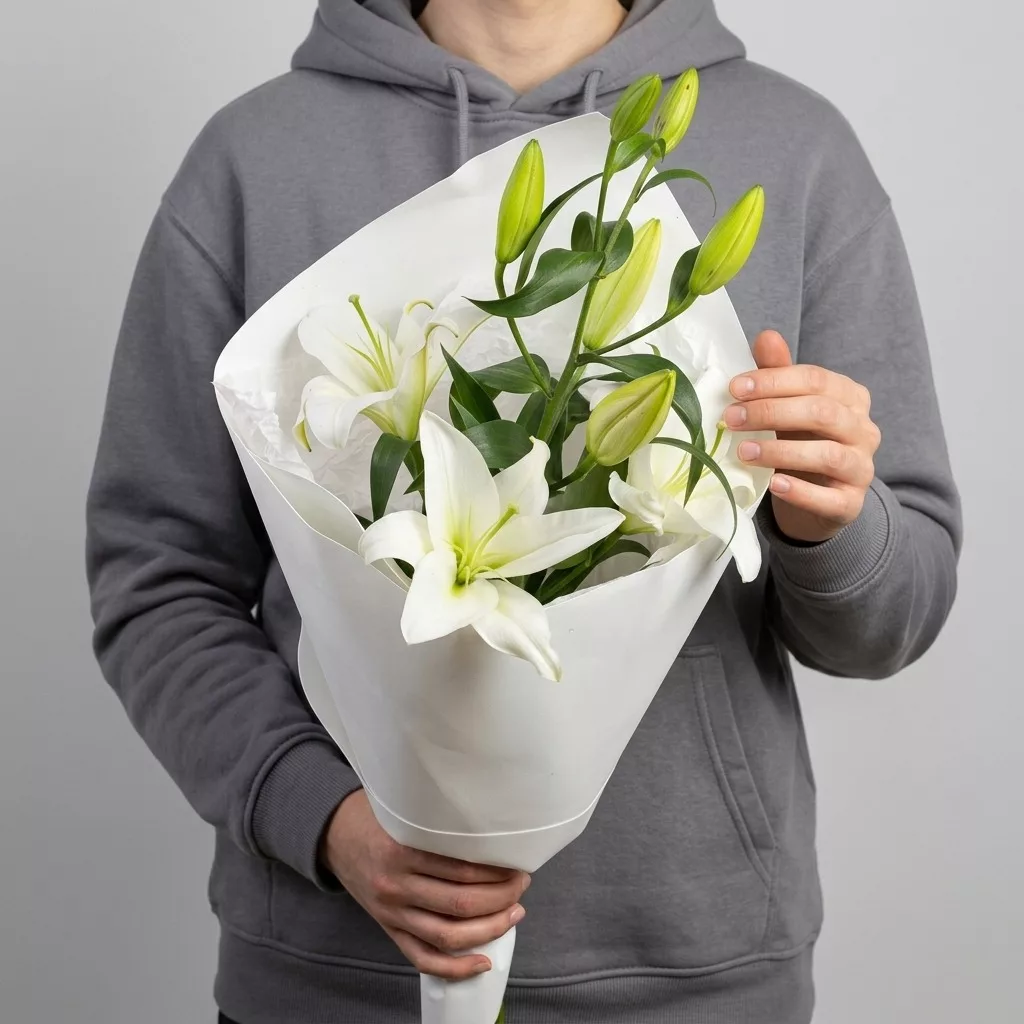
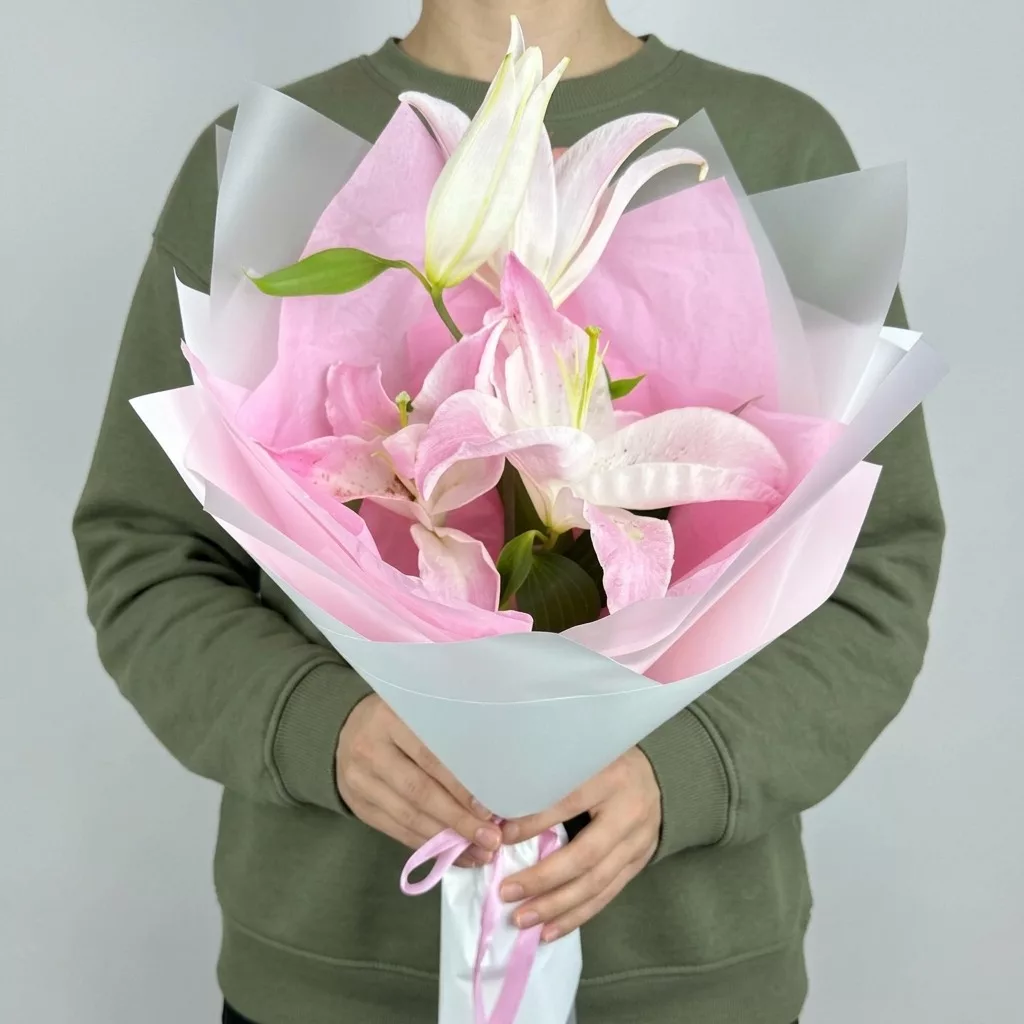
Bouquets we can deliver


Delivery Timing: What the Time Zone and Flight Schedule Mean for You
Petropavlovsk-Kamchatsky operates on UTC+12, which makes it the easternmost major city in Russia by time zone. When it is noon in Moscow, it is already nine in the evening in Petropavlovsk-Kamchatsky. This matters enormously when you are placing an order, because a bouquet ordered at three in the afternoon Moscow time may be arriving at the recipient's door at midnight local time — which is obviously not ideal.
The practical rule is to place your order as early in the Moscow day as possible. Morning orders give the most flexibility and the best chance of same-day delivery to the recipient. Orders placed in the Moscow afternoon are typically scheduled for the following morning local time, which is often the cleaner choice anyway, since a daytime arrival always feels more celebratory than a late evening knock.
Flight connections are the other variable. Direct flights between Moscow and Petropavlovsk-Kamchatsky take roughly eight to nine hours. Flowers are transported in climate-controlled cargo holds, but the total transit window — including handling time on both ends — means that same-day delivery from Moscow is realistic only for early-morning dispatch. For most customers ordering from western Russia, next-day delivery to the recipient is the standard expectation, and it is a perfectly good one.
If you are ordering from Vladivostok or another Far Eastern city, the logistics shorten considerably. Always confirm the delivery window at the point of order so that you and the recipient are working from the same timeline. Surprises are lovely; confusion about timing is not.
The Kamchatka Climate and Why It Changes Your Flower Choices
Kamchatka has a subarctic oceanic climate, which means cold winters, cool summers, high humidity, and frequent wind. Average temperatures in winter drop to minus ten or fifteen degrees Celsius, and even in July the city rarely climbs above sixteen or seventeen degrees. For flowers, this is actually a mixed picture — cold air preserves freshness in transit, but sharp temperature swings between a heated cargo hold and outdoor air can stress stems significantly.
The flowers that handle this best are those bred for structural resilience. Chrysanthemums are an excellent choice for Kamchatka deliveries — they are robust, they hold water efficiently, and they do not bruise easily during handling. Spray roses perform well for the same reasons. Standard roses can work, but they need to be kept tightly budded during transport; fully open blooms are more vulnerable to the cold-to-warm transitions on the tarmac.
Alstroemeria is another strong option. The stems are sturdy, the flowers are long-lasting, and the variety of colours means you can build a genuinely expressive arrangement without relying on delicate petals. Lisianthus, on the other hand, is beautiful but fragile — its layered petals trap moisture and can bruise in cold, turbulent cargo conditions, so it is better reserved for shorter journeys.
In summer, the options open up considerably. Gerbera daisies, sunflowers, and even some tropical varieties like strelitzia can make the journey if the timing is right. The florist choosing the stems will always factor in what is actually in peak condition that week rather than what looks good on a screen, and that judgment is part of what you are paying for.
Choosing the Right Bouquet for the Person and the Occasion
In Russia, flowers carry a lot of social meaning, and a few conventions are worth knowing if you are not familiar with them. The most important is the number of stems: even numbers of flowers are traditionally associated with mourning, so bouquets are almost always arranged in odd numbers — five, seven, eleven, fifteen. This is not superstition so much as deeply ingrained etiquette, and deviating from it unintentionally can create an awkward moment for the recipient.
Colour carries meaning too, though it is less rigid than the number rule. Red roses are romantic and are understood that way universally. White flowers are elegant and work well for birthdays, anniversaries, and professional occasions. Yellow flowers were once considered unlucky in Soviet-era culture, but that association has largely faded among younger generations in cities like Petropavlovsk-Kamchatsky. If you are sending to someone older or more traditional, it is still worth choosing a warmer palette just to be safe.
For birthdays, a mixed bouquet with a clear focal flower — a large-headed rose or peony at the centre, surrounded by complementary fillers like waxflower or eucalyptus — reads as generous and considered. For a professional thank-you or a congratulation, something more structured and monochromatic often lands better. A tight cluster of white spray roses with minimal greenery is clean, impressive, and appropriate across a wide range of workplace relationships.
If you know the recipient's taste, lead with that. If you do not, a warm mixed arrangement in coral, peach, and soft pink is almost universally well received and photographs beautifully, which matters in an age when people document every delivery.
Packaging That Protects Flowers Across Nine Time Zones
The packaging of a long-distance bouquet is not decorative — it is functional first, and every layer has a job to do. Stems are hydrated before packing using water-soaked floral foam or sealed water tubes on each individual stem. This keeps the flowers drinking during the entire journey rather than sitting in dry air for eight hours and arriving dehydrated.
The outer packaging needs to be rigid enough to protect the arrangement from pressure in cargo holds, where bags and boxes shift during turbulence. A sturdy kraft box with internal supports is the standard approach. The box also acts as insulation, buffering the flowers against the temperature swings between the aircraft hold, the tarmac, and the delivery vehicle. In Kamchatka's winters, this insulation layer is essential — an unprotected bouquet set down on a frozen loading dock for even ten minutes can suffer petal damage that is irreversible.
Once the box is opened by the recipient, the presentation should still feel like a gift, not a shipping container. Good packaging design means the flowers are revealed in a way that feels intentional — tissue paper, a ribbon, and a handwritten card tucked in at the top. The card is worth taking seriously. A few specific, personal sentences mean far more than a generic greeting, and for someone receiving flowers in a city as remote as Petropavlovsk-Kamchatsky, knowing that someone put real thought into the message makes the whole gesture feel even more significant.
Ask the florist about the packaging before you finalise the order if presentation matters to you. It usually does.
Keeping Flowers Fresh After Arrival: Advice for the Recipient
Flowers that have travelled a long distance need a little attention when they arrive, and passing this information along to the recipient is a kind thing to do. The first step is always to recut the stems — about two centimetres off the bottom at a forty-five-degree angle, ideally under running water or while the stem is submerged. This removes any air bubbles that have formed during transit and allows the flower to drink immediately.
The water in the vase should be cool and clean. Warm water encourages bacteria, and bacteria is the primary enemy of vase life. Change the water every two days and recut the stems each time. Remove any leaves that fall below the waterline, because they decompose quickly and cloud the water. A small sachet of flower food is usually included with the delivery — dissolve it in the first fill of water and skip it on subsequent changes.
Placement in the room matters more than most people realise. Flowers last longest away from direct sunlight, heating vents, and fruit bowls. Ripening fruit releases ethylene gas, which accelerates ageing in cut flowers noticeably. A cool spot — a windowsill away from direct sun, or a hallway — will add days to the arrangement's life.
For Kamchatka's cool indoor temperatures, which tend to be well-heated in winter but not excessively warm, chrysanthemums and alstroemeria can last ten to fourteen days with proper care. Roses typically give seven to ten days. Gerberas are shorter — around five to seven days — but their impact in the first few days is worth it. Good care doubles the life of almost any arrangement.
Getting the Delivery Right: Practical Steps Before You Order
The single most important piece of information you need before ordering is the recipient's full address, including the apartment number and entry code if the building has a secured entrance. Petropavlovsk-Kamchatsky, like most Russian cities, has a high proportion of apartment buildings, and a courier who cannot get past the front door creates a problem that is very hard to solve quickly from nine time zones away.
A working phone number for the recipient is equally important. If the courier arrives and cannot reach the person — they are at work, they stepped out, their phone is off — the courier needs a way to arrange a second attempt or a safe handover point. This is not a failure of the delivery system; it is just the reality of coordinating a surprise across a large time difference. Building in a small buffer and confirming the recipient will be reachable during the delivery window saves a lot of stress.
If you are organising a surprise, consider looping in a trusted third party — a family member or colleague of the recipient — who can confirm the person will be home without revealing the delivery. This is a common approach for milestone birthdays and anniversaries, and it works well.
Finally, order earlier than you think you need to. For a city as geographically specific as Petropavlovsk-Kamchatsky, the logistics are more layered than a domestic city delivery, and placing your order the day before the occasion rather than the morning of gives the whole chain more room to work smoothly. The recipient will not know you planned ahead — they will just notice that the flowers arrived perfectly, exactly when they should.
Sending flowers to Petropavlovsk-Kamchatsky is one of those gestures that lands with unusual force precisely because of the distance involved. The person receiving the bouquet understands, at some level, that getting something fresh and beautiful to the edge of the Pacific required real intention. When the stems are well chosen, the packaging holds, and the timing is right, what the recipient feels is not just pleasure at the flowers — it is the sense that someone on the other side of Russia was thinking of them specifically. That feeling is what a good delivery is actually made of.
Frequently asked questions
Can I order flowers for same-day delivery to Petropavlovsk-Kamchatsky from Moscow?
Same-day delivery is possible only for early-morning Moscow orders, because the time difference means the recipient's day is already well advanced. For most customers, next-day delivery to the recipient is the realistic and recommended option. Place your order the evening before the occasion or first thing in the morning for the smoothest outcome.
Which flowers are best suited to the long journey to Kamchatka?
Chrysanthemums, spray roses, and alstroemeria are the most reliable choices. They are structurally sturdy, hold moisture well during transit, and tolerate the temperature variations between aircraft cargo holds and outdoor air. Delicate varieties like lisianthus or fully open garden roses are better suited to shorter delivery distances.
Why do Russian bouquets always have an odd number of flowers?
Even numbers of flowers are traditionally associated with mourning in Russian culture, so bouquets for celebrations, birthdays, and romantic occasions are always arranged in odd numbers — five, seven, eleven, and so on. This is standard practice across Russia and is simply good etiquette to follow when sending flowers to a Russian recipient.
What should the recipient do as soon as the flowers arrive?
The first step is to recut the stems at an angle and place them in a clean vase with cool water and the included flower food. Remove any leaves below the waterline and keep the arrangement away from direct sunlight, heating vents, and fruit bowls. Changing the water every two days and recutting the stems will extend the life of the bouquet significantly.
What information do I need to provide to ensure the delivery goes smoothly?
You need the recipient's full address including apartment number and building entry code, plus a working mobile number for the courier to use if the person is temporarily unavailable. For a surprise delivery, having a trusted contact who can confirm the recipient will be home during the delivery window is strongly recommended, especially given the time zone difference.
Ready to send flowers?
Pick the city, choose the bouquet, and a local florist takes it from there.
Choose a city →