Sending Flowers to Podolsk? Here Is Everything You Need to Know
Podolsk sits close enough to Moscow that people sometimes assume flowers can arrive in minutes, yet far enough that a poorly timed order can leave someone waiting by the door. Whether you are surprising a partner in a new residential district or sending a birthday bouquet to a colleague in the historic centre, the details matter: which neighbourhoods we reach, how long it actually takes, and what happens to roses when the temperature outside drops below zero.
Which Parts of Podolsk We Deliver To
Podolsk has grown considerably over the past decade, absorbing surrounding settlements and developing new residential clusters along its edges. We deliver across the city proper, including the central districts around Lenina Square, the older neighbourhoods near the Pakhra River, and the newer high-rise zones to the north and south. Microrayon Klimovsk, now officially part of the Podolsk urban district, is also within our delivery zone, as are areas toward Domodedovo direction.
When you place an order, entering the full street address including the building number and apartment is essential. Many Podolsk addresses share similar street names across different districts, and a missing corpus number can send a courier to completely the wrong end of a long residential block. If the recipient lives in a gated compound or a building with a coded entrance, adding that information in the comment field saves everyone time.
For recipients in outlying villages or country house communities on the fringes of the district, please contact us before ordering so we can confirm coverage. Delivery to dachas and private houses is possible in most cases, but timing and route planning differ from urban addresses. We always aim to be honest about what we can and cannot do rather than promise something we cannot deliver on time.
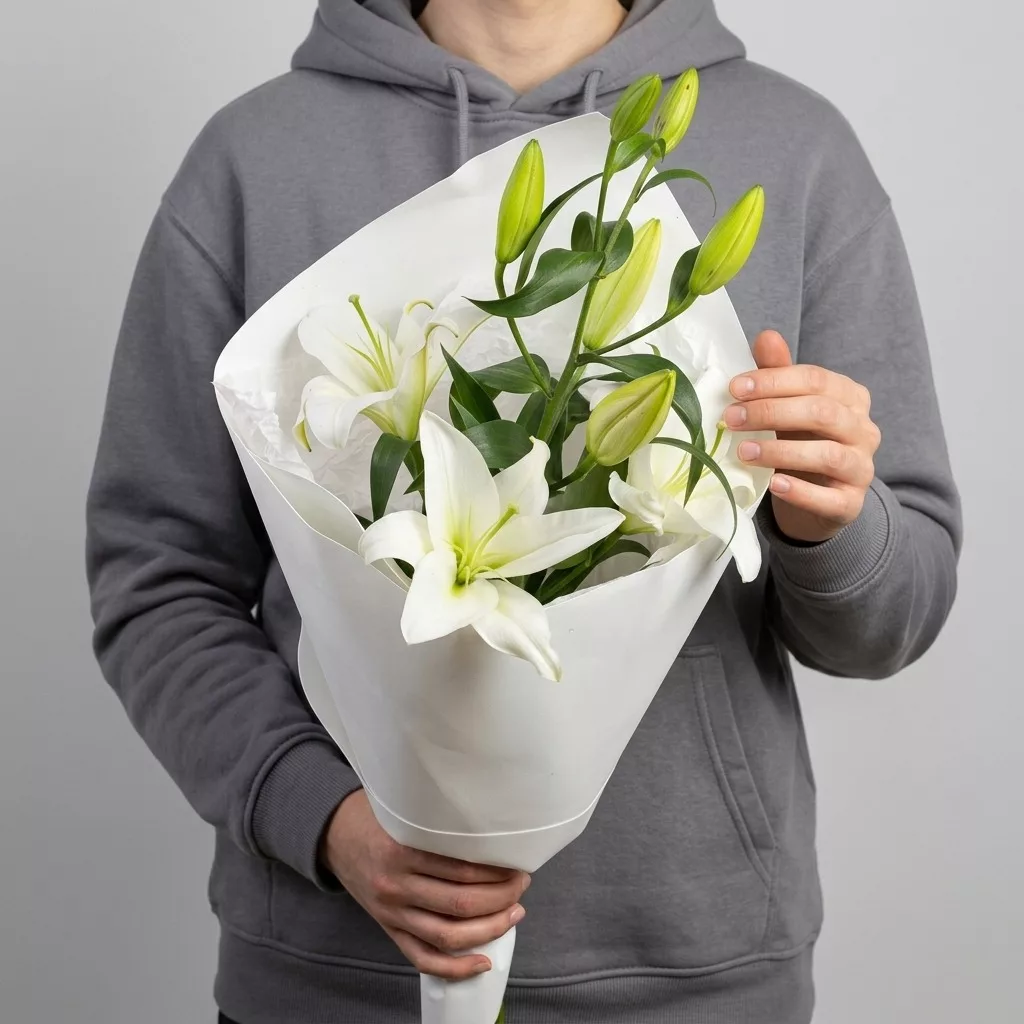
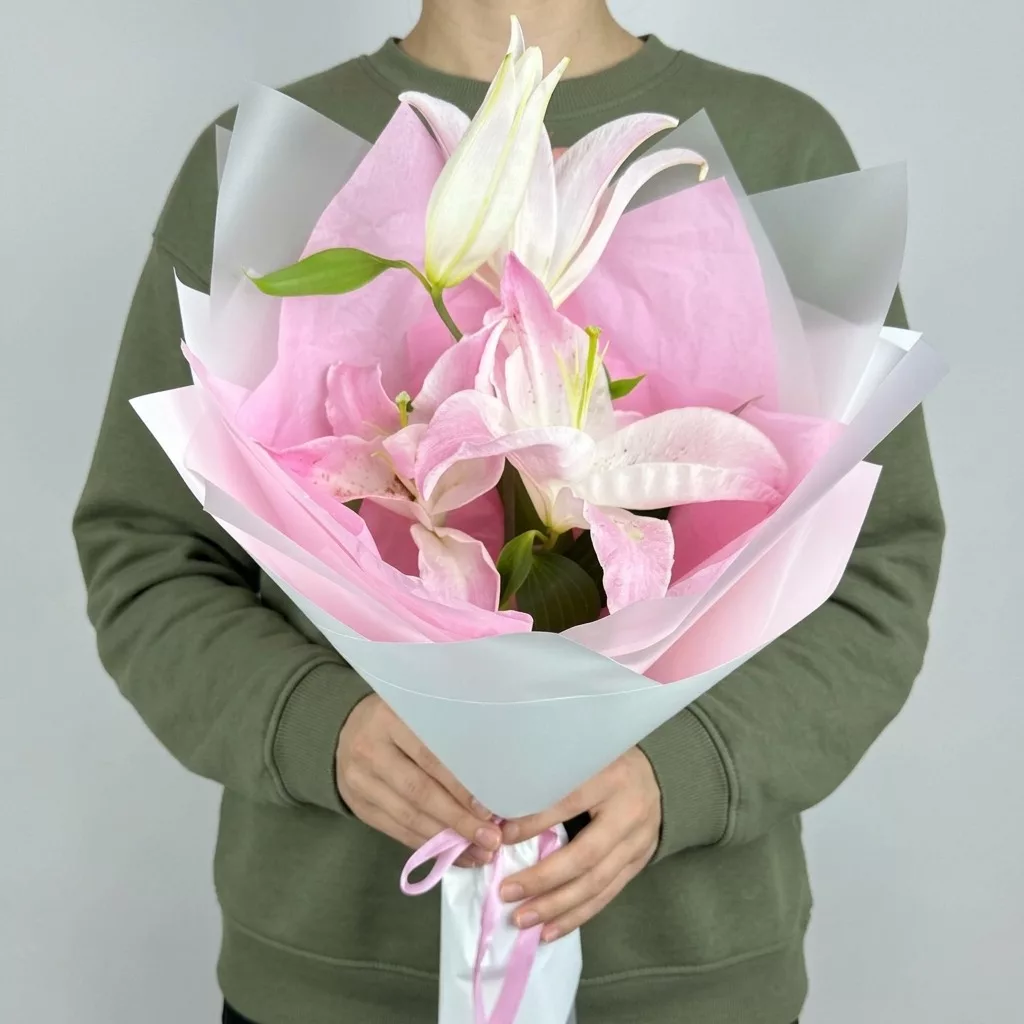
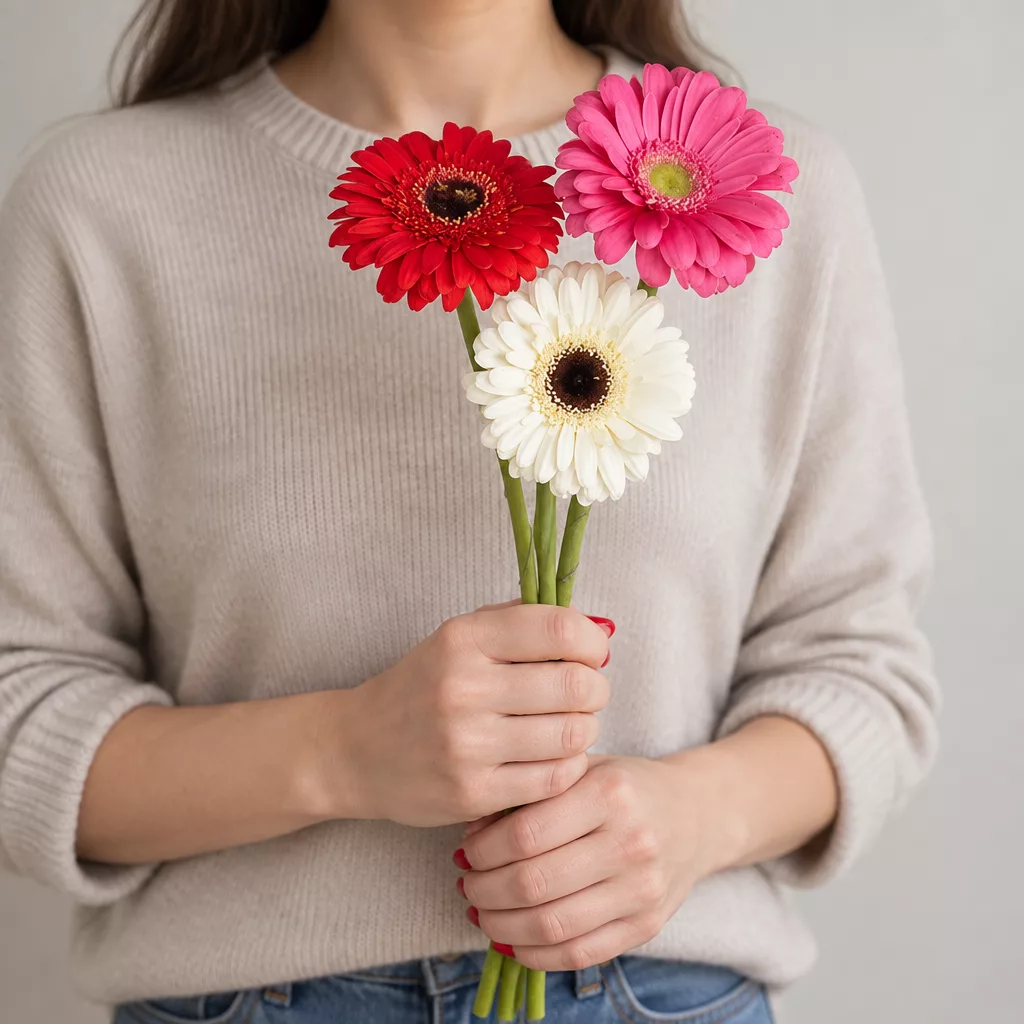
Bouquets we can deliver

Realistic Timing: What One to Two Hours Actually Means
The one-to-two-hour window we quote is the time from order confirmation to the moment the courier rings the doorbell. It is not the time from when you start browsing the website. Confirmation happens once your payment clears and a florist has reviewed the order, which on busy days like February 14th or March 8th can add a short queue. On a quiet Tuesday afternoon, confirmation is nearly instant.
Podolsk is connected to Moscow via the M2 highway and Simferopol Road, both of which can slow to a crawl during morning and evening rush hours. Orders placed between roughly eight and ten in the morning or five and seven in the evening should account for this. If the bouquet must arrive before a specific moment, such as before a birthday dinner reservation, choose a delivery window that ends at least an hour before that deadline.
We also want to be direct about weather. Heavy snowfall in winter and summer thunderstorms can extend transit time. Flowers travel in insulated packaging, so a delay of thirty or forty minutes in cold weather does not harm the blooms, but it does affect punctuality. Choosing a morning slot during uncertain weather is a practical habit. If you need same-day delivery and it is already past midday, ordering early in the afternoon gives us the best chance of hitting the earlier part of that window rather than the later.
Choosing the Right Bouquet for the Person, Not Just the Occasion
A birthday bouquet for a twenty-five-year-old woman who loves bold colour is a very different thing from a bouquet for her mother who keeps a tidy home with neutral tones. Starting from who will receive the flowers, not just what the event is, leads to a much better result. Think about where the bouquet will live for the next week. A small apartment with one narrow windowsill calls for a compact, upright arrangement rather than a wide garden-style display.
For someone who appreciates elegance without fuss, single-variety bouquets work beautifully. A tight cluster of garden roses in blush or cream, or a bundle of white lisianthus, reads as considered and refined. For someone who loves abundance and colour, mixing ranunculus with spray roses and eucalyptus branches creates a layered, almost wild feeling that still holds together visually.
If you are sending flowers to a new home or a housewarming, avoid heavily scented varieties like tuberose or stargazer lilies in large quantities. The fragrance in an enclosed space during unpacking can be overwhelming rather than welcoming. Opt instead for something visually generous but gentle in scent: garden roses, hydrangeas, or a mixed seasonal arrangement built around soft peonies when they are in season. The goal is to make the recipient smile the moment they open the door, not reach for a window latch.
Bouquet Options Across Different Budgets
Flowers do not have to be expensive to be meaningful, and a well-assembled smaller bouquet often makes more impression than a large one put together without thought. At a modest budget, a hand-tied bunch of seasonal tulips or alstroemeria in a single strong colour, wrapped simply in kraft paper with a ribbon, is clean and cheerful. Alstroemeria in particular lasts exceptionally well, often ten days to two weeks, which makes it a genuinely generous gift despite its accessible price.
In the mid range, combination bouquets start to open up. Spray roses paired with waxflower and a few stems of eucalyptus create texture and depth. Garden roses mixed with soft-toned carnations, which have shed their old-fashioned reputation entirely, make a bouquet that looks expensive and lasts well. Adding a few stems of veronica or matthiola introduces vertical movement and fragrance without dramatically raising the cost.
At a higher budget, garden roses from Ecuador or Colombia, peonies in season, or orchid arrangements come into their own. These varieties are not just prettier at this level; they are genuinely different in petal count, fragrance, and vase life compared to their mass-market equivalents. A bouquet of David Austin-style garden roses in a terracotta or dusty pink tone, arranged loosely with dried bunny tail grass and a few sprigs of olive branch, is the kind of thing people photograph and keep on their feed for days. The presentation layer, the wrapping, the ribbon, the water tube on each stem, matters as much as the flowers themselves at this level.
How Flowers Travel and What Packaging Protects Them
Every bouquet that leaves our workroom is built to survive a journey, not just to look good on a table. Stems are cut at an angle and placed in water tubes or wrapped in damp paper before being secured inside the outer packaging. This keeps them hydrated during transit. In summer, when temperatures in Podolsk regularly reach above twenty-five degrees Celsius, we add cool packs to the packaging for delicate varieties like garden roses and peonies, which can wilt quickly in a hot car.
In winter, the challenge reverses. Below minus ten Celsius, flower petals become brittle and can bruise or brown at the edges during even a short exposure to open air. We wrap cold-weather bouquets in insulating sleeves and instruct couriers to keep them inside the vehicle until the last possible moment before the handover. If a recipient lives in a building with a long outdoor walk from the parking area, the courier will call ahead so the handover happens as quickly as possible.
When the bouquet arrives, the recipient should unwrap it within the first hour and place the stems in clean, cool water immediately. Tap water in Podolsk is generally fine for flowers, but letting it sit for twenty minutes to release chlorine improves uptake slightly. Cutting another centimetre off the stems at an angle before placing them in the vase reopens the channels that may have compressed during transit. This small step adds two to three days of vase life in most cases.
Russian Flower Customs Worth Knowing Before You Order
If you are not familiar with Russian gifting traditions around flowers, a few points are worth knowing before you choose. The number of stems in a bouquet carries meaning for many recipients. An even number of flowers is traditionally associated with mourning and funerals, so bouquets given as gifts are almost always composed of an odd number of stems: three, five, seven, eleven, fifteen, and so on. We follow this convention automatically, but if you are building a custom order, keep it in mind.
Colour symbolism is generally relaxed in modern Russian culture, especially among younger generations in cities, but white flowers are sometimes perceived as formal or ceremonial by older recipients. If you are sending to someone over sixty and want to play it safe, a warm-toned arrangement in peach, coral, or soft yellow tends to feel more celebratory and less ambiguous.
Flowers are given for a wide range of occasions that might feel more casual in other cultures. Teachers receive bouquets on Knowledge Day in September and on Teacher's Day in October. Colleagues are often gifted flowers on their birthdays, and it is common to bring a small bouquet when visiting someone's home for the first time. International Women's Day on March 8th is the single largest flower-giving event of the year in Russia, comparable to Valentine's Day and Mother's Day combined in other countries. Ordering well in advance for that date is not optional; it is genuinely necessary.
Keeping Your Bouquet Fresh After Delivery
The care a bouquet receives in the first few hours after arrival determines most of its vase life. The vase itself matters more than people realise. A narrow-necked vase holds stems upright but restricts water flow; a wide-mouthed one lets the arrangement breathe but may not support the stems well. For a hand-tied bouquet, a straight-sided vessel at roughly two-thirds the height of the stems is a practical starting point.
Keep the vase away from direct sunlight, radiators, and fruit bowls. Ripening fruit releases ethylene gas, which accelerates petal drop in roses, tulips, and carnations noticeably. A cool room, ideally between sixteen and twenty degrees Celsius, extends the life of almost every variety. If your apartment runs warm in winter due to central heating, placing the bouquet in the coolest corner of the room makes a real difference.
Change the water every two days and re-cut the stems each time. Remove any leaves that fall below the waterline, as they decompose quickly and cloud the water with bacteria that block stem uptake. A small pinch of sugar in the water feeds the flowers, and a drop of bleach keeps bacteria in check; you do not need commercial flower food sachets if you follow these steps. Tulips will continue to grow in the vase and may lean toward the light, which is normal and part of their charm. Rotating the vase a quarter turn each day keeps them growing upright. Most mixed bouquets assembled from fresh stock will look beautiful for five to seven days with basic care, and some stems like chrysanthemums and alstroemeria will outlast the others by several more days.
Sending flowers to Podolsk is straightforward when you know what to expect from the journey, the timing, and the care on the other end. The right bouquet chosen for the actual person, packaged to survive the route, and placed in water within an hour of arrival will do exactly what flowers are supposed to do: make someone feel genuinely seen and celebrated. We handle the logistics; you handle the message.
Frequently asked questions
Can I order flowers for same-day delivery to Podolsk if I place the order in the evening?
Yes, we accept evening orders and deliver until late. The key is to check our current available delivery slots when you place the order. Evening slots fill quickly on weekends and holidays, so placing the order as early as you can in the day gives you more flexibility. We will always show you the earliest realistic window rather than promise a time we cannot meet.
What happens if the recipient is not home when the courier arrives in Podolsk?
Our courier will call the recipient before arriving. If there is no answer, we will contact you as the sender to decide next steps: leaving the bouquet with a neighbour, attempting a second delivery, or arranging a new time slot. We do not leave flowers unattended in a hallway or outside a door, especially in extreme temperatures, as this damages the blooms and creates a security concern.
Is it possible to deliver to a workplace or office address in Podolsk?
Absolutely. Office deliveries work well and are a popular choice. Include the company name, floor, and any reception or security desk instructions in the address field. We recommend scheduling workplace deliveries during business hours, typically between nine in the morning and six in the evening, to ensure someone is there to receive them. Surprise deliveries to an office are always a welcome moment for the recipient.
Do you deliver to the newer residential developments on the outskirts of Podolsk?
We cover most of the newer districts, including large residential complexes built in the past five to seven years. Some gated communities have specific entry procedures. Adding the entry code, the name of the complex, or any access instructions in the comment field when ordering ensures the courier reaches the door without delays. If you are unsure whether your specific address is covered, contact us directly before placing the order.
Which flowers hold up best during a long delivery in hot summer weather?
Chrysanthemums, alstroemeria, and tropical varieties like anthuriums and tropical ginger are the most heat-tolerant. Among classic bouquet flowers, spray roses handle warmth better than large-headed garden roses. We use cool packs in summer packaging for sensitive varieties, but if temperatures are above thirty degrees Celsius and delivery will take close to two hours, choosing a hardier variety is genuinely the more reliable option for a beautiful result on arrival.
Ready to send flowers?
Pick the city, choose the bouquet, and a local florist takes it from there.
Choose a city →