Sending Flowers to Polyarny: Timing, Varieties and What to Expect
Polyarny sits above the Arctic Circle on the Kola Peninsula, and sending flowers there feels like a small act of defiance against the weather. The town is compact, the winters are long and dark, and a fresh bouquet landing at someone's door carries a weight that it simply does not carry in warmer cities. Whether you are marking a birthday, a homecoming, or just telling someone you are thinking of them, getting the delivery right matters — and it starts with understanding exactly what the journey looks like from our Saint Petersburg workroom to a door in Polyarny.
Who Receives Flowers in Polyarny and Why It Matters
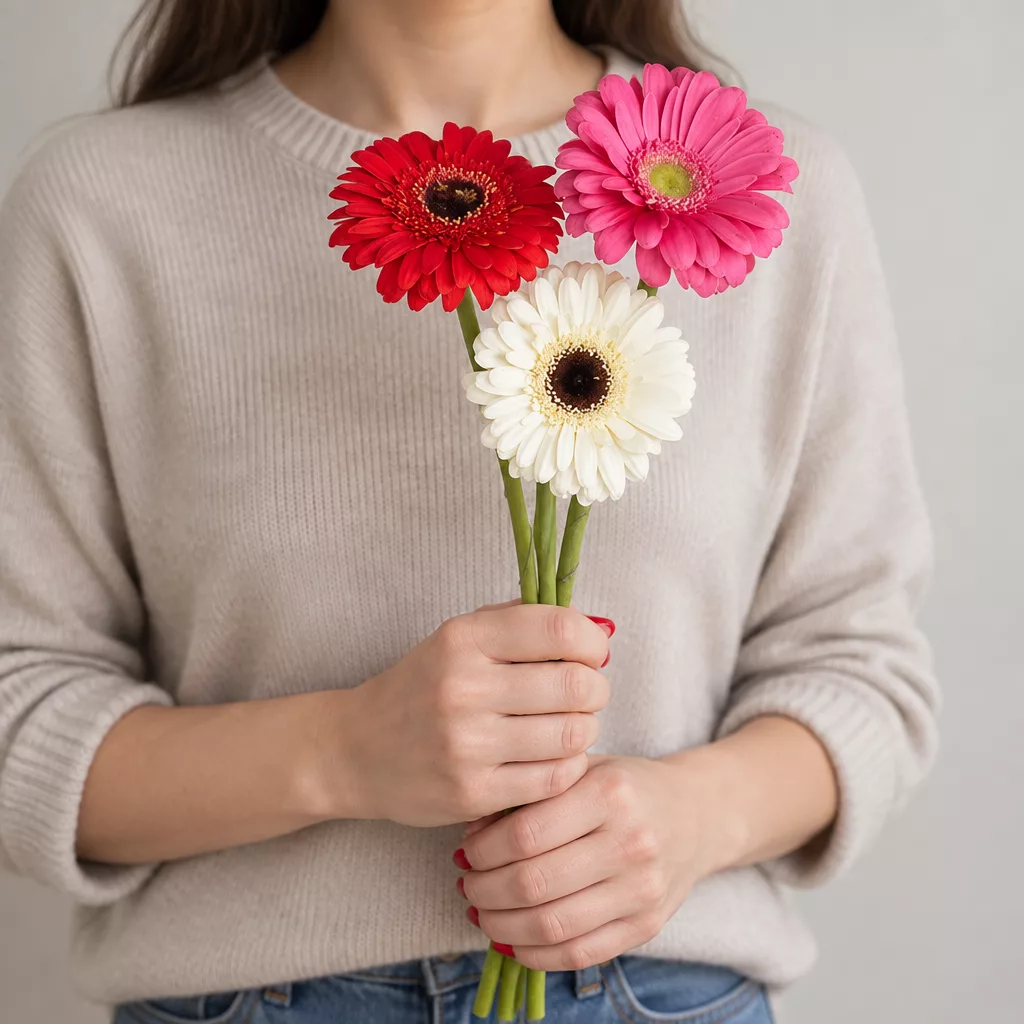
Polyarny is a closed military town on the shores of the Kola Bay, home to naval personnel and their families, civilian workers, and people who have simply built a life in one of Russia's most remote corners. The recipient shapes everything about how you should order. A partner waiting for a sailor to return from a long deployment needs something with staying power and warmth — full garden roses or alstroemeria in deep reds and corals will feel like a fire lit in a cold room. A colleague celebrating a promotion in an office where the windows show grey Arctic water all winter deserves something bright and uplifting — sunflowers, yellow spray chrysanthemums, or a mixed bouquet with gerberas. Children celebrating a birthday respond to colour and texture: ranunculus in candy pinks, or tulips in the spring season when the supply chain brings them in peak condition. Russian custom leans toward odd numbers of stems — three, five, seven — and that is worth knowing if you are ordering from abroad or from another culture. It is not superstition exactly; it is simply how celebration is expressed here, and arriving with an even number can feel slightly off to a local recipient. We handle the count automatically, but if you are building a custom order it is worth keeping in mind. The point is that a bouquet chosen for the person, not just for the occasion, arrives with more meaning. Spend thirty seconds picturing what that person's home looks like, what colours they wear, and the choice becomes obvious.
Bouquets we can deliver


The Geography of Delivery: Getting Flowers to the Kola Peninsula
Polyarny is not a city you pass through on the way somewhere else. It sits at the end of a road that branches off the main Murmansk highway, tucked against the bay. That geography is the first thing to understand when you are planning a delivery. Turboflora delivers across Russia, and reaching Polyarny means coordinating a route that accounts for both distance and the town's semi-closed status. Delivery windows here are wider than in a major city — plan for same-day delivery when you order well before midday, and allow for next-day confirmation if the order comes in later in the afternoon. The road conditions on the Kola Peninsula change dramatically by season. In summer, the midnight sun means visibility is never a problem, and roads are clear. In winter, from November through March, polar night and snowstorms can slow transit. We always build a weather buffer into Arctic-region orders, and we will tell you honestly at the point of order if conditions make a specific time window unreliable. Polyarny's closed-town status means our courier needs to follow the standard access procedures for deliveries, which adds a small but real step to the process. This is routine and handled on our side — you do not need to arrange anything special — but it is worth knowing so you are not surprised by a slightly longer delivery window compared to Murmansk city. The bouquet itself is packed for the cold, which we explain in detail further on. The geography is the constraint; the care is our answer to it.
Choosing the Right Flowers for an Arctic Climate
Temperature is the central fact of flower delivery in Polyarny. In January the ambient temperature outside can sit at minus fifteen to minus twenty-five degrees Celsius for weeks at a time. That range will destroy unprotected flowers in under ten minutes. The varieties that travel well in these conditions are those with naturally robust cell structure: spray roses hold better than large-headed garden roses in extreme cold; alstroemeria is exceptionally resilient and will survive brief exposure without petal damage; chrysanthemums in both standard and spray forms are among the most cold-tolerant flowers in the florist's palette. Tulips in season — roughly February through April when Dutch supply peaks — travel well if they are in tight bud, because the closed bud protects the inner petals. Avoid ordering open lilies or fully open peonies for delivery in deep winter; they are simply too fragile at the cell level for the temperature swings involved. Gerberas are beautiful but sensitive to frost and are better suited to spring and summer orders. Carnations, often underestimated, are genuinely tough and come in a wide range of colours that work well for both celebratory and affectionate bouquets. For winter orders in Polyarny, a combination of spray roses, alstroemeria, and waxflower — a small white filler flower with a waxy coat that resists cold — creates a bouquet that is both visually generous and practically suited to the journey. In summer, the range opens up considerably: hydrangea, lisianthus, and even delicate ranunculus can make the trip without issue when temperatures are above zero.
Bouquet Options Across Different Budgets
A meaningful bouquet does not require the largest arrangement on the page. In Polyarny, where fresh flowers are genuinely rare compared to a city like Moscow or Saint Petersburg, even a simple five-stem bouquet of good spray roses with eucalyptus and a ribbon is received as something special. The scarcity itself adds value — the recipient knows that someone made an effort that goes beyond clicking a button. For a modest budget, think in terms of a single focal flower done well: seven stems of alstroemeria in a warm coral tone, wrapped tightly with kraft paper and a satin ribbon, is complete and generous. Alstroemeria lasts exceptionally well in a vase — up to two weeks with proper care — which makes it a smart choice when you want the gesture to stay visible for a long time after delivery. A mid-range order opens the door to combinations. A mixed bouquet with garden roses as the focal flower, spray chrysanthemums as the body, and eucalyptus or pistache greenery as the frame creates visual depth and lasts well. This is the level where presentation starts to do real work: the way the flowers are layered and the wrapping chosen changes how the bouquet reads at the door. For a larger celebration — a significant birthday, an anniversary, a return after a long time away — a mono bouquet of premium roses, thirty-five to fifty stems in a single deep colour, makes an unambiguous statement. In a town where flowers are not an everyday sight, that kind of arrival is remembered. Whichever level you choose, ask yourself what the recipient will do with the bouquet first: photograph it, put it on a table, or hold it while someone takes a picture. That image guides the shape.
Packaging for Cold: What Happens Before the Bouquet Leaves
The packaging step is where Arctic deliveries differ most visibly from a standard city order. Every bouquet going to Polyarny in the cold season is prepared with an insulating wrap around the stems and a protective outer layer over the blooms. We use a dense foam-lined sleeve around the water-filled stem wrap, and the flowers themselves are covered with a soft non-woven fabric that traps a layer of warm air without pressing against the petals. The outer presentation wrapping goes over the top of this protective layer, so the bouquet still looks like a bouquet when it arrives — not like a package from a hardware store. The courier carries the bouquet inside the vehicle for the entire journey and brings it directly to the door rather than leaving it in a hallway or on a step. This matters enormously in winter: a bouquet left unattended at minus twenty will suffer visible damage within minutes, and we do not take that risk. In summer the process is simpler but still deliberate: flowers are kept away from direct sun during transit, because the midnight sun in June and July can create surprisingly intense heat inside a vehicle. Hydration is managed with a water-gel sachet at the stem ends, which keeps the flowers fresh for the duration of transit without the mess of open water. When the recipient opens the outer wrap, the flowers have been in a controlled environment the whole way. The first impression is of flowers that look as though they were just cut — which, within a day of assembly, they essentially were.
Vase Life and Care After Delivery
The bouquet has arrived, the moment has happened, and now the flowers need to live as long as possible in what is probably a warm, dry apartment — the standard Russian heating system runs hot in winter, and Polyarny apartments are no exception. Dry indoor air is the enemy of vase life, and it is the most common reason flowers fade faster than expected. The first thing the recipient should do is trim the stems at an angle under running water, removing about two centimetres. This reopens the water channels that close during transit and makes an immediate difference to how well the flowers drink. Remove any leaves that would sit below the waterline, because submerged leaves rot quickly and cloud the water with bacteria that block the stems. Change the vase water every two days — this single habit extends vase life by three to five days across almost all varieties. Keep the bouquet away from the heating radiator and from fruit bowls: ripening fruit releases ethylene gas, which accelerates petal drop in roses and tulips. A cool windowsill in the evening, away from the direct blast of the heater, is ideal. For the varieties most common in Polyarny winter deliveries: alstroemeria will last ten to fourteen days with good water discipline; spray roses seven to ten days; chrysanthemums up to two weeks; carnations ten to fourteen days. Tulips are shorter — five to seven days — but they continue to grow and open in the vase, which creates a different kind of pleasure. Telling the recipient these basics, either in a card or a message, turns a beautiful gift into one that stays beautiful.
Making the Order: Timing, Messages and What to Tell Us
Ordering for Polyarny works best when you give us as much lead time as the occasion allows. Same-day delivery is possible for orders placed before noon Saint Petersburg time, and we will confirm the window with you before you complete the order. For a specific time — a birthday dinner, the moment someone gets home from a shift — order at least a day ahead and specify the window clearly. The more precise the instruction, the better we can plan the route and the packaging schedule. The message card is worth taking seriously. In Russia, a handwritten note inside a bouquet is a genuine tradition, and even a few sincere lines mean more than an elaborate bouquet with no words. Write in Russian if you can manage it — even imperfect Russian is appreciated — but a warm message in any language, translated on the card, is understood and valued. If the recipient has a preference for colour, a flower they love, or a scent sensitivity, tell us at the order stage. We build bouquets to order, not from a fixed stock shelf, and that information changes what we put together. If you are ordering from outside Russia and are unsure about the address format for Polyarny — the town has a specific postal code and the street naming follows Soviet-era conventions — our team can help you verify the address before the order is confirmed. A wrong address in a closed town is a much harder problem to solve than in an open city, so we check carefully. The whole process, from order to door, is designed to require as little effort from you as possible while giving the recipient something that feels like it took real thought.
Polyarny is a place where a fresh bouquet is genuinely rare, and that rarity is part of the gift. Choosing the right flowers for the cold, packing them properly, and getting the timing right turns a simple order into something the recipient will talk about. Turboflora handles the logistics, the packaging, and the journey — your part is choosing who deserves the flowers and what you want them to feel when the door opens.
Frequently asked questions
Can flowers really survive the cold journey to Polyarny in winter?
Yes, with the right varieties and proper packaging. We use insulating sleeves, water-gel stem hydration, and protective fabric over the blooms. Varieties like spray roses, alstroemeria, and chrysanthemums are specifically chosen for cold resilience. The courier keeps the bouquet inside the warm vehicle for the entire trip and delivers directly to the door.
How far in advance should I order for a specific delivery time in Polyarny?
At least one day ahead for a specific time window, and two days ahead during winter when road conditions on the Kola Peninsula can be unpredictable. Same-day delivery is available for orders placed before noon Saint Petersburg time, but a precise hour slot is easier to guarantee with more lead time. We confirm the window before your order is finalised.
Does the closed-town status of Polyarny affect delivery?
It adds a small procedural step for our courier, but this is routine and handled entirely on our side. You do not need to arrange any special access or paperwork. It does mean the delivery window may be slightly longer than for an open city, and we account for this in our scheduling so there are no surprises.
Which flowers last longest in a warm, dry Polyarny apartment in winter?
Alstroemeria and carnations are the clear leaders, both lasting ten to fourteen days with regular water changes. Spray chrysanthemums also hold well, up to two weeks. Roses give seven to ten days. The biggest factor after variety is keeping the bouquet away from radiators and fruit, and changing the vase water every two days.
Can I include a message card in Russian if I do not speak the language?
Absolutely. Write your message in your own language and we will include it on the card exactly as you write it, or we can help you phrase a short message in Russian if you ask us at the order stage. Even a brief, sincere note makes a meaningful difference to how the bouquet is received, and recipients genuinely appreciate the personal touch.
Ready to send flowers?
Pick the city, choose the bouquet, and a local florist takes it from there.
Choose a city →