Flower Delivery in Prokopevsk: Timing, Bouquets and What to Expect
Prokopevsk sits in the Kemerovo region, a city with its own rhythm and its own sense of occasion. Whether you are sending roses to a colleague on her birthday or surprising a relative with a spring arrangement after a long winter, getting flowers there feels personal the moment you place the order. Turboflora delivers fresh bouquets to Prokopevsk within one to two hours, and this article walks you through every step — from choosing the right flowers for the person and the moment, to keeping them alive on the windowsill for as long as possible.
Which Parts of Prokopevsk We Deliver To
Prokopevsk is a mid-sized Siberian city spread across several distinct districts, and coverage matters when you are counting on a two-hour window. Turboflora delivers across the central part of the city, the Zayarsky and Kiselyovsk Road corridors, residential neighbourhoods around Gagarina Street, and the areas near the Prokopevsk railway station. If you are sending to a private address in the outer residential blocks or near the city boundary, it is worth specifying the exact street and building number when you place the order — Prokopevsk has a number of similarly named streets in different quarters, and a precise address keeps the courier on the right track.
For office deliveries, the courier will call ahead and wait at the entrance if access requires a pass. For apartment buildings with intercom systems, include the flat number and intercom code in the delivery notes. These small details make the difference between a bouquet arriving warm and fragrant on time and one sitting in a cold stairwell. Prokopevsk winters are serious — temperatures regularly drop below minus twenty Celsius from November through March — so the courier uses insulated packaging during those months to protect roses, tulips and any arrangement with delicate petals from frost damage between the van and the front door.
Bouquets we can deliver



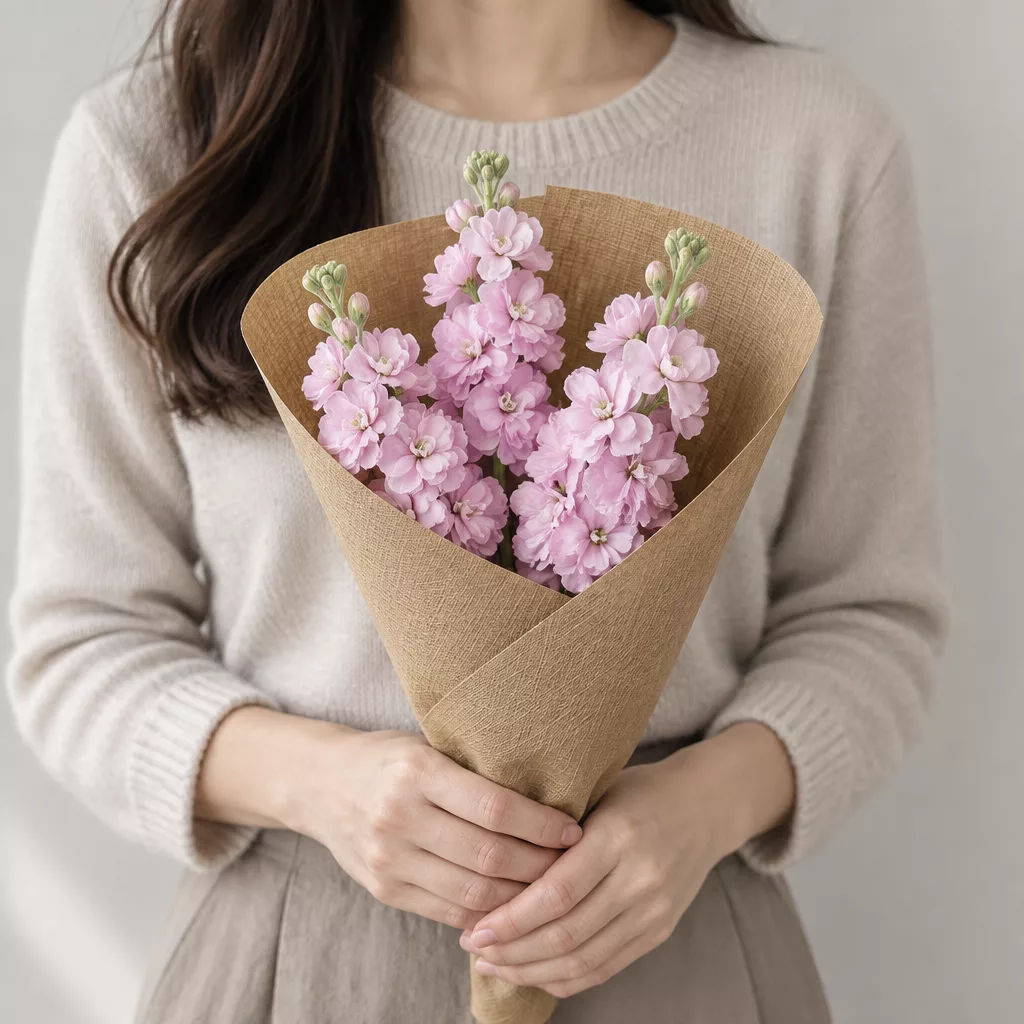
Timing Your Order for the Right Moment
The one-to-two-hour delivery window is the core promise, and it applies across Prokopevsk during standard operating hours. Orders placed in the morning tend to arrive with the most flexibility — if you want flowers on the table before a lunch celebration, placing the order by ten in the morning gives the team time to assemble the bouquet carefully rather than rushing the stems into water and out the door. Evening deliveries are possible and popular for birthdays, but placing the order at least ninety minutes before your intended arrival time is wise.
Prokopevsk has predictable traffic patterns that the courier team accounts for. The area around the central market and the main shopping streets can slow things down between noon and two in the afternoon on weekdays. Saturdays before public holidays are the busiest days across all Siberian cities, and flower demand spikes sharply around March 8, February 14 and the first of September. On those dates, ordering the evening before or early in the morning is genuinely the better strategy — not because delivery becomes impossible, but because it lets you choose from the full range of fresh stock rather than whatever remains after the morning rush. Turboflora keeps Prokopevsk orders in a separate queue so local deliveries are never delayed by volume from larger cities.
Choosing Flowers for the Person, Not Just the Date
The most common mistake people make when ordering flowers remotely is choosing by colour alone. A bright red rose arrangement reads very differently to a twenty-year-old receiving it from a friend than to a fifty-year-old receiving it from a spouse. Think first about who the person is, then about what the moment calls for, and only then about colour and size.
For a warm, personal birthday gift to a woman who appreciates something a little different, a mixed arrangement of alstroemeria, waxflower and seasonal greenery like eucalyptus tends to feel more considered than a dozen identical roses — and it lasts longer in the vase. For a professional occasion, such as congratulating a colleague on a promotion or thanking a teacher, single-variety bouquets of white or cream chrysanthemums or spray roses carry a respectful, unambiguous message without feeling overly romantic. For a new mother, soft peony-toned lisianthus or pale ranunculus in a compact round bouquet work beautifully because the flowers are not strongly scented and will not overwhelm a newborn's sensitive environment.
In Siberian cities, people tend to appreciate substantial bouquets — a slim five-stem arrangement that might look elegant in a Moscow boutique can read as underwhelming in Prokopevsk, where generosity is expressed through volume and warmth. Ask for a medium or large format when in doubt, and let the florist balance the proportions.
Bouquets by Budget: What Each Level Gets You
Budget shapes the bouquet, but it does not have to limit the impression the flowers make. At the entry level, a single-variety arrangement of seasonal flowers — tulips in spring, chrysanthemums in autumn, spray carnations year-round — can look striking when the stems are cut to a uniform length and wrapped well. The key at this level is simplicity done with intention, not a handful of stems that look like they were grabbed from a bucket.
Moving into the mid-range opens up combinations. This is where you can pair a focal flower like a garden rose or a standard gerbera with supporting textures — statice, pittosporum, ruscus — so the bouquet has depth and does not look flat from across the room. A well-built mid-range bouquet in Prokopevsk will typically include seven to eleven stems with foliage and wrapping that suits the occasion, whether that is kraft paper for a casual feel or soft fabric ribbon for something more celebratory.
At the upper end, you gain access to flowers that travel less well and require careful handling: garden peonies in May and June, imported David Austin roses, seasonal ranunculus and anemones. These flowers have a shorter shelf life than their hardier counterparts — ranunculus, for example, lasts around five to seven days in the vase — but the visual impact when they arrive fresh is difficult to match. If you are sending a premium bouquet to Prokopevsk in winter, the insulated packaging is especially important for these sensitive varieties, and Turboflora applies it automatically.
Russian Flower Customs Worth Knowing
If you are sending flowers from outside Russia or are simply unfamiliar with local customs, a few conventions are worth understanding so your gift lands exactly as intended. The most well-known rule is the odd-number tradition: bouquets given as gifts contain an odd number of stems, while even numbers are associated with mourning. Turboflora follows this convention automatically for all gift orders, so you do not need to count stems yourself.
Yellow flowers carry a nuanced reputation in Russian culture — in some regions and among older generations, yellow roses in particular are associated with separation or jealousy, though this belief is less strongly held among younger recipients. If you are unsure about the recipient's views, mixing yellow with white or cream flowers in the same arrangement softens the association entirely and still produces a beautiful result. Pure yellow sunflowers, on the other hand, are almost universally cheerful and carry no such weight.
It is also customary in Russia to present flowers with the blooms facing upward, not wrapped bud-down as is common in some Western European traditions. Turboflora's packaging is designed with this in mind — the bouquet arrives upright and presentation-ready. When the recipient opens the door, the flowers are already in gift position, which matters more than people realise for the first impression of the arrangement. A small card in Russian or English can be included with the order; the team will transcribe your message carefully.
What Happens to Your Flowers in Siberian Winter
Winter in Prokopevsk is not a footnote — it is a major factor in how flowers travel and how long they last once they arrive. From late October through early April, outdoor temperatures can stay below minus fifteen Celsius for weeks at a time. Roses, tulips and lisianthus are particularly vulnerable to freezing: even ten minutes of unprotected exposure at those temperatures can cause the outer petals to turn translucent and collapse within hours of being brought indoors.
Turboflora uses insulated flower sleeves and, during the coldest months, thermal wrapping for all Prokopevsk deliveries. The courier carries orders in a climate-managed van rather than leaving bouquets in an unheated boot. When the flowers arrive, the recipient should bring them inside immediately and unwrap them within five minutes — leaving an insulated bouquet sealed for too long once indoors can cause condensation that accelerates petal browning.
Once inside, flowers that have been in the cold need fifteen to twenty minutes to acclimatise before being placed in water. Cutting the stems at a diagonal under lukewarm — not cold — water helps the cells reopen after the chill. A warm room is actually better for this initial recovery than a cool one, counterintuitively. After the first two hours in water, move the vase away from radiators and direct sunlight, which is the standard advice regardless of season but especially relevant in Prokopevsk apartments where central heating runs very warm through the winter months.
Keeping Your Bouquet Fresh: Vase Life and Simple Care
Most fresh flowers last between five and ten days in the vase when given basic care, and a few simple habits make a real difference. Start with a clean vase — residue from previous arrangements carries bacteria that shorten stem life significantly. Fill it with cool, fresh water and change it every two days rather than topping it up, which concentrates bacteria rather than removing them.
Cut the stems by one to two centimetres each time you change the water, always at a diagonal angle. This increases the surface area for water uptake and prevents the flat cut end from sitting flush against the bottom of the vase and blocking flow. Remove any leaves that fall below the waterline — submerged foliage rots quickly and clouds the water, which is both unsightly and harmful to the stems above.
Different flowers have different lifespans, and knowing this helps you enjoy each variety at its peak. Chrysanthemums and alstroemeria are among the longest-lasting, often reaching ten to fourteen days with good care. Standard roses typically give seven to nine days. Tulips are shorter at five to seven days but open beautifully if you keep the water cool and the room not too warm. Ranunculus and anemones are the most delicate at four to six days but reward you with extraordinary movement as they open — they are worth the shorter window.
Keep the vase away from fruit bowls: ripening fruit releases ethylene gas, which accelerates flower ageing noticeably. A spot with indirect light and away from heating vents is ideal in any Prokopevsk apartment.
Sending flowers to Prokopevsk is straightforward when you know what to expect at each step — from the delivery route and the cold-weather packaging to the customs that make a bouquet feel right to a Russian recipient. The city has a warm, appreciative culture around flowers, and a well-chosen, generously sized arrangement will be remembered long after the occasion itself. Turboflora handles the distance and the Siberian winter so that what arrives at the door is fresh, fragrant and exactly what you had in mind.
Frequently asked questions
Can I schedule a flower delivery to Prokopevsk for a specific time?
Yes, you can specify a preferred delivery window when placing your order. While the standard delivery is one to two hours from the moment of order, scheduled deliveries allow you to plan for a birthday morning or a surprise arrival in the evening. On peak dates like March 8, scheduling the evening before is strongly recommended to guarantee your preferred time slot.
Will the flowers be damaged if it is very cold in Prokopevsk when they are delivered?
Turboflora uses insulated packaging and climate-managed vehicles for all Prokopevsk deliveries during cold weather. When flowers arrive, unwrap them promptly indoors, let them rest for fifteen minutes at room temperature, then cut the stems and place them in lukewarm water. This simple sequence protects even delicate varieties like roses and lisianthus from cold shock damage.
Is it true that yellow flowers are a bad choice to send in Russia?
The association between yellow flowers and bad luck or separation exists among some recipients, particularly older generations. It is not universal. Mixing yellow flowers with white or cream blooms removes any ambiguity while keeping a bright, cheerful tone. Yellow sunflowers are generally considered positive and warm by most recipients regardless of age or region.
What is the best flower choice for a long-lasting bouquet in Prokopevsk?
Chrysanthemums, alstroemeria and spray carnations are the most durable options, regularly lasting ten to fourteen days with proper care. Standard roses give seven to nine days. If you want something visually impressive and long-lasting, a mixed arrangement combining chrysanthemums with eucalyptus and waxflower holds its shape and fragrance well through Prokopevsk's dry, centrally heated winter apartments.
Do I need to be present at the address to receive the delivery?
Someone should be available to accept the bouquet, especially in cold weather when leaving flowers unattended outside risks frost damage. If the recipient is at work, the courier will call ahead and meet them at the entrance. Include an accurate phone number for the recipient in the order notes so the courier can coordinate arrival without any delay or confusion.
Ready to send flowers?
Pick the city, choose the bouquet, and a local florist takes it from there.
Choose a city →