Flower Delivery in Pushkino: Timing, Freshness and What to Expect
You have found the right bouquet, typed in the address, and now you are wondering whether the flowers will actually arrive looking the way they do on screen. That is a fair question, especially when the recipient is someone you cannot easily visit in person. Pushkino is well within our delivery zone, and this article walks you through every stage — from the moment the florist cuts the stems to the second the door opens.
Which Parts of Pushkino We Deliver To
Pushkino is a compact city in the Moscow Oblast, and we cover it in full — central streets, residential districts along the Serebryanka river, the newer neighbourhoods near the railway station, and the quieter areas further from the main road. If the recipient lives in a gated community or a high-rise with a security desk, that is not a problem. Our couriers are used to calling ahead, waiting at the barrier, and coordinating with building staff so the bouquet reaches the right floor without confusion.
Addresses in the older parts of town sometimes have non-standard numbering — buildings lettered A, B, V after the main number, or separate entrance codes. When you place your order, add any detail you know about the building in the notes field. Even a short phrase like 'entrance from the courtyard side' saves the courier five minutes and keeps the flowers out of the cold longer.
If you are sending to a workplace rather than a home, note the company name and the floor. Receptions in office buildings often hold deliveries without calling the recipient, which can ruin a surprise. Mentioning 'please call the recipient directly' in your instructions means the bouquet goes straight to the right person, not a shared desk.
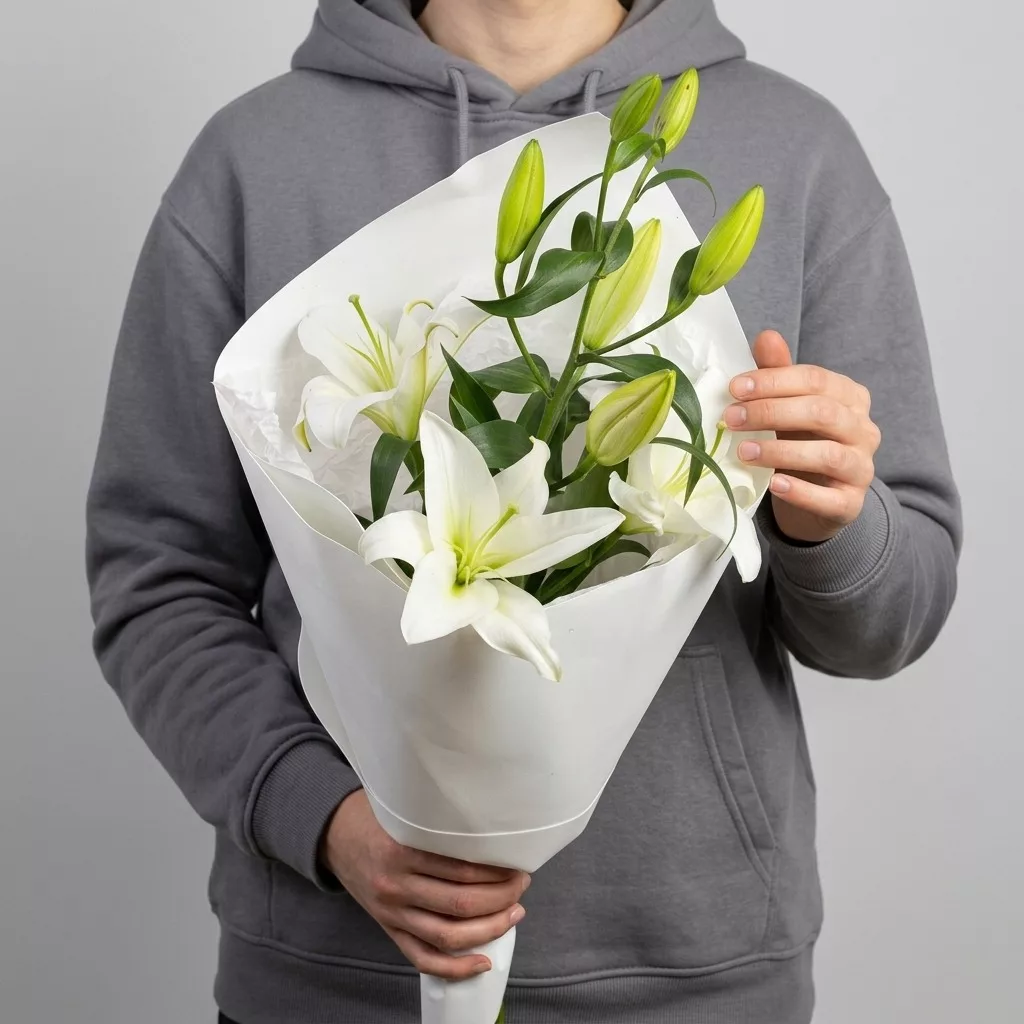
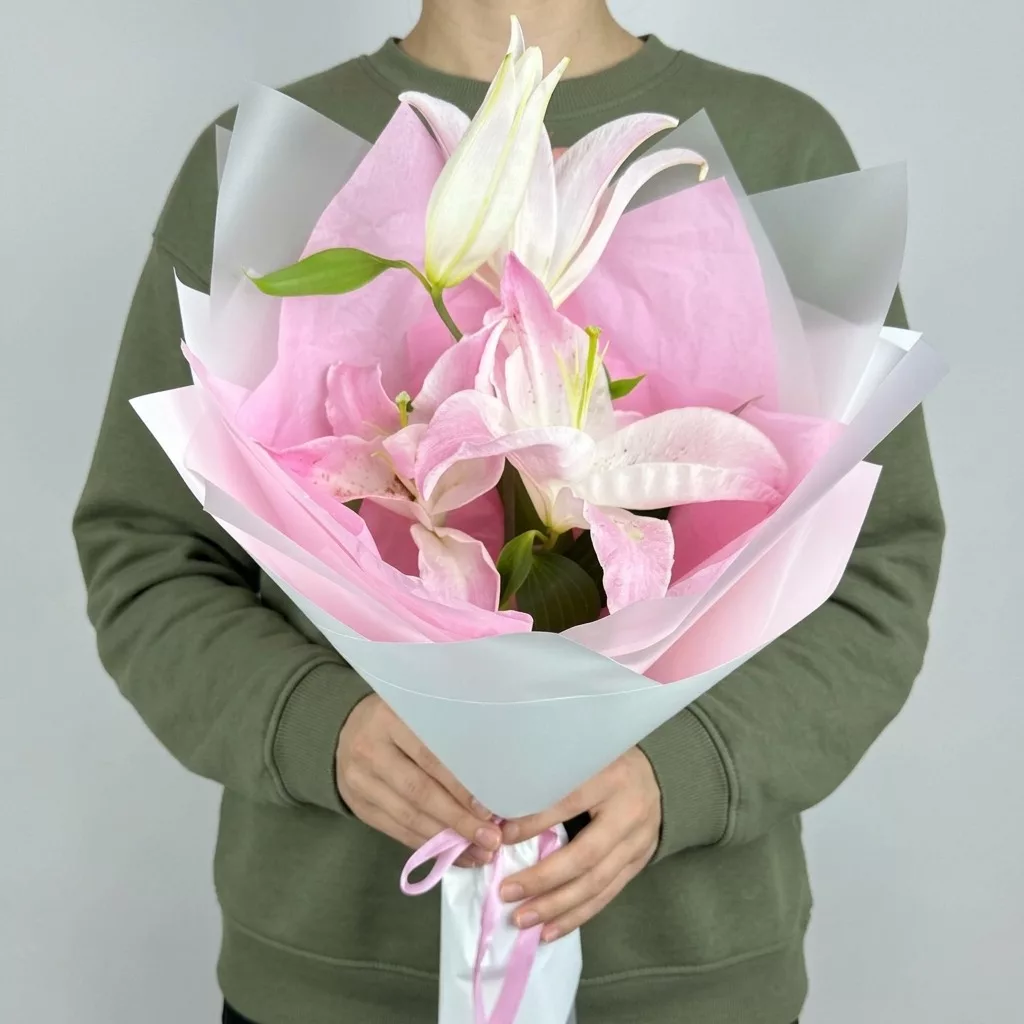
Bouquets we can deliver


How Long the Journey from Saint Petersburg Actually Takes
The distance between Saint Petersburg and Pushkino is roughly 700 kilometres by road. We do not drive that distance for each individual order. Flowers are prepared at our Saint Petersburg studio, then transported on a scheduled same-day route that keeps the bouquets refrigerated throughout. Delivery windows to Pushkino are typically within the day you order, and for orders placed before noon we aim to complete delivery the same evening. Morning orders often arrive by mid-afternoon.
Temperature matters more than speed. Roses, ranunculus and tulips are all sensitive to heat above 22 degrees Celsius, and a bouquet sitting in a warm car for two hours will show it. Our transport maintains a stable cool environment, which is why flowers arrive with petals still closed or only just beginning to open — exactly as they should be at the point of delivery, not at the point of purchase.
One thing worth knowing: Pushkino sees significant traffic on weekdays around the M8 highway approach. We factor that into our routing. If there is an unusual delay on a specific day, you will receive a message with a revised time. We do not leave you guessing. The recipient can also be given a one-hour arrival window if you ask for that when ordering, which is useful when someone needs to be home to receive the flowers.
Choosing the Right Bouquet for the Occasion and the Person
Start from the recipient, not the flower name. A colleague retiring after twenty years deserves something with presence — garden roses in cream or blush, mixed with lisianthus and eucalyptus, arranged in a way that reads as generous rather than functional. A friend celebrating a birthday in her twenties might love the loose, almost wild look of ranunculus with sweet peas and a few sprigs of ruscus. These are different emotional registers, and the bouquet should match the moment.
For romantic occasions, red roses remain the classic choice in Russia and are taken seriously as a gesture — they are not considered cliché here the way they sometimes are in other countries. If you want something warmer and less formal, garden roses in peach or apricot tones with white freesia carry the same feeling with a softer edge. Freesia also adds scent, which matters when the flowers will be in a small apartment.
Budget shapes the bouquet, but it does not have to limit it. A smaller arrangement of three to five stems in a single variety — white peonies in season, or a trio of large-headed garden roses — can look more considered than a large mixed bunch assembled without a clear idea. When in doubt, fewer flowers done well will always impress more than many flowers done loosely. Tell us the occasion and who the person is, and we will suggest something that fits both.
What Happens in Cold Weather and Why It Can Actually Help
Pushkino winters are real. January temperatures regularly drop to minus ten or fifteen degrees Celsius, and the concern most people have is that the flowers will freeze on the doorstep. In practice, a well-wrapped bouquet can handle a few minutes of cold without damage. Our wrapping uses insulating kraft paper with an inner layer, and the courier does not leave flowers unattended outside in freezing temperatures — the recipient is always called first.
What cold weather actually does for flowers is slow their metabolism. A rose kept at two to four degrees Celsius lasts significantly longer than one kept in a warm room. Bouquets delivered in winter often outlast summer deliveries by two or three days for exactly this reason. Once inside, the recipient should unwrap them immediately and move them away from heating radiators, which are very common in Russian apartments and are the single biggest threat to cut flowers indoors.
Spring and autumn bring their own challenges. April in Pushkino can swing between five and eighteen degrees in a single day, and tulips — which are extremely popular at this time of year, especially around March 8th, the main flower-giving date in Russia — are sensitive to warmth and will open very quickly if placed near a window with afternoon sun. Advising the recipient to keep tulips in a cool spot and change their water every two days is genuinely useful information, not just a formality.
Seasonal Varieties Worth Knowing About
Russian flower customs are tied closely to the calendar. March brings an enormous demand for tulips, mimosa and the first hyacinths — March 8th is International Women's Day and is treated as the biggest flower occasion of the year, far larger than Valentine's Day. If you are sending in late February or early March, order a day or two in advance. Tulips at this time are plentiful and beautiful, and Dutch varieties in white, yellow and deep purple are all widely available.
By May and June, peonies take over. Russian recipients know and love peonies deeply — a full bunch of coral or blush peonies is considered one of the most generous gifts you can give. Their vase life is five to seven days when stems are cut at an angle and water is changed every two days. They open slowly in a cool room and dramatically in warmth, so the recipient controls the experience by where they place the vase.
Summer brings sunflowers, lisianthus and garden roses in abundance. Autumn is the season for chrysanthemums, which in Russia carry no negative associations — they are cheerful, long-lasting and come in a wide range of forms from button spray types to large single-headed varieties. Winter months rely on roses, carnations and tropical stems like anthuriums and orchids, all of which travel well and hold up in heated interiors. Knowing the season helps you choose something that is both fresh and appropriate.
Keeping the Bouquet Beautiful After It Arrives
The first thirty minutes after a bouquet arrives matter more than most people realise. If the stems have been in water during transport — which ours are, in a sealed hydration sleeve — they are still drinking. The recipient should re-cut each stem at a diagonal angle, about two centimetres from the bottom, immediately before placing them in a vase. This removes any air bubble that has formed at the cut end and restores full water uptake.
The vase should be clean and filled with cool, not cold, water. Tap water in Pushkino is generally fine for flowers. Remove any leaves that would sit below the waterline, because submerged foliage rots quickly and clouds the water with bacteria that shorten vase life. A small sachet of flower food is included with every order — it contains a mild acidifier, sugar and a bactericide, and it genuinely extends freshness by two to three days compared to plain water.
Placement inside the home is the next decision. Keep the bouquet away from direct sunlight, fruit bowls (ripening fruit releases ethylene gas, which ages flowers rapidly), and radiators. A dining table or a sideboard away from the window is ideal. Change the water every two days and re-cut the stems each time. Roses and lisianthus managed this way will last seven to ten days. Tulips and ranunculus are shorter-lived but no less beautiful — four to six days at their best is a reasonable expectation.
Making the Delivery a Moment, Not Just a Transaction
A bouquet arriving at the door is a small event, and the details around it shape how it feels. A handwritten card is still the standard in Russia — printed cards exist but feel less personal. When you write your message, keep it direct and warm. Russian recipients respond well to sincerity over cleverness. Something simple and honest lands better than something witty but slightly distanced.
Timing the delivery to coincide with the right moment takes a little thought. If the recipient works from home and you want the flowers to arrive while they are at their desk, mid-morning is usually ideal — the day has started but the routine has not fully settled. If the occasion is an evening birthday dinner and you want the table to look right, an afternoon delivery gives time for the flowers to open slightly and for the recipient to arrange them without rushing.
You can also ask us to hold the delivery until a specific hour. This is particularly useful for surprise deliveries where someone else needs to let the courier in, or where the recipient will only be home from a certain time. Include a note explaining the situation and we will work around it. The goal is for the flowers to arrive when they will have the most impact — not just when it is logistically convenient. That difference is what separates a delivery from a gift.
Pushkino is not a distant destination for us — it is a regular part of what we do, and every delivery there follows the same standard we apply in Saint Petersburg itself: flowers cut fresh, wrapped properly, transported in the right conditions, and handed over at a time that works for the person receiving them. Whether you are sending to a family member who moved there recently or marking an occasion for a colleague in the Moscow Oblast, the distance does not change what the flowers should feel like when they arrive.
Frequently asked questions
Can I schedule a delivery to Pushkino for a specific time of day?
Yes. When placing your order, specify the preferred delivery window in the notes. We offer morning, afternoon and evening slots. For surprise deliveries where the recipient needs to be home, we recommend a two-hour window rather than an exact time, which gives us flexibility around traffic on the M8 route without disappointing anyone.
Will the flowers survive the journey from Saint Petersburg in summer heat?
They will, because our transport is temperature-controlled throughout. Flowers travel at around four to six degrees Celsius, which is close to optimal cold storage. The bouquet arrives with petals still firm and stems fully hydrated. The main risk is what happens after delivery — keep flowers away from direct sun and radiators once inside.
What is the most popular flower for delivery in Russia around March 8th?
Tulips are by far the most requested flower for International Women's Day on March 8th, followed by mimosa and hyacinths. Demand rises sharply from late February, so ordering two to three days ahead is strongly recommended. We source Dutch tulips in a wide range of colours and can build a bouquet around a specific shade if you prefer.
Do I need to be present to receive the delivery, or can someone else accept it?
Anyone at the address can accept the bouquet. If the delivery is a surprise and you would prefer the courier to call the recipient directly rather than a third party, note that in your order. For office deliveries, naming the recipient and their floor helps us bypass a reception desk and deliver directly, keeping the gesture personal.
How long will the bouquet last after it arrives in Pushkino?
Most arrangements last seven to ten days with basic care — re-cutting stems on arrival, changing water every two days and keeping flowers away from heat sources and fruit. Tulips and ranunculus are naturally shorter-lived at four to six days. Roses, lisianthus and chrysanthemums are among the longest-lasting varieties and hold up well in typical Russian apartment conditions.
Ready to send flowers?
Pick the city, choose the bouquet, and a local florist takes it from there.
Choose a city →