Sending Flowers to Pyatigorsk? Here Is What to Expect
Pyatigorsk sits at the foot of Mount Mashuk, and the city has its own rhythm — unhurried mornings at the mineral springs, warm evenings on Kirov Street, and a culture where arriving with flowers is never considered too much. Whether you are sending a bouquet from Moscow to a friend recovering at a spa resort, or ordering from across town for a birthday dinner, the details of how delivery actually works here will save you time and spare you surprises.
Which Areas of Pyatigorsk We Deliver To
Pyatigorsk is a compact city, but its terrain is not flat. The centre around the Tsvetnik park, the lower market district, the spa quarter near the Lermontov Gallery, the residential areas climbing toward Goryachaya Gora — all of these fall within our delivery zone. We also cover the newer residential districts built out toward the ring road, including Belaya Romashka and the neighbourhoods near the central stadium.
The city's hilly streets mean that some addresses require a little extra navigation, particularly in the older parts of town where lanes narrow between stone walls. Our florists know these routes and plan for them when calculating your delivery window, so the estimate you receive at checkout already accounts for local conditions rather than assuming a straight line from A to B.
If you are sending to a sanatorium or resort hotel — and Pyatigorsk has many, since it is the largest resort city in the Caucasian Mineral Waters region — please include the full name of the establishment and the guest's room number if you have it. Reception desks at larger resorts can add a few minutes to handover, and giving us that detail upfront means your recipient gets the flowers fresh at the door rather than waiting at the front desk. We deliver to private addresses, hotels, offices, clinics and open public venues within the city boundaries.
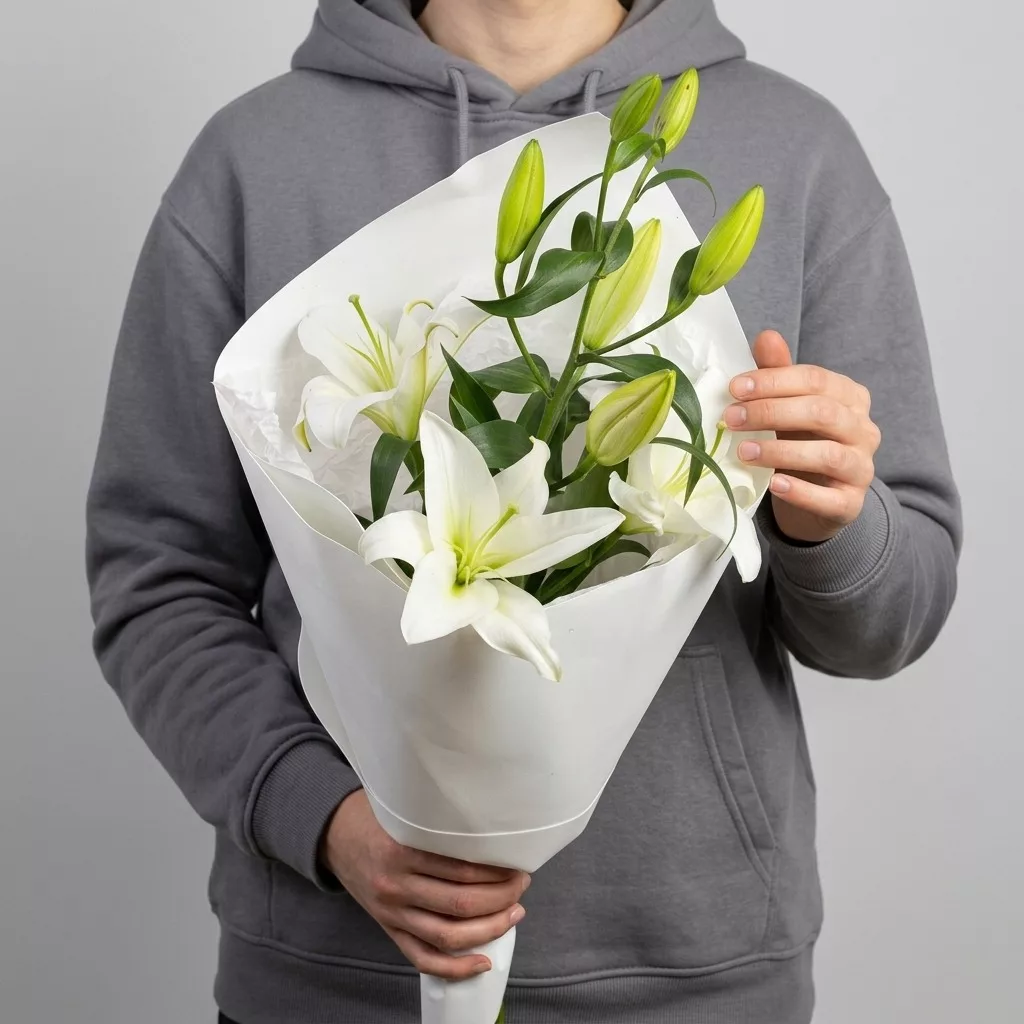
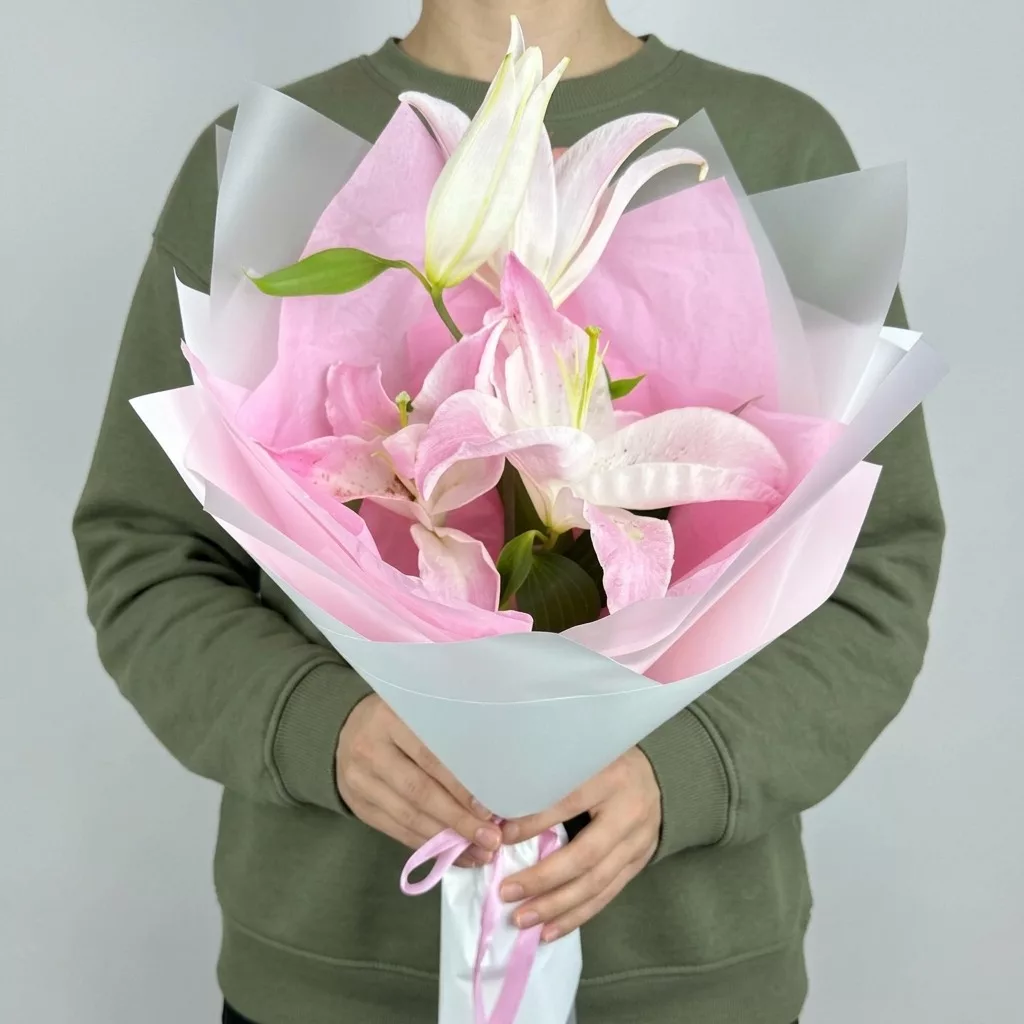
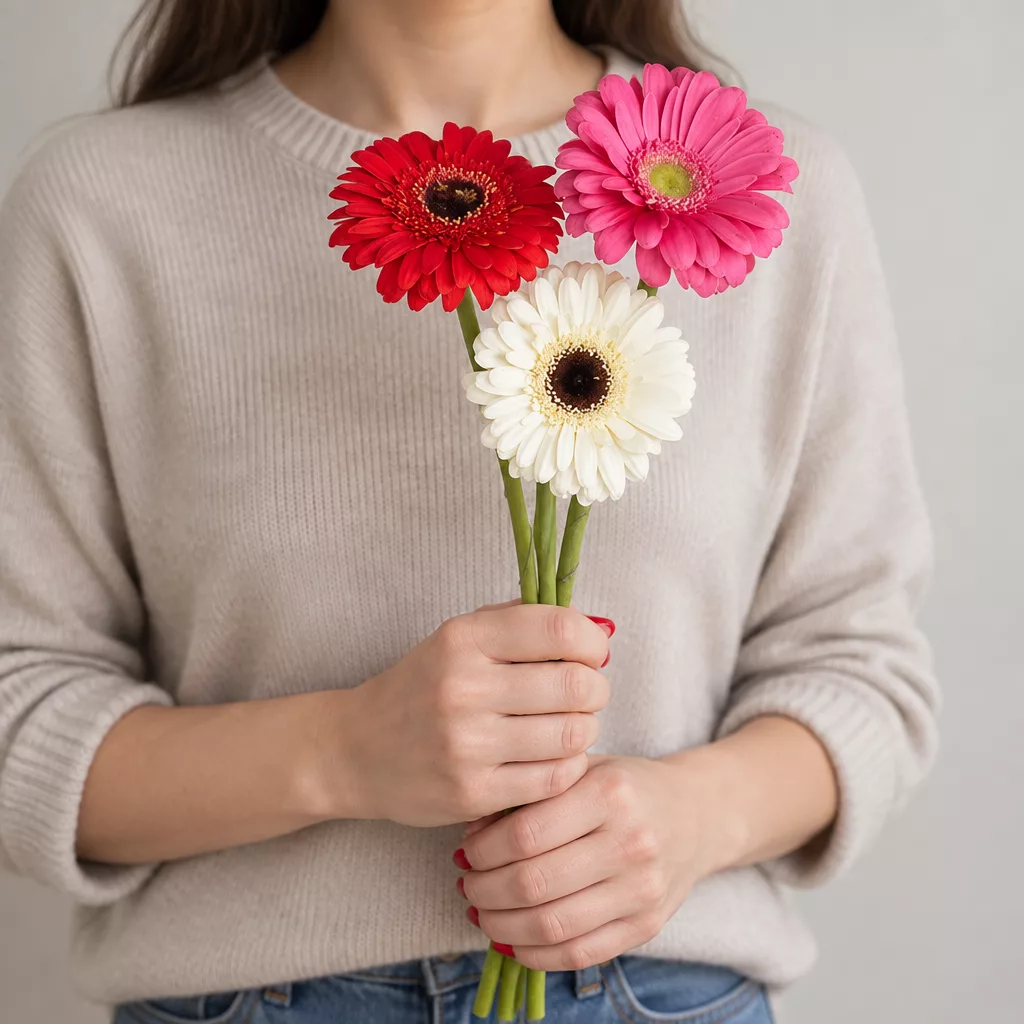
Bouquets we can deliver

How Long Delivery Actually Takes in This City
Our standard delivery window in Pyatigorsk is one to two hours from the moment your order is confirmed. For most central addresses — the streets near the railway station, the embankment, the area around Lenin Square — you can realistically expect arrival closer to the one-hour mark during a normal weekday. The two-hour end of the window applies to addresses on the city's edges or when orders come in during peak periods like the morning rush on major holidays.
Pyatigorsk has predictable traffic patterns. The central crossroads near the market can slow midday, and the road past the railway station backs up on weekend afternoons when visitors arrive from Mineralnye Vody airport. We factor these patterns into our routing, and we will contact you proactively if anything unusual affects your order rather than leaving you to wonder.
Timing your order well makes a real difference. If you want flowers to arrive before a dinner that starts at seven in the evening, placing the order by five gives comfortable margin. For morning deliveries — say, a birthday surprise before the recipient leaves for work — ordering the evening before and scheduling a morning slot is the most reliable approach. We do not recommend same-day orders placed within thirty minutes of a needed arrival time, not because it is impossible, but because a little buffer protects the quality of the arrangement: a florist who is not rushing produces better work.
Choosing the Right Bouquet for the Occasion and the Person
In Pyatigorsk, as across Russia, flowers carry clear social weight. Showing up to a birthday, a housewarming or a name-day celebration without them would feel incomplete to most hosts. But the choice of what to bring matters as much as the gesture itself, and a working florist's honest advice is to start with the person, not the flower.
For a woman in her thirties or forties celebrating a birthday, a mixed bouquet built around garden roses — varieties like David Austin's Juliet or the blush tones of Keira — combined with ranunculus and eucalyptus reads as thoughtful and current without being showy. For a younger recipient, something with more colour and movement works better: sunflowers paired with alstroemeria and seasonal greenery feel celebratory without the formality of a mono-bouquet.
For a man — and yes, men in Russia do receive flowers, particularly on birthdays and professional milestones — keep the arrangement structured and bold. A composition of anthuriums, tropical leaves and dark calla lilies works well. Avoid anything that reads as overly delicate or pastel.
For a colleague or a thank-you gesture, single-variety bouquets are safe and elegant: fifteen or twenty-one stems of white or cream chrysanthemums, or a clean bundle of white freesias, convey respect without overstepping. In Russian custom, bouquets are traditionally given in odd numbers — this is a real convention, not a myth, and your recipient will notice if you send an even count.
What the Caucasian Climate Does to Fresh Flowers
Pyatigorsk's climate is a genuine consideration when ordering flowers. Summers here are warm and dry, with July and August regularly reaching 30 to 35 degrees Celsius. In that heat, a bouquet left in a car or on a sunny doorstep for even twenty minutes begins to suffer visibly — petals wilt, stems soften and the arrangement loses the crispness that made it beautiful when it left the studio.
We pack summer orders in insulated wrapping and use water-retaining floral foam or hydration tubes for stems that need them. Roses and hydrangeas are the most heat-sensitive flowers we work with in summer; peonies, which are available in late May and June, are also fragile in high temperatures. If you are ordering in July or August, choosing flowers with stronger cell structure — lisianthus, alstroemeria, gerbera — gives your recipient a bouquet that holds its shape through the day.
Spring and autumn in Pyatigorsk are mild and genuinely pleasant for flowers. October deliveries in particular are reliable: temperatures between 10 and 18 degrees are close to ideal for most cut flowers, and the bouquet your recipient receives at noon will still look excellent by evening. Winter here is relatively mild compared to central Russia — ground frost is common but prolonged freezing is not — so cold-weather damage is less of a risk than in, say, Novosibirsk or Yekaterinburg. We still wrap winter orders carefully, and we time handover to minimise time outdoors.
How to Keep the Bouquet Beautiful After Delivery
A bouquet delivered fresh can last anywhere from four days to nearly two weeks depending on the varieties and how it is cared for after arrival. Giving your recipient a few plain instructions — or including a care card with the order, which we can add on request — makes a real difference to how long the flowers stay beautiful.
The first thing to do on receiving a bouquet is cut the stems. Even a few hours out of water causes the ends to seal slightly, and a fresh diagonal cut of about two centimetres opens the stem again for water uptake. Use a sharp knife rather than scissors if possible, since scissors can crush the stem tissue. Then place the bouquet in a clean vase with cool, fresh water — not warm, despite the common belief that warm water helps. Cool water slows bacterial growth and keeps the stems firm.
Change the water every two days and re-cut the stems each time. Keep the bouquet away from direct sunlight, heating radiators and fruit bowls — ethylene gas from ripening fruit accelerates petal drop in roses and tulips noticeably. In summer, a cool room or even an overnight stay in a tiled hallway extends vase life significantly.
Specific varieties to watch: tulips continue to grow after cutting and will lean toward light, so rotate the vase. Roses benefit from having their lower leaves removed — any leaf sitting in water will rot and cloud the water quickly. Lilies will drop pollen from open anthers; wiping them with a dry tissue before the anther opens fully prevents staining on fabric and petals alike.
Combinations That Work Especially Well in Pyatigorsk
Pyatigorsk has a resort-town sensibility — the city is used to a certain aesthetic ease, and its residents tend to appreciate arrangements that feel generous and slightly romantic rather than stiff or corporate. This shapes what works well here as a gift.
In spring, a combination of ranunculus, sweet peas and muscari — the small blue bulb flower that smells faintly of grape — captures the season perfectly and suits the light, airy quality of the city's parks in April. This combination has a short window, typically March through May, but it is worth requesting specifically if the timing lines up.
For summer occasions, garden roses mixed with matthiola — the fragrant stock flower — create a bouquet that fills a room with scent, which feels appropriate in a city where people spend time outdoors and return home to open windows. Add a few stems of white or blush lisianthus to extend the arrangement's life and add layered texture.
In autumn, dahlias are the obvious choice and for good reason: their form is complex enough to carry a mono-bouquet on its own, and they come in colours — deep burgundy, warm terracotta, dusty rose — that match the season visually. Pair them with rosehip branches for a combination that feels rooted in the landscape around the Caucasus.
Winter calls for something that holds well in variable indoor temperatures. Amaryllis, with its bold trumpet-shaped blooms, is dramatic and long-lasting. Combined with white hypericum berries and a few stems of eucalyptus, it makes a statement arrangement without requiring the fragile handling of roses in cold weather.
What to Include With Your Order for the Best Result
The flowers are the main event, but a few small decisions at the order stage shape how the whole experience lands for your recipient. The most important is the message card. In Russia, written notes with bouquets are expected and valued — an unsigned bouquet creates confusion rather than mystery, and even a short line in the card transforms the gesture from anonymous to personal. We print your message exactly as you write it, so you can use Russian or English, keep it brief or write at length.
If you are sending to someone you do not know well — a colleague's wife, a business contact's anniversary — keep the card warm but formal. Something like a simple congratulation with your name is entirely appropriate. If you are sending to someone close, the card is where the real feeling goes, and we treat it with the same care as the arrangement.
Timing information matters more than most people realise. If your recipient has a specific schedule — they leave for work at eight, they will be at a restaurant from six — telling us this when you order allows us to plan the delivery slot properly. We would rather know about a constraint early than discover it when a driver is already en route.
You can also request specific packaging. Our standard wrapping is kraft paper with a ribbon, which suits most occasions. For a more formal gift, ask for a box arrangement — flowers presented in a hatbox or a low floral box travel more securely and photograph beautifully, which matters if the recipient is likely to share the moment. These details are small, but they are what separate a memorable delivery from a routine one.
Pyatigorsk is a city that takes pleasure seriously — its parks, its mineral springs, its long summer evenings are all built around the idea that life should feel good. Sending flowers here is not a formality; it is a way of joining that spirit. When you order through Turboflora, you are not just arranging a delivery. You are choosing the specific roses, the exact combination, the card with your words on it, and trusting that all of it will arrive at the right door at the right moment, fresh and exactly as intended. That is the standard we hold ourselves to with every order, in Pyatigorsk and everywhere else we deliver.
Frequently asked questions
Can I schedule a flower delivery for a specific time in Pyatigorsk?
Yes. When placing your order, you can select a preferred delivery window rather than the next available slot. For morning surprises or deliveries timed to a dinner or event, choosing a slot the evening before is the most reliable approach. We confirm the window and notify you when the order is on its way, so you are never left guessing.
Do you deliver to sanatoriums and resort hotels in Pyatigorsk?
We do. Pyatigorsk has many resort and spa establishments, and we deliver to all of them within our zone. Include the full name of the property and the guest's room number or contact details when ordering. This allows us to coordinate with reception efficiently and get the flowers to your recipient without unnecessary delays at the front desk.
What flowers hold up best in Pyatigorsk's summer heat?
Lisianthus, alstroemeria, gerbera and tropical varieties like anthurium handle heat better than roses or hydrangeas. If you are ordering in July or August, these are worth considering. We also use insulated packaging and hydration tubes for summer orders to protect the arrangement during transit. Ask us for a heat-resilient recommendation when you place your order.
Is it true that bouquets in Russia should have an odd number of flowers?
Yes, this is a genuine and widely observed custom. Bouquets given as gifts are traditionally arranged in odd numbers — five, seven, eleven, fifteen stems and so on. Even numbers are associated with mourning occasions. All our gift arrangements follow this convention automatically, so you do not need to count or specify unless you have a particular number in mind.
Can I add a message card in English if my recipient speaks English?
Absolutely. We print your message exactly as you write it, in any language. If your recipient is an English speaker, an international visitor staying at a Pyatigorsk resort, or someone you simply want to address in English, just type your message that way at checkout. There is no restriction on language, and the card is included with every order at no extra charge.
Ready to send flowers?
Pick the city, choose the bouquet, and a local florist takes it from there.
Choose a city →