Sending Flowers to Reutov? Here Is What to Expect
Reutov sits just beyond the Moscow Ring Road, close enough to the capital that fresh flowers can reach almost any address there within a couple of hours. Whether you are ordering for a birthday across town, surprising a colleague on their first day, or sending something warm to family you cannot visit right now, the distance is not the obstacle it used to be. This article walks you through everything worth knowing before you place an order — timing, seasonal choices, presentation, and a few habits that make a real difference to how long the flowers last.
Which Parts of Reutov We Reach and How Quickly
Reutov is a compact city, and that works in your favour. The centre around Pobedy Square, the residential districts along Lenina Street, the newer developments near the Reutov metro station, and the quieter streets closer to the Balashikha border — all of these fall within our standard delivery zone. There are no pockets of the city that require special arrangements or longer lead times.
For most addresses in Reutov, the realistic window is one to two hours from the moment your order is confirmed. During busy periods — the morning of 8 March, for example, or the afternoon before New Year — we recommend adding a small buffer and ordering at least three to four hours ahead. That is not a warning about unreliability; it is simply honest florist arithmetic when the whole city is ordering at once.
If you are sending to a business address, such as an office on Transportnaya Street or one of the commercial buildings near the ring road, it helps to include a floor number and a contact name. Reception desks in office buildings can slow things down if the courier has to search. A direct phone number for the recipient, which we only use if we genuinely cannot locate the address, makes delivery smooth and keeps the surprise intact when everything goes to plan.
Bouquets we can deliver

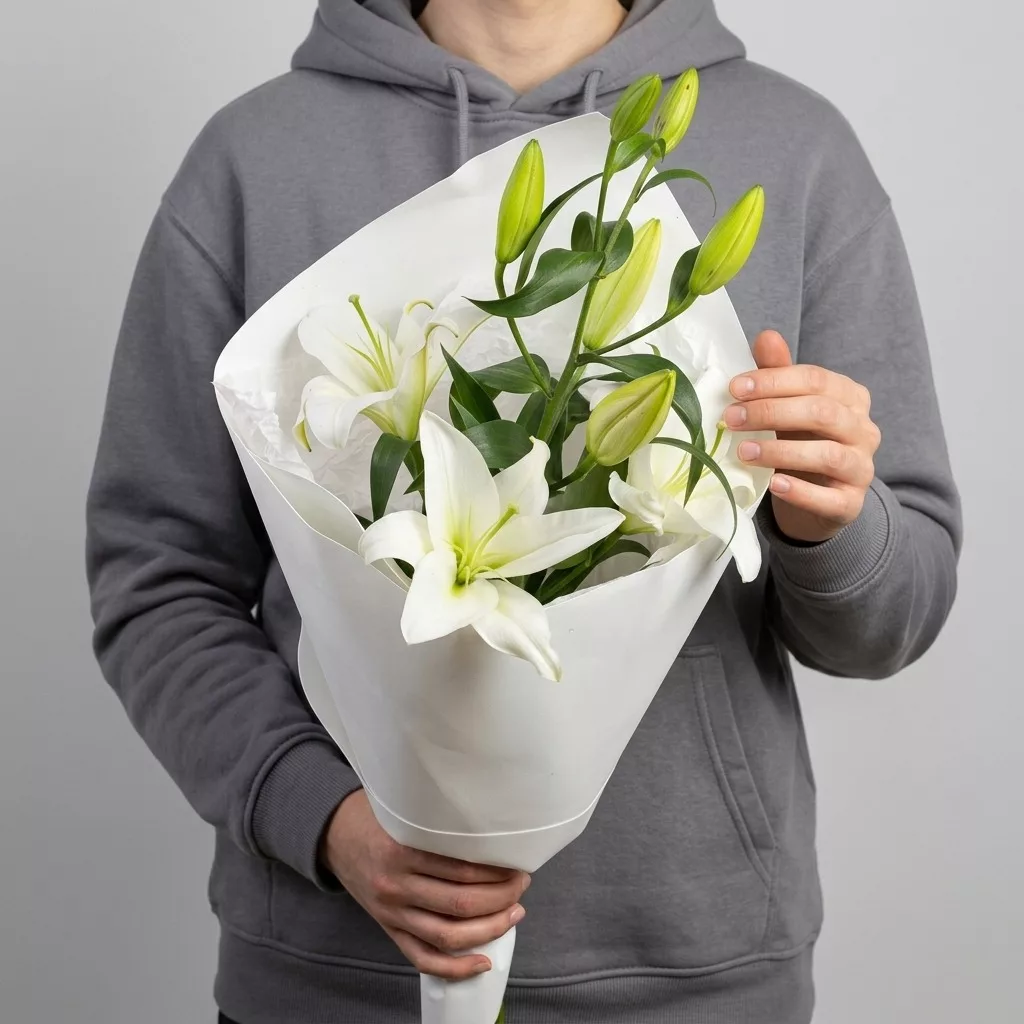
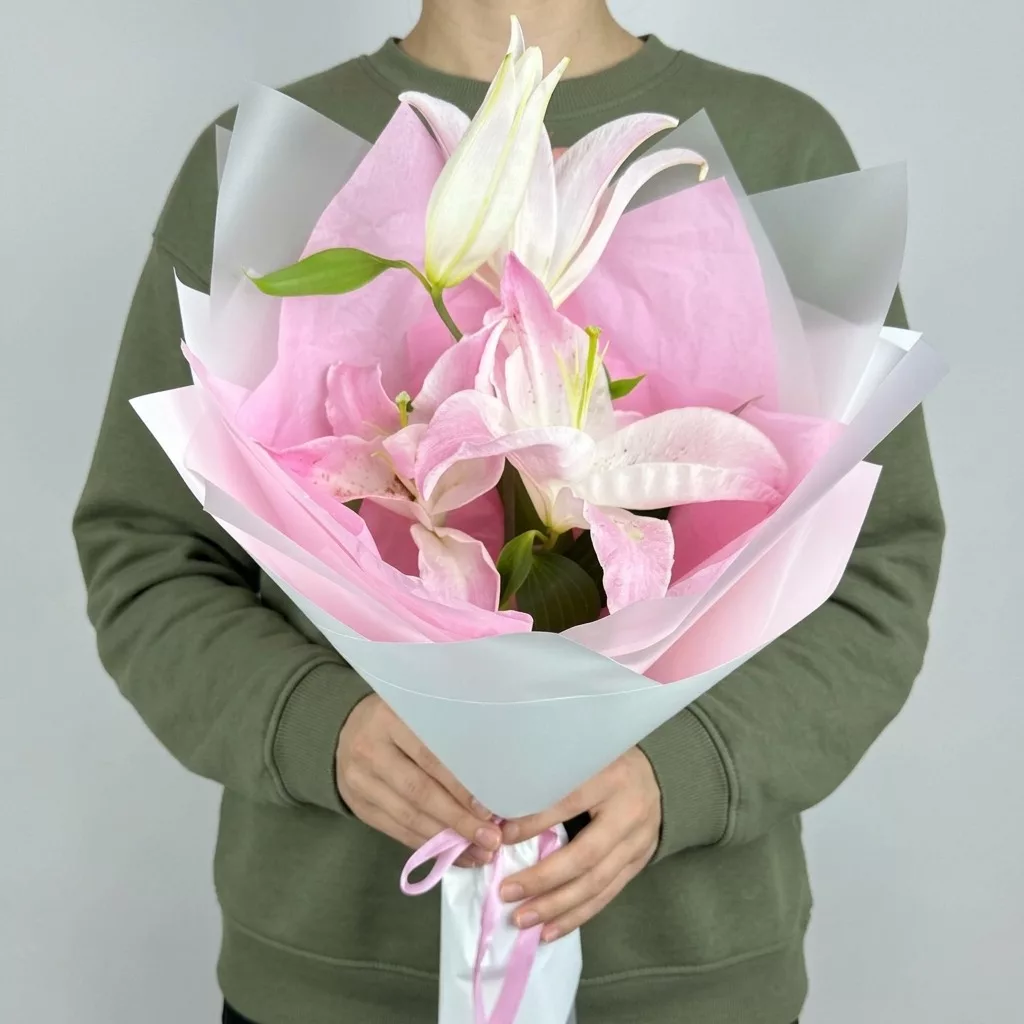
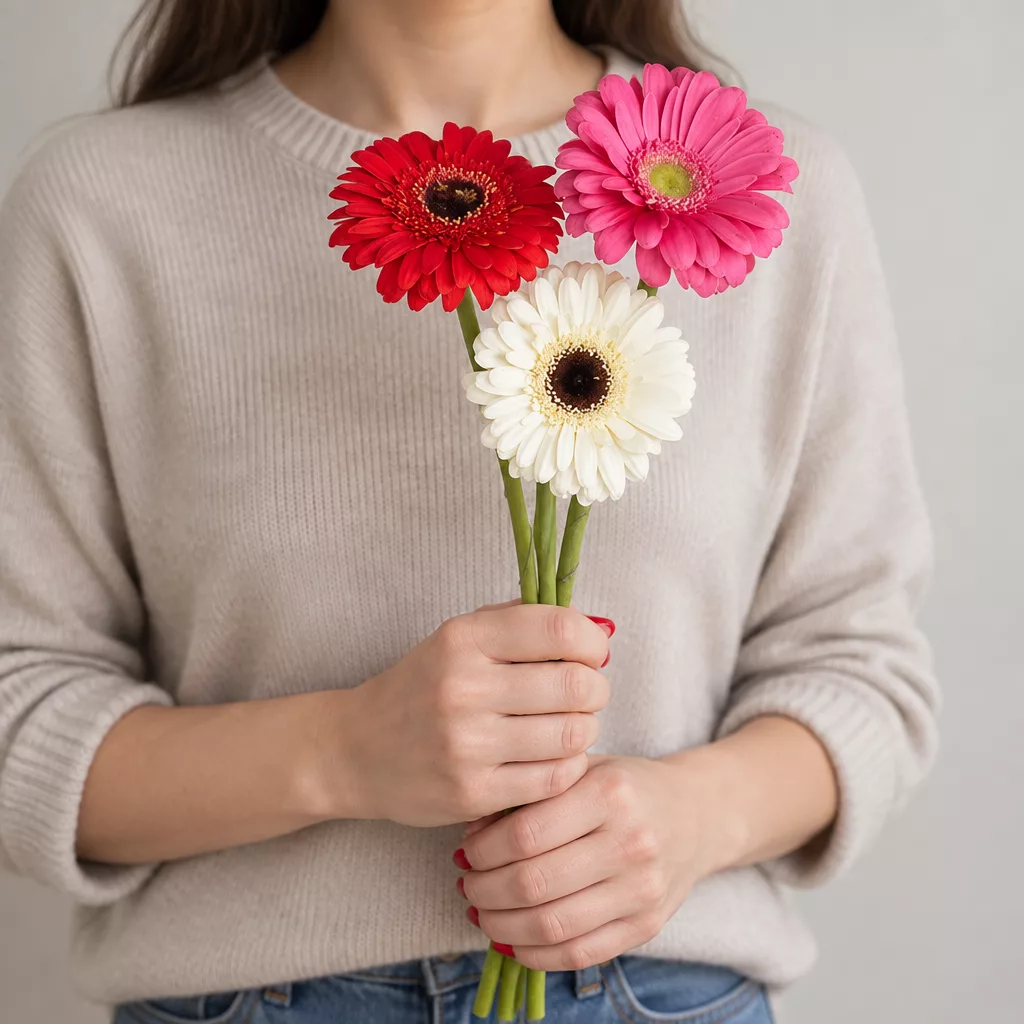
Reading the Occasion Before You Choose the Flowers
The most useful question to ask before picking any bouquet is not what flowers you like — it is what the recipient will feel when they open the door. A colleague celebrating a promotion wants something that reads as confident and a little celebratory. A mother on her birthday wants warmth and softness. A friend who just moved into a new flat wants colour and life, something that makes the space feel inhabited.
In Russian tradition, bouquets are almost always given in odd numbers — three stems, five, seven, and so on. Even numbers are reserved for different occasions entirely, and while most recipients in Reutov will not say anything if the count is wrong, florists notice and it matters to the person receiving it. We handle this automatically, but if you are ordering a very specific stem count, keep the odd-number rule in mind.
The size of the bouquet also sends a message. A single large peony or a trio of garden roses can feel more intimate and considered than a generic mixed bundle. Conversely, a full, abundant arrangement of seasonal flowers — dahlias in late summer, tulips in early spring — reads as generous and festive without needing to be expensive. Think about where the flowers will live. A small apartment in one of Reutov's older residential blocks calls for a different scale than a spacious office reception or a house with high ceilings.
Choosing by Season: What Is Actually Fresh Right Now
Flowers are an agricultural product, and the best ones at any given moment are the ones that have not travelled too far or waited too long. In winter, ranunculus, anemones, and freesias are reliably fresh and hold their shape well in cold temperatures. Tulips are available year-round but are at their most vibrant from February through April, when Dutch and domestic supplies peak together.
Spring in Reutov can still mean frost at night as late as early May, which is worth remembering if you are sending flowers that will sit on an outdoor doorstep. Peonies arrive in earnest from late May and stay through June — they are one of the most requested flowers in Russia and for good reason, but they have a short season, so ordering them in October means you are getting something that has been stored, not just cut.
Summer brings dahlias, lisianthus, and garden spray roses, all of which travel well and last reasonably long in a vase. In autumn, chrysanthemums are everywhere, and while they have a slightly old-fashioned reputation in some markets, the newer varieties — particularly the button types and the large Japanese disbuds — are genuinely beautiful and last ten to fourteen days with basic care. Alstroemeria is a year-round workhorse that deserves more credit than it gets; it holds colour for up to two weeks and comes in a wide range of shades from pale cream to deep burgundy.
Budget and What It Actually Gets You
The honest truth about flower budgets is that the difference between a modest arrangement and an impressive one is usually about composition, not just stem count. A florist who knows what they are doing can make five stems of garden roses with eucalyptus and a few sprigs of waxflower look more considered than fifteen stems of mixed flowers arranged without thought.
At the lower end of the budget range, the strongest choices are spray roses, alstroemeria, and chrysanthemums — all of them long-lasting and genuinely attractive when handled well. A single-variety bouquet in one of these, wrapped simply and tied with a ribbon, often looks more intentional than a mixed bunch assembled in a hurry.
Mid-range budgets open up peonies in season, garden roses, lisianthus, and the possibility of adding interesting foliage — eucalyptus, ruscus, or pittosporum — which adds texture and makes the arrangement feel fuller without inflating the stem count. These greens also extend vase life by reducing water competition.
At the higher end, you can work with orchids, large-headed roses from Ecuador or Kenya, or elaborate mixed arrangements that combine multiple textures and heights. These work especially well as a statement piece for a significant birthday or a professional milestone. The key is that every step up in budget should bring a step up in intentionality, not just volume. More flowers for the sake of more flowers is a common mistake, and a good florist will steer you away from it.
What Happens Between the Florist and the Front Door
Once your order is confirmed, the bouquet is assembled fresh — not taken from a refrigerated shelf but built from stems that have been conditioned and hydrated in the workroom. Conditioning means cutting stems at an angle under water, removing any leaves that would sit below the waterline, and letting flowers drink for a period before they are arranged. This step is invisible to the customer but makes a measurable difference to vase life.
The bouquet is wrapped to protect it during transit. In cold weather — and Reutov winters can sit well below minus ten Celsius — this means insulating the blooms against temperature shock. Flowers like roses and tulips are sensitive to sudden cold and can bruise or develop dark patches on petals if they move too quickly between warm and freezing air. We wrap accordingly.
Delivery to Reutov typically means a car journey of thirty to fifty minutes from central Moscow, depending on traffic on the Shosse Entuziastov corridor. We track road conditions and adjust dispatch timing so the flowers arrive within the promised window rather than sitting in a cold vehicle longer than necessary. If the recipient is not home, we contact you — not them, unless you have asked us to — so the surprise is preserved and we can agree on the next step together. Leaving flowers on a doorstep in winter is a last resort, not a default.
Vase Life and Care: What to Tell the Recipient
Most people receive flowers, put them in a vase, and then wonder three days later why they are already drooping. The basics of flower care are simple but rarely explained, and including a short handwritten note with care instructions is one of the kindest things you can do alongside the gift itself.
Fresh water every two days is more important than any additive. Tap water in Reutov, as in most of the Moscow region, is treated and slightly alkaline — it is fine for flowers, but the vase should be rinsed properly each time to prevent bacterial build-up at the bottom, which is what actually kills stems quickly. Re-cutting the stems by one to two centimetres at an angle each time you change the water keeps uptake efficient.
Keep the arrangement away from direct sunlight, radiators, and fruit bowls. Ethylene gas from ripening fruit accelerates petal drop in roses and tulips noticeably. A cool room at around eighteen degrees is ideal. In a centrally heated Russian apartment in winter, where indoor temperatures often reach twenty-four or twenty-five degrees, vase life will naturally be shorter — perhaps five to seven days for roses rather than the ten you might get in a cooler space.
Ranunculus and anemones are thirsty and will visibly droop if they run low on water, but they usually recover well if you re-cut and rehydrate them promptly. Chrysanthemums and alstroemeria are the most forgiving of all — they will tolerate minor neglect and still look presentable after ten days.
Small Details That Make the Delivery Feel Considered
The flowers themselves are only part of what arrives at the door. The way the order is presented — the wrapping, the card, the condition of the stems — is what the recipient experiences first, before they even put the bouquet in water. A few small decisions at the ordering stage make a real difference to that first impression.
A handwritten card is worth more than a printed one. It does not need to say much — even a single sentence in your own words carries warmth that a typed message cannot replicate in the same way. If you are ordering from a distance and cannot write the card yourself, dictating your exact words and asking them to be written carefully by hand is a reasonable request.
Timing is a form of consideration too. Sending flowers to arrive in the morning means the recipient has them for the whole day. An afternoon delivery can feel more like a surprise interruption, which works well for a colleague at an office. Evening deliveries suit home addresses and have a more intimate quality. Reutov addresses are accessible throughout the day, so you have genuine flexibility here.
If the occasion is a significant one — a fiftieth birthday, a wedding anniversary, a new baby — consider adding a second element alongside the flowers. A small potted plant, a candle, or a box of chocolates does not need to be elaborate. It signals that the order was assembled with thought, not just clicked through in two minutes, and that intention is what people actually remember.
Reutov is an easy city to send flowers to — short distances, straightforward addresses, and a delivery window that genuinely works within a couple of hours for most occasions. The things that make a delivery memorable are not complicated: fresh stems chosen for the season, a composition that suits the person rather than just filling a box, honest care instructions so the flowers last, and a card that says something real. Get those four things right and the logistics take care of themselves.
Frequently asked questions
Can you deliver flowers to Reutov on the same day I order?
Yes, same-day delivery to Reutov is standard for orders placed with enough lead time. For most addresses, two to three hours is a comfortable window. On high-demand dates like 8 March or 14 February, we recommend ordering four to five hours ahead to secure your preferred delivery slot and give us time to assemble the bouquet properly.
What if the recipient is not home when the flowers arrive?
We contact the sender first, not the recipient, so any surprise remains intact. Together we decide whether to wait briefly, arrange a second delivery attempt, or leave the bouquet with a neighbour if the sender approves. Leaving flowers unattended on a doorstep in cold weather is a last resort we try to avoid, since temperature exposure affects the blooms.
Do Russian customs around flower giving differ from what I might expect?
The most important custom is the odd-number rule — bouquets are given in odd stem counts, such as three, five, or seven. Even numbers carry a different cultural association in Russia. We apply this automatically to all our arrangements. Yellow flowers are sometimes considered unlucky by older generations, though attitudes among younger recipients vary considerably.
Which flowers last longest if the recipient has a warm apartment?
Chrysanthemums and alstroemeria are the strongest performers in warm indoor conditions, often lasting ten to fourteen days with basic care. Spray roses and lisianthus also hold up well. Tulips and peonies are more sensitive to heat and will open and fade faster in a centrally heated room, though they remain beautiful for their shorter window.
Can I include a message or extra gift with the flowers?
Yes, a handwritten card can be included with any order — we write your words carefully by hand. You can also add a small accompanying item such as a potted plant or a box of chocolates. These additions are worth considering for milestone occasions where you want the delivery to feel assembled with genuine thought rather than a single item.
Ready to send flowers?
Pick the city, choose the bouquet, and a local florist takes it from there.
Choose a city →