Sending Flowers to Rubtsovsk? Here Is What to Expect
Rubtsovsk sits deep in the Altai region, and when you want to send flowers there — for a birthday, an anniversary, a thank-you that words cannot carry alone — the distance feels like an obstacle. It does not have to be. With the right preparation and a florist who understands Siberian conditions, a fresh, well-composed bouquet can arrive at a door in Rubtsovsk looking exactly as it should: vivid, fragrant and full of intention.
Which Parts of Rubtsovsk We Reach and Why It Matters
Rubtsovsk is a mid-sized industrial city with a clear grid of central districts and a spread of residential mikrorayons — the Soviet-era housing blocks that ring most Russian cities of this size. Delivery covers the central part of the city, the residential areas along Lenina and Traktornaya streets, and the newer housing developments on the eastern edge. If you are sending to a factory dormitory or a private house on the outskirts, it is worth confirming the exact address at the time of order, because some peripheral addresses add time to the route.
The city itself is not large by Russian standards, but the road conditions between districts matter, especially in winter. Snow-covered side streets can slow a courier significantly, and a bouquet sitting in a cold vehicle longer than planned is a bouquet at risk. We account for this by packaging flowers in insulated wrapping during the cold months, but the address precision you give us is the first line of protection.
When you place an order, include the building number, the apartment or office number, and any entry code for the front door. In Russian cities, many residential buildings have a domofon — an intercom system — and a courier without the code will wait outside in freezing temperatures rather than leave the flowers unattended. A correct, complete address is not a formality; it is what keeps the roses looking like roses when the door opens.
Bouquets we can deliver



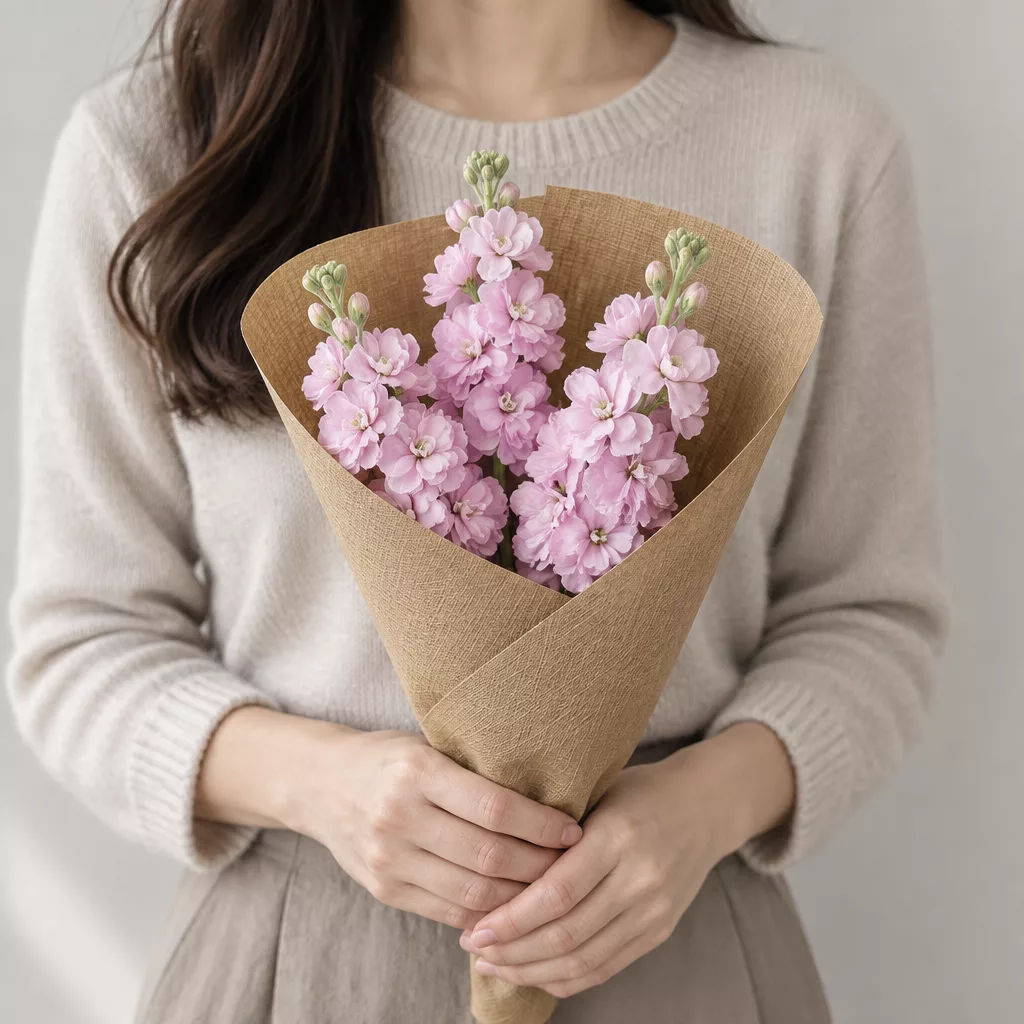
Timing Your Delivery: What One to Two Hours Actually Means
The one-to-two-hour delivery window is a real commitment, not a marketing phrase. It means that once your order is confirmed and the bouquet is assembled, a courier is dispatched with that specific arrangement. There is no batching with other deliveries that happen to go in the same direction. The bouquet is treated as a time-sensitive item, because it is.
For Rubtsovsk, the most reliable delivery slots are mid-morning and early afternoon. This is when roads are clearest, when recipients are most likely to be home or at a workplace, and when the florist team is at full capacity for assembly. Evening deliveries are possible and popular for surprises, but if you are ordering for a specific moment — the end of a work meeting, the start of a birthday dinner — build in a small buffer and communicate the preferred arrival window clearly.
Same-day orders placed before early afternoon are the safest choice. If you are ordering from Moscow or another city for someone in Rubtsovsk, remember the time difference: Rubtsovsk runs four hours ahead of Moscow. An order placed at noon Moscow time lands in the early afternoon locally, which is ideal. An order placed at eight in the evening Moscow time arrives well after midnight locally — not the surprise anyone intended. Checking the local time before you confirm is a small step that changes everything about how the moment lands for the person receiving the flowers.
Choosing Flowers for the Siberian Climate: Varieties That Travel Well
Rubtsovsk winters are serious. Temperatures regularly drop below minus twenty Celsius, and even autumn and spring carry sharp overnight frosts. This shapes which flowers make sense to send and how they need to be handled. Not every variety survives a Siberian winter transit without preparation, and knowing the difference helps you choose confidently.
Roses are the most resilient cut flower for cold-weather delivery when handled correctly. Garden spray roses and standard hybrid tea roses both hold their structure well if they are kept from freezing during the transfer from vehicle to door. Chrysanthemums are excellent for Rubtsovsk — they are cold-tolerant, long-lasting, and available in a wide range of colours from deep burgundy to pale champagne. Alstroemeria is another strong choice: the stems are firm, the blooms open gradually over days, and the recipient gets to watch the arrangement evolve.
Delicate flowers like sweet peas, anemones, or ranunculus require more care in transit during winter months and are better suited to warmer seasons. In summer, Rubtsovsk is warm and sunny, and the range of available varieties expands considerably — lisianthus, sunflowers, and garden-style mixed bouquets all travel well in July and August.
For any season, avoid ordering flowers that are already fully open. A rose that is tight in bud when it leaves the shop will open beautifully over two to three days in the recipient's home. A rose that is already fully open has less time ahead of it and less resilience for the journey. The florist assembles with this in mind, but it helps to know the reasoning.
Bouquets for Different Occasions: Matching the Arrangement to the Moment
The occasion shapes the bouquet more than most people realise when they order. A birthday calls for something celebratory and generous — warm colours, mixed textures, a sense of abundance. Sunflowers paired with orange spray roses and yellow solidago create exactly that feeling, and the combination holds up well in transit. For a professional occasion, such as congratulating a colleague on a promotion or thanking a business contact, a more restrained palette works better: white or cream roses with eucalyptus, or a single-variety arrangement of white chrysanthemums in a neat round form.
For a romantic gesture, red roses remain the universal language, and they are understood that way in Russia just as they are everywhere else. But a florist's alternative worth considering is a combination of deep red roses with dark-toned alstroemeria and a few stems of waxflower — it reads as more considered, more personal, than a dozen red roses alone. If the recipient is someone who appreciates flowers and notices the details, that kind of composition will mean more.
For a new baby or a housewarming, soft colours and gentle forms suit the moment. Pastel pink or lavender lisianthus, white gypsophila, and pale peach roses together create a bouquet that feels welcoming without being overwhelming. In Russian tradition, odd numbers of flowers are given for joyful occasions — even numbers are associated with mourning — so a florist composing for a celebration will always work in odd numbers. If you are ordering for someone unfamiliar with this custom, it is worth knowing so the gesture lands without confusion.
Budget Ranges and What Each Level Delivers
Flower budgets tend to fall into three natural ranges, and each one produces a genuinely different result. Understanding what each range delivers helps you choose without feeling uncertain about whether you are doing enough.
At the entry level, a bouquet is typically a single-variety arrangement — five or seven roses, or a small mixed bouquet built around one focal flower with one or two complementary stems. It is modest but sincere, and when it is well-assembled, it does not look sparse. The key is proportion: a small bouquet that is tightly composed and neatly wrapped looks intentional. A small bouquet that is loosely thrown together looks like an afterthought.
At a mid-range budget, the florist has room to work with two or three varieties, add foliage for depth, and use a more interesting wrapping or presentation. This is where combinations become genuinely expressive — roses and lisianthus together, or chrysanthemums with eucalyptus and a touch of waxflower. The recipient notices the thought behind it.
At a higher budget, the arrangement becomes a statement. Large-headed peonies in season, garden roses with multiple layers of petals, or a structured mixed bouquet with five or six varieties — this is the level where the flowers themselves become the event. If you are marking something significant — a milestone birthday, a major achievement, a long-distance relationship expressed in flowers — this is the range to consider. It is also worth noting that in Russia, the size and generosity of a flower gift carries social weight. A substantial bouquet communicates that the occasion mattered.
What Happens After Delivery: Care That Extends Vase Life
The bouquet arrives and the moment is perfect. What happens in the next twenty-four hours determines whether the flowers last three days or ten. Most people know to put flowers in water, but the details beyond that make a significant difference, and a few simple habits extend vase life considerably.
The first step is to cut the stems — at an angle, with a sharp knife rather than scissors — removing about two centimetres from the base. Scissors compress the stem tissue and reduce water uptake. A clean diagonal cut maximises the surface area through which the flower drinks. Do this under running water or immediately before placing the stems in the vase, so no air enters the cut end.
Remove any leaves that would sit below the waterline. Submerged foliage rots quickly and introduces bacteria that shorten the life of every stem in the vase. Change the water every two days, and rinse the vase each time. If the bouquet came with a sachet of flower food, dissolve it in the water on the first day — it contains a mild acidifier and a small amount of sugar that feeds the blooms and inhibits bacterial growth.
Keep the arrangement away from direct sunlight, radiators, and fruit bowls. Ripening fruit releases ethylene gas, which accelerates the ageing of cut flowers. In Rubtsovsk's heated winter apartments, where radiators run hot, positioning the vase near a cool window rather than in the warmth of the room can add two or three days to the life of the arrangement. Roses and chrysanthemums reward this kind of attention with a vase life of seven to ten days.
Making the Order Smooth: Details That Prevent Missed Deliveries
A missed delivery is the one outcome nobody wants, and almost all of them are preventable. The most common cause is an unreachable recipient — someone whose phone is on silent during a work meeting, or who has stepped out for an hour at exactly the wrong moment. The second most common cause is an incomplete address.
When you place an order for Rubtsovsk, provide the full address including the apartment or office number, the floor if relevant, and any entry code for the building. If the recipient works in a large institution — a school, a hospital, an industrial facility — include the name of the department or the building entrance they use. A courier arriving at a large enterprise with only a street address and a name faces a real obstacle.
For surprise deliveries, it is worth thinking through the logistics honestly. A surprise works best when the recipient is reliably in one place — at home in the evening, at a workplace during the day. If their schedule is unpredictable, consider giving a trusted friend or family member a heads-up so someone can receive the flowers if the intended recipient steps out.
Leave a phone number that the courier can reach during the delivery window. If you are ordering from another city and the number you provide is yours rather than the recipient's, make sure you are available to relay messages in real time. A five-minute response time makes the difference between a successful delivery and a returned bouquet. The flowers are ready; the logistics are the last step, and they are entirely within your control.
Sending flowers to Rubtsovsk is not a complicated act, but it is one that rewards a little preparation. Get the address right, check the local time before you order, choose varieties suited to the season, and give the recipient's flowers a clean cut and fresh water when they arrive. Do those things and the bouquet will do everything you hoped it would — it will sit on a table in an apartment in the Altai region and tell someone, clearly and without ambiguity, that they were thought of.
Frequently asked questions
Can I order flowers for Rubtsovsk from another city?
Yes, and many orders come from Moscow, Saint Petersburg and other cities. The key detail to remember is the time difference — Rubtsovsk is four hours ahead of Moscow. Place your order accounting for local Rubtsovsk time so the delivery lands at a sensible hour for the recipient, not in the middle of the night.
What flowers hold up best in Rubtsovsk's cold winters?
Chrysanthemums, roses and alstroemeria are the most reliable choices for winter delivery. They tolerate cold transit well when properly packaged. Delicate varieties like anemones and sweet peas are better reserved for the warmer months of June through August, when Rubtsovsk's weather is genuinely warm and sunny.
How do I make sure the delivery is a surprise without missing the recipient?
The safest approach is to confirm the recipient will be in one place during the delivery window — at home in the evening or at work during the day. If their schedule is unpredictable, alert a trusted person nearby who can accept the flowers. Always provide a reachable phone number so the courier can make contact quickly.
Why do Russian bouquets always have an odd number of flowers?
In Russian tradition, even numbers of flowers are associated with mourning and are brought to cemeteries or funerals. Odd numbers are for living recipients and joyful occasions. A florist composing a celebration bouquet will always work in odd numbers — three, five, seven, nine — so the gesture carries the right meaning without any explanation needed.
How long will the flowers last after they are delivered?
Roses and chrysanthemums last seven to ten days with proper care — fresh water every two days, a clean angled cut on the stems, and placement away from radiators and fruit bowls. Alstroemeria often reaches ten to fourteen days. The care the recipient gives in the first hour after delivery has the biggest impact on total vase life.
Ready to send flowers?
Pick the city, choose the bouquet, and a local florist takes it from there.
Choose a city →