Flower Delivery to a Russian Office: Everything You Need to Know
Sending flowers to someone at their workplace feels like a generous, thoughtful gesture — and it is. But an office delivery has its own quiet rules, especially in Russia, where buildings have security desks, receptionists who take their role seriously, and corridors that can swallow a bouquet whole if the address details are even slightly off. Get the logistics right and the flowers arrive fresh, on time, and in exactly the right hands. Miss a small detail and the whole surprise unravels at the front desk.
Why Office Deliveries Need More Detail Than Home Deliveries
When you send flowers to a home address, the recipient is usually the only person who answers the door. An office is different. A large company building in Saint Petersburg or Moscow can house dozens of firms on different floors, each with its own reception or security checkpoint. The courier arrives at a front desk and is immediately asked: who is this for, which department, which floor, and who sent it? Without clear answers, the bouquet waits — and waiting is not kind to fresh flowers.
In Russia, many office buildings also have a pass system, called a propusk, where visitors must be registered in advance or at least announced before they can enter. A courier carrying a bouquet of garden roses and lisianthus is still a visitor in the eyes of building security. This is not bureaucracy for its own sake — it is simply how professional buildings manage foot traffic, and it applies just as much to a flower delivery as to a business meeting.
The good news is that once you understand what information is needed, the process is straightforward. The key is providing it all upfront when you place your order, rather than hoping the courier can figure things out on arrival. Think of it as writing a small but precise delivery brief: the more specific you are, the smoother and faster the flowers reach the person who deserves them.
Bouquets we can deliver

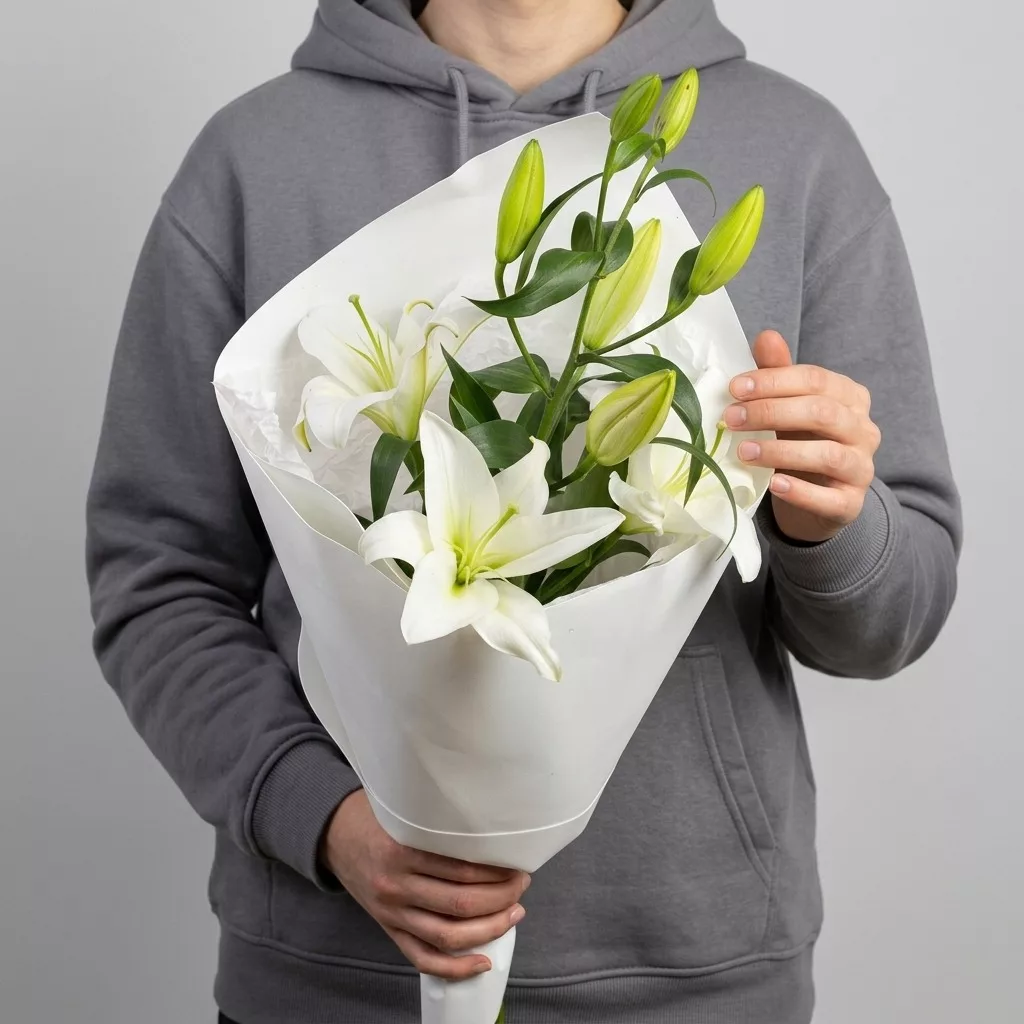
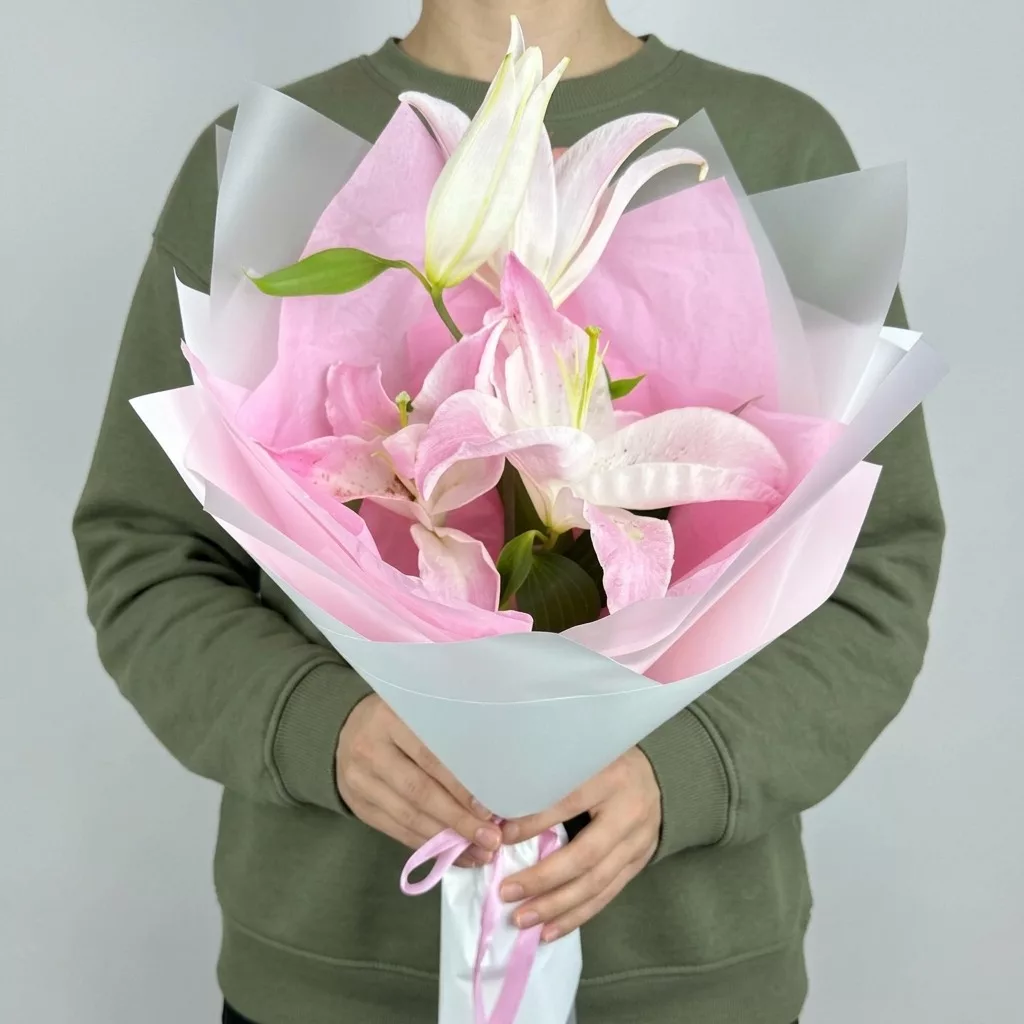

The Address Details That Actually Matter
A street address and a company name are a starting point, not a complete delivery instruction. For an office, you need to go several steps further. Start with the full legal or commonly used name of the company exactly as it appears on the building directory or intercom panel — not an abbreviation your recipient uses internally. Then add the floor number, the office or room number if known, and the name of the department. In large business centres, the same floor can be divided among several tenants, and a floor number alone leaves the courier guessing.
The recipient's full name matters more here than anywhere else. In Russia, it is standard practice to use the full first name and patronymic when addressing someone in a formal or semi-formal setting. If you are sending flowers to a colleague named Ekaterina Sergeyevna Volkova, writing just Katya Volkova on the card may cause confusion at a reception desk where the administrator knows colleagues by their formal names only. When in doubt, ask your recipient's assistant or a mutual colleague for the correct form of address.
Also include a direct phone number for the recipient — not just a general company switchboard. If the courier encounters any access issue, a quick call to the recipient directly resolves it in seconds. A switchboard number means waiting on hold, being transferred, and potentially a delay of fifteen to twenty minutes while a fresh bouquet of tulips or spray chrysanthemums sits in a warm lobby. One direct number prevents all of that.
Timing Your Delivery Around the Working Day
Timing an office delivery well is part of the gift. Flowers that arrive during a busy morning meeting, or right at the end of the day when your recipient is rushing to leave, do not land with the same warmth as flowers that appear at a calm, natural moment. The sweet spot for most offices in Russia is mid-morning, roughly between ten and eleven-thirty, or early afternoon between two and three. These windows tend to fall outside peak meeting hours and give the recipient time to receive the bouquet gracefully, find a vase, and enjoy the moment.
Avoid scheduling a delivery for the very start of the working day, especially before nine-thirty. Many large office buildings in Saint Petersburg do not open their reception fully until that time, and security staff may not yet have a full list of expected visitors. Similarly, deliveries timed for after five in the evening risk arriving after the recipient has already left, leaving a bouquet of delicate freesias or alstroemeria sitting at a reception desk overnight — which is not good for the flowers or the gesture.
If the occasion is a birthday and you want the flowers to be the first thing the person sees when they arrive, coordinate with a colleague inside the office who can receive the bouquet and place it on the desk before the birthday person walks in. This takes a little extra communication but creates a genuinely memorable moment. It also means the flowers do not depend on building access at all — they are already inside.
How Reception Desks Handle Incoming Bouquets
In Russia, a company receptionist or office administrator takes their responsibilities seriously, and that includes managing incoming deliveries. When a bouquet arrives, the administrator will typically log it, ask the courier for the recipient's name and department, and then either call the recipient to come down or arrange for someone to bring the flowers upstairs. This process is usually smooth, but it depends entirely on the delivery information being clear and complete.
One common mistake is addressing the bouquet only to a first name. If the administrator does not immediately recognise who Masha or Andrei is — and in a company of fifty or more people, they may not — the flowers are set aside while phone calls are made. A full name and department shortcut all of that. Some receptionists will also ask who sent the flowers, so it is worth including a sender name on the card even if you want the bouquet to feel like a surprise. The administrator is not going to spoil the surprise — they simply need the information to route the delivery correctly.
For very large business centres with multiple tenants, there is sometimes a central reception on the ground floor and then a second reception specific to each company on its floor. In these cases, the courier may need to check in twice. Our couriers are familiar with this setup and carry all delivery details with them, but it reinforces why providing the floor, office number, and a direct contact number makes such a practical difference. A bouquet of peonies or garden roses deserves to travel the last hundred metres in good company, not confusion.
Choosing Flowers That Suit an Office Setting
The office environment shapes which flowers work best. A workplace is a shared space, which means fragrance is worth thinking about carefully. Heavily scented varieties like oriental lilies or hyacinths can be overpowering in an enclosed room, especially in an open-plan office where colleagues sit nearby all day. This does not mean avoiding fragrance entirely — a light, fresh scent from freesias or a single stem of garden rose is pleasant without being intrusive. The difference is intensity, and it matters more in an office than almost anywhere else.
Practicality also plays a role. Tall, dramatic arrangements with branching stems look stunning in a large entrance hall but are awkward on a desk. For a personal desk delivery, a compact, well-structured bouquet works better — something like a rounded arrangement of spray roses, ranunculus, and eucalyptus that sits comfortably in a standard vase without tipping or sprawling. If the recipient has a windowsill or a side table, you have more room to work with, but a desk-sized bouquet is almost always a safer choice.
Colour matters in a professional context too. Bright, joyful combinations — warm yellows, soft corals, clean whites — read as celebratory and appropriate for birthdays, promotions, or work anniversaries. If you are sending flowers to congratulate a team rather than one individual, consider a larger arrangement with mixed seasonal flowers that can be displayed in a common area, making the gesture visible and inclusive rather than personal. Lisianthus, alstroemeria, and statice hold up beautifully over several days and look generous without being extravagant.
What to Write on the Card for a Workplace Delivery
The card that accompanies a workplace bouquet does more than carry a message — it also helps the flowers find their recipient if there is any confusion along the way. Always include the recipient's full name at the top of the card, written clearly. Below that, your message can be as warm and personal as you like, but keep the tone in mind. An office is not a private space, and the card may be seen by colleagues, the receptionist, or anyone who helps carry the bouquet upstairs. A heartfelt but measured message is almost always better than something very intimate.
In Russian workplace culture, acknowledging the occasion explicitly is appreciated. If it is a birthday, say so. If it is a work anniversary or a congratulation on a promotion, name it. Russians tend to value directness and sincerity over vague sentiments, and a card that says exactly why the flowers are being sent feels more genuine than a generic well-wish. You can write the card in English if that is the shared language between you and the recipient, but if you know the recipient reads Russian, a message in Russian — even a simple one — will be received with particular warmth.
Finally, include your name or at least your initials. An anonymous bouquet creates curiosity, which can be charming in a romantic context, but in a workplace it can create awkwardness — colleagues speculating, the recipient feeling uncertain about how to respond. Signing the card removes all ambiguity and lets the recipient simply enjoy the flowers and the thought behind them. That, after all, is exactly what you wanted when you ordered them.
A flower delivery to a Russian office is not complicated — it just rewards a little preparation. When you have the full name, floor, department, and a direct phone number ready before you place the order, the rest takes care of itself. Choose flowers that suit a shared space, time the delivery for a calm part of the working day, and write a card that is warm, clear, and signed. The bouquet will arrive fresh, reach exactly the right person, and do what fresh flowers always do: make someone's day noticeably better.
Frequently asked questions
What happens if the recipient is not at their desk when the flowers arrive?
The office receptionist or administrator will typically hold the bouquet and notify the recipient by phone or messenger. This is why providing a direct mobile number for the recipient is so important — it allows a quick call to coordinate pickup or delivery to the correct floor without the bouquet sitting in a warm lobby for longer than necessary.
Can I send flowers to a company without knowing the exact office number?
You can, but it adds risk. A company name and floor number will usually get the courier to the right general area, but without an office or room number the receptionist has to make additional calls to route the delivery. Providing at least the department name alongside the company name significantly reduces the chance of any delay or confusion.
Is it appropriate to send flowers to a male colleague at a Russian office?
Yes, though the occasion and the relationship matter. Congratulating a male colleague on a promotion, a work anniversary, or a significant achievement with flowers is entirely appropriate in Russian professional culture. Choose a composed, structured arrangement rather than a very romantic style — think clean lines, foliage, and restrained colour rather than a soft pastel bouquet.
Should I warn the recipient that flowers are coming, or keep it a surprise?
For large or access-restricted office buildings, giving the recipient a brief heads-up — or asking a colleague inside to be ready to receive the bouquet — makes the logistics much smoother. If you want to preserve the surprise, ask a trusted colleague at the office to receive the flowers on your behalf and place them before the recipient arrives.
Which flowers last longest once they arrive at an office where there may not be a proper vase?
Alstroemeria, spray chrysanthemums, and lisianthus are among the most resilient and will hold well even in a simple glass or a repurposed water bottle. If vase availability is uncertain, ask us to arrange the bouquet in a water-filled box or wrapped with a water sachet at the stems so the flowers stay hydrated from the moment they are delivered.
Ready to send flowers?
Pick the city, choose the bouquet, and a local florist takes it from there.
Choose a city →