Sending Flowers to Stavropol? Here Is Everything You Need to Know
Stavropol sits at the edge of the North Caucasus, where the air is drier and warmer than in most Russian cities, and where a well-chosen bouquet can cross a whole city in under two hours. Whether you are ordering for a birthday in the Yuzhny district, an anniversary near Tsvetnoy Boulevard, or a spontaneous gesture for someone you miss, getting flowers there on time and in perfect shape is entirely possible — if you know what to plan for.
Which Parts of Stavropol Receive Same-Day Flower Delivery
Stavropol is a mid-sized city that spreads across several distinct residential and commercial zones, and delivery coverage matters more than people often expect. The central districts around Lenina Street, the area near Stavropol State Medical University, and the residential neighbourhoods of Yarki and Semashko are all well within the standard delivery window. Orders placed before early afternoon reach these areas within one to two hours without difficulty.
The newer residential developments on the city's western edge and the areas closer to the Tashla river valley take slightly longer, simply because of road patterns and distance from the central logistics point. Placing your order with a thirty-minute buffer for these zones is a sensible habit.
If the recipient lives in a gated residential complex, which is increasingly common in Stavropol's newer districts, it helps to include the intercom code or a mobile number in the order notes. Couriers will always call ahead, but having the gate code saves time and keeps flowers from sitting in summer heat longer than necessary. Stavropol summers are genuinely hot — temperatures regularly climb above thirty degrees Celsius from June through August — and every extra minute outside matters for delicate blooms like garden roses or sweet peas. Giving precise address details is one of the simplest ways to protect the quality of what you are sending.
Bouquets we can deliver

Timing Your Order: Morning, Afternoon, and Last-Minute Requests
The best time to place a flower delivery order in Stavropol is in the morning, even if the occasion is in the evening. This gives you room to choose a more elaborate arrangement, add a personal card message, and avoid the midday rush when order volume is highest. Morning orders also benefit from the coolest part of the delivery day, which is especially relevant in spring and summer when temperatures rise quickly after ten o'clock.
Afternoon orders work well for most standard bouquets — a classic arrangement of spray roses, alstroemeria, or chrysanthemums will travel comfortably in a temperature-controlled delivery bag and arrive looking fresh. The two-hour window holds reliably across most of the city during afternoon hours, though Fridays and the days before public holidays see higher demand and it is worth ordering an hour earlier than you normally would.
Last-minute orders — placed within ninety minutes of when you need delivery — are possible and do succeed regularly, but they work best for straightforward bouquets rather than custom compositions. If you want something specific, such as white peonies arranged with eucalyptus, or a large presentation bouquet with ribbon and a box, give the florist at least three hours. Rushed custom work rarely matches the quality of a properly prepared arrangement. A short lead time is not a problem; a short lead time combined with complex expectations sometimes is. Being honest about your timeline when you order will always get you a better result.
Choosing Flowers That Suit Stavropol's Climate
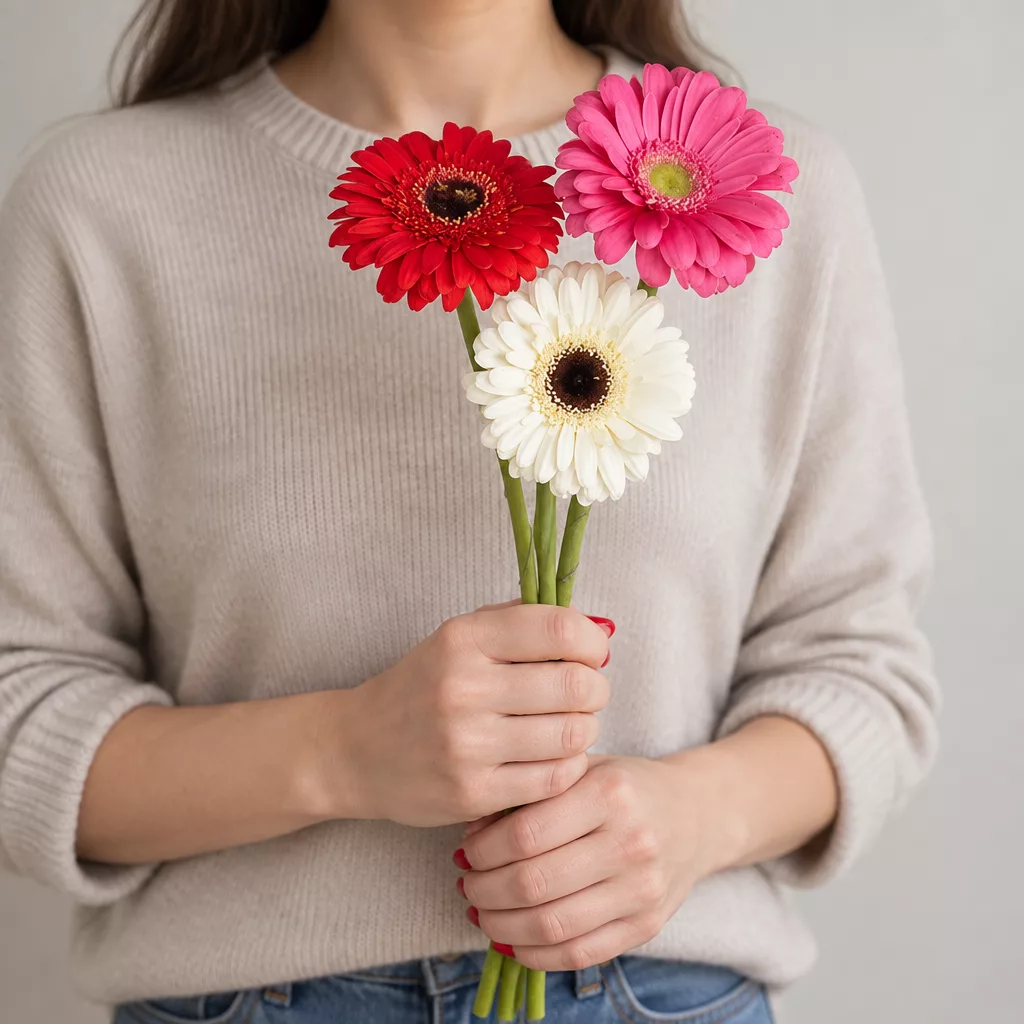
Stavropol's climate is continental with warm, dry summers and cold winters, and this affects which flowers travel best and last longest once they arrive. In summer, roses, lisianthus, and statice are reliable choices — they handle heat better than tulips or ranunculus, which are better reserved for the cooler months from October through March. Gerbera daisies are popular year-round in the region and hold their shape well, making them a dependable pick for birthdays and casual celebrations.
In winter, which in Stavropol can bring genuine frost and occasional snow, the concern shifts to cold damage rather than heat. Tropical varieties like anthuriums and orchid stems can develop dark spots if exposed to temperatures below five degrees Celsius even briefly. A good florist will wrap these in insulating kraft paper and a thermal sleeve, but the recipient should still move them indoors quickly.
Spring in Stavropol is one of the loveliest seasons for flower giving. From late March through May, tulips, hyacinths, and freesias are at their best — fragrant, affordable, and visually striking in almost any combination. A mixed bouquet of yellow freesias with pale pink tulips and a few stems of white muscari feels genuinely seasonal and personal in a way that an all-rose arrangement rarely does. Matching your flower choice to the season is not just about aesthetics; it is about sending something that was grown at its peak and will last as long as possible in the recipient's home.
What a Stavropol Bouquet Looks Like: Presentation and Russian Customs
If you are sending flowers to someone in Russia for the first time, a few customs are worth knowing so that your order feels right to the recipient. Flowers in Russia are almost always given in odd numbers — one stem, three, five, seven, and so on. Even numbers are traditionally associated with mourning, so a bouquet of ten roses would strike most Russian recipients as unusual. Reputable florists follow this rule automatically, but if you are specifying an exact stem count, keep it odd.
Presentation is taken seriously. Bouquets are typically wrapped in layered craft paper or a combination of paper and organza, tied with a ribbon, and sometimes placed in a decorative box for larger arrangements. The wrapping is considered part of the gift, and recipients often appreciate the unwrapping moment as much as the flowers themselves. Asking for gift wrapping is standard, not an extra request.
Card messages are common and warmly received. In Russian culture, a handwritten-style card note — even a short one — makes the gesture feel personal rather than transactional. If you are ordering from abroad or writing in English, that is completely fine; many recipients will appreciate a message in your own language. The florist can print your message on a small card and attach it to the bouquet. Keep the message warm and direct — something that speaks to the person, the occasion, and what you wish them. A specific detail, like referencing a shared memory or a quality you admire in the recipient, always lands better than a generic greeting.
Bouquets by Budget: What Each Range Gets You in Stavropol
Understanding what different budget levels actually look like in practice helps you set realistic expectations and order with confidence. At the entry level, you are working with seasonal stems and simple combinations — three to five stems of spray roses with gypsophila, or a small bunch of alstroemeria in a single colour. These are cheerful, genuine, and appropriate for everyday occasions like a colleague's birthday or a thank-you gesture. They travel well and last a good week with basic care.
In the mid range, the bouquet gains volume and variety. A typical mid-range arrangement might combine garden roses in two complementary shades with eucalyptus branches and a few stems of waxflower, wrapped in layered paper with a satin ribbon. This is the level where presentation becomes noticeably more considered, and the recipient feels the thought behind the choice. Most anniversary and celebration bouquets fall here.
At the upper end, you are looking at premium varieties — David Austin roses, peonies in season, imported ranunculus, or large-headed hydrangeas — combined with textural greenery like ruscus or Italian pittosporum and presented in a hatbox or a structured arrangement. These bouquets make a strong impression and are suited to significant occasions: a major birthday, a professional achievement, or a romantic gesture where you want the flowers to speak clearly. The difference between budget levels is not just stem count — it is the quality of individual blooms, the complexity of the colour story, and the care taken with the overall composition.
Keeping Flowers Fresh After Delivery: Practical Advice for Stavropol Homes
Once the bouquet arrives, what happens in the first hour determines how long it will last. The recipient should trim the stems at a diagonal angle — about two centimetres from the bottom — using scissors or a sharp knife, never tearing. Diagonal cuts increase the surface area through which the stem draws water. Then place the flowers in a clean vase with cool, fresh water immediately. This step sounds obvious, but many bouquets spend their first hour sitting on a table being admired before anyone thinks about water.
In Stavropol's warm climate, keeping flowers away from direct sunlight and heat sources is especially important. A spot near a south-facing window in July is genuinely damaging — blooms that might last eight days in a cool room will fade in four. A shaded corner or a north-facing windowsill is much better. Air conditioning is fine for most varieties, though keep flowers away from the direct airflow, which dries petals faster.
Change the water every two days and re-trim the stems each time. Remove any leaves that fall below the waterline, as they decompose quickly and cloud the water with bacteria that block the stems. Roses and tulips benefit from a small pinch of sugar dissolved in the water. Tulips in particular continue to grow after cutting and will lean toward light, so rotating the vase occasionally keeps the arrangement looking balanced. Most bouquets delivered fresh and cared for properly will last seven to ten days, with hardy varieties like chrysanthemums and alstroemeria sometimes reaching two weeks.
Special Occasions and How to Make Your Order Feel Personal
A birthday bouquet and a congratulations bouquet might seem similar on the surface, but the details that make each feel right are different. For a birthday, colour and energy matter most — bright sunflowers, vivid gerberas, or a bold mix of orange roses with purple lisianthus signals celebration. For a professional achievement or a new job, something more composed works better: cream and white roses with clean green foliage, or a single-colour arrangement in blush tones that feels elegant rather than exuberant.
When ordering for a romantic occasion, resist the temptation to default to red roses simply because they are traditional. Red roses are beautiful and meaningful, but a bouquet of deep burgundy peonies with dusty miller leaves, or a mix of pale pink garden roses with white ranunculus and soft green hellebores, can feel far more intimate and considered. Think about what the recipient actually loves — their favourite colour, a flower they have mentioned, a scent they enjoy — and build from there.
For occasions involving children, such as a school graduation or a young person's birthday, lighter and more playful combinations work well. Bright gerberas, chamomile-like matricaria, and colourful sweet peas feel age-appropriate and joyful without being childish. Adding a small plush toy or a box of chocolates to the delivery is a common and appreciated touch in Russia, and most florists can include these alongside the bouquet. The more specific and personal your instructions, the more the arrangement will feel like it was made for that exact person on that exact day — which, of course, it should be.
Stavropol is a city where a well-timed bouquet can genuinely change someone's afternoon. The distance between an order placed and flowers in someone's hands is shorter than most people expect, and the range of what is possible — from a simple seasonal bunch to an elaborate presentation box — is wide enough to suit almost any occasion and any relationship. The key is knowing what you want, being clear about timing, and trusting that fresh flowers, properly chosen and properly cared for, are one of the most direct ways to tell someone they matter.
Frequently asked questions
How quickly can flowers be delivered in Stavropol?
Standard delivery across most of Stavropol takes one to two hours from the moment your order is confirmed. Central districts and well-connected neighbourhoods are typically faster. If you are ordering to a newer development on the city's outskirts, adding a thirty-minute buffer to your expected window is a good habit, especially during peak hours on weekends and public holidays.
Can I order flowers to Stavropol from another city or from abroad?
Yes, absolutely. Many orders come from people in Moscow, Saint Petersburg, or from outside Russia entirely. You will need the recipient's full address including the district, their mobile number, and any gate or intercom codes for secured buildings. Payment is handled online, and you can write your card message in any language — the florist will attach it to the bouquet exactly as written.
What flowers are best to send in summer when Stavropol is very hot?
In summer, choose heat-tolerant varieties such as roses, gerberas, alstroemeria, lisianthus, and statice. Avoid tulips, ranunculus, and sweet peas, which wilt quickly above twenty-five degrees. Delivery bags keep bouquets cool during transit, but once inside, the recipient should place flowers in water immediately and keep them away from direct sunlight and south-facing windows.
Is it true that flowers in Russia must be given in odd numbers?
Yes, this is a genuine and widely observed custom. Odd numbers — one, three, five, seven, and so on — are associated with celebration and life. Even numbers are traditionally reserved for mourning occasions. When you order from a professional florist, this rule is applied automatically, but if you specify a custom stem count, make sure it is odd to avoid any unintended message.
How long will a delivered bouquet last in Stavropol's climate?
A fresh bouquet cared for properly typically lasts seven to ten days. Trim stems diagonally on arrival, place in cool clean water, change the water every two days, and keep flowers out of direct sun and away from heating or cooling vents. Hardy varieties like chrysanthemums and alstroemeria can reach twelve to fourteen days. Delicate blooms like peonies and sweet peas are shorter-lived but intensely beautiful while they last.
Ready to send flowers?
Pick the city, choose the bouquet, and a local florist takes it from there.
Choose a city →