Sending Flowers to Vologda? Here Is What to Expect
Vologda sits about five hundred kilometres north of Moscow, and its winters are long, its summers brief and bright. When you want to send flowers to someone there — a birthday, an anniversary, a thank-you that words alone cannot carry — you deserve to know exactly what happens between your order and the moment the door opens. This article walks you through timing, seasonal variety, how cold weather affects the journey, and the small choices that turn a decent bouquet into a genuinely memorable one.
Which Parts of Vologda We Reach and How Quickly
Vologda is a compact city by Russian standards, and its central districts — around Kremlin Square, Lenina Street and the historic embankment of the Vologda River — are straightforward to reach. Orders placed before midday typically arrive the same day within two hours of confirmation. The newer residential areas on the city's eastern and northern edges, including the districts around Bessanova and Pugacheva Streets, are fully within the delivery zone and follow the same timing window.
If the address is a private house rather than an apartment block, it helps to include the gate code or a landmark in the order notes. Many houses in Vologda sit behind fences with intercoms, and a courier who cannot reach the gate will call ahead — so a working phone number for the recipient is genuinely useful, not just a formality.
For same-day delivery, orders placed before 16:00 local Vologda time are most reliably fulfilled on the day. Evening deliveries up to 21:00 are available, which works well for surprise gifts when the recipient is at work during the day. If you are ordering from another time zone — Moscow is two hours ahead of nothing here, Vologda shares Moscow time — the cutoff is straightforward to calculate. Planning a morning delivery for a birthday? Place the order the evening before and choose a delivery window starting at 09:00.
Bouquets we can deliver


What Vologda's Climate Does to Fresh Flowers
Vologda's winters run from November through March and temperatures regularly fall to minus fifteen or even minus twenty Celsius. That range is genuinely dangerous for fresh flowers without the right handling. Roses, ranunculus and anemones are among the most cold-sensitive: even five minutes of exposure at minus ten can cause petal edges to brown and stems to turn glassy and soft. Bouquets travelling in this weather are wrapped in insulating kraft paper and placed in thermal sleeves before leaving the shop.
The transition from cold outdoor air to a warm interior is the critical moment. When a bouquet arrives in winter, the recipient should resist the urge to unwrap it immediately in a heated hallway. Letting it rest in a cool room for ten to fifteen minutes before removing the wrapping prevents condensation from settling on the petals, which would accelerate decay. This is not fussiness — it is simply how flowers stay beautiful for longer.
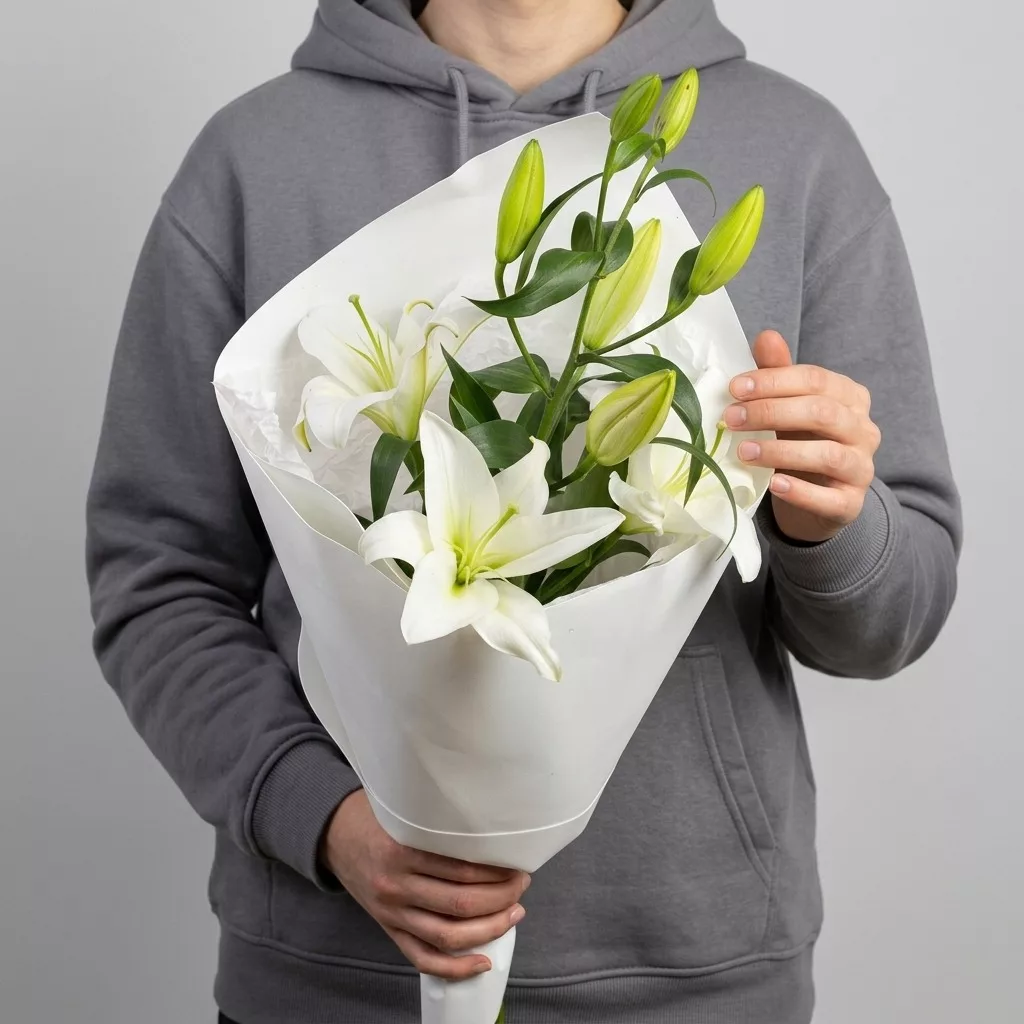
Summer in Vologda is mild and sometimes warm, with July averages around eighteen to twenty degrees Celsius. This is actually excellent for flower transport: lilies, sunflowers, lisianthus and garden-style mixed bouquets travel without thermal stress. The main summer risk is direct sunlight through a vehicle window, which can wilt a bouquet within minutes. Couriers are instructed to keep flowers out of direct sun during transit. Spring and autumn bring the most unpredictable conditions — a warm afternoon can follow a frosty morning — so the shop monitors the day's temperature forecast when packing each order.
Choosing Flowers for the Person, Not Just the Occasion
Start with the recipient rather than the date on the calendar. A woman in her sixties who keeps a traditional home will often respond more warmly to a dense, rounded bouquet of spray roses, alstroemeria and eucalyptus than to a loose, asymmetric arrangement with dried elements — even if the latter is more fashionable right now. A younger recipient who follows interior trends might love that same loose bouquet with cotton stems and dried lunaria. Knowing even one detail about the person's home or style narrows the choice immediately.
For men — and flowers for men are far more common in Russia than in many Western countries — single-variety bouquets tend to land better than mixed arrangements. A clean bundle of white or burgundy chrysanthemums, or a group of strong-stemmed gerberas in a single bold colour, reads as intentional rather than decorative. Russian culture does attach meaning to flower count: even numbers are traditionally associated with mourning, so bouquets are assembled in odd numbers. If you are unfamiliar with this custom, simply note it when ordering and the florist will arrange accordingly.
Children's occasions — a school graduation, a recital, a first day at university — call for lightness and colour. Bright gerberas, small sunflowers and solidago (golden rod) in yellow and orange combinations are perennially appropriate. These varieties also last well without a vase, which matters when the recipient will be carrying the bouquet around for several hours before getting home.
Bouquet Options Across Different Budgets in Vologda
A modest but genuinely beautiful bouquet starts with a single focal flower and a supporting cast of two or three greenery types. Alstroemeria paired with ruscus and a few stems of waxflower, for example, creates a full, layered look without requiring premium flowers. The stems last seven to ten days with basic care, which makes this combination particularly good value for recipients who are not experienced with flower maintenance.
In the mid-range, you gain access to roses as a primary element. Dutch roses with heads of five to six centimetres diameter are the standard for this tier — varieties like Explorer or Avalanche are common workhorses, bred specifically for vase life and head stability during transport. Pairing them with lisianthus adds a frilled, delicate contrast that photographs beautifully and appeals across generations. A bouquet at this level typically holds seven to eleven stems in total.
For a premium order, peonies in season (late May through June in the Russian market), garden roses with cupped heads, or large-headed ranunculus become available. These varieties are more temperature-sensitive and shorter-lived — ranunculus lasts five to seven days even with ideal care — but the visual impact on arrival is immediate and striking. Premium bouquets also allow for more considered presentation: a specific colour palette, a particular wrapping style, or the addition of a small potted plant alongside the cut flowers. Communicating your intention clearly in the order notes is the single most effective way to get the result you have in mind.
How to Write a Card Message That Actually Lands
The card is the part most people leave until the last moment, and it shows. A generic message — 'Happy Birthday, with love' — is fine, but it disappears from memory within the hour. A message that names something specific — a shared joke, a reference to a place you both know, or a single honest sentence about what the person means to you — stays. The flowers are the vehicle; the words are what the recipient will return to.
In Russian gift culture, the card is often read aloud when others are present, especially at a birthday gathering or a work celebration. If the message is meant to be private, it is worth noting that on the order so the card can be sealed. If you are comfortable with the message being semi-public, a warm and slightly formal tone works well — something that reads graciously rather than intimately.
For corporate deliveries — congratulating a colleague on a promotion, thanking a client, marking a company anniversary — keep the message short and specific. Mention the occasion, express the sentiment in one clear sentence, and sign with the full name or company name. Russian professional culture values directness and sincerity over elaborate phrasing. Avoid superlatives like 'the best' or 'incredible' in a business context; they read as hollow rather than warm.
If you are writing in English for a recipient who reads Russian, consider asking the shop to provide a translated version alongside the original. Many recipients in Vologda will appreciate the original language as a personal touch, with the translation simply ensuring nothing is lost.
Keeping the Bouquet Fresh After It Arrives
The first hour after arrival determines most of what follows. Stems should be cut at a forty-five degree angle — this increases the surface area drawing up water — and placed immediately in a clean vase with cool water. Tap water in Vologda is generally fine for flowers; there is no need for filtered water. The diagonal cut is best made with a sharp knife rather than scissors, which can crush the stem's vascular tissue and reduce water uptake.
Remove any leaves that would sit below the waterline. Submerged foliage rots quickly and introduces bacteria into the water, shortening the life of every stem in the vase. This step takes thirty seconds and makes a noticeable difference over the following days. Change the water every two days, re-cutting the stems each time.
Placement matters as much as water. Flowers last longest away from direct sunlight, heating radiators and fruit bowls. Ripening fruit releases ethylene gas, which accelerates flower ageing — apples and bananas are particularly active producers. A cool corner of a room, away from draughts, is ideal. In Vologda's winters, a windowsill above a radiator is one of the worst possible spots despite its aesthetic appeal.
Different varieties have different lifespans even under ideal conditions. Chrysanthemums and alstroemeria regularly last twelve to fourteen days. Standard roses give seven to ten days. Tulips, which are popular in Russia especially around March, last only five to seven days but open dramatically and reward daily repositioning as the heads follow the light. Knowing what you received helps you set realistic expectations and enjoy each stage of the bouquet's life.
Occasions That Call for Flowers in Vologda's Calendar
Russia's gift-giving calendar has several fixed points that generate high demand and are worth planning around. The eighth of March — International Women's Day — is the single largest flower day of the year, eclipsing Valentine's Day by a significant margin. In Vologda as everywhere in Russia, it is standard to give flowers to mothers, colleagues, teachers, neighbours and friends, not only romantic partners. Orders for this date placed two to three days ahead are processed more smoothly than last-minute requests.
The first of September, known as Knowledge Day, marks the start of the school year. Children traditionally bring flowers to their teachers on this morning, and the demand for bright, cheerful bouquets — gerberas, asters, small sunflowers — peaks sharply. If you are sending flowers to a teacher or to a child starting school, placing the order on the thirty-first of August for morning delivery on the first is the reliable approach.
New Year in Russia is celebrated on the night of December thirty-first and is the primary winter holiday, culturally more significant than Christmas for most families. Flowers for New Year gatherings tend toward rich, deep colours: burgundy roses, dark purple lisianthus, red carnations paired with evergreen foliage. The combination reads as festive without being specifically religious.
Birthdays, anniversaries and professional achievements — a defence of a university thesis, a promotion, the opening of a new business — are celebrated with flowers throughout the year and do not require a fixed date to justify a beautiful bouquet. These personal occasions are often the most meaningful deliveries, and they deserve the same care in choosing as any calendar holiday.
Sending flowers to Vologda is not complicated once you understand the city's geography, its climate, and the rhythms of its gift-giving culture. The distance from Moscow or Saint Petersburg is irrelevant to the recipient's experience — what matters is that the bouquet arrives fresh, on time, and chosen with some thought for the person opening the door. Cold weather handled correctly, a card written with a specific detail or two, stems cut and placed in clean water within the first hour: these are small things that together make the difference between a gesture and a memory.
Frequently asked questions
Can I order flowers for delivery to Vologda from another city?
Yes, you can place an order from anywhere in Russia or abroad through turboflora.com. Vologda shares Moscow time, so use that when calculating the cutoff for same-day delivery. Include a working local phone number for the recipient so the courier can reach them without difficulty, especially if the address is a private house.
Will the flowers survive the cold during winter delivery in Vologda?
Bouquets are wrapped in insulating kraft paper and thermal sleeves before leaving the shop in cold weather. The courier keeps transit time as short as possible. On arrival, let the bouquet rest in a cool room for ten to fifteen minutes before unwrapping — this prevents condensation from forming on the petals when moving from cold to warm air.
Why do Russian bouquets always have an odd number of flowers?
Even numbers are traditionally associated with mourning occasions in Russian culture, so flowers given as a celebration or expression of affection are assembled in odd numbers — five, seven, nine, eleven and so on. If you are unfamiliar with this custom, simply mention it in the order notes and the bouquet will be arranged accordingly without any extra effort on your part.
How far in advance should I order for March 8th delivery in Vologda?
International Women's Day on March 8th is the busiest flower day of the year across Russia. Placing your order two to three days ahead gives the most reliable result and allows you to specify timing more precisely. Last-minute orders on the day itself are accepted where capacity allows, but earlier planning ensures your preferred bouquet and delivery window are available.
What flowers last longest in a Vologda apartment during winter?
Chrysanthemums and alstroemeria are the most durable cut flowers, regularly lasting twelve to fourteen days with basic care. Standard spray roses give seven to ten days. Keep the bouquet away from radiators and fruit bowls, change the water every two days, and re-cut the stems each time. Avoid windowsills directly above heating units, which are common in Russian apartments and shorten vase life significantly.
Ready to send flowers?
Pick the city, choose the bouquet, and a local florist takes it from there.
Choose a city →