Sending Flowers to Volzhsky? Here Is What to Expect
Volzhsky sits just across the river from Volgograd, close enough to feel like one city, distinct enough to have its own rhythm. Whether you are ordering for a birthday in the Stariy Gorod district or a work anniversary near the industrial north, getting fresh flowers there on time is entirely possible — and when you know what to plan for, the whole experience becomes much simpler.
Where in Volzhsky We Deliver and How the City Is Laid Out
Volzhsky stretches along the left bank of the Akhtuba river in a long, relatively narrow band. The city was built in the Soviet era around the hydroelectric station, so the street grid is orderly and addresses are easy to find — a real advantage when you are coordinating a surprise delivery. Residential areas fan out from the central avenue, and most apartment buildings are numbered clearly, which keeps couriers on schedule.
We deliver across all districts of Volzhsky, from the central mikrorayons near the main square to the quieter streets closer to the water. Industrial zones in the northern part of the city are also reachable, though delivery windows there may be slightly wider because of traffic patterns around shift changes at large plants.
If you are sending to a specific workplace or gated residential complex, it helps to include the building entrance number and a contact phone for the recipient. Security desks at larger office buildings sometimes require a call-ahead, and having that detail ready means the bouquet does not wait in a lobby while someone tracks down the right floor. A note in the order comments costs nothing and saves everyone time.
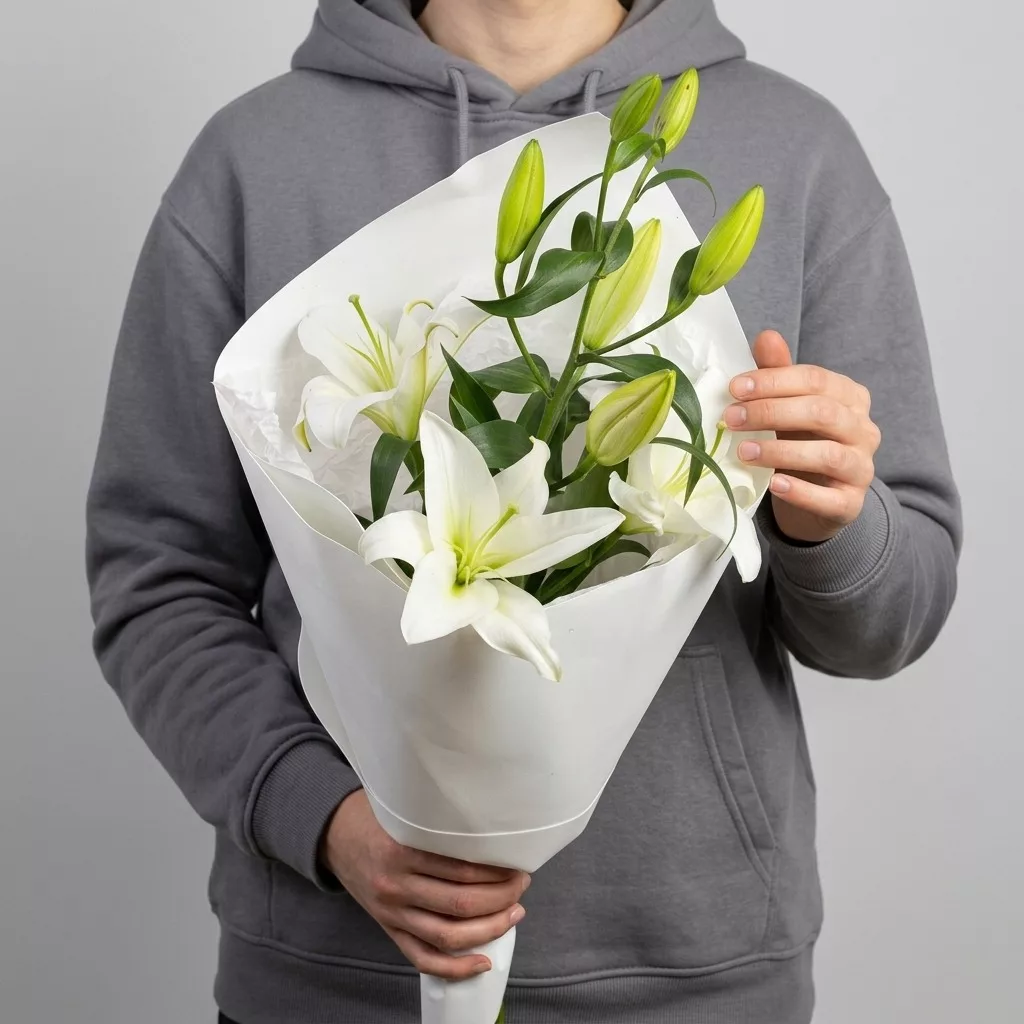
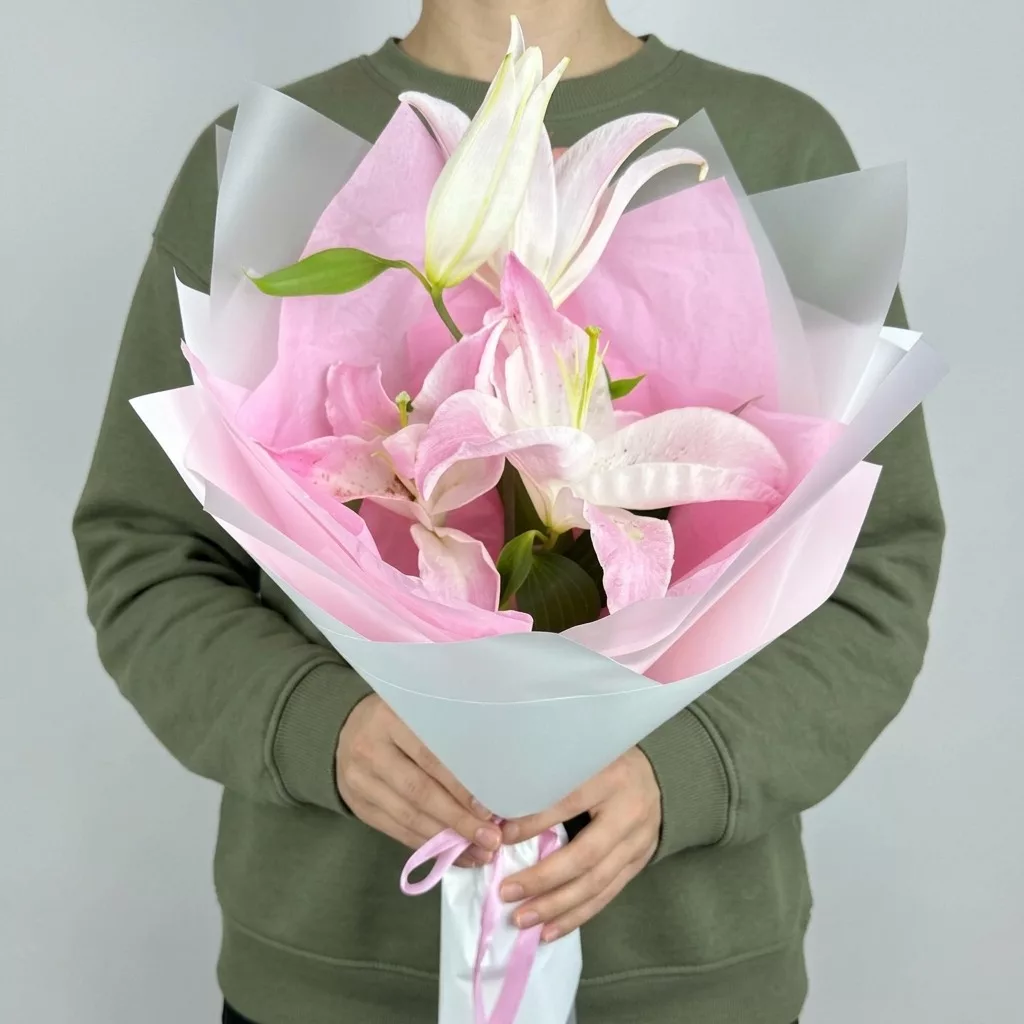
Bouquets we can deliver


Timing Your Order: What Same-Day Delivery Actually Means Here
Turboflora works on a one-to-two hour delivery window, and that applies to Volzhsky just as it does to central Saint Petersburg. The key variable is when you place the order. Morning orders placed before noon give you the most flexibility — the bouquet is assembled while flowers are at their freshest after the overnight cool storage, and the courier has clear roads before the midday rush.
Afternoon orders, roughly between noon and five, are the busiest window across the whole operation. They are still fulfilled within the stated timeframe, but if you have a hard deadline — say, flowers must arrive before a dinner reservation — place the order at least two and a half hours ahead rather than cutting it close. Evening deliveries up until the shop's closing time are available and popular for end-of-day celebrations.
One thing many customers do not realise: the assembly of the bouquet itself takes fifteen to twenty minutes for a standard arrangement, longer for large compositions with structural elements like branches or mixed tropical stems. That time is built into the window, but it is worth knowing so you are not watching the clock from minute one. When in doubt, order slightly earlier than you think you need to — flowers that arrive ten minutes early are always welcome, flowers that arrive after the cake has been cut are a different story.
Choosing Flowers for the Volzhsky Climate and the Season
Volzhsky has a continental climate with real extremes — hot, dry summers where temperatures regularly exceed thirty degrees Celsius, and cold winters that drop well below freezing. Both ends of that scale affect which flowers travel well and which ones need extra care in transit.
In summer, roses and lisianthus hold up better than, say, hydrangeas or open peonies, which wilt quickly in heat above twenty-five degrees. If you are ordering in July or August, ask for buds that are just beginning to open rather than fully open blooms — they will finish opening beautifully in the recipient's home and last several days longer. Alstroemeria is an excellent summer choice: it is naturally robust, comes in warm corals and yellows that suit the season, and lasts up to two weeks in a vase.
In winter, the challenge is the opposite. A bouquet moving from a warm shop into minus-fifteen air and then into a warm apartment needs a moment to acclimatise. Tulips, which are abundant and affordable in January and February, actually handle the cold transition well because their stems are flexible. Roses need careful wrapping and should not be left in an unheated car or entryway for more than a few minutes. Spring and autumn are the easiest seasons — moderate temperatures mean almost any variety travels without drama, and that is when ranunculus, freesia and spray roses are at their most beautiful and affordable.
What the Bouquet Looks Like When It Arrives: Presentation Details
A bouquet that has travelled an hour should look as though it just left the florist's hands. We wrap arrangements in layers — an inner moisture-retaining sleeve around the stems, then craft paper or fabric depending on the style of the composition, and a secure outer wrap that protects petals from being crushed against the sides of a delivery bag. The result holds its shape through the journey.
Presentation matters especially in Russia because flowers are almost always given unwrapped, directly into the recipient's hands, at the moment of gifting. The packaging is designed to be removed easily and gracefully — no scissors needed, no fumbling with tape. If you are ordering for a formal occasion like a work celebration or a significant birthday, mention it in the comments and we will adjust the finishing accordingly, adding a ribbon or a more structured outer wrap.
A handwritten card is included with every order. In Russian culture, the written message carries real weight — it is often kept long after the flowers have faded. If you are writing in English for a recipient who reads Russian, we can include both, or you can write your message in English and trust that the gesture itself translates perfectly. Keep the message personal rather than formal; a specific memory or a genuine wish lands better than a generic greeting, regardless of the language.
Combinations That Work: Building a Bouquet for Someone You Know
A single-variety bouquet — fifteen white roses, a dozen tulips in one colour — is elegant and always appropriate. But a mixed composition tells a more specific story, and for someone you know well, that specificity is worth the extra thought.
For a close friend, consider pairing garden roses with eucalyptus and a few stems of white or blush lisianthus. The eucalyptus adds scent and texture without overpowering the flowers, and the overall effect is relaxed and generous rather than stiff. For a colleague or professional contact, monochromatic arrangements read as polished and considered — ivory and cream tones with a single textural element like waxflower or pittosporum work well in an office setting.
If the recipient loves bold colour, sunflowers combined with orange gerbera and rust-toned chrysanthemums make a composition that genuinely stops people in the hallway. This kind of arrangement suits summer and early autumn in Volzhsky, when the warm palette echoes the landscape outside. For romantic occasions, red and deep burgundy ranunculus mixed with garden roses and a single variety of dark-leaved foliage creates depth without looking heavy.
The rule that experienced florists follow: odd numbers of focal flowers look more natural than even numbers, and three distinct textures — smooth petals, fine filler, structured greenery — give any bouquet visual interest without becoming complicated. You do not need to specify all of this when you order; describing the person and the occasion gives the florist enough to work with.
Vase Life and Care: Making the Flowers Last in a Volzhsky Home
Volzhsky apartments in summer can be warm, especially upper floors without air conditioning. Heat is the single biggest enemy of cut flower longevity, and the care steps are simple but make a measurable difference.
Cut the stems at a forty-five degree angle under running water before placing them in a vase — this increases the surface area for water uptake and removes any air bubble that may have formed during transport. Remove any leaves that would sit below the waterline, because submerged foliage rots quickly and clouds the water with bacteria that shorten the life of every stem in the vase. Change the water every two days, and re-cut the stems by a centimetre each time.
Keep the arrangement away from direct sunlight and away from fruit bowls. Ripening fruit releases ethylene gas, which accelerates petal drop in roses and tulips particularly. A cool corner of the room, or even a cool hallway overnight, can add two or three days to the vase life of a mixed bouquet.
Different varieties have different natural lifespans even under ideal conditions. Chrysanthemums and alstroemeria regularly last twelve to fourteen days. Roses, well cared for, give you seven to ten days. Tulips are shorter — five to seven days — but they continue to grow and move in the vase in a way that many people find beautiful. Knowing this helps you set realistic expectations and appreciate what you have rather than feeling disappointed when the first petals drop after a week.
Getting the Details Right: Address, Access and Last-Minute Changes
An accurate address is the single most important detail in any delivery order, and in Volzhsky specifically, where several streets share similar names or numbering conventions from the Soviet-era planning, a small error can send a courier to entirely the wrong mikrorayon. Always include the street, building number, block letter if there is one, apartment number, and entrance number. If the building has a door code, include that too.
For deliveries to workplaces, include the company name and the floor. Receptionists in larger offices deal with many deliveries and a name alone may not be enough. For residential deliveries to someone who does not know the flowers are coming, a note asking the courier to call the recipient rather than ring the doorbell gives the person a moment to come to the door without it being a complete shock — though most people are delighted either way.
If your plans change after placing the order, contact us as soon as possible. Changes to the delivery address are straightforward to accommodate if the bouquet has not yet left the assembly area. Once a courier is en route, a time change is easier to manage than an address change, but we will always try to find a solution. The least helpful thing is to say nothing and hope for the best — a quick message gives us room to act. Flowers are a time-sensitive gift by nature, and the logistics are designed around that, not against it.
Volzhsky is a city that takes celebrations seriously — a birthday there is marked properly, a promotion is acknowledged with something real, and flowers are understood as a genuine expression rather than a formality. Ordering from a distance, whether you are in Moscow, Saint Petersburg or anywhere else in Russia, does not diminish that. With the right timing, a thoughtful choice of varieties for the season, and an accurate address, the bouquet that arrives at the door will look and feel exactly as you intended it to.
Frequently asked questions
Can I order flowers to Volzhsky for delivery on the same day?
Yes, same-day delivery to Volzhsky is available within a one-to-two hour window from the time you place your order. For the best results, order at least two to three hours before you need the bouquet to arrive, especially if the delivery falls during a busy afternoon period or involves a specific time like just before an event begins.
What happens to the flowers if it is very hot or very cold outside?
In summer heat above twenty-five degrees, we prioritise robust varieties like alstroemeria and closed rose buds, and use insulated packaging for transit. In winter, bouquets are wrapped to protect against cold air and should be brought indoors promptly. We advise letting a cold bouquet rest at room temperature for ten minutes before unwrapping, so condensation does not damage the petals.
Can I include a message in English on the card?
Absolutely. Write your message in English in the order comments and we will transfer it to the card exactly as written. If you would like a brief Russian translation added alongside your English text, just mention that in the comments and we will include both so the recipient can read it in their own language.
Which flowers last the longest in a vase for someone in Volzhsky?
Chrysanthemums and alstroemeria are the longest-lasting cut flowers, regularly reaching twelve to fourteen days with basic care. Roses give seven to ten days when stems are re-cut and water is changed every two days. If longevity matters most, a mixed bouquet built around alstroemeria and spray chrysanthemums will reward the recipient with colour for nearly two weeks.
What if I entered the wrong address after placing my order?
Contact us immediately through the website or by phone. If the bouquet is still being assembled, we can correct the address at no extra cost. If the courier is already on the way, we will assess the situation and find the best solution. Acting quickly is essential — the sooner you reach us, the more options we have to get the flowers to the right place on time.
Ready to send flowers?
Pick the city, choose the bouquet, and a local florist takes it from there.
Choose a city →