Flower Delivery in Yoshkar-Ola: Timing, Districts and What Arrives at the Door
Yoshkar-Ola is a compact city with a warm character, and when someone there is about to open the door to a bouquet, the moment matters just as much as the flowers inside it. Whether you are sending from across Russia or ordering for a colleague a few streets away, knowing what the delivery actually looks like — the timing, the wrapping, the condition of the stems — turns a good intention into a genuinely memorable gift.
Which Parts of Yoshkar-Ola We Reach and How Quickly
Yoshkar-Ola is relatively easy to navigate compared with larger Russian cities. The central districts — around Lenin Square, the embankment of the Malaya Kokshaga river and the main shopping streets — are covered fastest, typically within one to two hours of the order being confirmed. Residential neighbourhoods further out, including Lugovoy and the areas near the industrial zones on the city's eastern edge, fall within the same delivery window on most days, though rush-hour traffic on Sovetskaya and Volkov streets can add a short buffer in the late afternoon.
We do not hand your order to a third party. The bouquet leaves our preparation area and travels directly to the recipient's address, which means we control the temperature and handling from start to finish. In summer, when Yoshkar-Ola can sit above 30 degrees Celsius, that matters enormously for roses and ranunculus, which wilt quickly in a hot car with no climate control.
If the address is in a newer residential complex on the city outskirts or in a private house district like Semyonovskoye, add a few minutes to your estimate. Telling us the entrance number and floor when you order removes the most common delay. Yoshkar-Ola's street numbering in some older quarters can be non-sequential, so a precise address with any landmark note genuinely helps.
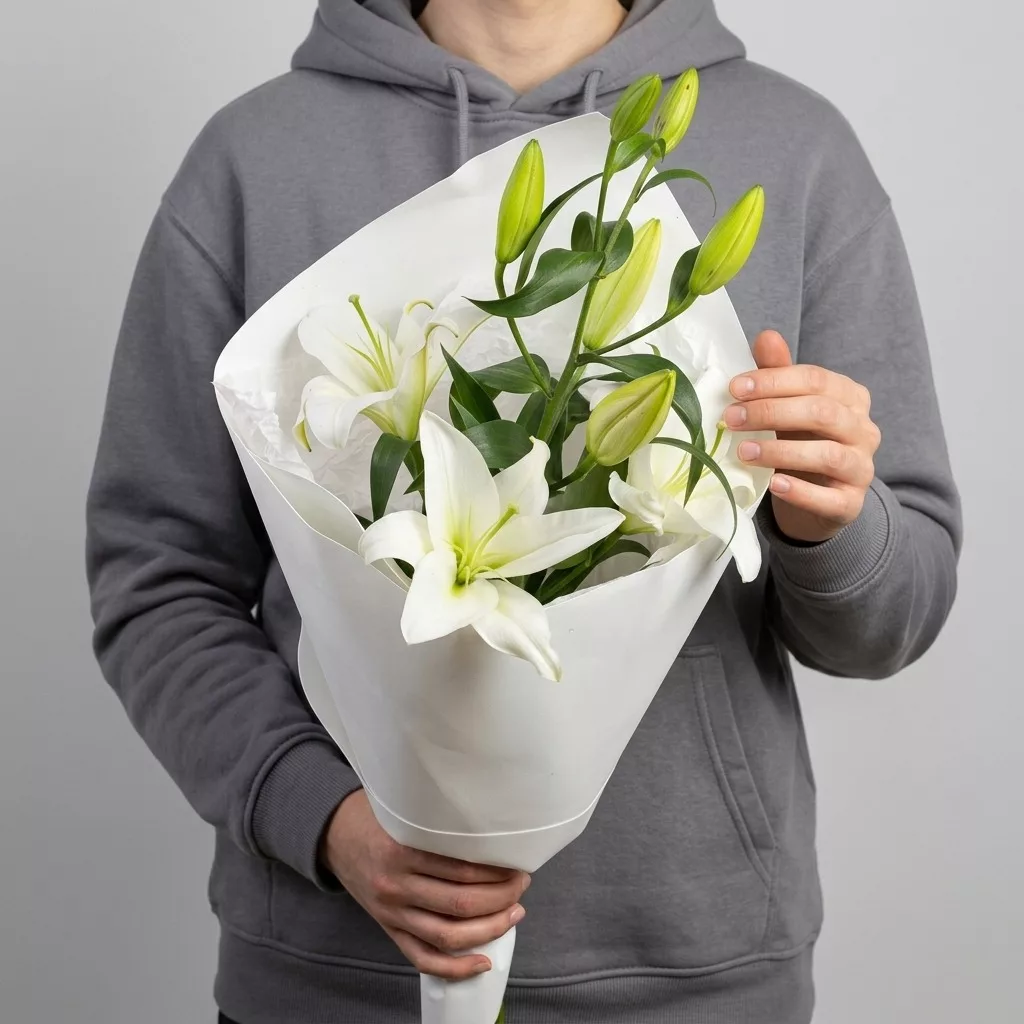
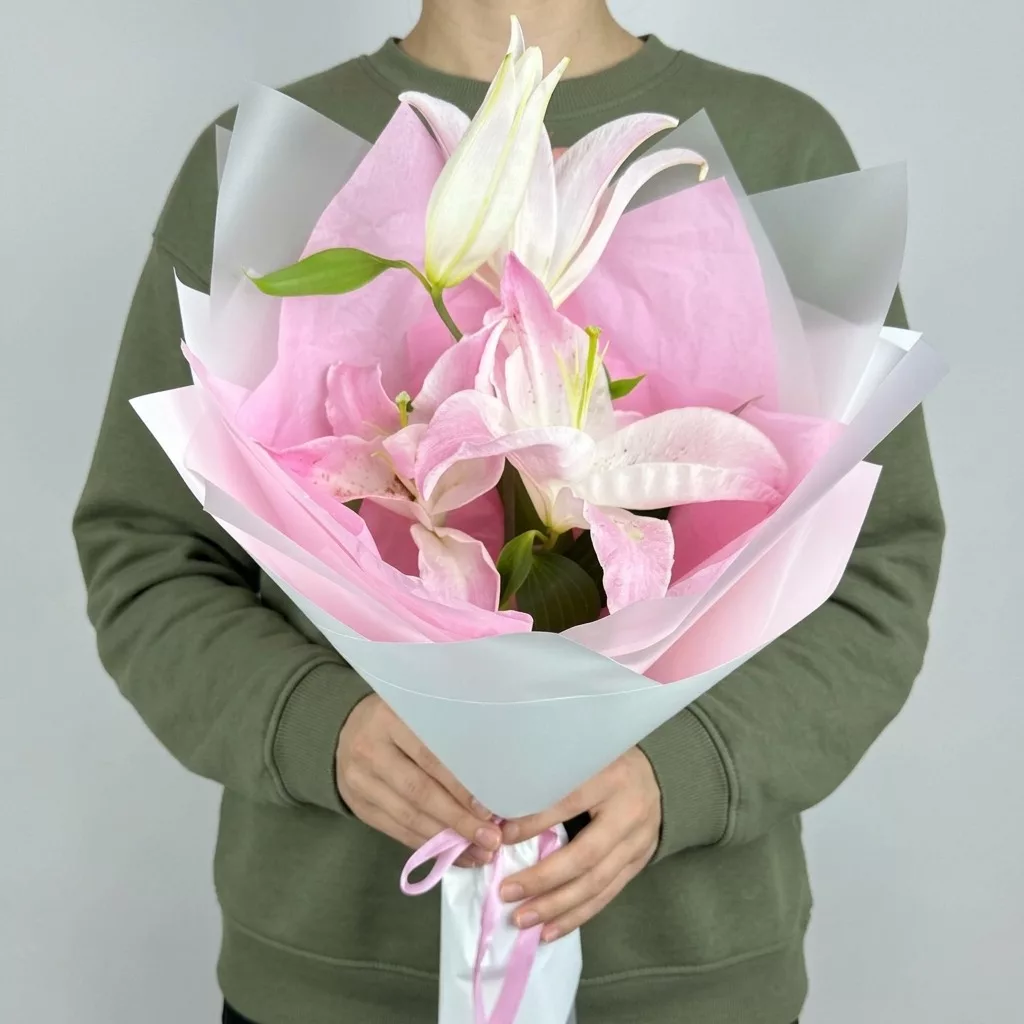
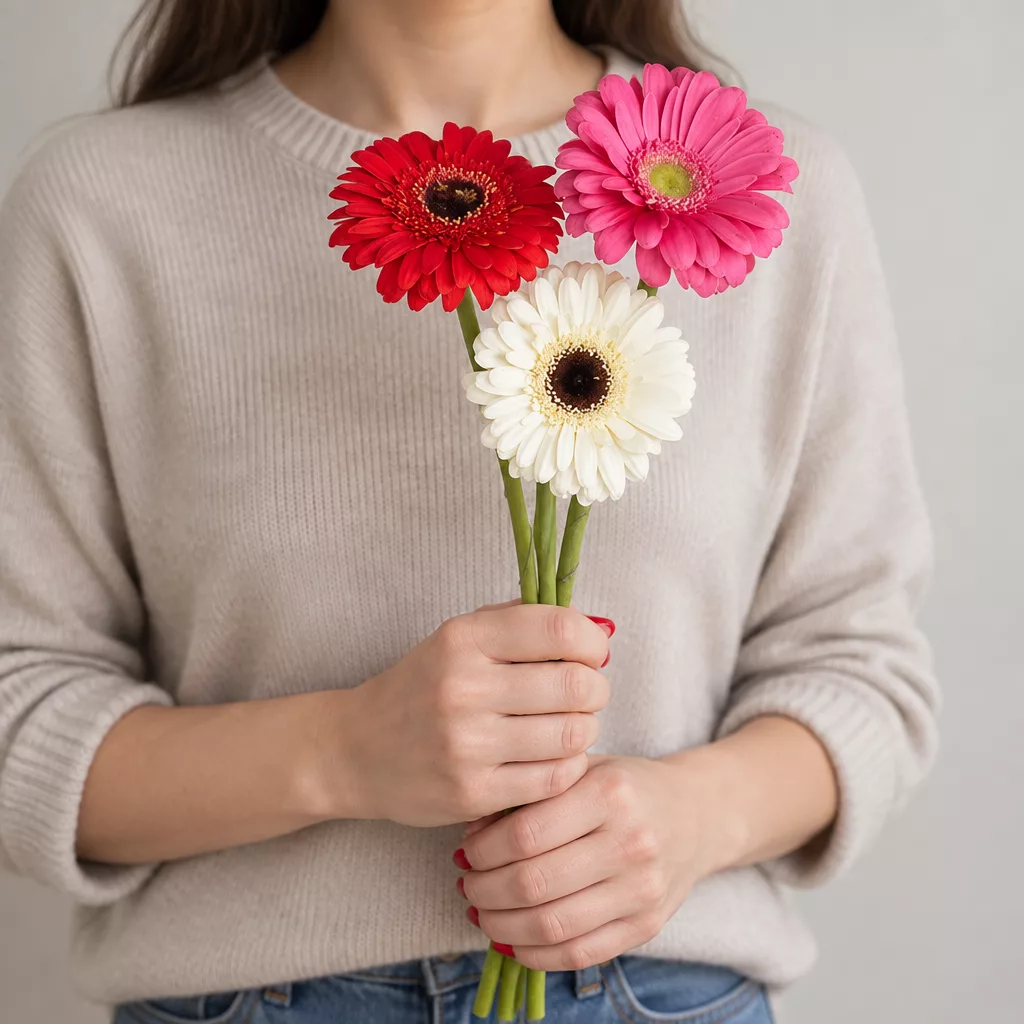
Bouquets we can deliver

Choosing the Right Flowers for the Person, Not Just the Occasion
The most important question is not what holiday it is — it is who will be holding the bouquet. A colleague celebrating a promotion responds differently to a structured arrangement of white spray roses and eucalyptus than to a loose, romantic bundle of garden roses and sweet peas. Think about the room the flowers will go into and the personality of the person receiving them before you think about colour.
For a first meeting or a thank-you gift in a professional context, cleaner compositions work better: single-variety bouquets of alstroemeria or chrysanthemum in neutral tones read as thoughtful without being overwhelming. For a close friend or partner, you can go bolder — peonies mixed with lisianthus, or sunflowers paired with solidago for warmth and texture.
In Yoshkar-Ola, as across Russia, it is a firm custom to give an odd number of flowers. Even numbers are associated with grief and funerals, so a bouquet of eleven roses or seven tulips is correct, while ten or twelve would feel wrong to any Russian recipient. If you are ordering from outside Russia and were not aware of this, now you are — and your recipient will notice the care.
Seasons shift what is genuinely fresh in the city. Winter months bring excellent availability of roses from greenhouse growers and sturdy carnations that travel well in the cold. Spring means tulips and hyacinths arrive in peak condition. Late summer is the moment for dahlias and zinnias, which look spectacular in a vase and hold their colour for days.
Bouquets by Budget: What Each Level Actually Looks Like
Budget shapes not just size but composition, and understanding what each tier delivers helps you order with confidence rather than guessing. An entry-level bouquet in our range typically centres on one reliable variety — alstroemeria, spray roses or standard chrysanthemum — wrapped simply with kraft paper and a ribbon. It is a genuine, fresh gift, not a token gesture, and it suits a quick congratulation or a thank-you for a neighbour.
The mid-range step adds a second or third variety and more considered wrapping. This is where you might see garden roses alongside waxflower, or tulips layered with muscari in spring. The arrangement has visual depth — light and dark tones, different stem heights — and the packaging reflects that. A box format at this level is popular in Yoshkar-Ola because recipients can carry it easily up a staircase without crushing the blooms.
At the upper end, the composition becomes the statement. Think peonies, David Austin-style roses, orchid stems, or seasonal exotics like protea or anthurium combined with premium foliage such as ruscus or eucalyptus. The wrapping at this level is designed to arrive looking like something you would see in a boutique window. Presentation is part of the gift — the ribbon, the paper texture, the proportions of the arrangement all carry meaning before the recipient even smells the flowers.
Whichever level you choose, the stems are cut and conditioned before packing. We do not send flowers straight from the cold store without preparation, because that shortens vase life significantly.
What Happens Between Order and Doorbell
Once your order is placed, a florist pulls the stems from cold storage, checks each one for damage or early wilting and cuts the ends at a diagonal — this increases the surface area for water uptake immediately. For roses, the lower leaves are stripped to prevent bacterial rot in the vase. For tulips, the stems are kept long because they continue to grow after cutting and a short stem creates problems within a day.
The bouquet is assembled, wrapped and placed in a water-retaining sleeve or a water tube for longer journeys. In winter, outer packaging includes insulating layers because Yoshkar-Ola temperatures regularly drop below minus 20 Celsius in January and February, and an unprotected rose in that cold will show petal damage within minutes. Summer orders get the opposite treatment — cool packs and breathable wrapping to prevent condensation and mould.
The courier carries the bouquet upright. This sounds obvious but it is the single most common cause of damage when deliveries go through uncontrolled channels — flowers laid flat in a boot, or wedged at an angle, bruise and arrive looking tired. Our couriers are instructed to keep arrangements vertical throughout the journey.
At the door, the recipient gets a brief word on care: add the sachet of flower food to the water, keep the vase away from direct sun and radiators, and change the water every two days. We include a printed card with these notes because most people, however delighted they are, forget what they were told in the excitement of receiving something beautiful.
Timing Your Order: When to Book and When to Order Same-Day
Same-day delivery in Yoshkar-Ola is available for orders placed before mid-afternoon on most days. The practical cut-off depends on how far the address is from the centre and whether it is a weekday or weekend. Weekend mornings are our busiest window — birthdays and anniversaries cluster on Saturdays — so ordering the evening before removes any uncertainty.
For major Russian celebration dates, plan further ahead. International Women's Day on the eighth of March is the single largest flower-giving day in Russia, and demand in any Russian city, including Yoshkar-Ola, peaks dramatically in the three days before it. Roses, tulips and mimosa are the traditional choices for this occasion, and availability of premium varieties tightens by the sixth of March every year. Ordering on the seventh and hoping for David Austin roses is optimistic.
New Year is the second major peak. Arrangements with pine branches, red carnations or amaryllis are popular, and people often send flowers to family members they cannot visit in person. Valentine's Day follows Western customs more than it once did in Russian cities, and red roses are expected — ordering two or three days early secures the best stems.
If your recipient works in an office, a daytime weekday delivery to their workplace is often more reliable than a home delivery when you are unsure of their schedule. Russian offices generally accept flowers for employees without any difficulty, and the social moment of receiving a bouquet at a desk has its own particular pleasure that a doorstep delivery cannot quite replicate.
Keeping Your Bouquet Fresh: Practical Care After Delivery
The first two hours after a bouquet arrives are the most important for vase life. The stems need water immediately — not eventually, not after the recipient has taken photographs and shown the arrangement to everyone in the flat, but as soon as possible. A clean vase, cool water and the flower food sachet we include create the right conditions for the flowers to rehydrate after transit.
Water temperature matters more than most people realise. Lukewarm water, around 20 degrees Celsius, is absorbed faster than cold water by most cut flowers. The exception is bulb flowers like tulips and hyacinths, which prefer cooler water. If your bouquet is mixed, cool water is the safer choice.
Roses are the most common flowers in Russian bouquets and also the most mishandled. Placing them near a bowl of fruit shortens their life noticeably because ripening fruit releases ethylene gas, which accelerates petal drop. A windowsill above a radiator is equally damaging — the warmth draws moisture out of the petals faster than the stems can replace it. The ideal spot is a cool room, away from drafts and direct sunlight.
Lisianthus and alstroemeria are the longest-lasting cut flowers in most bouquets, often going twelve to fourteen days with basic care. Roses at their best last seven to ten days. Peonies are glorious but shorter-lived — five to seven days — and they open dramatically in a warm room, which is part of their appeal. Tulips will continue growing in the vase, sometimes several centimetres, and the stems may curve toward the light, which many people find charming rather than a flaw.
Common Mistakes People Make When Ordering Flowers to Yoshkar-Ola
The most frequent problem we see is an incomplete address. Yoshkar-Ola has several streets with similar names, and without a building number, entrance number and floor, a courier can lose ten or fifteen minutes outside a block of flats — time that matters when the flowers are in summer heat. Double-check the address before confirming the order, and if the recipient lives in a gated residential complex, include the intercom code or a phone number the courier can call.
Ordering the wrong size for the occasion is another common misstep. A small bouquet sent to someone's home for a significant birthday can feel underwhelming, while an enormous arrangement delivered to a small office where the recipient has no car to take it home creates a different kind of awkwardness. Think about the setting and the scale of the occasion together.
Choosing flowers based on appearance in a photograph without considering the season leads to disappointment. Peonies photographed at their peak in May look extraordinary, but ordering them in October means either substituting a different variety or accepting lower quality. Asking what is genuinely fresh and in season on the day of delivery always produces a better result than insisting on a specific flower that is not at its best.
Finally, some people forget to include a message card or leave the message field blank. In Russian culture, a written note accompanying flowers carries real weight — it is not considered redundant or old-fashioned. Even a brief sentence explaining the reason for the gift makes the moment feel complete. A bouquet without a card can leave the recipient slightly uncertain, which is the opposite of what a flower gift should do.
Yoshkar-Ola is a city where people pay attention to gestures, and a fresh bouquet that arrives on time, in good condition, with an honest message attached is one of the simplest ways to make someone feel genuinely seen. The details — the odd number of stems, the right variety for the season, the cool water in the vase within the first hour — are what separate a flower that lasts a week and a half from one that droops by Thursday. Order with those details in mind, and the person opening their door in Yoshkar-Ola will remember it.
Frequently asked questions
Can I order flowers to Yoshkar-Ola the same day?
Yes, same-day delivery is available for most addresses in Yoshkar-Ola when you place your order before mid-afternoon. Central districts are reached fastest. For weekend mornings or major celebration dates like the eighth of March, ordering the evening before removes the risk of missing the window, especially for premium varieties that sell out quickly.
How many flowers should I include in a bouquet for a Russian recipient?
Always choose an odd number — five, seven, nine, eleven and so on. In Russian tradition, even numbers of flowers are associated with mourning and are given at funerals. An odd number signals celebration and goodwill. This applies regardless of the flower type, so three roses or fifteen tulips are both correct, while four or ten would feel wrong to any Russian recipient.
What flowers hold up best in Yoshkar-Ola's cold winters?
Roses, carnations, alstroemeria and chrysanthemums are all robust in cold transit when properly wrapped. We use insulating packaging for winter deliveries because temperatures in Yoshkar-Ola regularly fall below minus 20 Celsius in January and February. Delicate flowers like sweet peas or anemones are less suited to extreme cold, so we adjust compositions seasonally to ensure what arrives looks as good as it did when it left us.
Can I send flowers to a Yoshkar-Ola office address rather than a home?
Absolutely, and for recipients whose home schedule you are unsure about, an office delivery is often the more reliable choice. Russian workplaces routinely accept flowers for employees. Include the company name, floor and any reception instructions in the address field. Receiving a bouquet at a desk in front of colleagues is a moment many people genuinely enjoy.
How long will the bouquet stay fresh after it arrives?
With basic care — cool water changed every two days, flower food used, vase placed away from radiators and fruit — most bouquets last seven to twelve days depending on variety. Alstroemeria and lisianthus are the longest-lasting, often reaching two weeks. Roses average seven to ten days. Peonies are shorter at five to seven days but open beautifully in a warm room, which is part of their appeal.
Ready to send flowers?
Pick the city, choose the bouquet, and a local florist takes it from there.
Choose a city →