Flower Delivery in Zapolyarny: Timing, Choices and What Arrives at the Door
Zapolyarny sits well above the Arctic Circle, and when you want to send flowers there, the distance and the cold are real factors — not reasons to give up, but things worth understanding before you order. The right bouquet, packed for polar conditions and dispatched at the right moment, lands looking just as vivid as anything you would hand over in person. Here is everything you need to know to make that happen.
Who Receives Flowers in Zapolyarny and Why It Matters
Zapolyarny is a compact mining town in the Murmansk region, home to people who work hard in extreme conditions and who appreciate a gesture that travels all the way to find them. When you are sending flowers here, picture the person opening the door: a colleague celebrating a promotion at the Norilsk Nickel facility, a mother whose birthday falls during the polar night, a partner you cannot visit in person. The occasion shapes everything — the colours, the size, the wrapping.
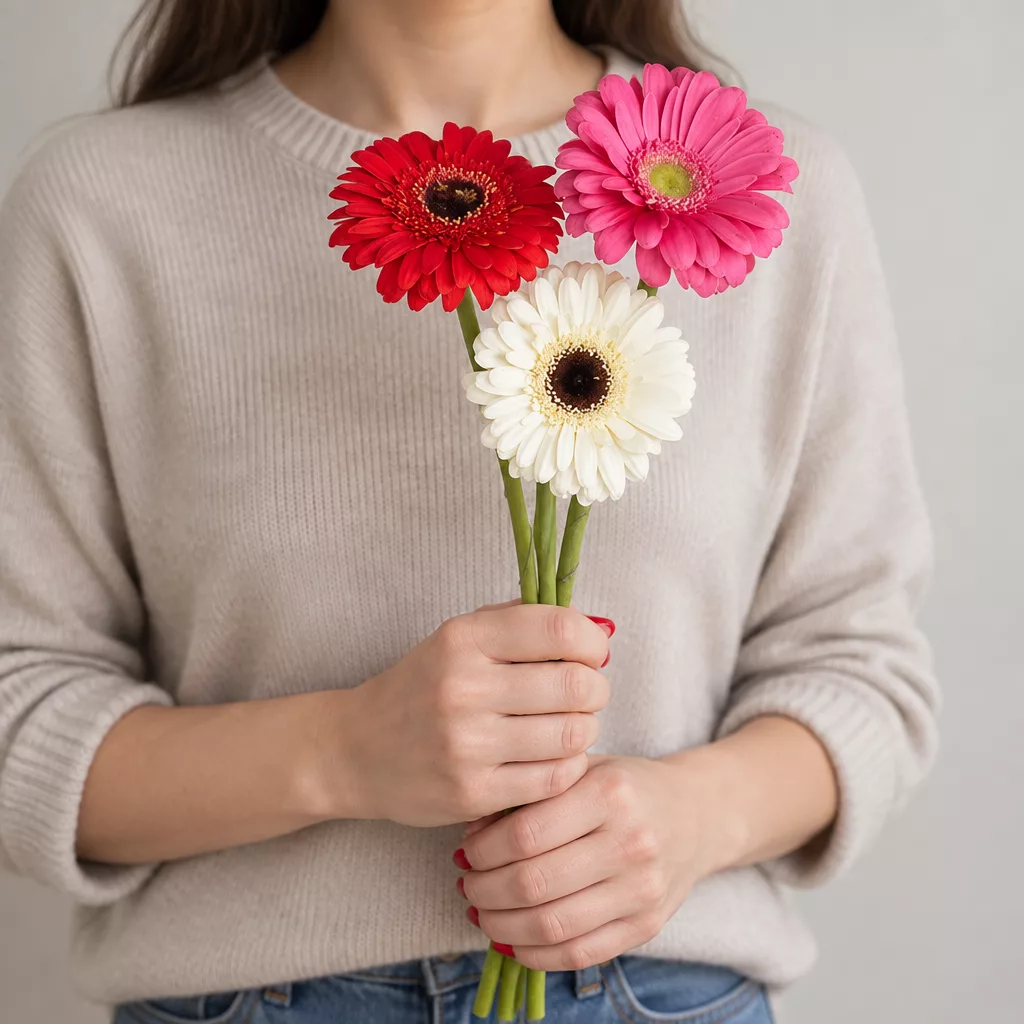
For a birthday in the depths of winter, warm tones do a lot of work. Sunflowers, orange gerberas and deep-red roses carry a sense of warmth that feels especially welcome when the temperature outside is minus twenty and daylight barely exists. For a congratulation or a new job, something cleaner and architectural — white alstroemeria with green eucalyptus — reads as confident and fresh.
Russian flower-giving customs are worth knowing if you are sending from abroad or from another culture. Always send an odd number of stems; even numbers are reserved for mourning. A bouquet of five, seven or eleven roses is perfectly standard. Red roses are a classic romantic gesture, but they are not limited to romance — a generous red bouquet is also a mark of deep respect and celebration. Explaining this to the recipient is not necessary; they will already know. What matters is that you choose with intention, and that the flowers arrive in a condition that matches the thought behind them.
Bouquets we can deliver


The Honest Truth About Delivery Timing in the Far North
Turboflora delivers fresh flowers across Russia, and Zapolyarny is one of the destinations we take seriously precisely because the logistics are demanding. Delivery windows here are not the same as in Saint Petersburg, where a one-hour slot is standard. For Zapolyarny, you should plan around a same-day or next-day window depending on when you place the order and the current road and weather conditions on the Kola Peninsula.
The most reliable approach is to order in the morning for an afternoon or evening delivery. This gives enough time to prepare the bouquet correctly for cold-weather transit, which involves specific packaging rather than a standard cellophane wrap. Flowers destined for Arctic temperatures need insulating kraft layers and, in the coldest months between November and March, an additional thermal sleeve that keeps the stems from hitting the freezing point during the final stretch of the journey.
Do not assume that because the town is small, delivery is simple. Roads in the Murmansk region can be affected by snowstorms, and a route that takes two hours in September can take considerably longer in January. We account for this when we confirm your delivery window, and we will contact you if conditions change. The practical advice is to avoid booking a timed delivery for a specific ceremony minute — give a two-hour window and let the flowers arrive when they can arrive safely. A bouquet that survives the journey intact is worth far more than one that was rushed and damaged.
Choosing Flowers That Survive the Cold Journey
Not every flower handles a trip to the Arctic with equal grace. Some varieties are naturally resilient to temperature stress; others are fragile and will show it the moment they warm up inside. Choosing well is one of the most practical things you can do for someone in Zapolyarny.
Roses are among the toughest cut flowers for cold transit, particularly the larger-headed Dutch varieties. Their petals are dense and they recover well after a controlled cold journey as long as they are not frozen. Chrysanthemums are similarly robust — they hold their shape, their colour stays true, and they last well in a vase even in the dry indoor air that heating systems create in northern apartments. Alstroemeria is another strong choice: multiple buds per stem mean the arrangement keeps opening over several days, which is a genuine pleasure when fresh flowers are not always easy to come by locally.
Flowers to approach with more caution for long cold-weather deliveries include open garden roses with very thin petals, ranunculus in full bloom, and any tropical variety such as birds of paradise or anthuriums, which are sensitive to temperatures below ten degrees Celsius and can suffer cold damage that looks like bruising or blackening on the petals. If you have your heart set on something delicate, order it in bud rather than in full bloom — it travels better and opens beautifully in the warmth of the recipient's home. A florist who knows the route will always advise you on this before the order is confirmed.
Bouquet Combinations That Work Well for Zapolyarny Occasions
A great bouquet is not a list of flowers — it is a combination that creates a mood. For Zapolyarny, where the landscape is dramatic and the light is either constant or almost absent depending on the season, bold combinations tend to land better than delicate pastels that can look washed out in artificial light.
For a romantic occasion, consider deep red roses paired with burgundy spray roses and dark green ruscus. The contrast is striking and the arrangement photographs well, which matters when the recipient will almost certainly share it. For a birthday or celebration, a mix of bright yellow solidago, orange gerberas and white chrysanthemums creates something genuinely cheerful — the kind of arrangement that changes the atmosphere of a room the moment it arrives.
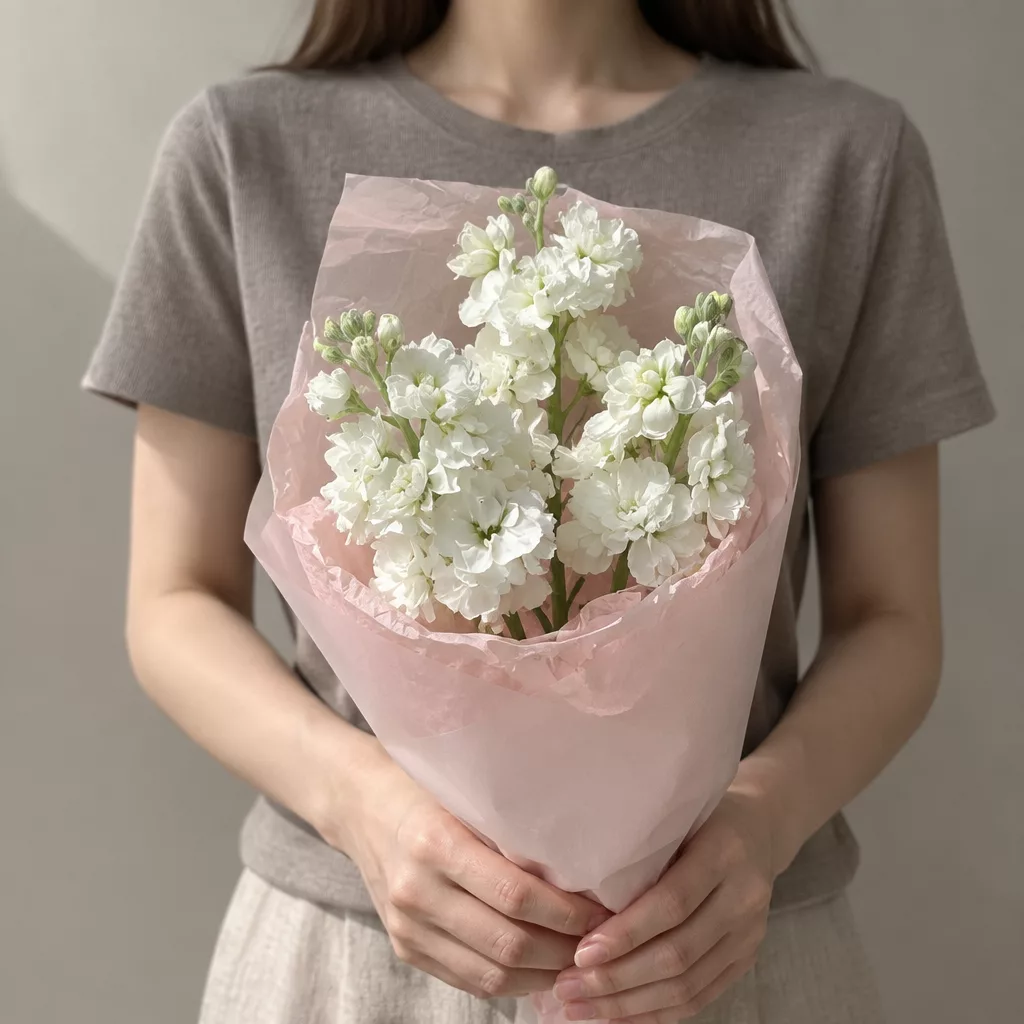
For a professional congratulation — a promotion, a work anniversary, a new beginning — white and cream tones with strong green accents feel appropriate without being cold. White eustoma with eucalyptus branches and a few stems of green trick dianthus is a combination that reads as elegant and considered. It suits a home office or a workplace desk equally well.
Presentation matters as much as the flowers themselves. A round, compact bouquet wrapped in a single colour of kraft paper with a ribbon that matches one of the flower tones looks intentional and generous. Avoid overly complicated wrapping with multiple layers of different-coloured cellophane — it tends to look busy and distracts from the flowers. Simple, clean and well-proportioned is always the right call, especially when the bouquet has to hold its shape through a long journey.
What Happens When the Bouquet Arrives: First Steps for the Recipient
A bouquet that has travelled from Saint Petersburg to Zapolyarny has been through real temperature changes, and the first fifteen minutes after arrival are important for its long-term vase life. Knowing what to do — or passing this information to the recipient — makes a genuine difference.
The first thing is to let the flowers rest at room temperature for about ten minutes before unwrapping them completely. If they have come in from the cold, a sudden rush of warm dry air can cause the petals to tighten or drop. Unwrap gradually, trim the stems at a diagonal angle of about two centimetres, and place them immediately in clean water at room temperature. Cold water from the tap is fine; the temperature of the room will equalise quickly.
For roses in particular, remove the lower leaves that would sit below the waterline — decomposing leaves cloud the water and shorten vase life significantly. Change the water every two days and re-trim the stems each time. A clean vase and fresh water are the two most effective things anyone can do to keep flowers looking good longer.
In Zapolyarny's heated apartments, the air tends to be very dry in winter because of the central heating systems common across northern Russian cities. This accelerates evaporation from the petals. Placing the vase away from direct heat sources — not on a windowsill above a radiator, not near a working oven — extends the life of the arrangement noticeably. Chrysanthemums and alstroemeria will typically last ten to fourteen days with this kind of care. Roses, seven to ten days. Gerberas, five to seven days but vivid throughout.
Ordering for the Polar Night and the Midnight Sun: Seasonal Considerations
Zapolyarny experiences two extreme seasons that affect both the mood of the recipient and the practical side of flower delivery. The polar night, which runs roughly from late November to mid-January, is a period when daylight is absent entirely. The midnight sun arrives in summer, when the sun does not set for weeks. Both create occasions and both create challenges.
During the polar night, flowers carry an outsized emotional weight. Bringing colour and light into an apartment when the world outside is dark and cold is not a small gesture — it is a real comfort. This is the season to go bold: sunflowers even when they are out of season, bright orange gerberas, yellow roses, anything that mimics warmth and light. If the recipient has been in Zapolyarny through the long dark, they will feel the difference immediately.
During the midnight sun season, the mood is different — celebratory, energetic, almost disorienting in the best way. Lighter combinations work well here: lavender-toned eustoma, white alstroemeria, pale pink spray roses. The constant daylight means flowers will be seen in natural light for much of the day, which is a luxury that does not exist in winter.
For ordering during the polar night months, keep in mind that road conditions are at their most variable. Build in extra time and do not schedule delivery for a very narrow window. During summer, the roads are clear and delivery is more predictable. Year-round, the most important thing is to order from a florist who actually knows the conditions rather than one who promises what they cannot deliver.
Common Mistakes to Avoid When Ordering to a Remote Northern Town
Sending flowers to a remote Arctic town is different from sending them across a city, and a few common mistakes can turn a generous gesture into a disappointment. The most frequent one is underestimating transit time and ordering for a delivery slot that is simply not realistic given the distance and the conditions.
A second mistake is choosing flowers purely by appearance in a photograph without considering how they travel. An open peony in full bloom looks spectacular on a screen. After several hours in a transit box, even a well-insulated one, it can arrive with bruised outer petals and a shortened vase life. The same peony ordered in tight bud travels beautifully and opens over two to three days in the vase — a much better result for everyone.
A third mistake is skipping the delivery note or keeping it too brief. In Russia, a card with a few warm, specific words matters. Recipients appreciate knowing exactly who sent the flowers and why. A note that says only a name is a missed opportunity. Write something real: a memory, a specific reason for the celebration, a wish that is particular to this person. The flowers are the visual; the note is the meaning.
Finally, do not assume that a smaller bouquet is appropriate because the recipient lives far away or because the gesture feels like it might not arrive perfectly. If anything, the distance makes the bouquet more significant — it shows that you made the effort. Choose something substantial, pack it for the journey, and let it arrive as the statement it is meant to be. A generous, well-chosen bouquet that travels well is always worth more than a cautious one.
Zapolyarny is not the easiest place to send flowers, and that is exactly why doing it well means something. When a bouquet arrives at a door above the Arctic Circle — colours intact, stems fresh, wrapped for the cold — the person who opens it knows that someone went beyond the easy option. Turboflora handles the distance, the packaging and the timing so that what the recipient experiences is simply the flowers and the thought behind them. Order with the occasion in mind, choose varieties that travel, and the rest takes care of itself.
Frequently asked questions
How long does flower delivery to Zapolyarny actually take?
Delivery to Zapolyarny typically runs on a same-day or next-day basis depending on when you order and current road conditions on the Kola Peninsula. Morning orders have the best chance of same-day arrival. In winter months, weather can extend the window, so we always recommend building in flexibility rather than booking for a precise minute.
Which flowers hold up best in Arctic temperatures during transit?
Roses, chrysanthemums and alstroemeria are the strongest choices for cold-weather delivery. They tolerate controlled low temperatures well and recover quickly in a warm room. Avoid fully open ranunculus, thin-petalled garden roses or tropical varieties like anthuriums, which are sensitive to anything below ten degrees Celsius and can show cold damage on arrival.
Is it true you should only send an odd number of flowers in Russia?
Yes, this is a genuine and widely observed custom across Russia. Odd numbers — five, seven, nine, eleven stems — are for celebrations and positive occasions. Even numbers are associated with mourning. If you are sending from outside Russia and were not aware of this, it is simply worth knowing so your bouquet lands with the right meaning attached.
How should the recipient care for flowers that have just arrived from a cold journey?
Let the bouquet rest at room temperature for ten minutes before fully unwrapping it. Then trim stems diagonally, remove leaves below the waterline and place in clean room-temperature water. Change the water every two days and re-trim stems each time. Keep the vase away from radiators and heat sources, which is especially important in the dry heated air of northern apartments.
Can I send flowers to Zapolyarny during the polar night in December and January?
Absolutely, and it is one of the most meaningful times to do so. Flowers carry particular emotional weight during the polar night when there is no natural daylight. Bold, warm colours — sunflowers, orange gerberas, yellow roses — make the strongest impression. Just allow extra delivery time during these months, as winter road conditions in the Murmansk region can be unpredictable.
Ready to send flowers?
Pick the city, choose the bouquet, and a local florist takes it from there.
Choose a city →