Sending Flowers to Zhukovsky? Here Is What to Expect
Zhukovsky sits close enough to Moscow that a bouquet ordered in the morning can reach someone's door before lunch, yet far enough that a little planning makes the difference between a wilted surprise and a genuinely beautiful one. Whether you are sending roses to a colleague after the MAKS airshow season or surprising a family member on a quiet Tuesday, knowing how delivery actually works here will help you choose better, spend smarter, and make the moment land exactly as you imagined.
Which Parts of Zhukovsky We Reach and How Quickly
Zhukovsky is a compact city, and that works in your favour. The central districts around Gagarina Street, the residential areas near Zhukovsky Station, and the newer neighbourhoods closer to the Moskva River all fall within our standard delivery window. We do not rely on a network of local shops — our couriers travel from a single dispatch point, which means every bouquet is prepared in one place and handled by one person from workbench to doorstep.
For most addresses in Zhukovsky, the realistic window after order confirmation is one to two hours. During peak periods — 8 March, Valentine's Day, and the first days of September when schools open — we recommend ordering at least three to four hours ahead. This is not a formality; it protects the quality of your flowers. A bouquet assembled under time pressure, or one sitting in a courier bag longer than necessary because of traffic on Novoryazanskoe Highway, simply does not arrive at its best.
If you are sending to a workplace inside the closed research zones near the airfield, please mention this when ordering. Access there requires a little extra coordination, and flagging it early means no delay at the gate. For standard residential and commercial addresses, no special steps are needed — just a full street address and a working phone number for the recipient.
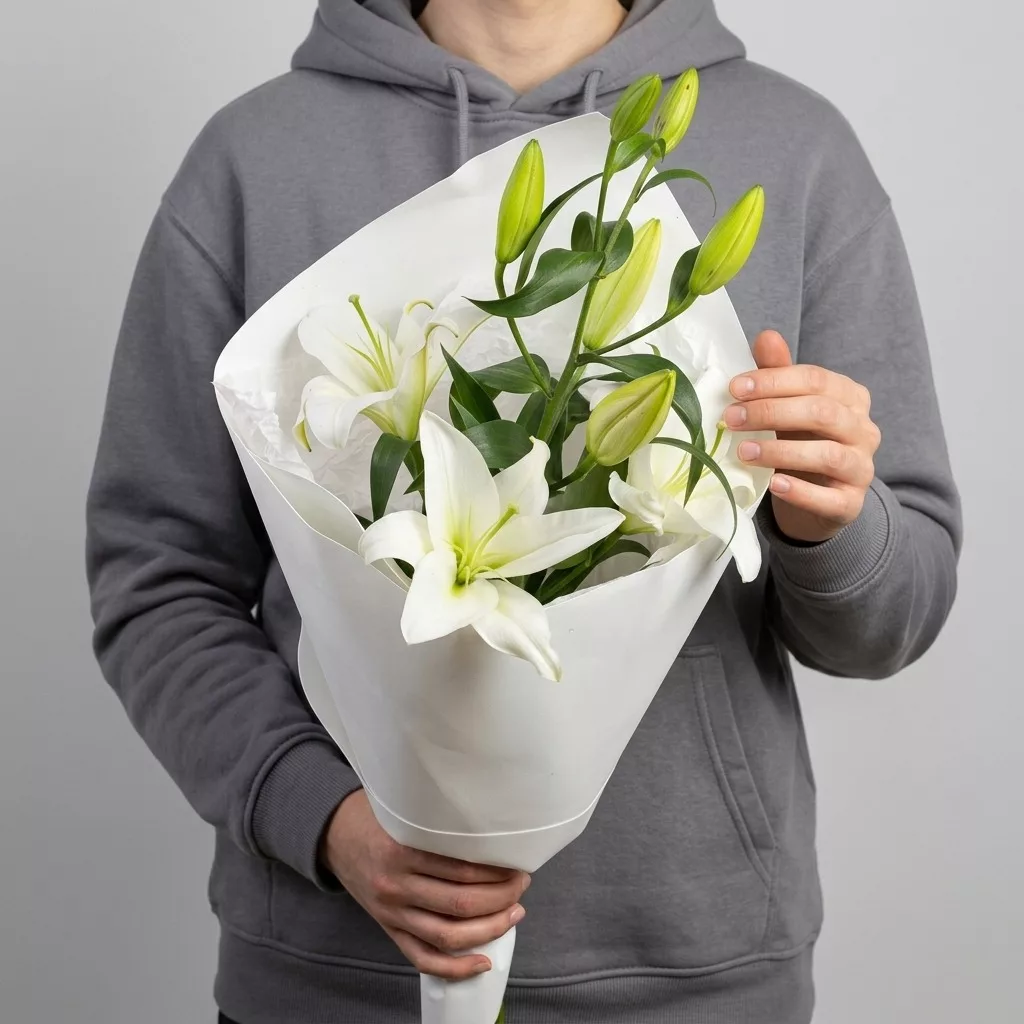
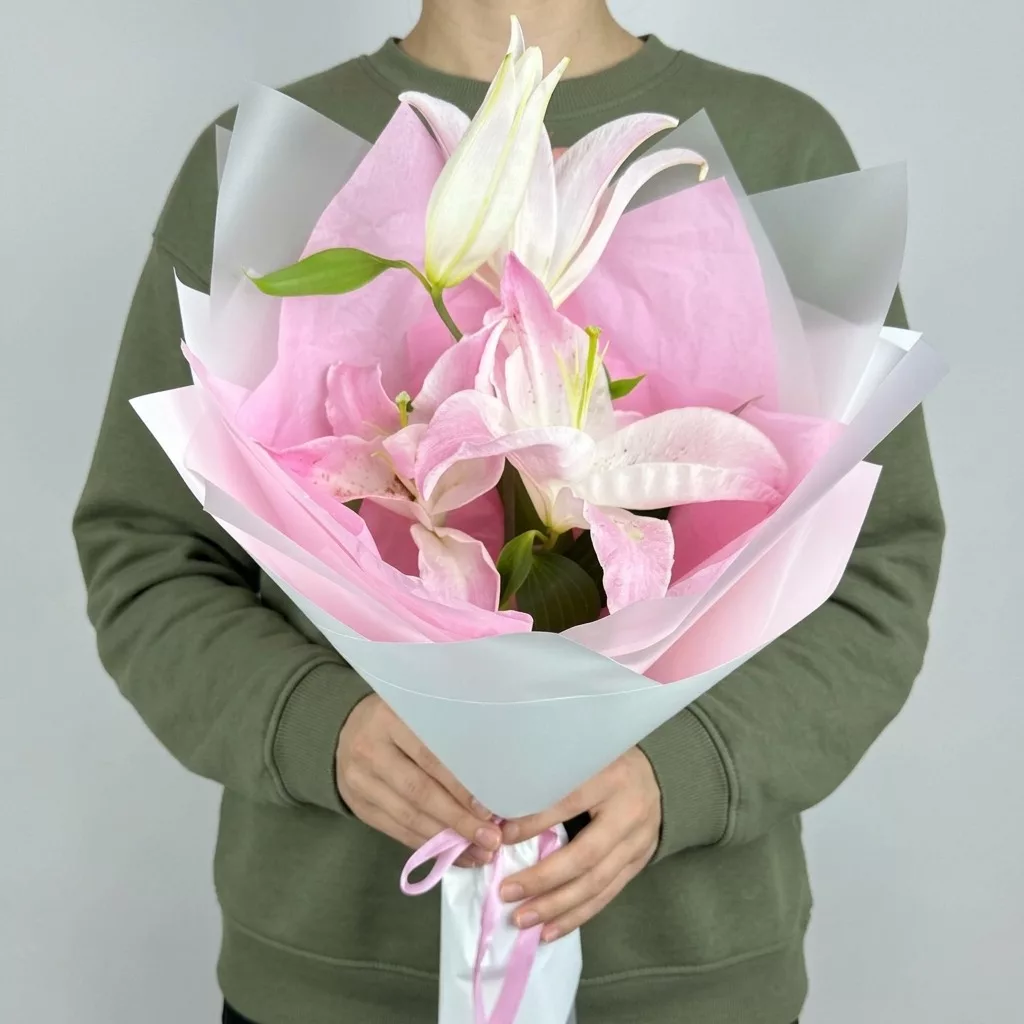
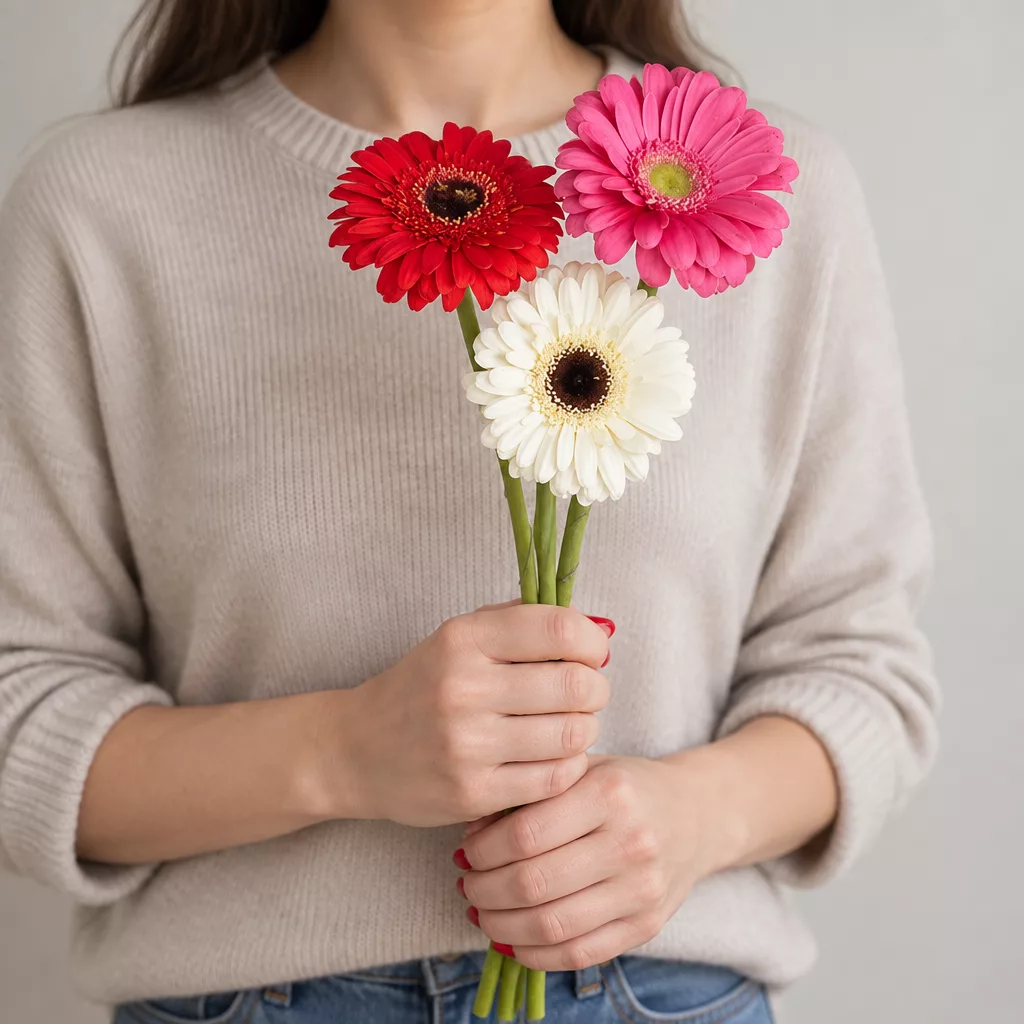
Bouquets we can deliver

Reading the Occasion Before You Choose the Flowers
The most common mistake people make when ordering flowers remotely is starting with the flower rather than the feeling. Ask yourself what the recipient will feel when they open the door. Relief and warmth after a difficult week call for something soft — garden roses in blush or apricot tones, or a loose arrangement of lisianthus and eucalyptus that reads like a hug. Celebration calls for something that commands attention: sunflowers in full bloom, bright gerberas, or a tall arrangement of orange and red spray roses that fills a room with colour.
Russian gift culture has a few customs worth knowing if you are not familiar with them. Bouquets are traditionally given in odd numbers — three, five, seven stems and so on. Even numbers are associated with mourning, so a florist who knows their craft will never hand you a bouquet of four roses without asking first. At Turboflora we follow this automatically, but if you are specifying an exact stem count yourself, keep it odd.
Another thing to consider is the setting. A bouquet going to a small apartment should be proportionate — a towering arrangement of fifty stems can overwhelm a modest kitchen table and make the recipient feel awkward rather than celebrated. For home deliveries in Zhukovsky, a medium arrangement of fifteen to twenty-five stems tends to feel generous without being excessive. For an office or a reception desk, you can go larger because the space absorbs it.
Choosing by Season: What Grows Well and What Travels Well
Zhukovsky experiences the full range of the Russian continental climate — hot summers, genuinely cold winters, and shoulder seasons that can swing ten degrees in a single day. This matters for flowers more than most people realise. A peony that looks magnificent in a Moscow flower market in late May will have spent its energy by mid-July. Ordering peonies in August means getting stems that were held in cold storage for weeks, and they show it.
In spring, from April through June, tulips, ranunculus, and fresh peonies are at their best and travel well even in variable temperatures. Summer — July and August — is the season for sunflowers, zinnias, and hydrangeas. These are sturdy, they hold colour in heat, and they look exactly right for the warm months. Autumn brings dahlias, which are underused and spectacular: the café au lait variety in particular has a warm caramel tone that photographs beautifully and lasts well in a vase.
Winter is the season of roses, amaryllis, and chrysanthemums. Roses travel better in cold weather than in heat because the chill slows their metabolism and keeps petals firm. However, the moment a winter bouquet moves from a cold car into a warm apartment, condensation forms on the petals. This is normal and harmless — tell the recipient to let the bouquet rest at room temperature for twenty minutes before unwrapping rather than plunging it straight into water. That small step prevents petal bruising and keeps the arrangement looking fresh.
Options Across Different Budgets Without Cutting Corners
Budget shapes what is possible, but it does not have to shape how meaningful the bouquet feels. At a modest budget, the goal is a single strong focal flower surrounded by complementary greenery and filler. A cluster of spray roses — the smaller, multi-headed variety — with ruscus and a few stems of waxflower makes a cohesive, pretty arrangement that does not look sparse. The key is choosing flowers that are naturally compact rather than trying to stretch large statement blooms too thin.
In the mid range, you can introduce a second focal flower and a more considered structure. Think garden roses paired with lisianthus, finished with eucalyptus and a few stems of statice for texture. This combination works across occasions and ages — it is neither too young nor too formal, which makes it the reliable choice when you are not certain of the recipient's taste.
At a higher budget, the difference is not just more stems — it is the quality of the stems themselves. Premium Ecuadorian roses have heads that are noticeably larger and petals that are denser than standard varieties. Peonies at full grade have a weight and fragrance that lower-grade stems simply do not match. If you are marking a significant occasion — a major birthday, an anniversary, a promotion — this is where the investment shows. A premium bouquet of thirty stems of high-grade roses with foliage and ribbon arrives as an event in itself. The recipient knows immediately that someone thought carefully about this moment.
What Happens During Delivery: Temperature, Packaging, and Timing
A flower bouquet is a living thing, and the journey from our workbench to a door in Zhukovsky is the most vulnerable part of its life. We wrap stems in water-retaining material — a small water capsule or damp cotton at the base — so that the bouquet does not begin to dehydrate the moment it leaves the shop. In summer, when temperatures in the Moscow region regularly reach 28 to 32 degrees Celsius, we pack arrangements in insulated sleeves and route deliveries to avoid long waits in a parked vehicle.
In winter, the risk is the opposite: frost damage to petals. At minus ten or below, an unwrapped bouquet held outside for even five minutes can develop translucent patches on rose petals — a form of freeze burn that is irreversible. Our couriers use insulated wrapping and keep bouquets inside the vehicle rather than in an open boot. When handing over the bouquet, they do it at the door rather than asking the recipient to come outside.
Timing precision matters most for surprise deliveries. If the recipient does not know to expect anyone, a courier arriving at an unexpected time may find no one home. We recommend either choosing a time window when you know the person will be present, or giving us a secondary contact number — a neighbour, a colleague, someone who can receive the bouquet and keep it safe. A bouquet left in a stairwell in July will not survive two hours of waiting, so a backup plan is always worth having.
Vase Life and Care: Making the Bouquet Last
Most flowers that arrive looking fresh can last seven to twelve days with the right care, and most flowers that fade in three days were treated incorrectly in the first hours. The single most important step is a clean diagonal cut — about two centimetres from the base of each stem — made with a sharp knife rather than scissors. Scissors crush the stem's vascular tissue; a knife leaves it open. Do this under running water or submerged in a bowl so no air bubble enters the cut end.
The vase should be clean and filled with cool water. Lukewarm water accelerates bacterial growth, which blocks the stem and prevents the flower from drinking. Change the water every two days and repeat the stem cut each time. Remove any leaves that fall below the waterline — they rot quickly and contaminate the water. This sounds like a lot of steps, but it takes less than three minutes and doubles the vase life of almost any arrangement.
Different varieties have different needs. Tulips continue to grow after cutting and will lean toward the nearest light source — rotate the vase daily if you want them to stay upright. Hydrangeas drink through their petals as well as their stems, so a light misting with cool water in the morning helps them stay full. Roses benefit from being placed away from fruit bowls: ripening fruit releases ethylene gas, which accelerates petal drop. A cool room, clean water, and distance from fruit — these three things alone will keep a good bouquet looking beautiful well into its second week.
Making the Delivery Feel Personal: Notes, Timing, and Presentation
The bouquet is the main event, but the details around it are what make the moment memorable. A handwritten card — even three or four sentences — changes how the recipient experiences the flowers. It is the difference between receiving a beautiful object and receiving a message. When you write your card text, be specific: mention the occasion, say something only you would say, or reference a shared memory. Generic phrases like 'with love' are fine, but a line like 'for finally finishing that project' or 'because Tuesday felt like it needed flowers' lands with more warmth.
Timing a delivery to coincide with a specific moment adds another layer. If you know the recipient finishes work at six and arrives home by half past, scheduling delivery for six forty-five means they walk through the door to flowers already waiting — or a courier arriving just as they do. This kind of precision is possible when you book in advance and give us a clear window.
Presentation on arrival matters too. Our couriers present bouquets upright, wrapped, with the card attached visibly. If you are ordering for a celebration and want the packaging to feel festive — a particular ribbon colour, craft paper rather than cellophane — mention this in the order notes. We cannot guarantee every request, but we accommodate most of them. Small details like these are what separate a flower delivery from a flower gift, and that distinction is exactly what we are in the business of making.
Zhukovsky is a city that rewards a little forethought when it comes to flower delivery. The distances are manageable, the timing is reliable, and the range of what we can send covers every occasion from a quiet weekday gesture to a major celebration. What makes the difference, almost every time, is starting with the person rather than the product — thinking about who they are, what they will feel, and what the moment deserves. Get that right, choose flowers that suit the season, and give us a working address and a phone number, and the rest takes care of itself.
Frequently asked questions
Can you deliver to addresses near the Zhukovsky airfield research zone?
Yes, but please mention any access restrictions when placing your order. Closed or semi-restricted zones require a little extra coordination at the gate, and flagging this early prevents delays. For standard residential and commercial addresses across Zhukovsky, no special steps are needed beyond a full street address and a working phone number.
Why do Russian bouquets always have an odd number of flowers?
In Russian tradition, even numbers of flowers are associated with mourning and are placed at graves. Odd numbers are for celebrations and gifts. This is a widely observed custom across Russia, not a regional quirk, so any florist working here will follow it automatically. If you specify a stem count yourself, keep it odd to stay within the tradition.
What flowers hold up best during a summer delivery in hot weather?
Sunflowers, zinnias, and chrysanthemums are the most heat-tolerant options in summer. Hydrangeas and gerberas also travel reasonably well if kept out of direct sun. Delicate varieties like sweet peas or fully open peonies are more vulnerable to heat and are better ordered in cooler months when they are also at peak quality.
How far in advance should I order for a timed surprise delivery?
For a specific time window on a regular day, two to three hours of lead time is usually enough. On high-demand dates — 8 March, Valentine's Day, or 1 September — order at least four to six hours ahead, or the evening before if possible. Earlier orders give us more flexibility to prepare the bouquet properly rather than rushing assembly.
My recipient was not home and the bouquet was left with a neighbour. Will it be okay?
If the neighbour kept it indoors at room temperature and out of direct sunlight, the bouquet should be fine for several hours. Ask the recipient to trim the stems and place them in fresh cool water as soon as possible. Avoid leaving flowers in a warm stairwell or outside — heat and dry air are the main risks during any unplanned wait.
Ready to send flowers?
Pick the city, choose the bouquet, and a local florist takes it from there.
Choose a city →