Sending Flowers to a Business Partner in Russia: What to Know
A bouquet handed to a Russian counterpart at the right moment can open a conversation, mark a milestone, or quietly signal that you understand the culture. Get it wrong — the wrong count, the wrong colour, the wrong occasion — and the gesture lands flat. This guide walks you through what actually matters, from the first impression to the last petal, so your flowers do exactly the work you intend.
Why Flowers Still Matter in Russian Business Culture
In many Western business settings, flowers have largely migrated to personal life. In Russia, they remain a fully accepted and even expected gesture in professional relationships. Presenting a bouquet to a senior partner, a client celebrating a company anniversary, or a colleague on a national holiday is not considered overly personal — it is considered attentive.
The gesture carries weight because it shows preparation. Anyone can send an email or a box of chocolates ordered in five minutes. A thoughtfully chosen bouquet signals that you noticed the occasion, you know something about the person, and you invested a little care. That reading is immediate and almost universal among Russian recipients.
Occasions that typically call for flowers in a business context include International Women's Day on the eighth of March — where it is genuinely expected for female colleagues and clients — company anniversaries, contract signings, promotions, and formal meetings where you are visiting someone's office for the first time. Men do receive flowers in Russian business settings, though less frequently; a potted plant or a compact arrangement is often more comfortable than a full bouquet in those cases.
Understanding this context matters before you choose a single stem. The flower is not decoration. It is a small social act, and the care you put into it will be noticed by people who give and receive flowers regularly throughout their professional lives.
Bouquets we can deliver

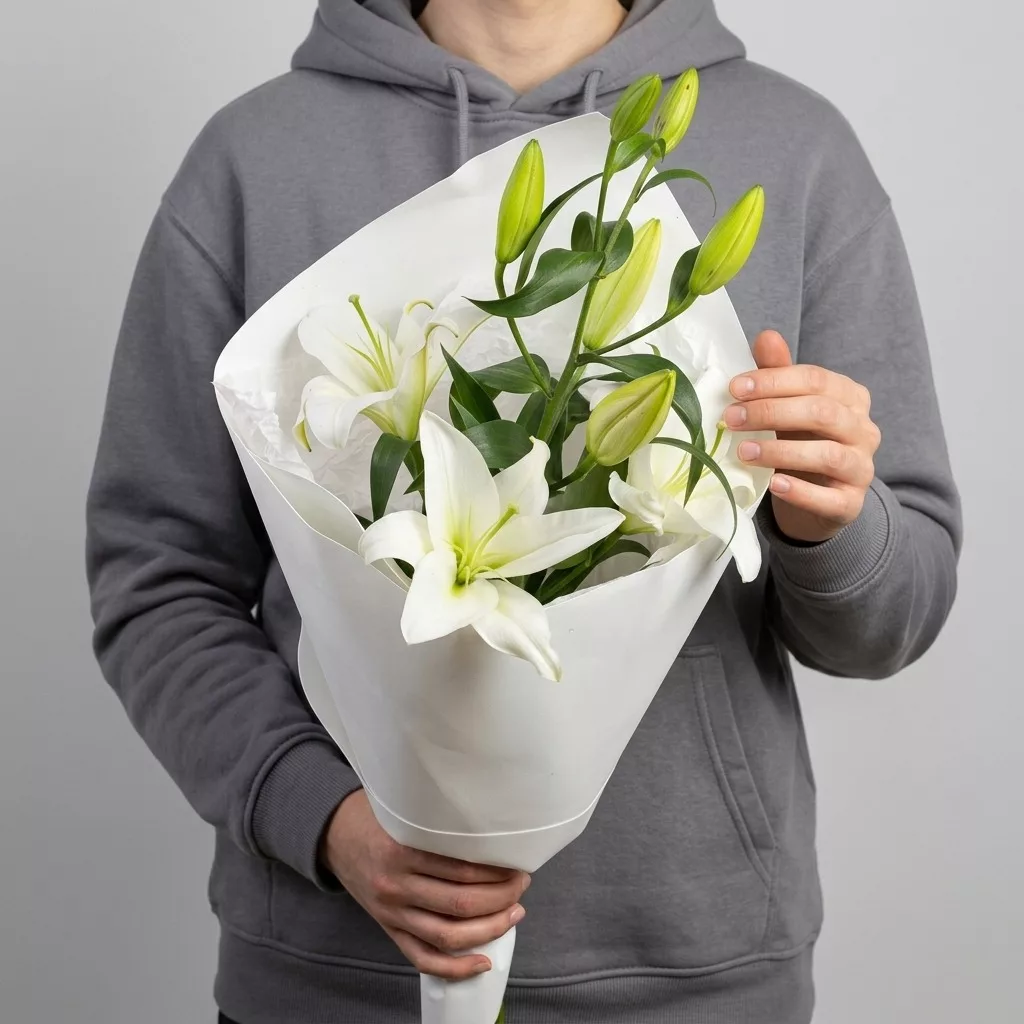
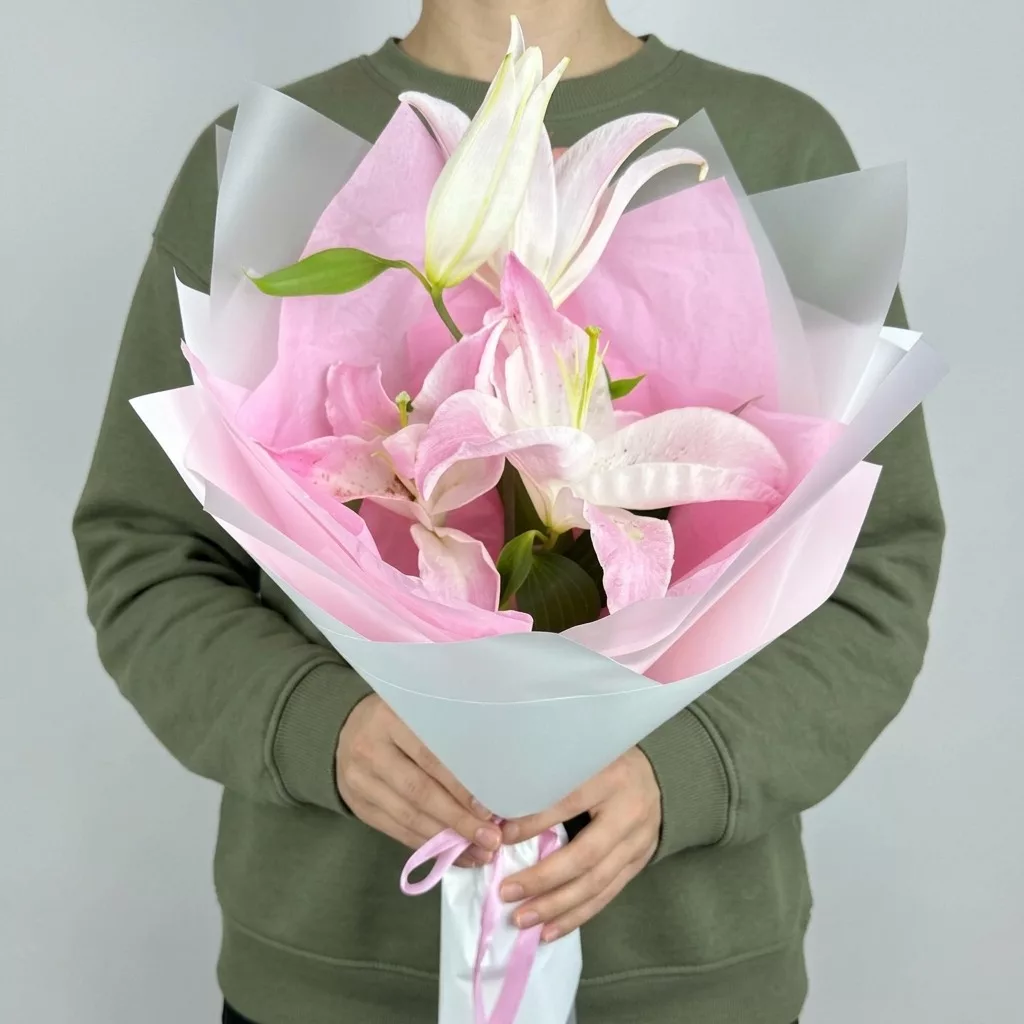
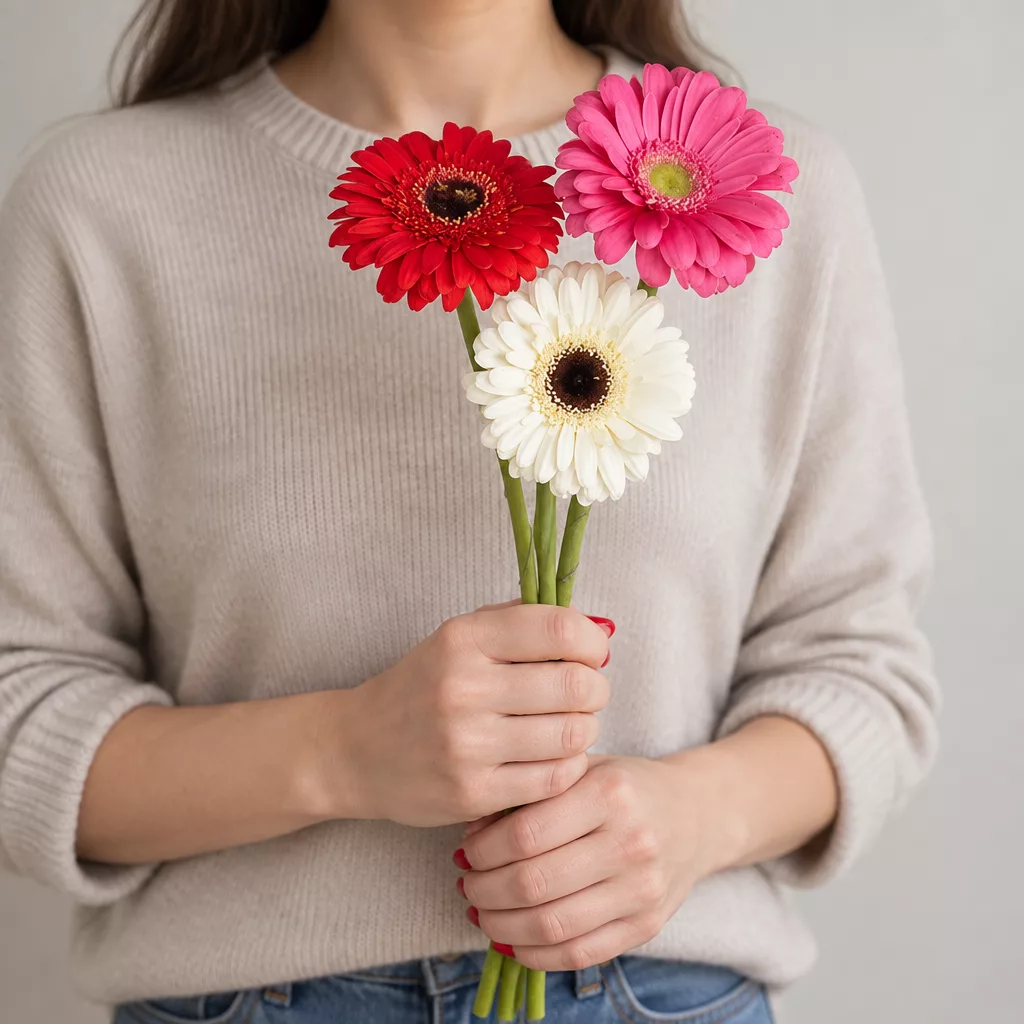
The Rules Around Numbers and Colours You Cannot Ignore
The most important rule in Russian flower-giving is the count. Even numbers of flowers are associated with mourning and are brought to funerals. For any living recipient, the bouquet must contain an odd number of stems — three, five, seven, nine, eleven, and so on. This is not a superstition observed only by older generations; it applies broadly and a bouquet of ten roses will genuinely unsettle most Russian recipients regardless of age.
Colour carries meaning too, though with more room for nuance. White flowers are considered appropriate and elegant in business settings — white roses, white lisianthus, white chrysanthemums. They read as respectful and neutral. Red roses are romantic in Russian culture and are best avoided for a professional counterpart unless you know the relationship very well. Deep burgundy, coral, and pale pink roses sit in a safer middle ground and are widely used in business bouquets.
Yellow flowers deserve a specific note. Yellow roses and yellow tulips are associated in Russian tradition with separation or the end of a relationship. Many people are aware of this and will feel an uncomfortable undertone even if they do not say so. Stick to other colours unless yellow appears as a small accent within a mixed arrangement dominated by other tones.
Mixed bouquets in cream, blush, and soft lilac are consistently well received in business contexts. They feel considered without being intimate, and they work for recipients of any gender. When in doubt, a florist who understands the occasion can steer you clearly.
Choosing Flowers That Match the Occasion and the Recipient
A bouquet for a first meeting with a new client calls for restraint and elegance rather than drama. Roses in cream or pale pink, combined with eucalyptus or soft ruscus greens, project professionalism. Keep the arrangement structured rather than loose and wild — a tighter, more composed form reads as more formal, which is appropriate when the relationship is just beginning.
For a long-standing partner or a celebration like a company anniversary, you have more latitude. Peonies in season — late May through June — make a generous and impressive statement. Garden roses with their layered petals suggest quality and care. Lisianthus, sometimes called eustoma, adds texture and a slightly unusual touch that shows you went beyond the obvious. These flowers hold well and look abundant without being excessive.
For a female executive receiving flowers on the eighth of March, think about what she will actually carry out of the office. A very large arrangement is impractical on public transport or in a car. A medium bouquet of fifteen to seventeen stems in a handled wrap travels well and still looks generous. Orchid stems — cymbidium or phalaenopsis — are striking in small numbers and last exceptionally long, which leaves a lasting impression.
For a male business partner, a small potted orchid, a succulent arrangement, or a compact bouquet of five to seven stems is less likely to feel awkward. The gesture is acknowledged without anyone needing to find a vase. Presentation matters here: clean wrapping, a ribbon, and a brief handwritten card elevate even a modest arrangement significantly.
Spending Levels: What Different Budgets Signal
Spending too little on a business bouquet is a real risk. A very small or sparse arrangement can read as an afterthought, which is worse than no flowers at all. In Russian business culture, the quality and fullness of a bouquet are noticed. This does not mean you need to spend extravagantly, but it does mean that cutting corners on stem count or flower quality will be apparent to a recipient who receives flowers regularly.
At a modest budget, the goal is a clean, single-variety bouquet with enough stems to look intentional. Seven or nine roses of consistent quality, wrapped simply with a card, is respectable. The key is choosing one good flower and doing it properly rather than combining cheap varieties to fill space.
At a mid-range budget, you can introduce combinations. Roses paired with lisianthus and seasonal greenery create depth and look considered. This level is appropriate for established clients, partners you meet regularly, and occasions like Women's Day where flowers are expected across a whole team.
At a higher budget, the bouquet becomes a statement. Garden roses, peonies, ranunculus, and orchid stems together in a large arrangement signal genuine appreciation and respect. This level suits a major contract milestone, a senior executive you are meeting for the first time, or a relationship you want to invest in visibly.
One consistent principle: presentation lifts every budget level. Quality kraft paper, a satin ribbon, and a handwritten card cost very little extra and transform how any bouquet is received. Never skip the card — a name and a short, warm line matter more than people expect.
Presentation and Delivery: Getting the Details Right
In Russian business culture, flowers are typically presented in person at the start of a meeting, not at the end. Handing over the bouquet as you arrive, before sitting down, is the natural moment. It sets a warm tone and gives the recipient time to set the flowers aside comfortably before the conversation moves to business.
If you are sending flowers ahead of a meeting or to an office you will not visit yourself, timing the delivery matters. A bouquet arriving at nine in the morning on the day of a meeting or celebration is ideal. Too early and the flowers may wilt before the moment arrives; too late and the gesture misses its window. Turboflora delivers across Saint Petersburg and to other Russian cities within one to two hours, which makes same-day precision delivery genuinely possible.
Wrapping style signals intent. For a business bouquet, avoid overly casual cellophane wrapping. Kraft paper with a ribbon, a fabric wrap, or a box arrangement all read as more considered. A clear, lidded box showing the flowers inside is increasingly popular in Russian business gifting because it protects the arrangement and photographs well — relevant if the recipient shares the moment.
Always include a card, even a small one. It does not need to be elaborate. The recipient's name, your name or company, and one sentence acknowledging the occasion is enough. In Russian business culture, the card is part of the gift. Arriving without one suggests the bouquet was assembled without much thought, regardless of how beautiful the flowers are.
Seasonal Choices and What to Expect from Each Flower
Understanding vase life helps you choose flowers that will still look good two or three days after delivery — important when you want the gesture to linger. Roses, when properly conditioned and kept away from direct heat, typically last seven to ten days in a vase. Lisianthus lasts similarly long and opens gradually, which means the bouquet actually improves over the first few days. These are reliable choices for office settings where no one may remember to change the water daily.
Peonies are spectacular but seasonal. Available from roughly late May through June in Russia, they open fully within a day or two of delivery and last about five days. They are worth using in that window — the impact is significant — but outside of it, a good florist will steer you elsewhere rather than substitute with inferior material.
Tulips, available from late winter through spring, are a popular choice for Women's Day in March. They are affordable, come in a wide range of colours — avoiding yellow — and look generous in larger counts. They do droop in warmth, so office delivery in winter is fine, but in a warm room they need fresh water daily.
Chrysanthemums are sometimes underestimated but are genuinely long-lasting — up to two weeks with care — and come in elegant spray forms that work well in mixed arrangements. They are a practical choice for a recipient who travels and may not be in the office every day.
In summer, sunflowers and dahlias bring colour and a sense of occasion. In autumn, deep-toned roses, burgundy dahlias, and amaranthus create rich arrangements that feel appropriate for more formal business settings.
Common Mistakes and How to Avoid Them
The even-number mistake is the most common error made by people unfamiliar with Russian customs. It is also the most easily avoided: simply count before you order. If your chosen combination adds up to an even number, add one stem. This single rule will save you from an uncomfortable moment with any Russian recipient.
Ordering too far in advance is another frequent misstep. Flowers ordered two or three days before the occasion and held at room temperature will be visibly tired by the time they are presented. Order for same-day or next-day delivery and specify the delivery window that matches your meeting time. Fresh flowers make a different impression entirely.
Ignoring the office environment is a subtler mistake. If you know your recipient works in a small private office, a very large arrangement may be impractical and even slightly overwhelming. If they work in an open-plan space, a compact bouquet is easier to manage at a desk. Asking yourself where the flowers will actually sit helps you choose the right scale.
Skipping seasonal awareness can lead to flowers that look forced or tired. A florist who knows what is genuinely in season will always produce a better result than one who tries to source out-of-season varieties at inflated cost and lower quality.
Finally, sending flowers without any context — no card, no occasion noted — can confuse rather than delight. Even a brief message clarifying that the bouquet marks a contract anniversary or a first meeting gives the recipient a framework for the gesture. Without it, a beautiful bouquet can feel random, and the opportunity to strengthen a professional relationship is partly lost.
A well-chosen bouquet for a Russian business partner is a small investment with a disproportionate return. It shows cultural awareness, personal attention, and genuine respect — qualities that matter in any professional relationship and especially in one that crosses cultural lines. Keep the number odd, choose colours that suit the relationship, match the scale to the occasion, and always include a card. These are not complicated rules, but following them confidently separates a gesture that lands from one that merely arrives.
Frequently asked questions
Is it appropriate to send flowers to a male business partner in Russia?
Yes, though the format matters. A compact arrangement of five to seven stems, a potted orchid, or a small succulent arrangement is more comfortable than a large bouquet. The gesture is understood and appreciated; keeping the scale modest avoids any awkwardness while still making a warm professional impression.
Can I send flowers to a Russian office without attending in person?
Absolutely. Delivery to an office address is common and well received. Specify the recipient's full name and department, choose a delivery window that falls during working hours, and always include a card with your name and a brief note. The card is essential — without it, an office reception may not know who sent the bouquet.
Which flowers should I completely avoid for a business bouquet in Russia?
Avoid yellow roses and yellow tulips, which carry associations with separation in Russian tradition. Even numbers of any flower are associated with mourning and must be avoided. Red roses read as romantic rather than professional. Outside of these, most flowers are appropriate; the combination and presentation matter more than any single variety.
How far in advance should I order flowers for a business occasion?
Same-day ordering is ideal. Fresh flowers delivered within hours of a meeting look and smell noticeably better than arrangements prepared a day or two earlier. Turboflora delivers within one to two hours across Saint Petersburg and to other Russian cities, making it practical to order on the morning of the occasion and receive a genuinely fresh result.
What is the right size bouquet for a business gift in Russia?
For a first meeting or a modest occasion, nine to eleven stems is a respectful and manageable size. For a significant celebration or a senior executive, fifteen to twenty-one stems signals genuine appreciation. Avoid very small arrangements of three or five stems for formal occasions — they can read as minimal rather than considered, even when the flowers themselves are high quality.
Ready to send flowers?
Pick the city, choose the bouquet, and a local florist takes it from there.
Choose a city →