Flowers for a Newborn in Russia: What to Send New Parents
A baby has arrived, and you want to send something that feels genuinely warm rather than generic. In Russia, congratulating new parents with flowers carries its own quiet set of customs — some rooted in superstition, some simply in taste — and knowing them makes the difference between a bouquet that lands beautifully and one that causes an awkward pause at the door.
Why the Timing of Your Delivery Matters More Than You Might Think
In Russian tradition, flowers are almost never sent to the maternity hospital itself. The custom is to wait until mother and baby are home — usually two to four days after birth — and then celebrate the homecoming properly. Sending a bouquet to the ward can feel presumptuous to older family members, and some hospitals restrict deliveries to the ward anyway. The homecoming day is the real moment.
This timing works in your favour as a sender. You have a day or two to choose thoughtfully rather than rushing. The new parents will be settled, the grandparents will likely be present, and the flowers become part of a genuine celebration rather than a hospital errand.
From a practical standpoint, a home that has just welcomed a newborn is warm — often warmer than usual, because parents keep the heating up for the baby. Choose arrangements built around sturdy varieties that handle indoor warmth well: spray roses, alstroemeria, and chrysanthemums all cope far better than, say, open garden peonies or delicate sweet peas in a heated apartment. Ask for the bouquet to be conditioned with a fresh cut and clean water before delivery, and it will last a full week even in those conditions.
Bouquets we can deliver


The Colour Conventions Russians Actually Follow
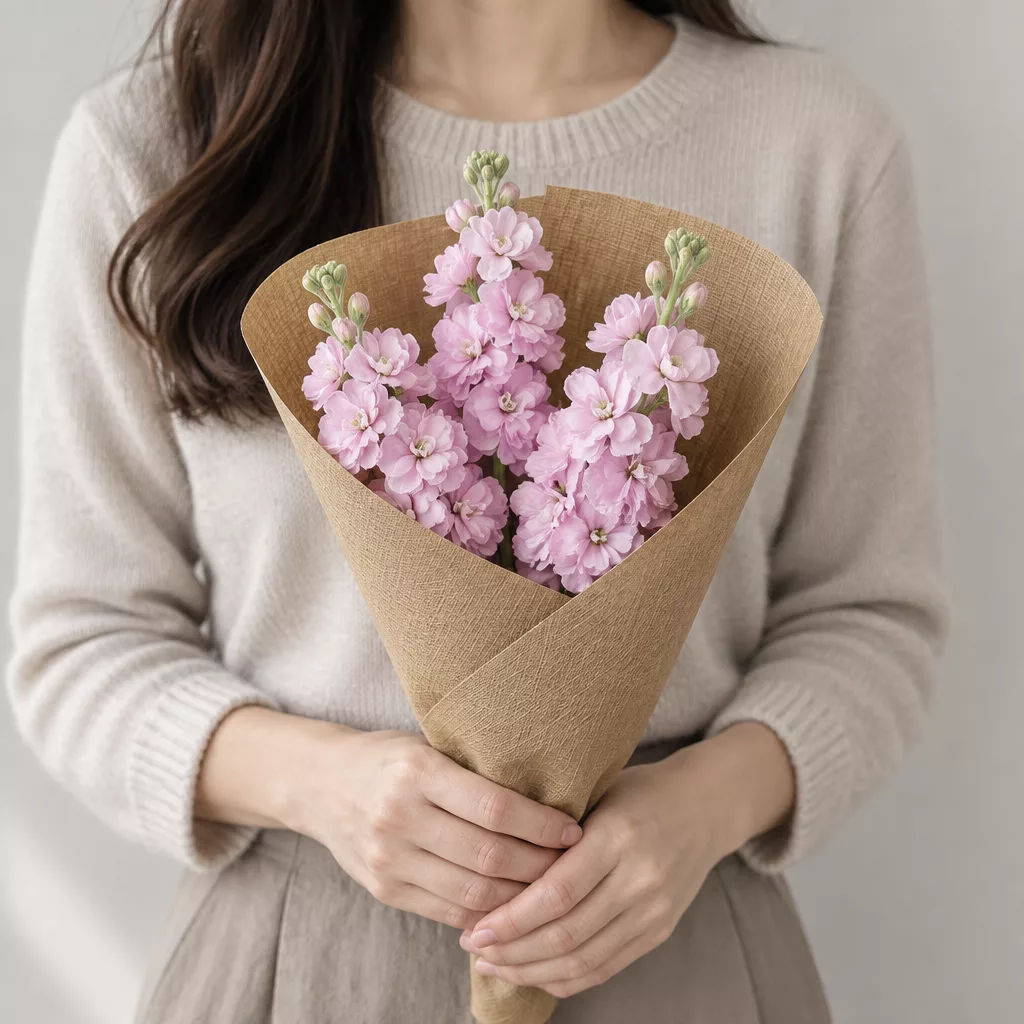
The pink-for-girls and blue-for-boys logic exists in Russia just as it does elsewhere, but it plays out with some specific nuances worth knowing. For a girl, soft pink, cream, and blush tones are universally welcomed. Pale lilac is also popular, particularly in combinations with white spray roses or white lisianthus. Saturated hot pink is less traditional for a newborn gift — it reads more like a birthday bouquet than a tender congratulation.
For a boy, blue flowers are genuinely harder to source in nature, so florists lean on white, soft green, and occasionally pale yellow. Delphinium provides real blue tones and works beautifully in a mixed arrangement. Eucalyptus and pistachio foliage give a fresh, airy feel that suits a boy's arrangement without forcing the colour. Pale yellow ranunculus or white tulips with green foliage are another clean, well-received direction.
If you do not know the baby's sex — perhaps the parents kept it a surprise — white and cream arrangements are the safest and most elegant choice. A monochrome white bouquet of lisianthus, white spray roses, and white matthiola reads as sophisticated rather than cautious. Avoid red entirely: in Russian culture, a fully red bouquet carries romantic associations and would feel tonally wrong as a gift for new parents welcoming a child.
Which Flowers Are Actually Appropriate — and Which to Avoid
Roses are the most common choice, and for good reason: they are reliably available year-round, they hold well in a vase, and they carry warmth without being overpowering. For a newborn gift, choose spray roses or garden-style roses with softer, more open heads rather than tight, formal long-stemmed varieties. The informal shape suits the occasion better.
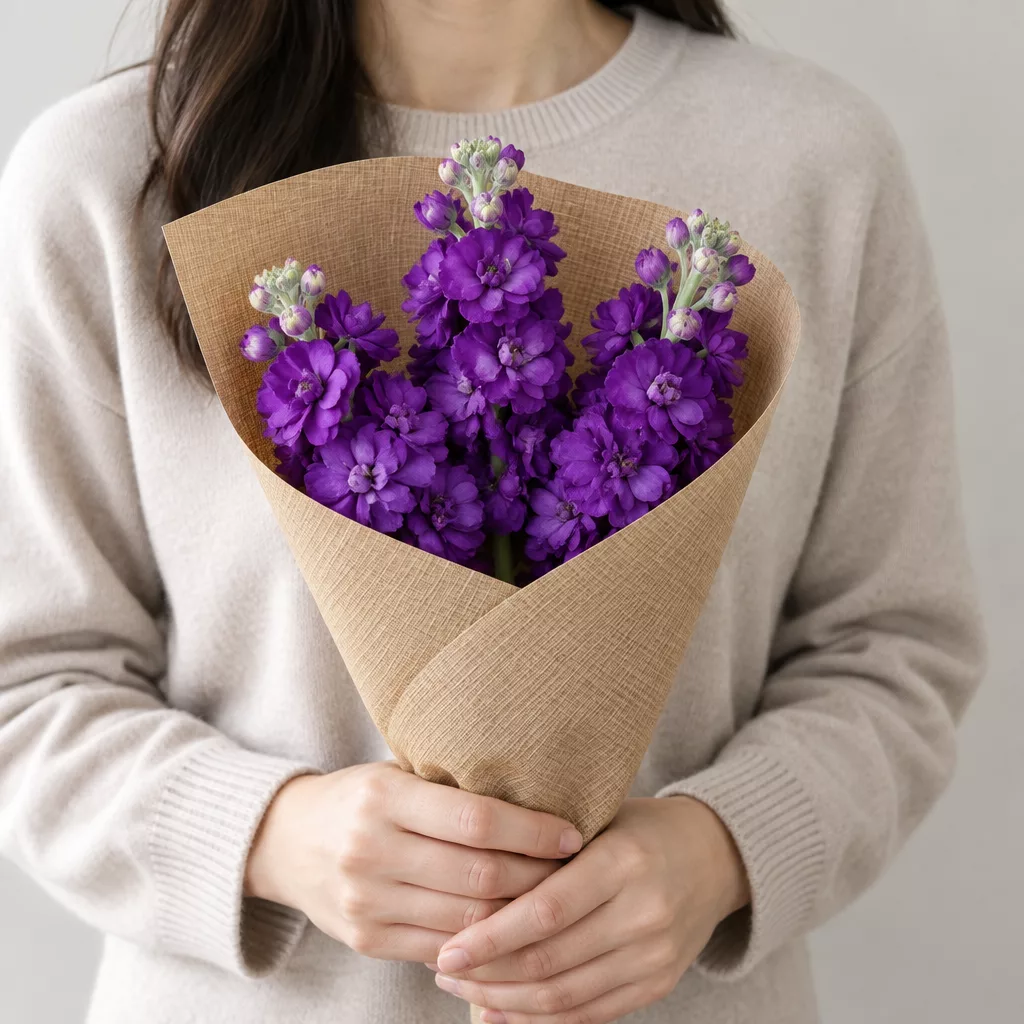
Lisianthus is a florist's favourite for this moment. Its ruffled petals resemble peonies but it is far more durable, lasting ten to fourteen days in a clean vase with regular water changes. Alstroemeria adds volume and longevity. Matthiola — stock flower — brings a gentle fragrance that is not overwhelming, which matters when there is a newborn in the room.
Strong fragrance is the main thing to avoid. Lilies, particularly Oriental lilies, release a scent that can be intense in a closed apartment and their pollen is genuinely harmful if it reaches a baby's skin or eyes. Freesia in large quantities can also be overpowering. Gypsophila used in excess looks dated and adds little, though a few stems woven into a softer arrangement are fine.
Avoid any flowers with thorns left untrimmed — a tired new parent reaching for a vase at midnight does not need that. A good florist removes thorns from roses as standard, but it is worth requesting explicitly. Also skip anything with small berries or decorative elements that could fall and become a hazard.
Choosing by Budget: From a Simple Bouquet to a Full Arrangement
At a modest budget, a hand-tied bouquet of spray roses and lisianthus in a single colour story is entirely appropriate and looks considered rather than minimal. Five to seven stems of each, wrapped in kraft paper with a soft ribbon, feels personal and fresh. The key is colour coherence: a tight palette of two or three tones always looks more intentional than a mixed rainbow at any price point.
At a mid-range budget, you can introduce a focal flower — a few stems of garden roses, ranunculus, or tulips — surrounded by supporting varieties and textural foliage. Eucalyptus, ruscus, or pistachio greens add depth without adding cost. A linen or cotton wrap instead of standard cellophane lifts the presentation noticeably.
For a more generous gift, a hatbox or low ceramic arrangement works beautifully in a home setting. Hatbox arrangements are particularly practical: they arrive self-contained, require no vase, and sit stably on a surface even in a busy, slightly chaotic new-parent household. A low ceramic piece with foam or a grid of tape across the opening can hold a dense, rounded arrangement of roses, lisianthus, and seasonal blooms that looks abundant and lasts well.
Whichever budget you are working with, add a note. New parents are overwhelmed with logistics and a handwritten message — even a short one — makes the flowers feel personal. It is the detail that gets remembered long after the blooms have faded.
Arrangements That Work Better Than a Standard Bouquet
A classic hand-tied bouquet is lovely, but it requires the recipient to find a vase, trim the stems, and arrange it themselves — all things that are genuinely difficult on day one or two at home with a newborn. Thinking about how the gift will be received, not just how it looks on delivery, is what separates a thoughtful sender from a well-meaning one.
A hatbox arrangement, as mentioned, solves the vase problem entirely. It arrives ready to display and typically holds water in a foam base that keeps the flowers hydrated for days without daily top-ups. This is a real advantage in a household where sleep deprivation is the dominant condition.
A low, wide bowl arrangement or a compact dome of flowers on a small stand also works well: it sits on a windowsill or kitchen table without risk of tipping, and its proportions suit a home rather than an event space. Avoid tall, dramatic arrangements for this occasion — they belong at celebrations where there is space and an audience, not in a home where a baby is sleeping in the next room.
If the parents have a garden or a balcony, a small potted plant — a miniature rose bush, a kalanchoe in soft pink, or a cyclamen — is a gift that outlasts cut flowers by weeks. It is not a traditional Russian choice, but it is increasingly appreciated by younger parents who want something lasting. Pair it with even a small hand-tied bouquet so the immediate visual impact is still there.
Care Instructions Worth Passing On to the New Parents
New parents are not going to read a care card carefully, so keep it simple if you include one. The essentials are: trim the stems at an angle on arrival, use a clean vase with fresh cold water, and change the water every two days. That routine alone extends vase life by three to five days compared to flowers left untouched in the same water.
The biggest enemy of cut flowers in a warm home is bacterial build-up in the water. A small sachet of flower food — which any florist should include with the arrangement — contains a mild biocide that slows this process. If the sachet gets lost, a few drops of bleach or a copper coin in the water are old household remedies that genuinely help, though the sachet is more effective.
Keep the arrangement away from direct sunlight and away from the fruit bowl. Ripening fruit releases ethylene gas, which accelerates petal drop in roses and lisianthus noticeably — this is not folklore, it is a real biochemical effect. A windowsill with indirect light and good air circulation is ideal.
At night, moving the vase to a cooler room — a hallway or bathroom — can add another day or two of life. Flowers slow their metabolism in cooler temperatures, just as they do in a florist's cold room. It is a small effort that most people do not know about, but new parents who discover it tend to feel pleased with the practical tip.
Sending Flowers Across Russia: What to Know Before You Order
Russia is a large country, and sending flowers from one city to another involves real logistical considerations. Turboflora delivers fresh flowers across Russia within one to two hours of ordering, which means the bouquet the recipient receives is assembled from fresh stock on the day — not transported from another city in a box.
The most important thing to confirm when ordering is the delivery address and the approximate time the recipient will be home. New parents are often out for brief periods — a check-up, a walk, a pharmacy run — and a bouquet left at a door in summer heat or winter cold for even an hour will suffer. Coordinate with a family member if possible, or choose a delivery window when you know someone will be in.
In winter, which in Saint Petersburg and much of Russia spans a long stretch from November to March, cold is actually less of a problem for flowers than the transition between cold outdoor air and a heated interior. A good florist wraps cold-weather deliveries in insulating paper and delivers promptly. Ask about packaging for cold-weather delivery if you are ordering in winter.
Include a specific note with the order about the occasion. A florist who knows the flowers are for a newborn congratulation will make different choices about colour, fragrance, and arrangement style than one working from a generic brief. The more context you give, the better the result — that is true whether you are ordering from across the city or from another country entirely.
Congratulating a Russian family on a new baby is one of the warmest things you can do with flowers, and the customs around it are not complicated once you know them. Wait for the homecoming, respect the colour conventions if you know the baby's sex, choose sturdy low-fragrance varieties, and think about how the arrangement will live in a tired household rather than how it photographs on a doorstep. Those four principles will carry you further than any catalogue of options. We deliver bouquets across Russia in 1–2 hours.
Frequently asked questions
Is it acceptable to send flowers to a Russian maternity hospital?
In Russian custom, it is generally better to wait until mother and baby are home. Many families consider it premature to celebrate before the homecoming, and some hospitals restrict ward deliveries. The homecoming day — usually two to four days after birth — is the traditional moment for flowers and gifts.
What colours should I choose if I do not know the baby's sex?
White and cream arrangements are the most elegant neutral choice and carry no awkward associations in Russian culture. A monochrome bouquet of white lisianthus, white spray roses, and soft green foliage looks sophisticated and thoughtful. Avoid red, which reads as romantic, and very saturated colours, which feel more like birthday than newborn congratulations.
Are there flowers I should definitely avoid for a newborn gift?
Avoid strongly scented lilies — Oriental varieties in particular — as their pollen can irritate a baby's skin and eyes, and the scent can be overwhelming in a closed apartment. Strong freesia in large quantities is also worth skipping. Make sure roses are delivered with thorns removed, as a sleep-deprived parent reaching for a vase at night should not have to worry about that.
How long will the flowers last in a warm home with a newborn?
Spray roses, lisianthus, and alstroemeria — all well-suited to this occasion — last seven to fourteen days with basic care: fresh water every two days, stems trimmed on arrival, and placement away from direct sun and fruit. Moving the vase to a cooler spot overnight adds noticeable extra life, even in a warm apartment.
What type of arrangement is most practical for new parents?
A hatbox or low bowl arrangement is more practical than a hand-tied bouquet because it arrives ready to display with no vase required and a built-in water source. New parents have very little spare attention in the first days, so a self-contained arrangement that simply needs to be placed on a surface is genuinely appreciated over one that requires immediate care.
Ready to send flowers?
Pick the city, choose the bouquet, and a local florist takes it from there.
Choose a city →