Congratulating a Russian Partner on a Company Anniversary
A company anniversary in Russia is taken seriously. It is not just a number on a calendar — it marks survival, growth, and reputation, and the people inside that company feel genuine pride on the day. When you send flowers to mark the occasion, you are not simply ticking a courtesy box. You are telling a team, a director, or a founding partner that their work has been seen. Getting the arrangement right means understanding a few Russian customs, knowing which flowers carry the right weight, and making sure the delivery lands at the right moment. This guide walks you through all of it.
What a Company Anniversary Means in Russian Business Culture
In Russian professional life, a company anniversary — especially at five, ten, twenty, or twenty-five years — is an occasion that calls for formal acknowledgment. Colleagues gather, speeches are made, and gifts arrive from clients, partners, and suppliers. Flowers are expected and genuinely appreciated, not treated as a generic afterthought the way they sometimes are in other markets.
The number of years matters. A tenth anniversary carries more ceremony than a third, and a twenty-fifth is treated almost like a national milestone for the business. If your partner has reached one of these round numbers, the size and quality of your arrangement should reflect that. A small bouquet that might suit a birthday feels visually thin against the occasion.
Russian business culture also values presentation as a signal of respect. An arrangement that arrives in a plain sleeve with no note reads as careless. One that comes in a well-dressed box or wrapped with ribbon, accompanied by a short congratulatory card, reads as considered. The difference is not about spending more — it is about showing that you thought about it.
Finally, timing matters more than many senders expect. Flowers that arrive a day late, after the celebration has ended, lose most of their impact. Aim for delivery in the morning of the anniversary date itself, before the formal part of the day begins. This gives the office a chance to display the arrangement during any reception or gathering.
Bouquets we can deliver



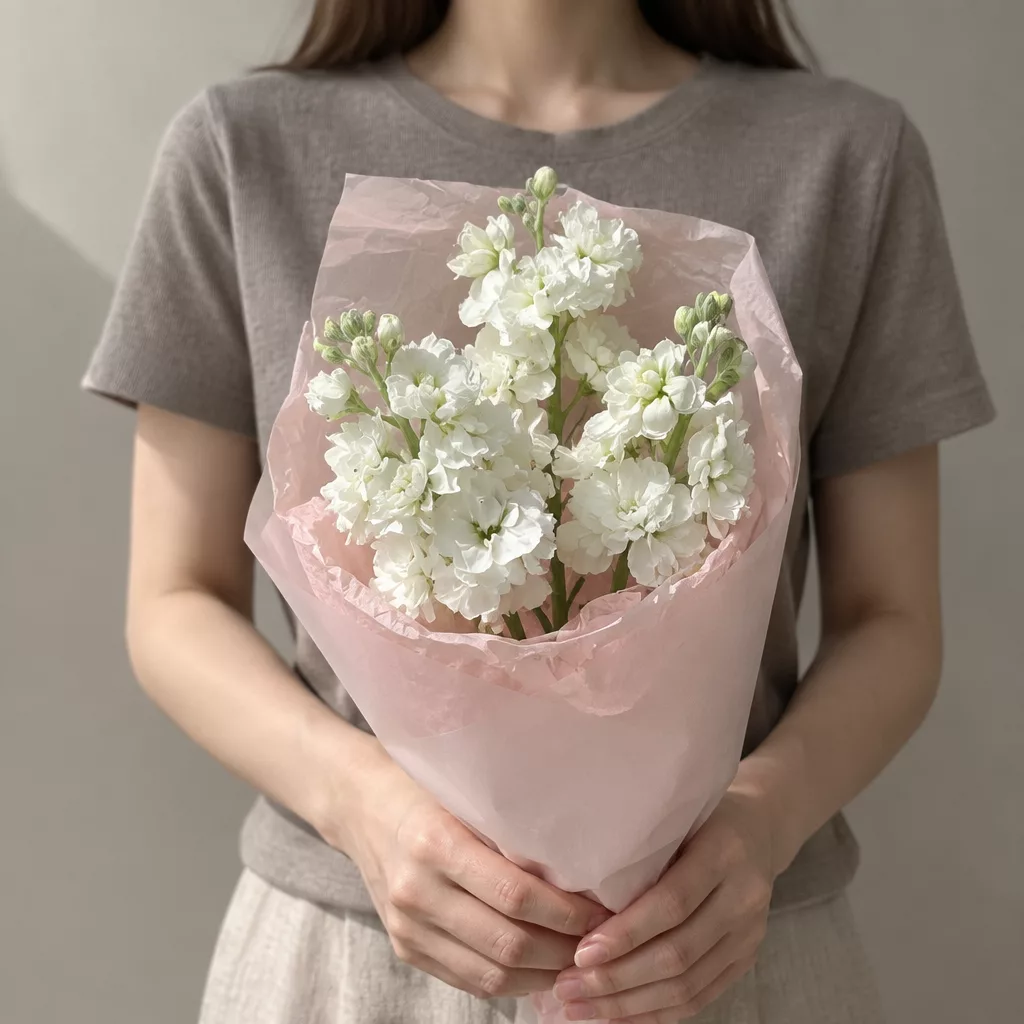
Which Flowers Work Best for a Corporate Congratulation
Not every flower suits a corporate setting. For a company anniversary, you want varieties that project confidence and longevity rather than delicacy or romance. Roses are the most universally appropriate choice in Russia and carry no ambiguity in a business context. White, cream, and deep red roses read as formal and respectful. Avoid pale pink or lavender tones, which lean personal and can feel out of place in an office environment.
Chrysanthemums are widely used in Russian corporate gifting and hold none of the negative associations they carry in some Western European countries. Large-headed spray chrysanthemums in white or yellow fill an arrangement well and last exceptionally long in a warm office — up to ten days with proper water changes. They are a practical choice for a busy team that may not have time to fuss over flower care.
Eustoma, sometimes called lisianthus, adds texture and a slightly more contemporary feel when mixed with roses or chrysanthemums. Its ruffled petals give volume without adding bulk, which is useful when you want an arrangement to look generous without becoming unwieldy on a reception desk.
Alstroemeria works well as a supporting flower. It comes in clean whites, yellows, and warm oranges that suit a celebratory palette, and it holds its blooms for a long time. Avoid red tulips for corporate occasions — they are strongly associated with romantic gestures in Russia and can create an awkward impression in a professional setting.
Sizing the Arrangement to the Occasion and the Company
The size of the arrangement should be proportional to two things: the significance of the anniversary and the scale of the company you are congratulating. A small design firm celebrating its fifth year does not need the same visual statement as a manufacturing company marking its thirtieth. Misjudging this in either direction sends an unintended message.
For smaller companies or younger anniversaries, a well-composed bouquet of fifteen to twenty-five stems is appropriate. This is enough to make a visible impression on a desk or reception counter without overwhelming the space. The key is that the stems are fresh, the palette is cohesive, and the wrapping is clean and professional.
For larger companies, significant anniversaries, or relationships where you are a key partner or major client, a box arrangement or a standing floor display becomes more fitting. Box arrangements — flowers laid flat in a branded or ribbon-tied box — have become extremely popular in Russian corporate gifting over the last several years because they photograph well and display elegantly on a conference table. A standing arrangement in a vase, delivered ready to place, works particularly well for a reception area.
If you are sending on behalf of an entire team or organization, scale up accordingly. An arrangement that represents a company should look like it does. A single modest bouquet sent from a team of fifty people reads as an oversight rather than a gesture. When in doubt, choose larger rather than smaller — Russian business culture does not penalize generosity.
Color Choices and What They Communicate
Color carries meaning in Russian gifting customs, and getting it right adds a layer of care that recipients notice even if they cannot always articulate why. White is the safest and most universally appropriate base for a corporate arrangement. It reads as clean, respectful, and celebratory without veering into any personal territory. A bouquet of white roses or white eustoma with green foliage is impossible to misread.
Gold and yellow tones — sunflowers, yellow chrysanthemums, yellow alstroemeria — are associated with celebration and prosperity in Russian culture. They are an excellent choice for anniversary occasions specifically, where the mood is triumphant rather than simply polite. A warm palette of cream, yellow, and soft orange reads as genuinely festive and suits a milestone anniversary well.
Deep red is formal and respectful but should be used with some care in a corporate context. A full arrangement of red roses can tip toward romance depending on who receives it. If you want to use red, mix it with white or cream to keep the tone clearly professional. Red and white together is a classic pairing that works well in Russian corporate settings.
Avoid purple and lilac as dominant tones for business congratulations — they are more associated with personal or spiritual occasions. Blue flowers such as delphinium or hydrangea can work as accents in a larger arrangement but should not carry the composition. Green foliage and filler should be generous — it signals freshness and adds structure without visual noise.
Writing the Card: What to Say and What to Skip
The congratulatory card is where many senders make their biggest mistake. They either write nothing meaningful — a generic line that could apply to any occasion — or they over-write, filling the card with marketing language that turns a warm gesture into a sales moment. Neither approach serves you well.
In Russian business culture, the card message should be sincere, brief, and specific to the milestone. Mention the number of years directly — it shows you know what you are celebrating. A message like "Congratulations on your twentieth anniversary — twenty years of strong work and trusted partnerships" lands far better than "Wishing you continued success." The latter sounds like it was written by someone who did not check the date.
If you have a personal relationship with a director or founding partner, you can add one sentence that references something specific — a shared project, a long-standing collaboration, a quality you genuinely admire about the company. This is not flattery; it is the kind of detail that makes a card worth keeping rather than discarding.
Write the card in Russian if at all possible, even if your Russian is limited. A short message in Russian — even a formally correct but simple one — is received as a significant gesture of respect. If you are not confident in the language, keep it to two sentences and have it reviewed. A grammatically correct short message outperforms a lengthy message full of errors.
Avoid humor unless you know the recipient extremely well. Anniversary cards in Russian professional culture are warm and respectful in tone, not playful.
Delivery Timing and Office Logistics to Get Right
Flowers for a corporate anniversary should arrive during working hours, and specifically in the first half of the working day. In Russia, formal celebrations often begin at midday or early afternoon, with guests arriving, photographs being taken, and the reception area being used. An arrangement that arrives at three in the afternoon, after the main gathering has wound down, misses the moment entirely.
Aim for delivery between nine and eleven in the morning. This gives the recipient time to place the flowers, add them to the table display if there is one, and have them looking their best when guests or colleagues arrive. If you are unsure of the company's schedule for the day, err earlier rather than later.
Offices in Russia vary widely in their reception arrangements. Some have a dedicated reception desk where deliveries are signed for and held; others have a shared entrance where deliveries are left with a security guard or building manager. When placing your order, provide the full legal address including floor and department if known, plus a contact name and phone number. This is not optional — it is what ensures the flowers reach the right person rather than sitting in a lobby.
Temperature matters on the delivery side too. Russian winters are extreme, and flowers transported without proper insulation in freezing temperatures suffer petal damage that appears hours after delivery. A reputable delivery service will use insulated packaging for cold-weather transport. If you are sending in January or February to a city like Kazan or Novosibirsk, ask specifically how the flowers are protected during transit.
Helping the Flowers Last in an Office Environment
An office is not the easiest environment for cut flowers. Central heating in Russian buildings runs warm and dry, especially from October through March, which shortens vase life considerably compared to a cooler home. Knowing this helps you choose varieties that hold up well and give the recipient advice that keeps the arrangement looking good for as long as possible.
Chrysanthemums and alstroemeria are the strongest performers in warm, dry conditions. Roses need more attention — they benefit from having their stems recut at an angle every two days and being placed away from heating vents and direct sunlight. A south-facing windowsill in a Russian winter office is beautiful but hard on flowers; a spot on a conference table or reception counter away from direct heat is much better.
Water quality matters more than most people expect. Tap water in Saint Petersburg and Moscow is generally fine for cut flowers, but it should be changed every two days. If the office uses a water dispenser with filtered water, that works well too. Adding a small sachet of flower food — which a good florist will include with the arrangement — extends vase life noticeably by balancing the water's pH and providing a small amount of sugar.
For box arrangements, which do not come in a vase, the recipient will need to transfer the flowers to water within a few hours of delivery. Include a clear note with the arrangement explaining this, because not everyone knows that a box arrangement is not designed to sit dry. A simple instruction card prevents a beautiful arrangement from wilting by the end of the day.
Sending flowers to a Russian company on its anniversary is one of the more meaningful gestures you can make as a partner or client. It says that you track dates, that you value the relationship, and that you are willing to invest a small amount of effort in marking someone else's achievement. The flowers themselves — the right varieties, the right size, the right colors — carry all of that message visually before anyone reads the card. And when the card says something specific and genuine, the whole gesture lands as it should: as a sign of real respect from one professional to another. We deliver bouquets across Russia in 1–2 hours.
Frequently asked questions
Is it appropriate to send flowers to a Russian company rather than a gift basket or wine?
Flowers are completely standard for corporate anniversaries in Russia and often preferred over food or drink gifts, which can create complications around dietary restrictions or alcohol policies. A well-sized floral arrangement is never inappropriate and is widely understood as a mark of respect. It also displays well during any gathering the company holds on the day.
How many stems should a corporate anniversary bouquet have?
For a modest gesture, fifteen to twenty-five stems is a reasonable range. For a significant anniversary or an important business relationship, thirty-five to fifty stems or a full box arrangement is more fitting. In Russian gifting culture, odd numbers of stems are traditional for personal occasions, but even numbers are perfectly acceptable in a corporate context.
Can I send flowers to a Russian company if I am based outside Russia?
Yes. You place the order remotely and the flowers are sourced and delivered locally within Russia, which means they arrive fresh rather than having traveled internationally. Provide the full office address, a contact name, and a phone number for the recipient. Delivery within Saint Petersburg and across major Russian cities is handled directly, typically within one to two hours of the order being confirmed.
Should the card be addressed to the director personally or to the whole company?
Either works, but addressing the director by name alongside a mention of the team reads as the most thoughtful option. For example, opening with the director's name and then referencing the entire company acknowledges both the leadership and the collective effort. If you do not know the director's name, addressing the company and its team is perfectly appropriate and will not cause offence.
What flowers should I avoid for a Russian corporate anniversary?
Avoid red tulips, which carry strong romantic associations in Russia. Skip purple or lilac as dominant tones, as these lean toward personal or spiritual occasions. Yellow flowers are fine and actually celebratory in Russian culture, unlike in some other countries. Single-variety arrangements of carnations alone can feel dated in a corporate context, though carnations work well as part of a mixed composition.
Ready to send flowers?
Pick the city, choose the bouquet, and a local florist takes it from there.
Choose a city →