Flowers for a Russian Man: Occasions When It Is Perfectly Normal
If you have grown up outside Russia, the idea of sending flowers to a man might feel uncertain — you wonder whether he will appreciate it or find it awkward. Inside Russia, there is no such hesitation. On the right occasion, a bouquet handed to a man is straightforward respect, and the man receiving it knows exactly what it means. The custom has specific moments where it belongs, and once you understand those moments, choosing flowers becomes as natural as choosing them for anyone else.
Why Russian Men Receive Flowers at All
The tradition of giving flowers to men in Russia is older than most people outside the country realise. In Soviet times, bouquets were presented to factory workers, athletes, cosmonauts, and academics at public ceremonies. The gesture was never gendered in the way it became in some Western cultures — it was simply the most visible way to say that something significant had happened and that the person in front of you had earned recognition.
Today that habit lives on in specific situations. It is not random or casual. A Russian man does not expect flowers on an ordinary Tuesday, but on a milestone day he will receive them without any discomfort at all. The key is that the occasion carries weight. When it does, flowers signal that the people around him noticed and took the moment seriously.
For anyone sending from abroad or from another city, this context matters. You are not doing something unusual — you are participating in a well-established local custom. The man receiving the bouquet will read it correctly: this is acknowledgement, not sentiment that needs explaining. Choosing the right arrangement and timing it well is what makes the gesture land properly, and that starts with knowing which occasions genuinely call for it.
Bouquets we can deliver

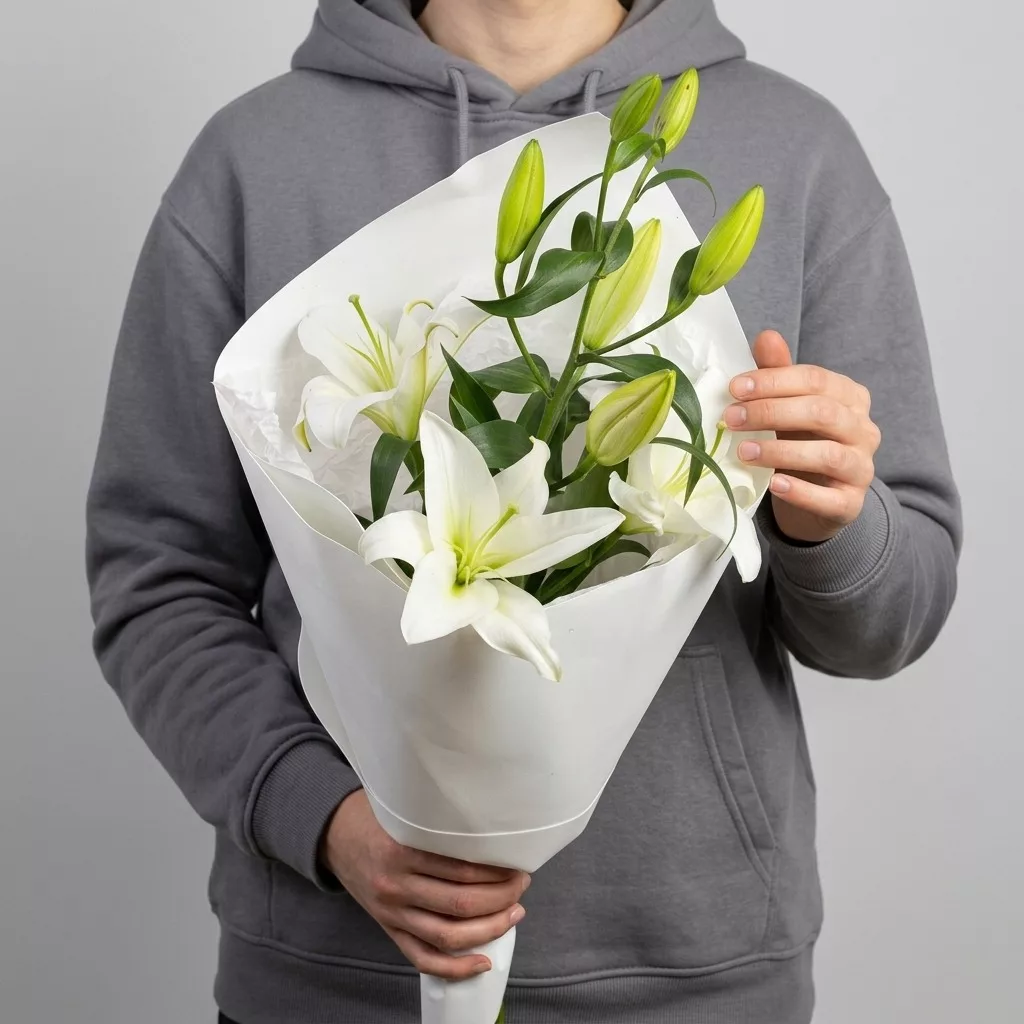
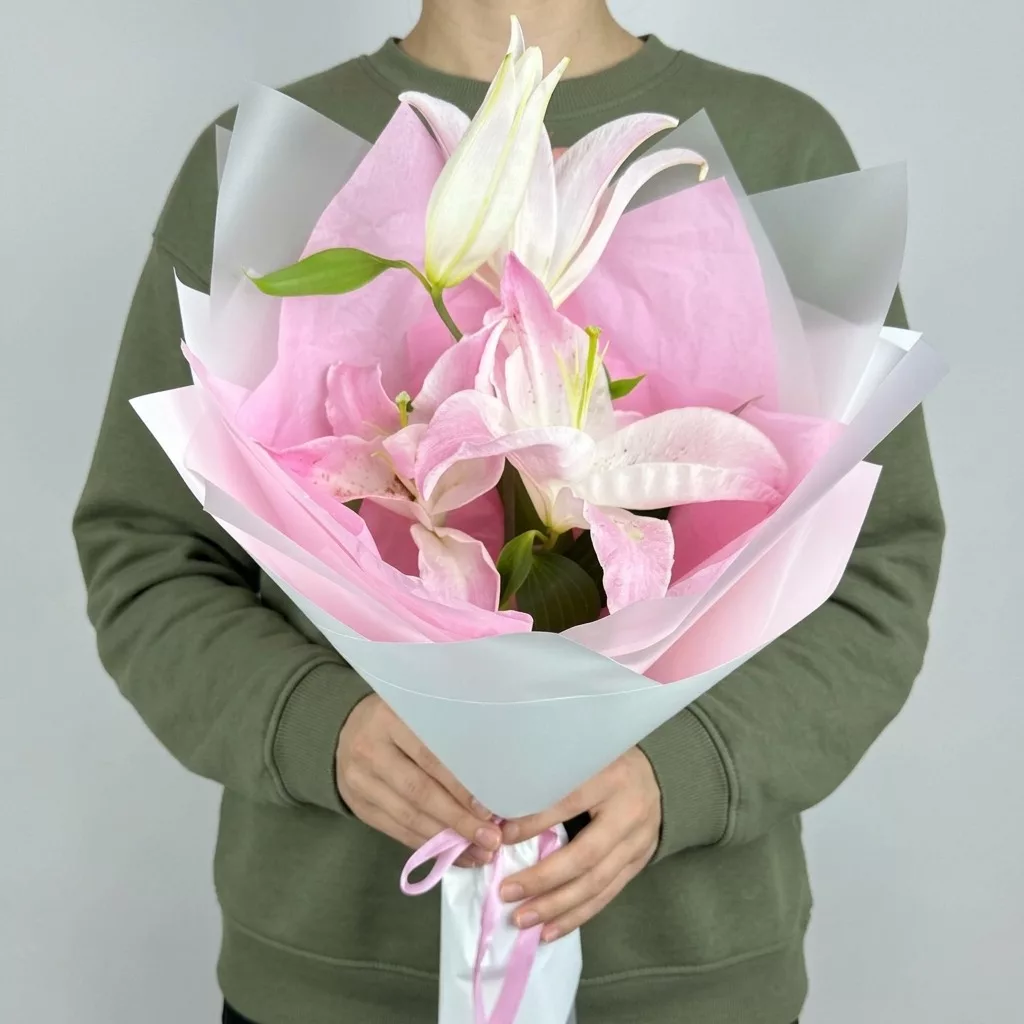

Birthdays: The Most Common Occasion of All
A Russian man's birthday is the single most common occasion for receiving flowers, and there is nothing unusual about it at all. Colleagues bring bouquets to the office, friends arrive with them at dinner, and family members send arrangements when they cannot be present in person. The birthday man places them on his desk or at home, and that is the end of any self-consciousness about it.
For a birthday bouquet aimed at a man, the presentation tends to be structured and deliberate rather than soft and romantic. Sunflowers, large-headed chrysanthemums, alstroemerias, and seasonal dahlias all work well. Roses are also completely acceptable — deep red, burgundy, or orange rather than pale pink. Greenery is used generously, and the wrapping is typically tight and architectural rather than loosely gathered.
Odd numbers are the rule in Russia for celebratory bouquets — three, five, seven, nine stems in a small arrangement, scaling upward for larger ones. Even numbers are reserved for mourning, so this detail matters. If you are ordering remotely and the florist asks how many stems, always confirm an odd count.
For a significant birthday — fiftieth, sixtieth, or a round decade — the arrangement can be larger and include premium varieties like garden roses or lisianthus mixed with structural foliage. The size of the bouquet reflects the scale of the occasion, and Russian birthday culture reads that signal clearly.
Retirement: Marking the End of a Working Life
Retirement is one of the most emotionally loaded occasions in Russian working culture, and flowers are almost always part of it. When a colleague retires, the office typically organises a small gathering, and a bouquet is presented alongside whatever gift the team has collected. If you are sending flowers from outside the office — as a family member or a friend from another city — a delivery timed to arrive on the last working day carries real meaning.
The tone of a retirement bouquet is warm and generous rather than triumphant. This is a moment that mixes pride with something more reflective, and the flowers should feel settled and full rather than sharp and dramatic. Alstroemerias last exceptionally well — up to two weeks in a clean vase with fresh water — which makes them a practical choice for a man who will be moving from an office to a home where he may not have a routine for flower care yet. Mixed arrangements with solidago, waxflower, and sturdy foliage hold their shape without daily attention.
Avoid very delicate varieties like sweet peas or ranunculus for this occasion. They require careful handling and wilt quickly in warm rooms, which is a minor but real frustration for someone who is not used to managing cut flowers. A retirement gift should feel easy and lasting, not fragile. If the delivery is going to a workplace, morning timing is better — it gives the flowers time to open before the afternoon gathering and ensures they are at their best when the moment happens.
Professional Achievements and Public Recognition
When a Russian man receives an award, completes a major project, defends a thesis, or is promoted to a senior position, flowers appear at the event or are sent the same day. This is especially visible in academic and cultural settings — a professor receiving a faculty honour, a musician after a performance, a scientist at a conference. In these contexts, presenting flowers is a formal act, not a personal one, and the man receiving them understands that distinction immediately.
For professional achievement, the bouquet should look considered and slightly formal. Monochromatic arrangements work well here — all white with textural greenery, or all deep red with minimal filler. Single-variety bouquets of large roses or premium chrysanthemums read as deliberate and respectful rather than assembled in a hurry. The wrapping and ribbon matter more than usual; neat presentation signals that the sender thought carefully about the moment.
If you are sending to a workplace or institution, confirm the delivery address precisely and note any reception or security desk procedures. A bouquet arriving during a ceremony or immediately after is far more effective than one that appears the following morning when the moment has passed. Same-day delivery within a couple of hours is exactly what this situation needs — the timing is part of the gesture. A card with a specific, direct message — naming the achievement, not just offering congratulations — completes the picture and shows the sender was genuinely paying attention.
23rd of February: The Men's Holiday
The 23rd of February — Defender of the Fatherland Day — is the closest thing Russia has to a dedicated men's holiday. Originally tied to military service, it has broadened over decades into a general occasion for acknowledging the men in your life, regardless of whether they served in the armed forces. On this day, women give gifts to male colleagues, family members, and friends, and flowers are a completely normal part of that.
The scale is usually modest compared to a birthday — a small, neat bouquet rather than a large arrangement. Single-variety options work well: five or seven stems of alstroemerias, a tight bunch of spray chrysanthemums, or a small grouping of tulips if they are in season. Tulips arrive in Russian markets in significant volume through February and early March, and they are entirely appropriate for a man on this date.
One practical note about tulips in February: they open quickly in heated indoor spaces. If the delivery is going to an office, morning arrival is better so the flowers are fresh through the working day. Tulips should be kept away from radiators and direct sunlight and will last five to seven days in cool water changed every two days. Cutting the stems at an angle each time you refresh the water extends their life noticeably. For a 23rd of February delivery, simple and clean is the right register — the occasion is warm but not sentimental, and the flowers should match that tone.
Graduations and Academic Milestones
Graduation ceremonies in Russia are significant family events, and flowers are given to graduates of both sexes without any distinction. When a man finishes university, defends a doctoral thesis, or completes a professional qualification, receiving a bouquet at the ceremony or immediately after is entirely expected. Parents, partners, and close friends all bring flowers, and the graduate holds them for photographs — this is a standard part of the visual record of the day.
For a graduation, the bouquet can be larger and more celebratory than for a professional event. Mixed arrangements with seasonal flowers are suitable, and colour can be bolder — bright yellows, oranges, and whites work well and photograph clearly. Sunflowers are popular at summer graduations because they are large, cheerful, and hold up well in warm outdoor conditions. For an indoor ceremony in a cooler month, roses and chrysanthemums are reliable choices that will not wilt during a long afternoon.
If you are sending rather than attending, timing the delivery to reach the graduate on the day itself — ideally before the ceremony — makes the gesture feel present rather than retrospective. A note that names the specific qualification or achievement is more meaningful than a generic congratulations. Russian graduation culture places real weight on the academic accomplishment, and flowers that arrive with a message that reflects that understanding will be received with genuine warmth. The combination of good timing and a specific, personal card is what makes a sent bouquet feel as close as being there in person.
Housewarming and Major Life Transitions
Moving into a new home is an occasion where flowers for a man are natural and practical. Russian housewarming customs — novoselye — involve friends and family visiting in the first days after a move, and bringing something for the home is expected. A bouquet is a clean, thoughtful choice that does not require the giver to know the new interior's style or the recipient's specific tastes.
For a housewarming, longer-lasting varieties are considerate because the man receiving them is likely busy with unpacking and settling in. Alstroemerias and chrysanthemums last the longest of the common cut flowers — up to two weeks with basic care — and they require very little attention. Avoid varieties that shed pollen heavily, like open lilies, in a new home where someone is still arranging furniture and may not want to deal with orange stains on new surfaces. Closed lily buds are fine and will open gradually over several days.
Other major life transitions — a significant move to a new city, completing a long personal project, recovering from a serious illness — can also be marked with flowers sent to a man, though these are less formalised occasions. In these cases, the gesture is personal rather than ceremonial, and a smaller, carefully chosen arrangement is more appropriate than a large formal bouquet. What matters most is that the flowers arrive quickly, look fresh, and are accompanied by a message that shows the sender understood the weight of the moment. That combination — speed, quality, and a real note — is what turns a bouquet into something the recipient will remember.
Sending flowers to a man in Russia is not a question of whether it is appropriate — on the right occasion, it is simply what people do. The occasions are specific and well understood: a birthday, a retirement, a professional honour, a graduation, a housewarming, the 23rd of February. Within those moments, a well-chosen bouquet says exactly what it is meant to say, without ambiguity and without awkwardness. The details that make it work are the ones a good florist thinks about automatically — odd stem counts, varieties that last, timing that matches the event, and a card message that names the real reason for the gesture. Get those right, and the flowers will land exactly as you intended.
Frequently asked questions
Is it really acceptable to give flowers to a man in Russia, or will he find it strange?
On the occasions listed here — birthdays, retirements, graduations, professional achievements, and the 23rd of February — a Russian man will find flowers completely natural. The custom is well established and he will read the gesture correctly as recognition and respect. Outside of these specific occasions, flowers for men are less common, so context is everything.
What flower varieties work best for a man's bouquet in Russia?
Sunflowers, large chrysanthemums, alstroemerias, roses in deep or bold colours, and tulips in season are all reliable choices. These varieties are structurally strong, last well, and carry no particular romantic association in Russia. Avoid very delicate flowers like sweet peas or open ranunculus, which wilt quickly and require attentive care that most men are not used to providing.
Why do Russian bouquets always have an odd number of stems?
Odd numbers are the rule for celebratory flowers in Russia — three, five, seven, nine, and so on. Even numbers are traditionally associated with mourning and are used for funeral arrangements. This is a firm custom, and most Russian recipients will notice if the count is wrong. When ordering, always confirm an odd stem count with your florist.
How long will a bouquet last if it is delivered to a man who does not usually care for flowers?
Choose alstroemerias or chrysanthemums, which last up to two weeks with minimal effort — just fresh water every two days and a cool spot away from radiators. These varieties are forgiving for someone unfamiliar with flower care. Avoid tulips or open lilies for recipients who are unlikely to give the flowers much attention, as these need more frequent water changes and cool temperatures to last.
Can I send flowers to a man in another Russian city and have them arrive the same day?
Yes. Turboflora delivers fresh flowers across Russia with a one-to-two hour window, so same-day delivery is possible for most cities. For occasion-specific timing — arriving before a graduation ceremony or during an office retirement gathering — place the order at least two to three hours ahead and include precise delivery instructions including any building or reception desk details.
Ready to send flowers?
Pick the city, choose the bouquet, and a local florist takes it from there.
Choose a city →