Flowers for a Russian Neighbor: Small Gestures That Land Well
You borrowed a cup of sugar, they watered your plants while you were away, or they simply carried a heavy parcel upstairs without being asked. A small bouquet is one of the most natural ways to say thank you in Russia, and neighbors genuinely appreciate it — but the gesture lands best when the flowers feel considered rather than grabbed at random. This article helps you choose something simple, sincere, and appropriate, whether you are new to Russian customs or just want to get the detail right.
Why Flowers Work So Well Between Neighbors in Russia
In Russian everyday culture, flowers are not reserved for birthdays or grand occasions. They move between neighbors, colleagues, and near-strangers as a natural shorthand for goodwill. A small bouquet placed at a door or handed over in a hallway carries no awkward weight — it is read as a warm, uncomplicated gesture, not an obligation that requires a return gift.
This matters if you are coming from a culture where flowers feel formal or expensive. In Russia, a modest bunch of three or five stems is entirely appropriate. The number of stems actually carries meaning: an odd number is the norm for living recipients, while an even number is associated with mourning. Three, five, or seven stems is the sweet spot for a neighbor gift — enough to look intentional, small enough not to feel overwhelming.
The occasion itself shapes the choice more than the budget does. A thank-you for a practical favor calls for something cheerful and uncomplicated — think bright gerberas or a few stems of alstroemeria. A welcome-to-the-building gift can afford to be slightly more considered, perhaps a small mixed arrangement with greenery. The key in both cases is that the bouquet should feel easy to receive: compact, already wrapped, and ready to go straight into a vase without the neighbor needing to do any work.
Bouquets we can deliver


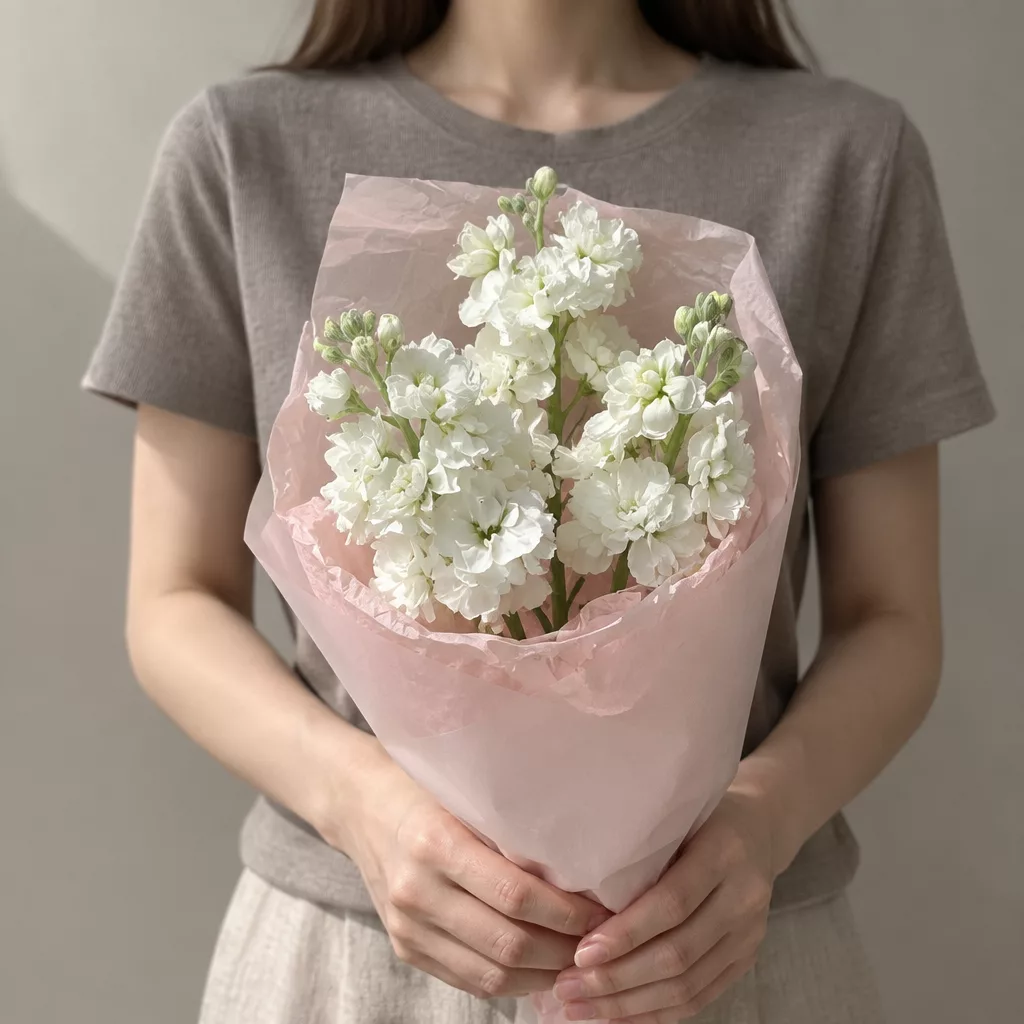
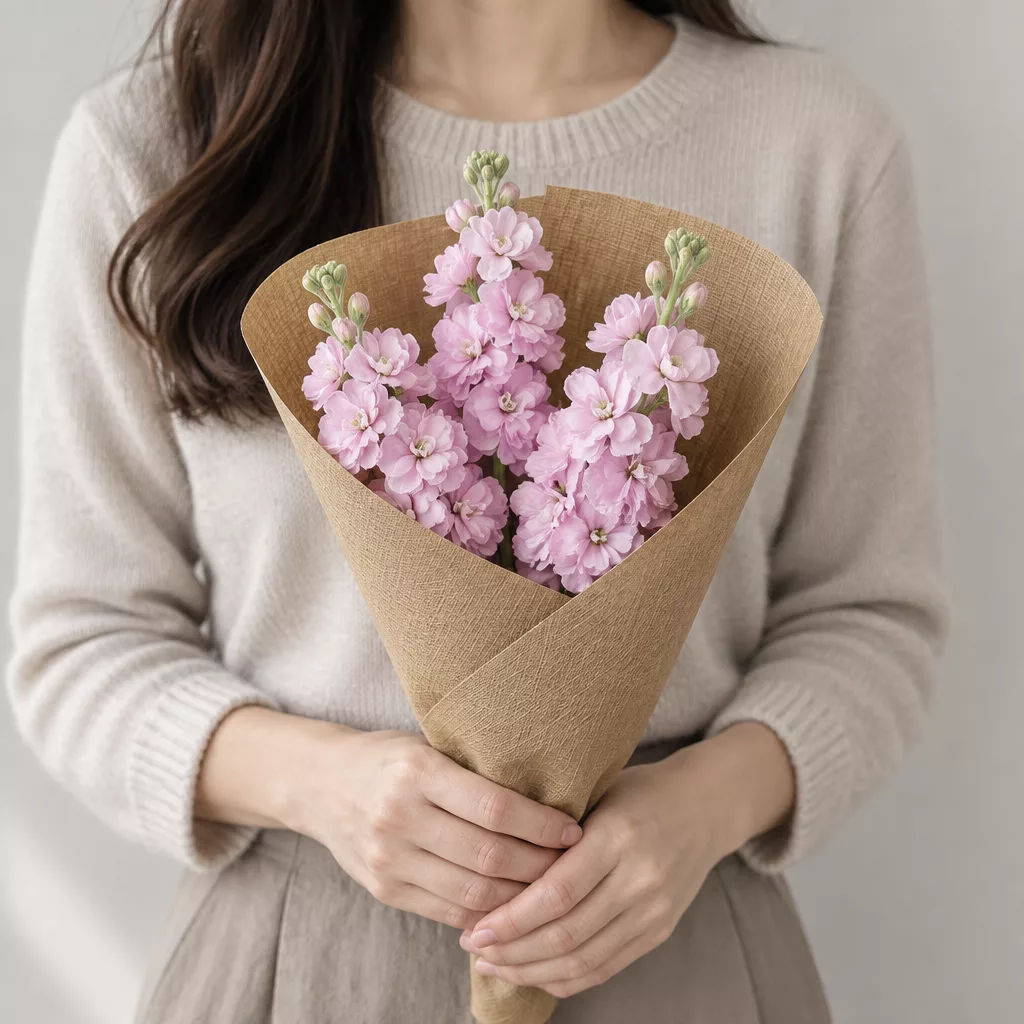
Reading the Situation Before You Order
Before you pick a flower, think about the person and the moment. A neighbor who just helped you move furniture deserves something with a bit of energy — saturated colors, a bold central flower like a sunflower or a spray chrysanthemum. A neighbor who has been quietly tolerant of your renovation noise is owed something gentler: soft pinks, white lisianthus, or a calm lavender-toned arrangement that says sorry and thank you at once.
Consider the season and the apartment. In Saint Petersburg winters, a neighbor's hallway is often dimly lit and the windows face a grey courtyard. A bouquet with warm yellows or deep oranges creates an immediate lift. In summer, when windows are open and balconies are full of plants, something more delicate — sweet peas, light-pink roses, small dahlias — fits the mood without competing with everything already in bloom.
Also think about allergies and strong scents. Lilies, especially Oriental varieties, release a heavy fragrance that can be overpowering in a small apartment. Freesias are similarly intense. For a neighbor you do not know well, it is safer to choose low-scent flowers: roses, gerberas, alstroemeria, or lisianthus. These carry all the visual warmth of a proper bouquet without the risk of triggering a headache or an allergic reaction in a confined space. A thoughtful florist will flag this for you when you order.
Affordable Options That Still Look Considered
A neighbor bouquet does not need to be expensive to feel genuine. The varieties that work best at a modest budget are also the ones with the longest vase life, which is a practical bonus for the recipient. Alstroemeria is one of the most reliable choices: it comes in a wide range of colors, holds up for ten to fourteen days with basic care, and a small bunch of five stems looks fuller than it sounds because each stem branches into several flowers.
Spray chrysanthemums are another underrated option. They are sturdy, cheerful, and available year-round. A monochrome bunch of white or yellow spray chrysanthemums tied with kraft paper looks clean and intentional — not cheap, just honest. Add a few eucalyptus stems or some ruscus greenery and the whole thing looks like it came from a boutique.
Gerberas are popular across Russia for exactly this kind of occasion. They are bright, open-faced, and immediately readable as friendly. A small bunch of five mixed-color gerberas with a simple ribbon is one of the easiest gifts to receive — there is nothing to decode, nothing formal about it, and they last around seven to ten days in clean water. If you want to step up slightly without a big jump in cost, combine gerberas with a couple of stems of solidago or waxflower for texture. The result looks more assembled than a single-variety bunch, and the recipient notices the effort even if they cannot name the filler flowers.
When You Want Something a Little More Special
Sometimes the favor was significant — a neighbor drove you to the airport at six in the morning, or looked after your dog for a week. In those cases, a more composed bouquet makes sense, and the step up does not need to be dramatic. Garden roses, when in season, are an excellent choice: they have a soft, full shape that reads as generous without being showy. Varieties with a peachy or blush tone work especially well because they feel warm rather than romantic, which matters when the gift is going to a neighbor rather than a partner.
Lisianthus is worth knowing about if you are not already familiar with it. It resembles a peony but is available year-round and holds its shape well. A small arrangement built around five stems of white or lilac lisianthus with some eucalyptus and a few ranunculus looks genuinely considered and will last eight to twelve days. It photographs well too, which matters if your neighbor is likely to post it somewhere.
For a welcome gift to a new neighbor, a small mixed bouquet in a wrapped vase or a simple ceramic pot is a thoughtful format. It removes the need for the recipient to find a vase immediately after opening the door, and it sits on a shelf or windowsill without any effort. Keep the color palette cohesive — two or three tones rather than every color available — and the arrangement will look intentional rather than assembled from leftovers.
Colors, Numbers, and a Few Russian Customs to Know
The odd-number rule is the most important one to remember. In Russia, even numbers of flowers are given at funerals, so a bunch of two, four, or six stems sends the wrong signal entirely — even if it is accidental. Always order three, five, seven, or more odd-numbered stems. Most Russian florists follow this automatically, but it is worth confirming when you order, especially if you are customizing the arrangement.
Color carries softer meaning. Red roses are strongly associated with romantic love and are best avoided for a neighbor unless the relationship is romantic. Yellow flowers have an old association with separation or jealousy in Russian tradition, though this is fading among younger generations. If you want to play it safe, white, pink, peach, orange, and purple are all unambiguous and well-received. A mixed bouquet that avoids pure red or pure yellow is a reliable default.
Wrapping matters more than many people expect. A bouquet handed over loose looks unfinished. Kraft paper with a simple ribbon, or a cellophane wrap with tissue inside, signals that the flowers were prepared with care. If the bouquet is being delivered, ask for it to be wrapped for a door delivery — that means the stems are trimmed, the water is preserved for transit, and the whole thing can sit outside a door for thirty minutes without wilting. In Saint Petersburg winters, flowers should not wait outside longer than that, so coordinating the delivery time with the recipient's schedule is always a good idea.
Keeping the Flowers Fresh Once They Arrive
Part of giving flowers well is making sure they last, and a quick note with care instructions is a genuinely appreciated touch — especially if your neighbor is not someone who keeps flowers regularly. The basics are simple but make a real difference. Stems should be cut at an angle with a sharp knife or scissors before going into water, removing about two centimeters from the bottom. Diagonal cuts increase the surface area that draws water, which is the single most effective thing a recipient can do to extend vase life.
Water temperature matters more than most people realize. Lukewarm water encourages flowers to open and drink more readily than cold water, except for bulb flowers like tulips, which prefer cold. For a mixed bouquet or a single-variety arrangement of roses, gerberas, or lisianthus, room-temperature water changed every two days is the right approach. The vase should be clean — bacteria in an unwashed vase will shorten the life of even the freshest stems by several days.
Position in the apartment also matters. Flowers last longest away from direct sunlight, radiators, and fruit bowls. Ethylene gas released by ripening fruit, particularly apples and bananas, accelerates wilting in many varieties. A spot on a hallway shelf or a kitchen windowsill away from the stove is usually ideal. For alstroemeria and spray chrysanthemums specifically, which are the longest-lasting varieties in this price range, good placement and clean water can stretch the display to two full weeks.
Ordering for Delivery to a Neighbor's Door
Sending flowers directly to a neighbor's apartment rather than carrying them yourself is a perfectly acceptable and increasingly common choice. It removes the awkwardness of catching someone at the right moment, and it gives the gesture a slightly more formal, considered quality — the recipient knows you planned it rather than grabbed something on the way home. Turboflora delivers across Saint Petersburg within one to two hours, which means you can time the arrival precisely.
When ordering for a neighbor in the same building or nearby, give the full address including the apartment number and the entry code if the building has one. Note any specific instructions about leaving the bouquet at the door if the recipient is not home — for deliveries in cooler months, this is usually fine for up to thirty minutes, but in the height of summer, flowers left in a warm hallway will suffer quickly, so it is better to coordinate a time when someone will be in.
A short handwritten note makes a significant difference. It does not need to be elaborate — three sentences explaining the occasion and expressing genuine thanks is enough. Russian neighbors will read a note carefully, and the personal touch distinguishes the gesture from a generic delivery. If you are ordering online and want to include a message, write it in plain, warm language rather than florist-card formality. Something like 'Thank you for helping last Tuesday — it meant a lot' lands better than 'With gratitude and best wishes.' Sincerity is always the right register for a neighbor gift.
A small bouquet for a neighbor is one of the easiest and most effective gestures you can make, and it requires very little to get right. Choose an odd number of stems, keep the colors warm and unambiguous, pick varieties that last well, and make sure the wrapping looks intentional. Whether you carry it over yourself or send it ahead as a surprise delivery, the message is the same: you noticed what they did, and it mattered. That is really all a neighbor gift needs to say.
Frequently asked questions
Is it really appropriate to give flowers to a neighbor in Russia, or does it feel too formal?
Flowers between neighbors are entirely normal in Russian culture and carry no awkward formality. A small bunch of three or five stems is read as a warm, practical gesture — similar to bringing baked goods in other cultures. The key is keeping the bouquet modest and cheerful rather than elaborate, so the recipient feels appreciated rather than obligated to respond in kind.
Which flowers should I avoid when giving to a Russian neighbor I do not know well?
Avoid strongly scented varieties like Oriental lilies and freesias, which can be overwhelming in a small apartment. Skip pure red roses, which carry romantic connotations, and be cautious with yellow flowers, which some older Russians associate with separation. Even numbers of stems should always be avoided, as they are linked to mourning occasions in Russian tradition.
How many stems should a neighbor bouquet have?
Always choose an odd number — three, five, or seven stems are the most appropriate range for a neighbor gift. Odd numbers are the standard for gifts to living recipients in Russia, while even numbers are reserved for funeral flowers. Five stems is a reliable choice: it looks intentional and generous without being excessive for a casual thank-you gesture.
What is the longest-lasting flower option for a neighbor bouquet?
Alstroemeria consistently offers the best vase life, often lasting ten to fourteen days with clean water and regular stem trimming. Spray chrysanthemums are a close second at around ten to twelve days. Both are affordable, available year-round, and look fuller than their stem count suggests, making them practical and visually generous choices for a modest neighbor gift.
Can I send flowers to a neighbor's door without being there myself?
Yes, and it is a perfectly considered choice. Provide the full address including the apartment number and any building entry code when ordering. For cooler months, flowers can safely wait outside a door for up to thirty minutes. In summer, coordinate the delivery time so someone is home. A short personal note included with the bouquet makes the gesture feel warm and deliberate.
Ready to send flowers?
Pick the city, choose the bouquet, and a local florist takes it from there.
Choose a city →