Flowers for a Russian Sister: How to Choose by Occasion
Sending flowers to your sister in Russia feels straightforward until you are standing in front of a dozen options and realise you have no idea whether she would prefer something bold and theatrical or quiet and garden-soft. The occasion shapes everything — the colour, the stem count, the wrapping, even the moment the courier should ring the bell. This guide walks you through the most common milestones in a sister's life and tells you exactly what to order for each one, so the bouquet arrives feeling chosen, not grabbed.
Her Birthday: Make It Personal, Not Just Pretty
A birthday bouquet for a sister is the one arrangement where you have full permission to go big and a little sentimental. Russians tend to give odd numbers of stems for living recipients — this is a genuine cultural convention, not a superstition, and an even number is associated with grief. If you are ordering from abroad and did not know this, now you do: ask for eleven, fifteen, or twenty-one stems rather than a round dozen.
For a sister in her twenties or thirties, garden roses combined with ranunculus and eucalyptus hit the right note — romantic without being stiff, full without looking overdone. Ranunculus open slowly over five to seven days, so the bouquet changes and stays interesting on her table. If she leans toward something bolder, consider deep burgundy dahlias in season or protea as a statement stem surrounded by softer filler.
Colour matters more than most people expect. Soft blush and ivory read as elegant and versatile; bright coral or fuchsia read as celebratory and energetic. Think about where she lives and how she decorates. A small apartment in a modern building often suits a tighter, more architectural arrangement, while a house with a garden might welcome something looser and wildflower-inspired.
Timing the delivery for late morning — around ten or eleven — means she opens the door before her day fills up, and the flowers have the whole afternoon in a cool room before evening heat sets in. Saint Petersburg summers can push indoor temperatures above 25°C, which shortens vase life noticeably.
Bouquets we can deliver

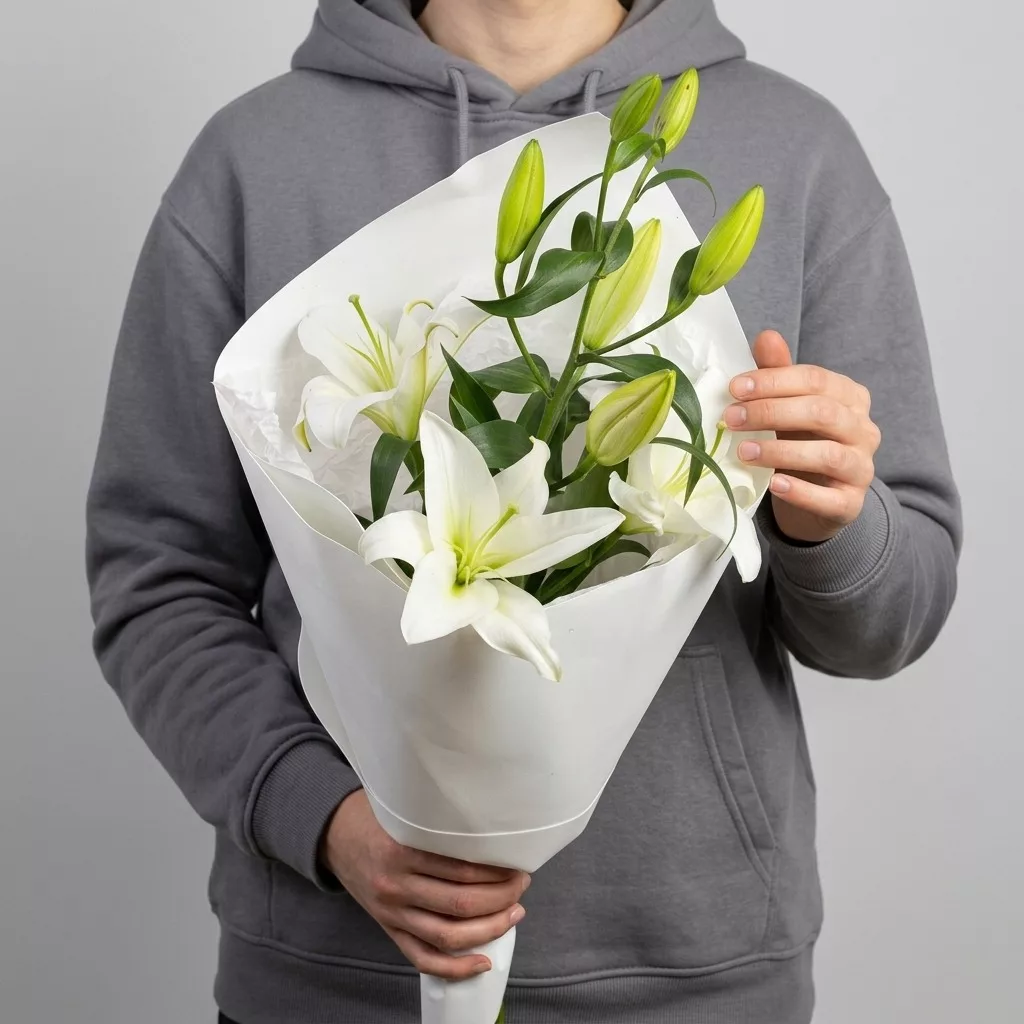
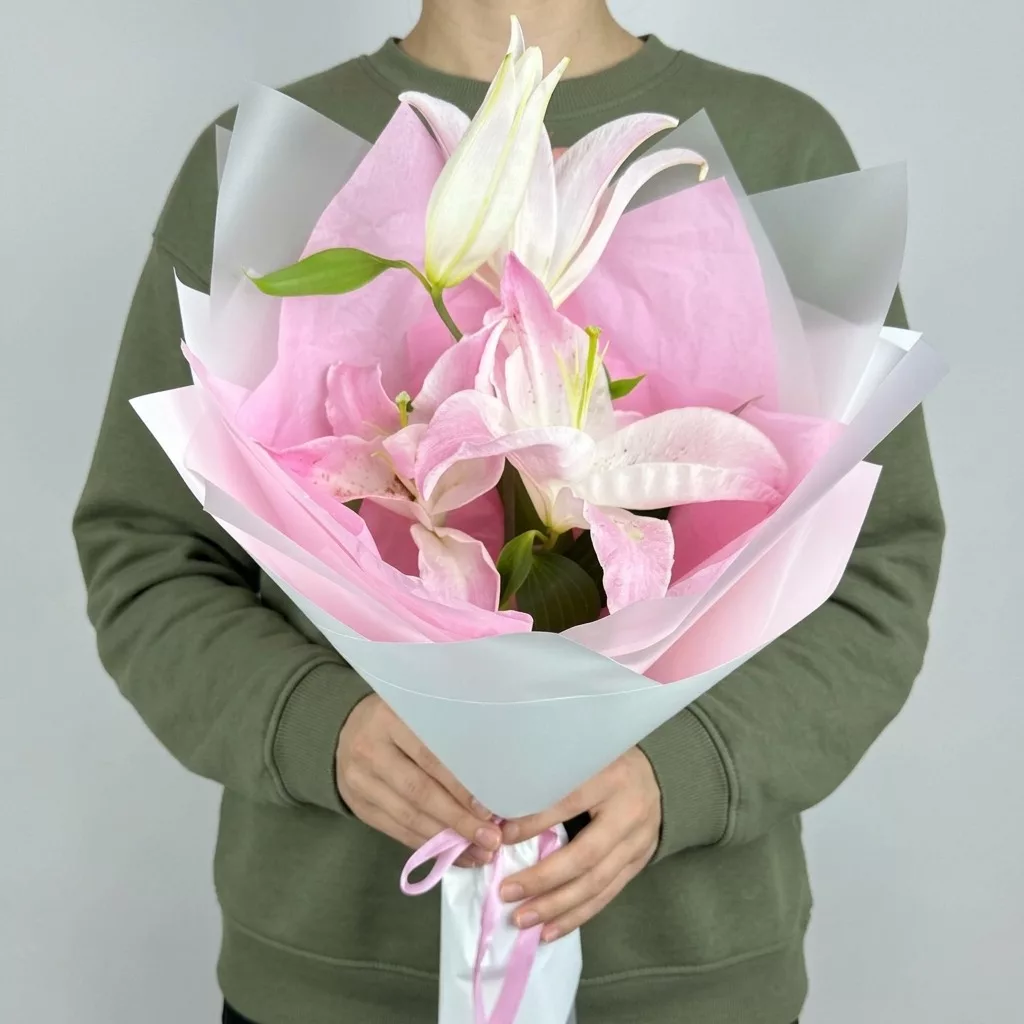

Her Name Day: A Quieter Celebration Worth Marking
Name days are observed in Russia, though less universally than birthdays. Many Russians with traditional Orthodox names — Tatiana, Natalia, Elena, Olga — celebrate their name day as a second birthday, sometimes with more warmth than the calendar birthday itself. If your sister mentions her name day and you have never sent flowers for it before, this is a meaningful moment to start.
The tone here is gentler than a birthday. Name day flowers do not need to shout. A single-variety bouquet of white or cream tulips in early spring, or a soft arrangement of sweet peas and lisianthus in summer, carries exactly the right register — affectionate, thoughtful, not overwhelming. Lisianthus is particularly well-suited because its ruffled petals resemble peonies but it is available across more of the year and holds its shape for up to ten days in water.
Keep the wrapping simple and the ribbon understated. Kraft paper with a thin satin ribbon in ivory or sage reads as considered rather than extravagant, which suits the quieter spirit of the occasion. If you want to add a small personal note, Russian florists often include a card insert — use it, because a name day without a written greeting feels incomplete.
One practical note: name days follow the Orthodox calendar, which does not always match the Gregorian dates most people outside Russia use. Double-check the date before you order, especially around moveable feasts. A delivery that arrives a day late loses most of its meaning.
Her Promotion or Professional Achievement
When your sister gets promoted, passes a major exam, or launches something she has worked toward for years, flowers should feel like a standing ovation, not a consolation prize. This is the occasion for structure and confidence — arrangements that look intentional and a little ambitious.
Anthuriums, tropical orchids, or calla lilies bring architectural presence that suits a professional moment. Callas in particular photograph beautifully, which matters because she will almost certainly share the moment on social media. A monochromatic arrangement — all white, or all deep plum — reads as sophisticated and deliberate. Avoid anything that looks like it might belong at a baby shower or a school concert; the visual language should match the weight of what she achieved.
If she works in an office and will be receiving the flowers there, consider stem length and container. Very tall arrangements can be awkward on a desk. A compact, dense bouquet of garden spray roses or a low arrangement in a box format travels better in an office environment and does not require her to hunt for a vase during a busy workday. Box arrangements — flowers packed tightly in a decorative hatbox — have become genuinely popular in Russian cities for exactly this reason.
Delivering to a workplace requires a precise address and, ideally, a named contact at reception. Flowers left without a recipient name can get delayed or misdirected in large office buildings. Confirm the delivery address includes the floor and company name, and schedule arrival for mid-morning before lunch meetings pull everyone away from their desks.
Her Wedding Day: Supporting Role, Not Competition
If your sister is the bride, the flowers you send are not her bouquet — that is already handled. What you are sending is a gift for the morning of the wedding, for her dressing room, or for the day after when the celebration is over and the emotional weight settles. Both moments call for something specific.
Morning-of flowers should be light and joyful — peonies if it is late spring, garden roses in summer, anemones in autumn. White and blush are safe choices that photograph well against any dress. Avoid anything with a strong scent, since many brides are sensitive to fragrance on a high-stress morning and heavy perfume from lilies or tuberose can become overwhelming in a small room with hair products and nerves already in the air.
If you are sending flowers the day after the wedding, the mood shifts. She is tired, possibly a little overwhelmed, and deeply happy. This is when something soft and generous feels right — a large, loose bouquet of mixed garden flowers in her favourite colours, something that says you were thinking of her specifically and not just marking the occasion. Hydrangeas, sweet Williams, and spray roses together create that abundant, just-gathered feeling without requiring a specific season.
For Russian weddings, it is common for guests and family to bring flowers to the ceremony or reception. If you are not attending in person, a delivery to her home the following morning is a genuinely touching gesture — it arrives when most of the flowers from the event are already wilting, and yours is fresh.
A New Baby: Flowers That Welcome Without Overwhelming
When your sister has a baby, you want to send something that celebrates her — the mother — not just the arrival. She has done something extraordinary and is probably exhausted, overstimulated, and quietly overwhelmed by love. The flowers should feel like a warm hand on the shoulder, not a firework.
In Russia, pink is traditional for a girl and blue or yellow for a boy, but this convention is softening in cities. Many modern Russian mothers prefer something less coded — soft peach, warm white, or sage green arrangements that feel calming rather than declarative. Chamomile, lisianthus, and soft garden roses in these tones are genuinely restful to look at across a tired first week at home.
Avoid strongly scented flowers entirely. A newborn's environment should be as neutral as possible, and heavy fragrance from stargazer lilies or oriental hybrids can be genuinely unpleasant for a breastfeeding mother or a sensitive infant. Stick to varieties that are visually beautiful but scent-neutral: tulips, ranunculus, spray roses, and most tropical varieties have little to no scent.
If she has just come home from the maternity hospital, time the delivery carefully. In Russia, mothers typically stay in the maternity ward for three to five days after a straightforward birth. Confirm she is home before scheduling delivery — a bouquet sitting in a hot entrance hall for a day loses both its freshness and its meaning. A delivery for the first or second morning at home lands at exactly the right emotional moment.
March 8th: Russia's Most Flower-Intensive Day of the Year
International Women's Day on March 8th is not a minor occasion in Russia — it is the single biggest flower holiday of the year, larger than Valentine's Day by a significant margin. Every woman receives flowers: sisters, mothers, colleagues, teachers. The streets smell of mimosa by the morning of the seventh, and delivery windows fill up fast.
Mimosa — the bright yellow clusters of Acacia dealbata — is the defining flower of March 8th in Russia. It has been associated with the holiday since Soviet times and carries genuine nostalgic warmth for most Russian women over thirty. A bundle of mimosa on its own, or combined with white tulips, is an immediately recognisable and deeply appreciated gesture. The scent is light and honeyed, and the colour is unambiguously cheerful against the grey of late Russian winter.
If your sister prefers something less traditional, Dutch tulips in any colour are the second most popular choice for this holiday and are widely available in high quality by early March. Hyacinths are another strong option — they are in peak season, heavily fragrant in a pleasant way, and come in violet, pink, white, and deep blue.
Order at least two to three days in advance for March 8th delivery. This is not a suggestion — it is the difference between a guaranteed morning delivery and a disappointed afternoon. Turboflora handles same-day delivery across Russia within one to two hours on normal days, but March 8th demand is exceptional and early booking protects your time slot. Do not leave this one until the evening of the seventh.
Just Because: The Most Underrated Occasion of All
There is no occasion more disarming than flowers sent for no reason at all. No birthday, no holiday, no milestone — just a Tuesday in October and a bouquet at the door because you were thinking of her. In Russian culture, where flowers are genuinely woven into daily life rather than reserved for formal moments, this kind of spontaneous gesture lands with particular warmth.
For a just-because bouquet, follow her personality rather than any seasonal convention. If she is someone who fills her home with plants and grows things on her balcony, a loose arrangement of seasonal wildflowers — cornflowers, cosmos, ammi — will feel more like her than a formal rose arrangement. If she is more polished and urban, a tight cluster of garden spray roses in a single colour with minimal greenery reads as quietly luxurious.
Monochromatic bouquets — one flower, one colour, beautifully presented — work exceptionally well for spontaneous gifts because they look deliberate and curated without requiring a complex combination. All-white anemones in autumn, all-coral ranunculus in spring, or a single variety of blush tulips in winter each make a strong visual statement with very little fuss.
The wrapping matters as much as the flowers for a just-because delivery. Ask for something clean and considered — matte paper, a simple ribbon, a short handwritten note. The note is essential: without it, a random delivery feels slightly mysterious. With it, even three words — thinking of you — turn a beautiful object into a moment she will remember for weeks longer than the flowers themselves last.
Your sister will remember the flowers that felt chosen for her, not the ones that simply arrived. The occasion gives you the starting point — birthday, promotion, new baby, or a quiet Tuesday — and the details do the rest: the right variety for the season, the right colour for her home, the right timing so the bouquet is at its best when she opens the door. If you are not sure where to begin, describe the occasion and a little about her when you order, and a florist who handles real stems every day will help you land on something she will want to photograph and keep in water for as long as possible.
Frequently asked questions
Is it true that flowers for a living person in Russia must be an odd number?
Yes, this is a genuine and widely observed convention. Even numbers of stems are associated with mourning and funerals in Russian culture, so bouquets for living recipients are given in odd numbers — five, seven, eleven, fifteen, or more. When ordering, specify an odd stem count or ask the florist to arrange accordingly. Most Russian florists follow this automatically.
What flowers should I avoid sending to a sister who has just had a baby?
Avoid strongly scented varieties such as stargazer lilies, oriental hybrids, tuberose, and hyacinths. Heavy fragrance can be uncomfortable for a breastfeeding mother and potentially irritating for a newborn. Choose visually beautiful but scent-neutral flowers instead — tulips, ranunculus, lisianthus, and spray roses are all excellent options that look generous without overwhelming a sensitive environment.
How far in advance should I order flowers for March 8th delivery in Russia?
Order at least two to three days before March 8th. It is the highest-demand flower day of the year in Russia — significantly larger than Valentine's Day — and delivery slots fill quickly. Ordering by March 5th or 6th gives you the best choice of bouquet styles and guarantees a morning delivery window. Waiting until the evening of March 7th carries real risk of delays.
Can I send flowers to my sister's workplace for a promotion, and what should I specify?
Yes, workplace delivery works well for a promotion gift. Include the full address with floor number, company name, and a named contact at reception — large office buildings can misdirect flowers without this. Choose a compact arrangement rather than a very tall one, since desk space is limited. Box-format arrangements are particularly practical and have become popular in Russian cities for professional occasions.
What is a name day and is it worth sending flowers for it?
A name day is a celebration tied to the feast day of the Orthodox saint a person is named after. Many Russians observe it as a second birthday, sometimes with more personal warmth than the calendar birthday. It is absolutely worth marking with flowers — a modest, elegant bouquet in soft colours is ideal. Check the Orthodox calendar carefully for the correct date before ordering, as it does not always match Gregorian dates.
Ready to send flowers?
Pick the city, choose the bouquet, and a local florist takes it from there.
Choose a city →