Recognising Your Team with Flowers That Actually Feel Thoughtful
A bouquet handed to an employee in front of their colleagues does something a certificate or a gift card cannot — it makes the moment visible and warm. Whether you are marking a company anniversary, running a monthly recognition programme, or celebrating a team that just closed a difficult project, flowers carry a message that lands before a single word is spoken. The choices you make — variety, colour, size, timing — tell the recipient exactly how much thought went into the gesture. This article helps you make those choices well.
Why Flowers Work Differently in a Professional Setting
Corporate gifting in Russia has its own unspoken grammar. Flowers are not considered frivolous in a workplace context — quite the opposite. Presenting a bouquet to a long-serving employee or a high-performing team member is a recognised mark of genuine esteem, and colleagues watching the moment understand that immediately. The gesture carries more emotional weight than a bonus line on a payslip because it happens in public, in real time, with everyone present.
That said, the professional setting does change what works best. A bouquet that reads beautifully at a birthday — loose, romantic, trailing greenery — can feel slightly out of place on a stage or at a formal podium. Corporate flowers tend to work better when they are structured and confident: a clean round form, a strong central flower, stems that hold their shape when someone is holding the bouquet and shaking hands at the same time.
Colour matters here too. Soft pastels read as personal and intimate. Richer, more saturated tones — deep burgundy roses, warm amber chrysanthemums, bold coral gerberas — project energy and confidence and photograph well under office lighting. If the event will be documented for internal communications or social media, that last point is worth taking seriously. A bouquet that looks washed out in a photo is a small but avoidable disappointment. Think about the background the recipient will be standing against and choose accordingly.
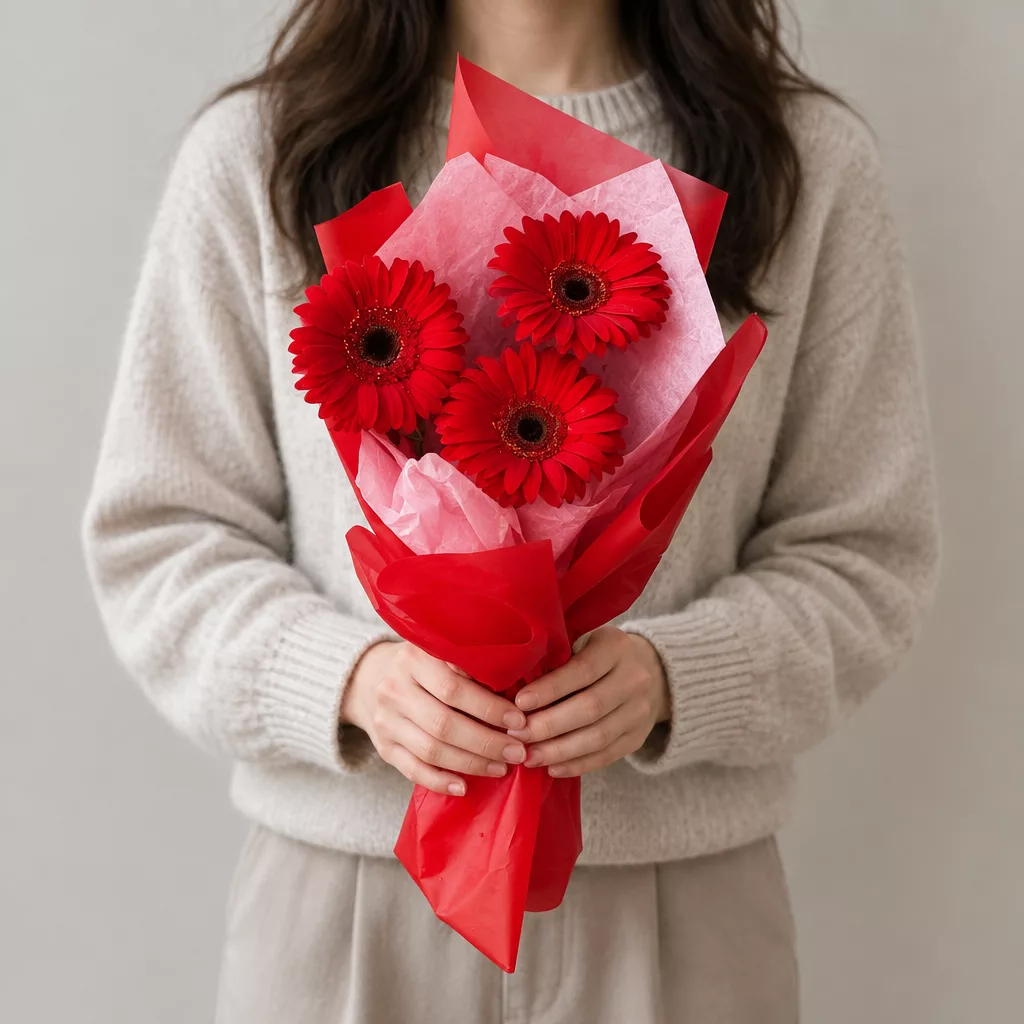
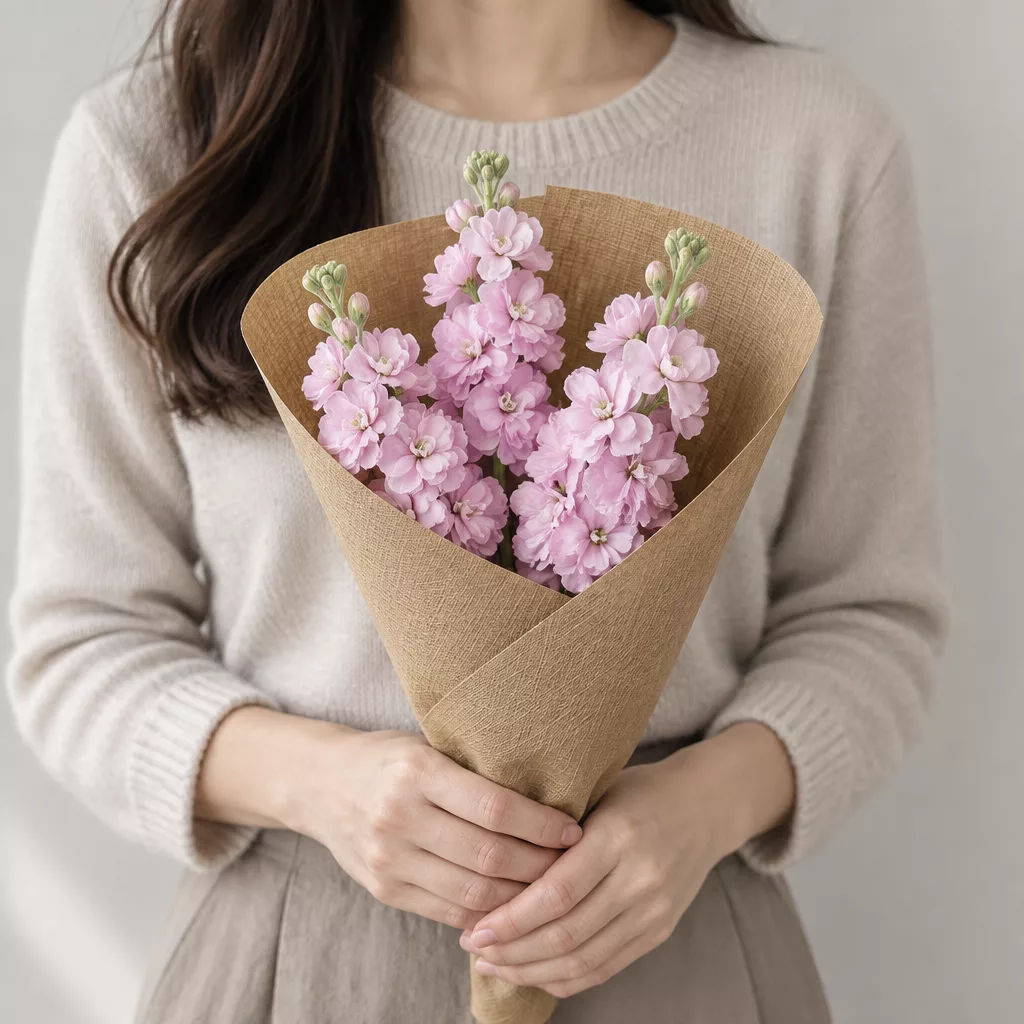
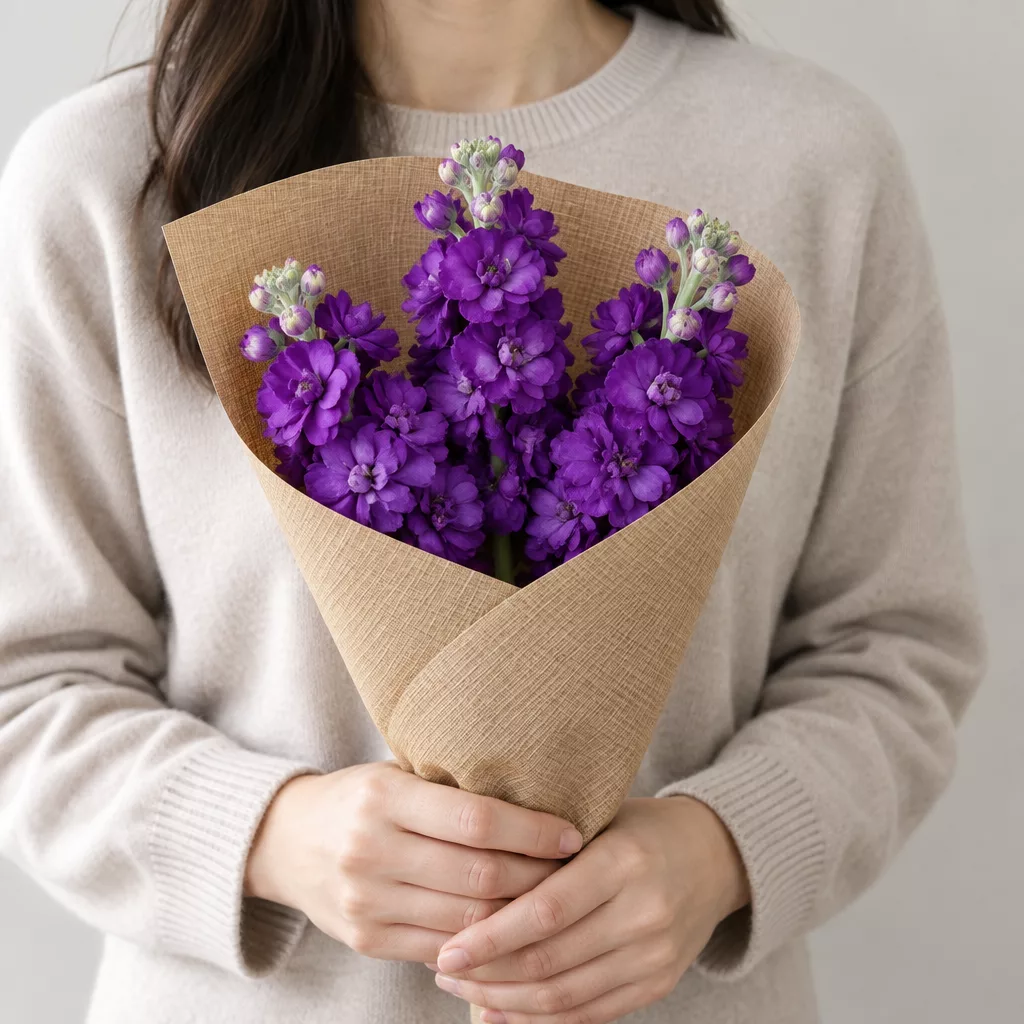
Bouquets we can deliver

Choosing Flowers for a Company Anniversary
A company anniversary is one of the few corporate occasions where scale is appropriate. This is a milestone that belongs to everyone in the organisation, so the flowers should feel generous rather than token. For the central presentation — usually to a founder, director, or the leadership team — a large structured bouquet of garden roses or premium spray roses in white and cream signals celebration without veering into anything too personal or romantic.
If the anniversary is a significant number — ten years, twenty-five years — consider adding flowers with longevity symbolism. Alstroemeria, for instance, is known in the trade for lasting well over a week in a vase and is associated with endurance and mutual support, which suits the occasion perfectly. Paired with white lisianthus and eucalyptus, it creates a bouquet that looks elegant without requiring an enormous budget.
For team members receiving individual posies or smaller arrangements at the same event, consistency matters more than variety. Matching colour palettes across all the bouquets creates a visual sense of unity — everyone is being recognised as part of the same story. Avoid mixing wildly different styles between the main presentation bouquet and the smaller ones, as the contrast can accidentally suggest a hierarchy of appreciation that you probably do not intend. Order all arrangements together so the stems arrive at the same temperature and open at the same rate throughout the event.
Employee of the Month: Making a Recurring Programme Feel Special Every Time
The challenge with a monthly recognition programme is that it has to feel meaningful on the twelfth occasion just as much as the first. Flowers help with this, but only if the selection changes enough to feel considered rather than automatic. Rotating the central flower variety each month is the simplest way to do this — ranunculus in winter, peonies in late spring, sunflowers in summer, dahlias in early autumn. Each has a distinct character that gives the month its own personality.
Keep the colour palette broadly consistent with your company's visual identity if you have one. This is not about being rigid — it is about creating a visual language that employees start to recognise and associate with the honour. When someone sees that particular combination of colours being carried through the office, they know what it means before anyone says a word.
Size is a practical question too. The recipient needs to get the bouquet home, possibly on public transport. A medium-sized bouquet — substantial enough to be impressive, compact enough to carry comfortably — is almost always the right call for an individual award. Wrap it properly so the stems are sealed and the flowers are protected from cold air, especially in winter when Saint Petersburg and most Russian cities drop well below freezing. Flowers left unwrapped in minus-ten temperatures for even a few minutes will show petal damage that no vase of water will reverse. Ask for cold-weather packaging when you place the order.
Team Celebration Events: Decorating the Space and Gifting Together
When an entire team is being celebrated — a successful product launch, a record quarter, the end of a demanding season — flowers can serve two roles at once: decoration for the event itself and take-home gifts for the people who made it happen. Planning both together means you can align the colour story across the room and the individual bouquets, which creates a cohesive atmosphere that feels designed rather than assembled at the last moment.
For table arrangements at a team event, low and wide works better than tall and narrow. People need to see each other across the table, and a towering centrepiece blocks conversation. Compact arrangements of garden roses, waxflower, and seasonal greenery at roughly thirty centimetres in height keep the visual interest without the obstruction. Waxflower in particular is useful here — it fills space beautifully, lasts exceptionally well out of water for the duration of an event, and adds a gentle fragrance that does not overpower a room.
For the take-home element, consider wrapping individual posies in kraft paper with a simple ribbon in the company colour. It is a small detail, but it signals that someone thought about the presentation end-to-end. Seasonal flowers work best for this — they are fresher, they travel better, and they tell the recipient that the order was placed with care rather than pulled from a standing stock. Coordinate delivery timing so that arrangements for the event itself arrive two hours before guests, and take-home posies are ready at the venue before the event ends.
Budget Tiers: What Each Level Actually Gets You
Corporate flower budgets vary enormously, and the good news is that thoughtful selection matters more than spend. At a modest budget, single-variety bouquets are your best friend. A generous bunch of white spray roses, or a bold arrangement of sunflowers with leather leaf fern, looks intentional and complete. The mistake at this level is trying to include too many varieties with too few stems of each — it ends up looking sparse rather than curated.
At a mid-range budget, you can introduce a premium central flower — a large-headed garden rose, a peony in season, or a stem of amaryllis in winter — surrounded by complementary secondary flowers that extend the arrangement without competing with it. Lisianthus is a reliable supporting flower at this tier: its ruffled petals echo the texture of a rose, it lasts ten days to two weeks in a vase, and it is available year-round in white, purple, and pale pink.
At a higher budget, the difference shows in stem count, variety layering, and the addition of structural elements like protea, anthurium, or orchid stems. These flowers photograph exceptionally well and hold their form in warm rooms for hours, which matters when the bouquet will be on display throughout a long event. Whatever the budget, resist the temptation to add filler just to increase visual volume. Three well-chosen varieties with generous stem counts will always outperform seven varieties crammed together. Discuss your budget openly when placing the order so the arrangement can be designed around what will look best at that level.
Logistics: Timing, Temperature, and Getting It Right on the Day
Corporate events run on schedules, and flowers need to arrive at exactly the right moment — not two hours early when there is no one to receive them, and not five minutes before the ceremony when there is no time to arrange anything. For a midday presentation, placing your order the evening before and specifying a morning delivery window gives the flowers time to hydrate and open slightly, which makes them look their best under event lighting.
Temperature is the variable most people underestimate. In Russian winters, flowers moving from a cold van into a warm office need a short acclimatisation period — unwrap them carefully and let them adjust for fifteen to twenty minutes before placing them in water. Rushing this step causes condensation inside the petals and can lead to bruising, particularly on roses and tulips. In summer, the opposite risk applies: flowers sitting in a hot room or direct sunlight for more than an hour will wilt faster than expected. Keep them in a cool area until the moment they are needed.
For large orders covering multiple recipients across a single event, prepare a simple handover list — recipient name, bouquet description, delivery point within the venue. This sounds obvious but is genuinely useful when a delivery arrives and the event coordinator is managing three things at once. Turboflora delivers across Russia within one to two hours, so if something is forgotten or an extra arrangement is needed on the day, a same-day order is a realistic option rather than a last resort.
Vase Life and Care: Helping Recipients Enjoy Their Flowers Longer
A bouquet that wilts two days after the event is a small but real disappointment. Sharing basic care guidance with recipients — either verbally or with a short printed note — extends the life of the flowers and extends the positive association with the gesture itself. Most corporate recipients are not experienced with cut flowers, so even simple information makes a meaningful difference.
The fundamentals: cut stems at a forty-five degree angle under running water before placing in a clean vase, change the water every two days, keep the arrangement away from direct sunlight and away from fruit bowls. Ethylene gas released by ripening fruit accelerates petal drop in roses, carnations, and lisianthus noticeably. This is a detail most people have never heard but immediately find useful.
Different varieties have different lifespans that are worth knowing. Chrysanthemums and carnations routinely last two to three weeks with basic care. Roses and lisianthus give you ten to fourteen days. Gerberas are beautiful but more sensitive — they prefer shallow water and will last around a week. Tulips continue to grow in the vase and will lean toward any light source, which some people find charming and others find frustrating; rotating the vase each day keeps them more upright. Peonies, when they arrive as tight buds, will open over three to four days into the full bloom that makes them so impressive — recipients who have never had peonies before sometimes worry the buds will not open, so reassuring them in advance is a thoughtful touch.
Recognising people with flowers is one of the simplest things a company can do and one of the most consistently underestimated. The variety you choose, the way the stems are wrapped, the moment the bouquet arrives — each detail adds up to a feeling that the recipient carries with them long after the petals have dropped. Get the logistics right, choose flowers that suit the occasion rather than defaulting to the obvious, and the gesture will land exactly the way you intend it to. We deliver bouquets across Russia in 1–2 hours.
Frequently asked questions
How far in advance should I order flowers for a corporate event?
For events with multiple bouquets or specific variety requests, placing your order the evening before is ideal. It allows the flowers to be properly hydrated and conditioned before delivery. For straightforward single-bouquet orders, same-day ordering works well — Turboflora delivers within one to two hours across Russia, so a morning order for an afternoon event is entirely realistic.
Which flowers last longest in a warm office environment?
Chrysanthemums and carnations are the most resilient — both handle warm, dry office air well and can last two to three weeks with fresh water every couple of days. Alstroemeria and lisianthus are also strong performers at ten to fourteen days. Avoid delicate varieties like sweet peas or anemones for arrangements that need to look good across a long event day.
Is it appropriate to give flowers to male employees in Russia?
Yes, entirely. In Russian workplace culture, presenting flowers to a male colleague or employee is a respected and recognised gesture of professional appreciation. A structured, confident bouquet — bold sunflowers, rich burgundy roses, or a strong mixed arrangement — suits the occasion well. There is no cultural awkwardness in doing so; it is considered a mark of genuine esteem.
Can I order matching arrangements for a large team event and individual take-home bouquets together?
Absolutely. Ordering everything together is actually the best approach — it allows the colour palette and flower varieties to be aligned across the room arrangements and the individual posies, creating a visually coherent event. Share your full requirements when placing the order so delivery timing can be coordinated: event arrangements arriving before guests, take-home bouquets ready before the event ends.
What should I do if flowers arrive looking slightly closed or tight?
Tight buds are normal and actually a sign of freshness — flowers are cut and packed before full bloom to survive transit in the best condition. Cut the stems at an angle, place them in clean water at room temperature, and keep them away from cold draughts. Most varieties will open to full bloom within twelve to twenty-four hours. Peonies and garden roses can take up to three days to open completely.
Ready to send flowers?
Pick the city, choose the bouquet, and a local florist takes it from there.
Choose a city →