Flowers for Your Boss in Russia: Professional and Safe Picks
Giving flowers to a manager or director in Russia is a genuine workplace tradition, but it comes with unspoken rules that can trip up anyone unfamiliar with the culture. Get it right and the gesture lands warmly. Get it wrong — too casual, too romantic, too funereal — and the bouquet creates exactly the awkward moment you were trying to avoid. This guide helps you choose something that reads as respectful, considered, and entirely appropriate.
Why Flowers for a Boss Follow Different Rules in Russia
In Russian professional culture, flowers are given far more frequently than in most Western workplaces. Birthdays, professional anniversaries, Women's Day on 8 March, and even project completions are all legitimate occasions. This means your colleagues and your boss have seen a lot of bouquets, and they will notice the thought — or the lack of it — behind yours.
The key distinction is register. A bouquet for a close friend can be wild, colorful, and playful. A bouquet for a superior should feel composed and deliberate. Russians associate a well-structured, restrained arrangement with seriousness and respect. A loose, garden-style mix of bright mismatched stems can read as careless in this context, even if it is fashionable in florist circles.
There is also a strong gender dimension. Female managers are given flowers very commonly and expect them on key dates. Male managers receive flowers less often but it does happen, particularly on milestone birthdays and professional holidays. Knowing your boss's gender and the specific occasion will shape almost every decision you make about variety, color, and scale.
One more point worth understanding: flowers in Russia are almost always given in odd numbers. This is a deeply held convention — even numbers of flowers are associated with mourning. If you are ordering remotely or through a colleague, confirm the count. A bouquet of ten roses, however beautiful, will feel wrong to most Russian recipients.
Bouquets we can deliver

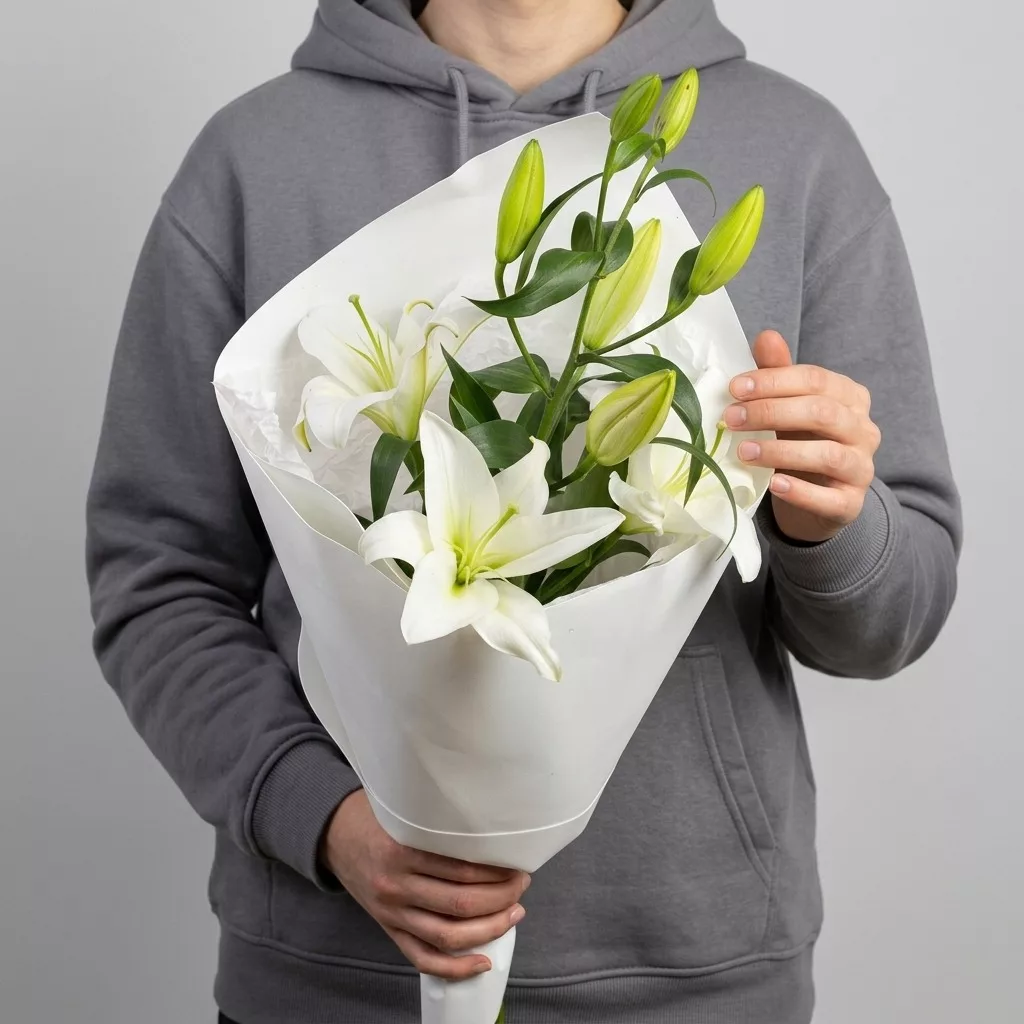
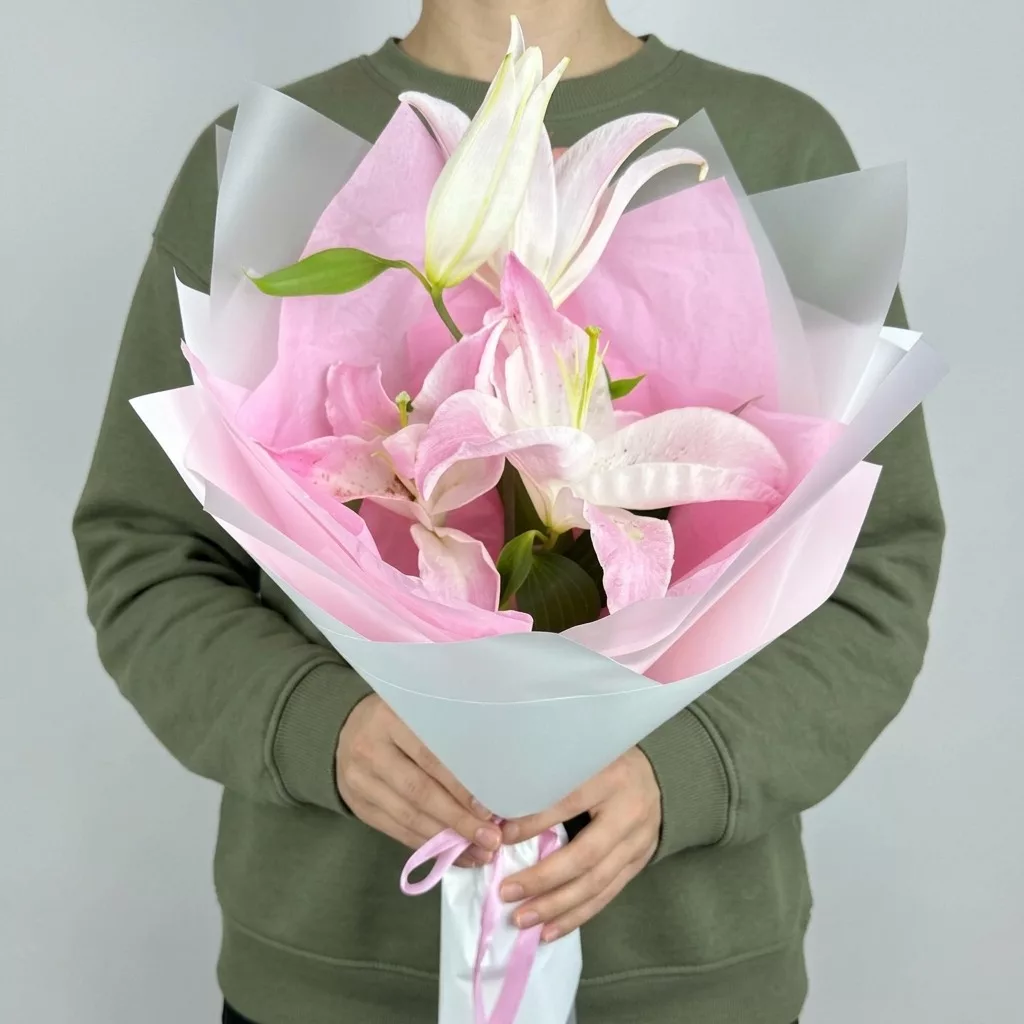

The Occasions That Call for a Bouquet at Work
The most important date in the Russian workplace flower calendar is 8 March, International Women's Day. On this day it is virtually universal for male employees — and often the whole team collectively — to bring flowers to female colleagues and managers. Roses, tulips, and mimosa are all traditional. If your female boss does not receive flowers from you on 8 March, it is genuinely noticed.
Birthdays are the next most common occasion. For a boss, the expectation is something a step above what you might bring a peer. A more structured bouquet, a slightly larger scale, or a premium variety signals that you recognize the hierarchy respectfully without being sycophantic.
Professional holidays matter more in Russia than in many countries. Teacher's Day, Doctor's Day, Engineer's Day — these are real occasions where flowers are given. If your boss works in education, medicine, or a field with a named professional holiday, acknowledging it with a small, elegant bouquet is a well-received gesture.
New Year is celebrated on 1 January and is the biggest holiday of the Russian year, but flowers are less common then because of the cold and because the holiday is family-focused. The period just before the New Year break — late December — is when workplace gifts, including flowers, are sometimes exchanged. A bouquet in this window should feel festive but still composed, not overly casual. Stick to whites, creams, and deep greens for a seasonal feel that stays professional.
Varieties That Always Read as Respectful
Roses are the default choice for a reason. They carry an inherent formality that suits the boss-employee dynamic perfectly. For a professional context, choose spray roses or large-headed garden roses over the very stiff, long-stemmed florist roses if you want a modern feel, but classic red or white long-stemmed roses remain entirely appropriate and widely appreciated. Avoid deep burgundy mixed with white for a boss — that combination can read as overly intimate.
Eustoma, also called lisianthus, is one of the best-kept secrets for professional bouquets. It looks expensive and layered, holds beautifully for seven to ten days in a vase, and comes in white, pale purple, and soft pink — all colors that work in an office setting. A mono bouquet of white eustoma wrapped in kraft paper is one of the cleanest, most confident choices you can make.
Chrysanthemums deserve a word of caution. They are widely used in Russia, but certain varieties — particularly the large, single-headed white or yellow ones — are strongly associated with funerals and should be avoided entirely for a living recipient. Spray chrysanthemums in warm tones are generally fine, but if you are uncertain, skip the variety altogether.
Orchid stems, particularly dendrobium, add an exotic touch without being showy. A few stems mixed with greenery and white roses create a bouquet that feels curated and generous. Peonies, when in season from late May through June, are universally loved and carry no negative associations — they are a safe and beautiful choice for any female boss during that window.
Choosing by Budget Without Losing the Professional Tone
A smaller budget does not mean a less respectful bouquet — it means you need to be more deliberate about composition. A tight, well-wrapped arrangement of five or seven white eustoma stems with a single eucalyptus branch and a quality ribbon reads as thoughtful at any price point. The key is that nothing looks sparse or afterthought. One variety, done cleanly, outperforms a mixed bouquet assembled without intention.
At a mid-range budget, you have room to combine two or three varieties. A classic pairing that works well for a boss is white or cream roses with blue or purple veronica and soft pistache greenery. The color palette stays cool and professional, the textures are interesting, and the arrangement holds its shape over several days. Avoid adding too many filler flowers — gypsophila in large quantities can undercut the premium feel you are aiming for.
For a more significant occasion — a major birthday, a promotion, a long tenure milestone — a larger bouquet with premium varieties makes sense. Peonies in season, garden roses, or a mixed arrangement built around white and blush tones with structured greenery like ruscus or salal leaves will feel genuinely generous without crossing into personal territory.
Whatever the budget, presentation matters as much as the flowers themselves. A professional bouquet for a boss should be wrapped cleanly, ideally in a single color of paper or fabric, with a simple ribbon rather than elaborate decoration. Overly festive wrapping — bright foil, cartoon prints, excessive bows — reduces the seriousness of the gesture immediately. Keep the packaging as composed as the flowers inside.
Colors to Choose and Colors to Avoid
White is the safest and most universally respected color for a professional bouquet in Russia. It reads as clean, respectful, and considered. An all-white bouquet — white roses, white eustoma, white ranunculus — is never wrong for a boss and works across all ages and personality types. If you are unsure of your boss's preferences, white is your answer.
Soft pink and blush tones are warm and well-received, particularly for female managers. They avoid the romantic connotations of red while still feeling personal and generous. Pale pink roses or blush peonies paired with white or cream elements create a bouquet that is feminine without being overly sweet.
Red roses are the most discussed choice. They are not inappropriate for a female boss, but they do carry romantic associations in Russian culture, so context matters. A classic red rose bouquet for a boss on her birthday from the whole team is perfectly normal. A single male employee giving his female boss a dozen red roses can feel ambiguous. If you are giving flowers individually rather than on behalf of a group, soft pink, white, or lavender are safer choices.
Yellow flowers have improved in reputation in recent years as florist culture has grown in Russia, but some older recipients still associate yellow with separation or bad news. For a boss you do not know well, avoid a predominantly yellow bouquet. Purple and lavender tones — irises, lavender roses, lisianthus — are elegant and professional with no negative associations. Deep orange and coral work well in autumn but should be balanced with neutrals to avoid reading as too casual.
Delivery Timing and Keeping Flowers Fresh at the Office
Timing a delivery to an office requires some thought. Most Russian offices begin the working day between 9 and 10 in the morning. A delivery arriving at 9:30 on a birthday or holiday morning makes a strong impression — it shows planning. A delivery arriving at 4 in the afternoon on the same day feels like it was remembered at the last minute, even if the flowers are identical.
For 8 March, order well in advance. This is the single busiest day in the Russian flower industry, and delivery slots fill up quickly. Placing your order the evening before or even two days ahead ensures your bouquet arrives in the first half of the morning, when the gesture has the most impact. Morning delivery on Women's Day is a cultural expectation, not just a preference.
Once the flowers arrive at the office, they face a challenging environment. Office air conditioning and heating both dry out flowers faster than a home setting. Roses and eustoma in an office at 22 to 24 degrees Celsius will last five to seven days with basic care. Tulips and ranunculus are more sensitive and may open fully within two days in a warm room.
Advise the recipient — or include a small care note — to trim the stems at an angle and change the water every two days. Keeping the vase away from direct sunlight and away from heating vents extends vase life significantly. If the office has no vase, a simple glass or pitcher works fine — the flowers do not need elaborate display to stay fresh. Eustoma in particular is forgiving and rewards even minimal care with a long, elegant life.
Common Mistakes People Make When Gifting to a Superior
The most frequent mistake is choosing a bouquet that is too personal. Sunflowers, wildflower mixes, and very informal garden-style arrangements are beautiful flowers but they signal closeness and informality. For a boss you see in a professional context, that register is wrong. The bouquet should feel like it came from someone who respects the relationship rather than someone who wants to redefine it.
Giving an even number of flowers is the second most common error, particularly among people ordering from outside Russia who are unfamiliar with the convention. Five, seven, nine, or eleven stems are all appropriate. If you are ordering a structured round bouquet where stems are not individually countable, this matters less — but for a classic tied bouquet, count carefully.
Choosing flowers based purely on your own taste is another trap. You may love bold tropical arrangements with birds of paradise and anthuriums, but a conservative boss in a formal industry — law, finance, government — will likely find that jarring rather than impressive. Default to classic varieties and restrained palettes when you do not know the recipient's personal style.
Finally, neglecting the wrapping undermines even a beautiful bouquet. Flowers handed over in a plastic sleeve from a supermarket, or in wrapping that has been crushed in transit, lose their impact immediately. A professional delivery with clean, intact presentation is part of the gift. When ordering for a boss, always request careful packaging and confirm that the bouquet will arrive in presentation-ready condition — not just the flowers, but the wrapping and any accompanying card.
Giving flowers to your boss in Russia is a gesture that carries real weight when it is done thoughtfully. The right bouquet — composed, appropriate in color, delivered at the right moment — communicates respect in a way that words in a card cannot fully match. You do not need to spend extravagantly or know every nuance of Russian tradition. You need to choose deliberately, avoid the handful of well-known pitfalls, and let the flowers do what they have always done in this culture: mark a moment and show that someone paid attention.
Frequently asked questions
Is it appropriate to give flowers to a male boss in Russia?
Yes, though it happens less often than for female managers. Milestone birthdays and professional holidays are the most accepted occasions. Choose a restrained, structured bouquet — white or cream tones, classic varieties like roses or eustoma — and keep the scale modest. A very large or elaborate bouquet can feel awkward in a male professional context, while a neat, well-composed arrangement is always received warmly.
Can I give red roses to my female boss without it seeming romantic?
Red roses are not forbidden, but context matters. A bouquet given on behalf of the whole team reads as purely celebratory. A bouquet given individually by one male employee to a female boss can feel ambiguous. If you are giving flowers personally rather than collectively, soft pink, white, or lavender roses carry the same elegance without the romantic association and are a safer professional choice.
What is the best flower choice if I know nothing about my boss's preferences?
White eustoma or white roses are the most universally safe options in a Russian professional context. Both varieties read as respectful and considered, carry no negative associations, and suit any age or personality. A clean, well-wrapped mono bouquet of white eustoma is one of the most reliable choices a florist can recommend when the recipient is unknown.
How far in advance should I order flowers for 8 March delivery to an office?
Order at least one to two days before 8 March. Women's Day is the busiest single day in the Russian flower industry, and morning delivery slots — which are the most meaningful — fill up very quickly. Placing your order the evening of 7 March at the latest ensures your bouquet arrives in the first half of the working day, when the gesture has the greatest impact.
How long will a professional bouquet last in an office environment?
Roses and eustoma typically last five to seven days in an office kept at 22 to 24 degrees Celsius, provided the stems are trimmed at an angle and the water is changed every two days. Tulips and ranunculus open faster in warm rooms and may peak within two days. Keeping the vase away from heating vents and direct sunlight extends the life of any arrangement noticeably.
Ready to send flowers?
Pick the city, choose the bouquet, and a local florist takes it from there.
Choose a city →