Flowers for Your Mother in Russia: How to Get It Right
Your mother is in Moscow, Kazan, or Novosibirsk, and you want to send her something that feels genuinely thoughtful — not just a generic bouquet dropped at the door. Russian mothers have clear preferences, shaped by decades of flower culture that is richer and more specific than most people outside Russia realise. Get the variety right, time the delivery well, and write a few honest words on the card, and the bouquet becomes a memory she will mention for years.
What Russian Mothers Actually Expect from a Bouquet
Flowers carry serious cultural weight in Russia. A bouquet is not background decoration — it is a statement of how much you thought about the person. Russian mothers, regardless of age, notice the composition, the freshness, and the odd-or-even number of stems. Always send an odd number: even numbers are reserved for mourning, and this is one custom that crosses all generations and regions without exception.
Beyond the number, fullness matters. A sparse, minimalist arrangement that might look elegant in a Scandinavian context can read as stingy or careless to a Russian recipient. The bouquet should feel generous — layered, with greenery or filler blooms that frame the focal flowers rather than leaving them floating alone in a sleeve.
Colour language also plays a role. Red roses signal romantic love, so sending a purely red rose bouquet to your mother can feel slightly off unless she is very young and the relationship is playful. Warm pinks, corals, peaches, creamy whites, and soft lavenders read as affectionate and respectful. Mixing these tones in one bouquet — say, blush ranunculus with ivory spray roses and eucalyptus — lands as both beautiful and appropriate across age groups.
Finally, Russian mothers pay close attention to freshness. A wilting stem is noticed immediately and remembered. This is why same-day or next-morning delivery from a shop that sources daily is not a luxury — it is the baseline expectation.
Bouquets we can deliver


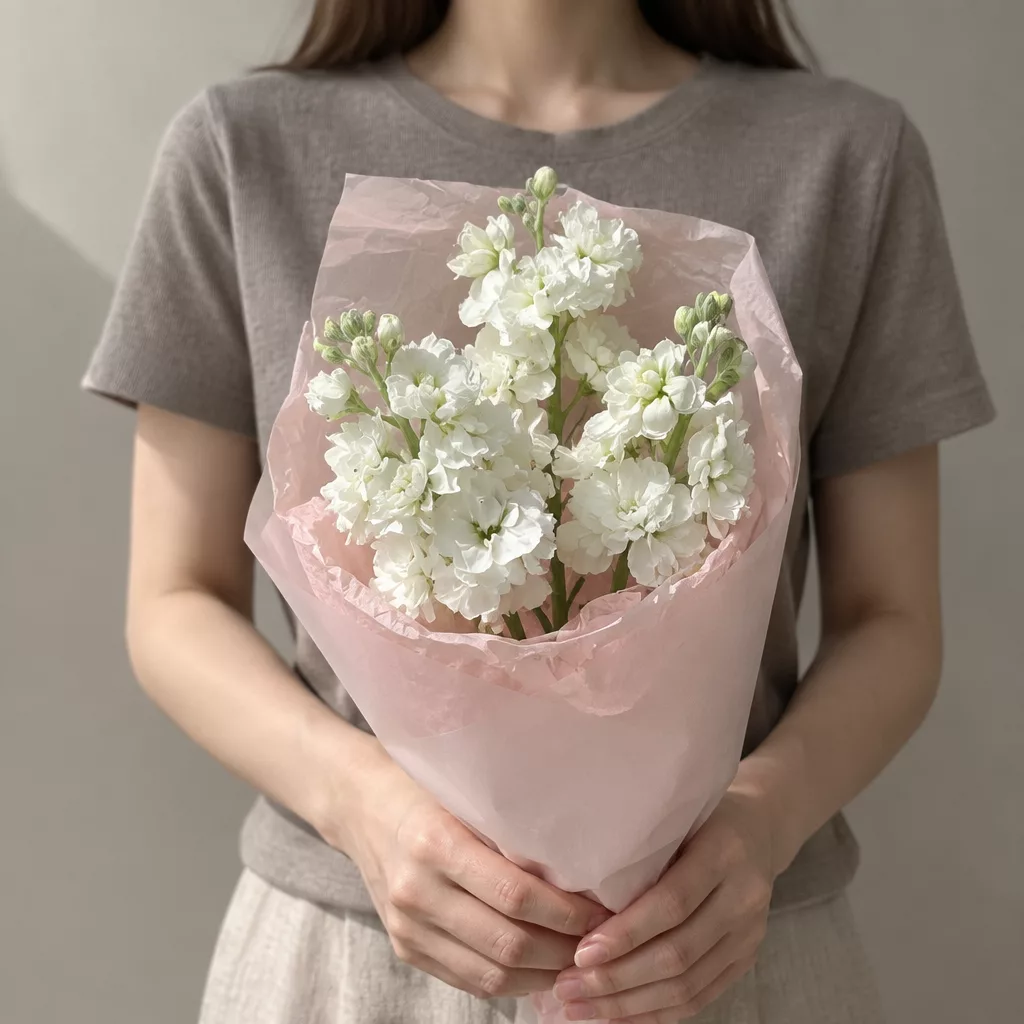
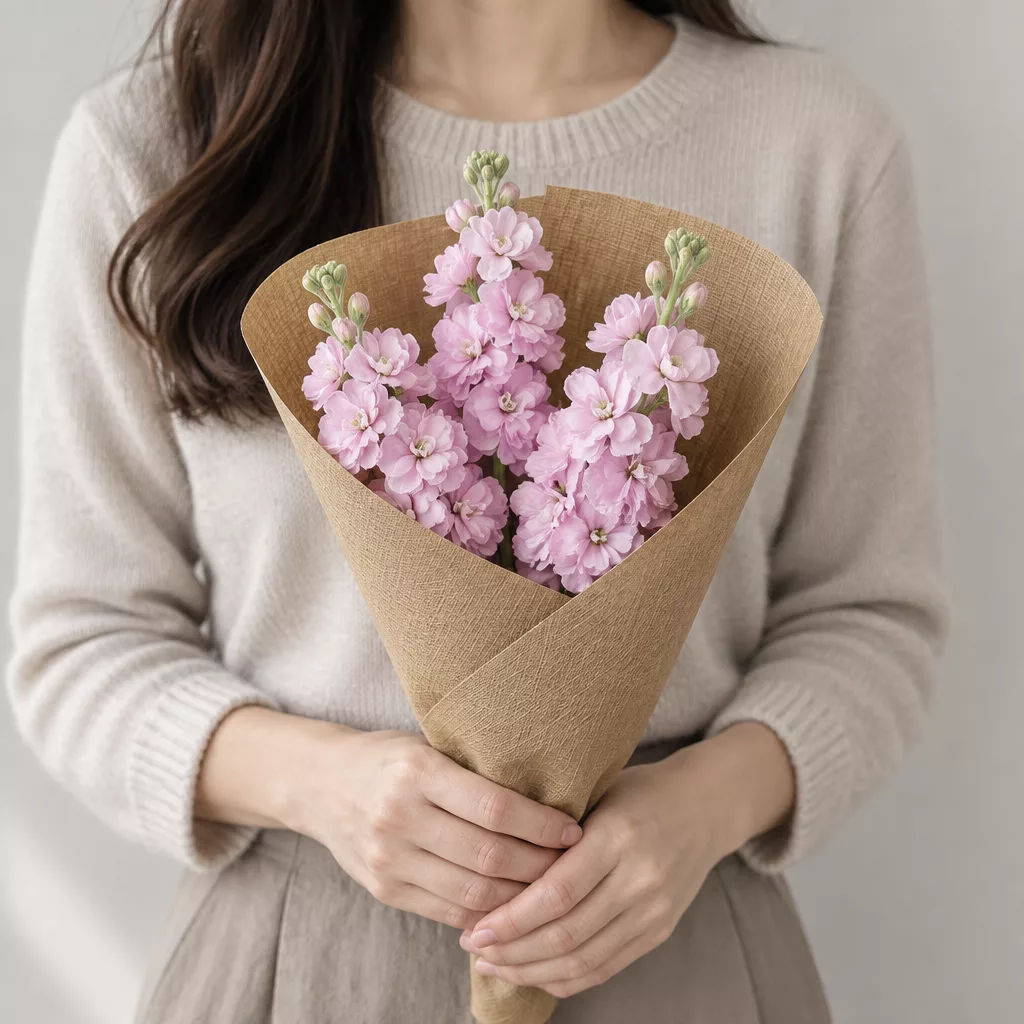
Choosing Flowers by the Occasion and Her Age
The occasion shapes the bouquet as much as personal taste does. For a birthday, you have room to be bold — peonies in season, large-headed garden roses, or a lush mix of lisianthus and matthiola create the sense of celebration. For Women's Day on March 8th, which is the single biggest flower day in Russia, mimosa is traditional and deeply nostalgic for mothers over fifty. Pairing mimosa with tulips in yellow or white gives you something that feels both classic and fresh.
For Mother's Day — celebrated in Russia on the last Sunday of November — the autumn palette works beautifully: chrysanthemums, alstroemeria, and hypericum berries in burgundy and rust tones match the season and feel intentional rather than generic.
Age shapes preference in real ways. Mothers in their sixties and older often have a genuine attachment to carnations, which younger buyers sometimes overlook as old-fashioned. A well-made carnation bouquet in mixed pinks and whites, with proper conditioning, lasts ten to fourteen days in a vase — longer than almost any other cut flower. That staying power is something older recipients appreciate and comment on.
Younger mothers, roughly those in their thirties and forties, tend to respond well to garden-style arrangements: ranunculus, anemones, sweet peas when in season, and soft foliage like ruscus or pittosporum. These feel current without being cold. When you are unsure, a combination of garden roses and lisianthus in blush tones works across virtually every age group and occasion without feeling like a compromise.
Timing the Delivery So the Flowers Arrive at Their Best
Timing is where many well-intentioned orders fall apart. Flowers sent to arrive at nine in the morning on a birthday land at the start of the day and set the tone for everything that follows. Flowers that arrive at eight in the evening, after dinner, after she has already called to check whether you forgot — those are harder to recover from, even if the bouquet itself is beautiful.
For birthdays and anniversaries, aim for morning delivery, between nine and noon. For Women's Day on March 8th, order at least two to three days in advance: demand across Russia is extremely high, and same-day slots fill quickly. Turboflora delivers within one to two hours across Saint Petersburg and to other Russian cities, but advance scheduling gives you the specific time window you want rather than leaving it to chance.
Temperature matters during transit, especially in Russian winters. Cut flowers suffer in freezing temperatures — exposure to frost even for a few minutes can blacken petals and collapse stems. A professional delivery service wraps bouquets properly for cold weather, but it is worth confirming this when you order if the destination city is experiencing temperatures below zero.
If your mother lives in an apartment building with a concierge, note that in the delivery instructions. Russian apartment blocks often require the courier to call ahead rather than ring the flat directly. Including her phone number and a note that she is expecting a delivery removes friction and means the bouquet reaches her hands rather than sitting in a lobby.
Building the Bouquet Around Her Home and Lifestyle
A bouquet does not end when it is delivered — it lives in her apartment for the next week or two, and thinking about that environment makes your choice more personal. If you know she has a small flat with limited surface space, a compact, tall arrangement in a single focal flower like gladiolus or tall roses works better than a wide, sprawling design that needs a large table to sit properly.
If she keeps her home warm — and many Russian apartments are heated generously in winter — choose flowers with good heat tolerance. Chrysanthemums, alstroemeria, and carnations handle warm indoor temperatures well and hold their shape. Peonies and sweet peas, while beautiful, open quickly in the heat and may last only four or five days in a warm room.
For mothers who love to garden or have a balcony filled with plants, a bouquet that includes interesting foliage — eucalyptus, fern fronds, or olive branches — adds a texture she will appreciate and might not expect. It signals that the bouquet was put together with thought, not just grabbed off a shelf.
If she has mentioned in conversation that she prefers a certain flower — even once, even in passing — use it. Russian mothers notice when you remembered. A single stem of her favourite variety tucked into an otherwise standard arrangement carries more meaning than an expensive bouquet of flowers she never mentioned. Ask siblings or her partner if you are unsure; that small piece of research transforms the gift entirely.
Writing the Card: Words That Land in Russian Culture
The card is where many people either skip the effort entirely or write something so generic it barely registers. In Russian culture, words of respect and warmth toward a mother are taken seriously — a heartfelt card is read more than once and sometimes kept. You do not need to write a long message, but you do need to write something real.
Start from what she actually does or is, not from a template. Instead of 'Happy Birthday, with love,' try something like: 'You make every room warmer just by being in it. Thank you for everything you carry without ever complaining.' Specificity matters. If she is known for her cooking, her patience, or her sense of humour, name it directly.
For Women's Day, the tone is celebratory rather than sentimental. Short and warm works well: 'To the woman who taught me everything worth knowing — enjoy your day completely.' Russian Women's Day cards often acknowledge strength and beauty together, without being over the top.
If you are writing in English for a mother who reads Russian, consider including a line in transliteration or asking a Russian-speaking friend to add a phrase. Even one line of Russian — 'Я тебя очень люблю' (I love you very much) — inside an otherwise English card will matter far more than the rest of the message combined.
Avoid overly formal language. Russian family relationships, especially between adult children and mothers, tend to be expressive and warm. A stiff, corporate-sounding message reads as distant. Write the way you would speak to her if you were in the same room.
Caring for the Bouquet After It Arrives
Giving your mother a few simple care instructions alongside the bouquet extends its life significantly — and she will appreciate knowing you thought that far ahead. The basics apply universally but are worth stating clearly: cut the stems at a diagonal under running water before placing them in a vase, use a clean vase with fresh cool water, and keep the arrangement away from direct sunlight, heating radiators, and fruit bowls. Ripening fruit releases ethylene gas, which accelerates wilting in cut flowers.
For mixed bouquets, remove any leaves that fall below the waterline — submerged foliage rots quickly and clouds the water, shortening the life of every stem in the arrangement. Change the water every two days, or every day in a warm apartment. If a flower food sachet was included with the bouquet, use it: it contains the right balance of sugar and biocide to keep stems fresh.
Different flowers in a mixed bouquet age at different rates. Spray roses and lisianthus typically last seven to ten days. Ranunculus and anemones are shorter-lived, closer to five to seven days. As individual stems fade, removing them keeps the remaining flowers looking intentional rather than neglected.
If the bouquet was wrapped and travelled in cold weather, let it rest at room temperature for thirty minutes before unwrapping and placing in water — this prevents thermal shock to the petals. Share these tips with your mother when the flowers arrive, either in the card or in a message. It shows care that goes beyond the purchase, and that is exactly the kind of detail that Russian mothers notice and remember.
Getting flowers right for your mother in Russia is not complicated, but it rewards a little thought. Choose varieties that suit her age and the occasion, build a composition that feels full and considered, time the delivery so it arrives when she is home and the day is still ahead of her, and write something honest on the card. Do all of that, and the bouquet does what flowers are supposed to do — it tells her she was worth the effort.
Frequently asked questions
Is it true you should never send an even number of flowers to a Russian mother?
Yes, this is a firmly held custom across Russia. Even numbers of stems are associated with mourning and are brought to funerals. Always send an odd number — three, five, seven, eleven, or more. This applies regardless of the flower type, the occasion, or the age of the recipient. It is one of the few floral rules in Russian culture that has no regional exceptions.
What flowers are most popular for Russian mothers on Women's Day, March 8th?
Tulips are the most widely given flower on March 8th across all age groups. Mimosa — the fluffy yellow branches of Acacia dealbata — is deeply nostalgic, especially for mothers over fifty who associate it with Soviet-era Women's Day traditions. Daffodils and hyacinths are also common. Whatever you choose, order two to three days ahead, as demand on this date is extremely high across Russia.
Can I send flowers to my mother in a Russian city I have never visited?
Absolutely. You do not need local knowledge to place an order. What helps is having her full address including the apartment number, her phone number for the courier to call on arrival, and any notes about building access such as a gate code or concierge desk. Turboflora handles delivery logistics and will contact her directly to confirm a convenient arrival window if needed.
My mother is in her seventies. Are carnations really appropriate, or do they seem cheap?
Carnations have an undeserved reputation in some Western markets, but in Russia they remain genuinely beloved, particularly among older generations. A well-conditioned carnation bouquet in mixed pinks and whites lasts ten to fourteen days — longer than almost any other cut flower — and that longevity is something many older recipients genuinely value. Pair them with greenery and a few spray roses and the result is both classic and beautiful.
How do I make sure the flowers survive delivery in a Russian winter?
Cold-weather wrapping is essential for any delivery when outdoor temperatures drop below zero. Exposed petals can blacken within minutes of frost contact. When ordering, confirm that the bouquet will be wrapped for cold transit. Turboflora packages flowers appropriately for the season. Once delivered, your mother should let the bouquet rest at room temperature for about thirty minutes before unwrapping, to avoid thermal shock to the petals.
Ready to send flowers?
Pick the city, choose the bouquet, and a local florist takes it from there.
Choose a city →