Sending Flowers to Several Russian Offices? Here Is How to Pull It Off
You have a company anniversary, a product launch, or a staff appreciation day, and you want every office across Russia to receive flowers at roughly the same moment. Moscow, Kazan, Novosibirsk, Krasnodar — the idea is generous and the effect, when it lands well, is genuinely memorable. The coordination, though, can feel like assembling a puzzle in the dark. This article walks you through the real workflow: what to plan first, which flowers travel and hold best across different climates, how to brief your team so nothing falls through, and what Russian workplace culture expects when a bouquet arrives at a reception desk.
Start With the Occasion and the Feeling, Not the Flower List
Before you think about roses versus chrysanthemums, think about what you want every recipient to feel when the delivery arrives. A corporate anniversary calls for something generous and celebratory — full-headed blooms, warm colours, a sense of occasion. A thank-you for a tough quarter asks for something warmer and more personal, perhaps softer tones and a handwritten note. A product launch wants energy: bright sunflowers, vivid gerberas, architectural alliums alongside greenery.
In Russian offices, flowers are taken seriously. A bouquet that looks thin or afterthought-sized will register as such, even if nobody says it aloud. The Russian tradition leans toward abundance — arrangements that feel complete, not minimal. This does not mean you need the most expensive stems; it means the composition should look intentional and full from every angle.
Once you know the emotional register, you can make every other decision — colour palette, stem count, vessel or no vessel — flow from that single answer. Write it down as one sentence: what should a person feel when they see this arrive? Share that sentence with whoever is placing the order. It becomes the brief that holds everything together across five cities or fifteen.
Bouquets we can deliver


Map Your Locations Before You Choose Your Stems
Russia spans eleven time zones, and that fact matters enormously for flower coordination. An arrangement leaving Saint Petersburg at seven in the morning arrives in Vladivostok the same calendar day but seven hours later in local time. If you want simultaneous delivery in the sense that every office receives flowers during their own working morning, you need to stagger your order triggers by time zone, not by clock.
Make a simple spreadsheet before you do anything else. List each city, its UTC offset, the office address, the name of the person who should receive the delivery, and their direct phone number. Florists need a reachable contact at each location because Russian apartment buildings and business centres often have access codes, security desks, or locked lobbies. A delivery driver who cannot reach anyone at the door will not wait indefinitely.
Also note the climate at each location on your delivery date. Siberian cities in January can see temperatures of minus twenty-five Celsius or colder. Flowers left in an unheated vehicle or handed off at an outdoor entrance in that cold will show damage within minutes — petals bruise, stems go limp. Southern cities like Krasnodar may be mild in winter but hot in summer, which creates the opposite problem. Your florist needs this information to pack and time each delivery appropriately, using insulated wrapping for cold climates and scheduling earlier morning slots in summer heat.
Which Flowers Actually Hold Up Across Long Distances and Varied Climates
Not every beautiful flower is a reliable traveller. Peonies, for example, are spectacular but have a narrow window — they need to arrive at exactly the right stage of opening, and they do not forgive temperature swings. Gardenias bruise from touch alone. These are flowers to choose when conditions are controlled.
For multi-city corporate deliveries, the most dependable stems are spray roses and standard roses, which hold their shape well and recover from brief temperature stress; alstroemeria, which lasts seven to fourteen days in a vase and is nearly impossible to kill in transit; chrysanthemums in their many forms, from button pompons to large disbud heads, which are robust and available in every season; and lisianthus, which mimics the look of a ranunculus or peony but travels with far more resilience.
Gerberas are popular in Russian offices because of their bold colour and clean lines, but they are stem-sensitive — they must be kept upright during transport or the stems kink and the head droops. If you are ordering gerberas for multiple locations, flag this with your florist explicitly.
Greenery matters more than many clients realise. Eucalyptus adds fragrance and longevity; ruscus and pittosporum give structure without wilting. A well-chosen foliage mix means the arrangement still looks intentional on day four, when some petals have already dropped. For large corporate orders, ask for greenery that complements rather than simply fills — the distinction shows.
Building a Consistent Look Across Different Cities
One of the trickiest parts of multi-location orders is visual consistency. The head of your Moscow office and the head of your Novosibirsk office should feel equally considered, not as though one received the real arrangement and the other received a regional approximation.
The way to achieve this is to define the palette and the composition type rather than a fixed stem list. Specify, for example, that every arrangement should use white and dusty pink tones, should include at least one focal flower with a head wider than six centimetres, and should incorporate a trailing or textural element. That brief can be executed faithfully with slightly different stems depending on what is freshest in each city on that day, and the result will still feel coherent.
For truly important moments — a company milestone, a board-level event — you may want to specify a single hero stem that appears in every arrangement. White garden roses, for instance, read the same way in every city and carry a recognisable weight. Build the rest of the composition around them and you have consistency without rigidity.
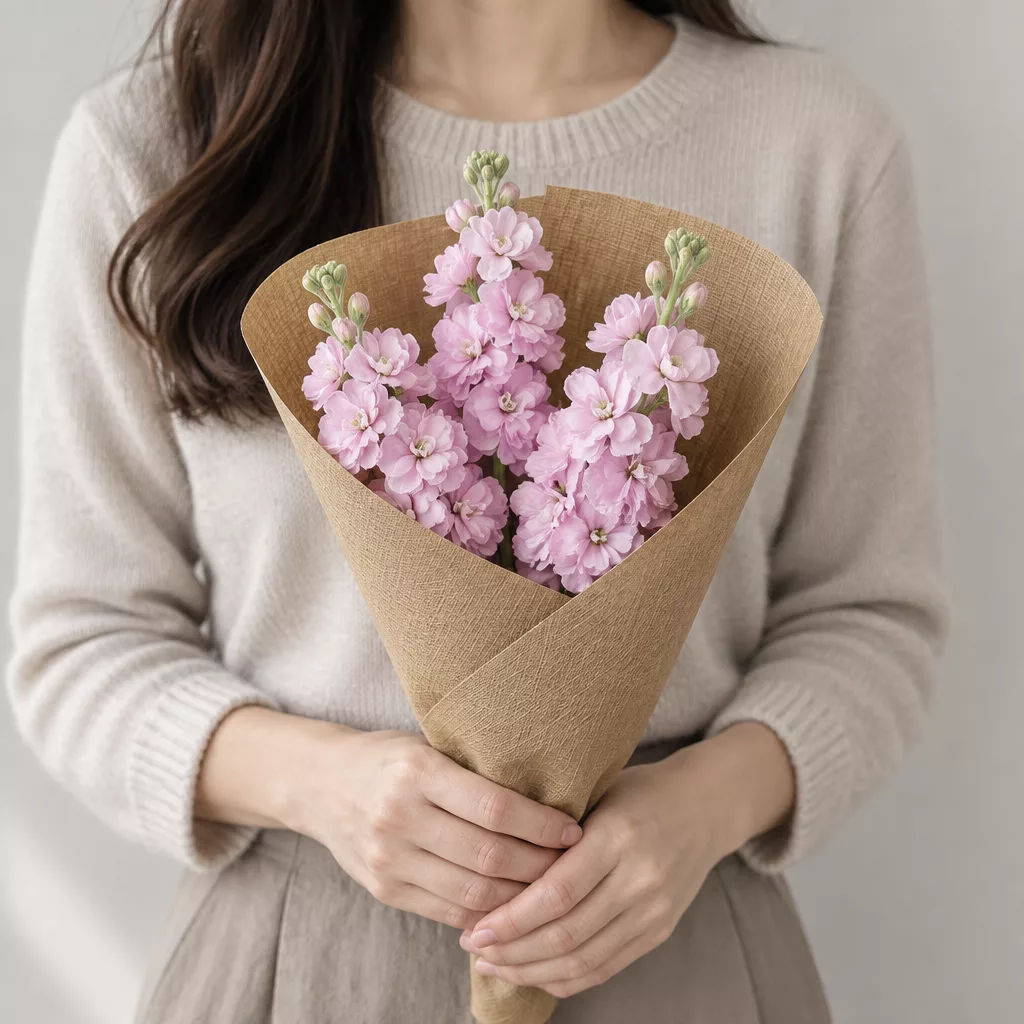
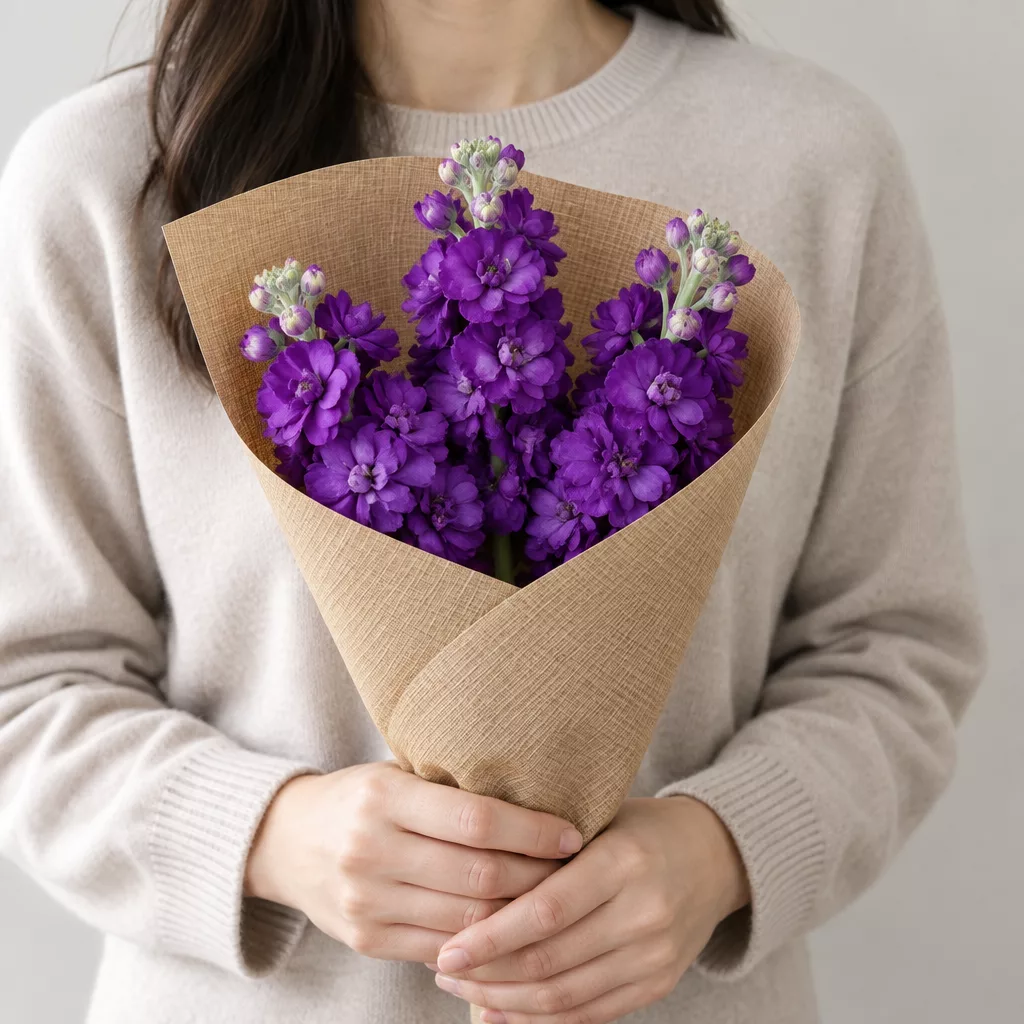
Presentation matters in Russian corporate culture. Flowers arriving wrapped in kraft paper with a ribbon feel like a gift; flowers arriving in a plastic sleeve feel like a grocery run. If your budget allows, ask about branded wrapping or a consistent ribbon colour that matches your company identity. It is a small detail that lands with real impact when the recipient photographs it for internal communications.
Timing the Order: Lead Times, Confirmations, and What Can Go Wrong
For a single delivery, twenty-four hours of notice is usually comfortable. For simultaneous deliveries to five or more cities, seventy-two hours is a more realistic minimum, and a week ahead is genuinely better. The extra time allows for stock confirmation across all locations, any custom wrapping or note preparation, and a dry run of the logistics sequence.
Place the order in one consolidated brief rather than separate requests. A single document listing every city, address, contact, delivery window, and arrangement specification is far easier to execute without error than a chain of messages. Include the occasion in the brief — florists make better decisions about stem maturity and presentation when they understand the context.
Confirm delivery windows in local time, not Moscow time. This is the single most common mistake in multi-city corporate orders. A client specifies eleven in the morning without clarifying the time zone, and the Yekaterinburg office receives flowers at nine in the morning local time before staff have arrived, or at one in the afternoon after the morning meeting has already ended.
Build in a confirmation step: ask for a message or photo from each location once the delivery is received. This takes thirty seconds per office and gives you immediate visibility if anything has gone wrong. If a delivery is delayed or an address is inaccessible, you want to know within the hour, not at the end of the day when the driver has long since moved on.
Vase Life and Care Instructions for Office Settings
Offices are not ideal environments for flowers. Air conditioning in summer and central heating in winter both dry the air significantly, shortening vase life. Flowers placed near a window in direct afternoon sun — a common choice because it looks good — will fade and wilt within two days instead of seven. A brief care card with each delivery makes a genuine difference.
The basics to communicate: change the water every two days, recut the stems at an angle each time, keep the arrangement away from direct heat sources and air conditioning vents, and remove any leaves that sit below the waterline to prevent bacterial growth. These four steps can double the vase life of most common office flowers.
Alstroemeria and chrysanthemums are the longest-lasting choices for office settings, regularly reaching ten to fourteen days with basic care. Roses in a well-maintained vase last five to eight days. Gerberas, despite their bold look, typically give you five to seven days and need their stems recut frequently because they are prone to air-lock.
If the office does not have a suitable vase, consider including one with the arrangement. A clean, wide-mouthed vase in a neutral colour works for any interior and removes the awkward moment where a receptionist is hunting through storage cupboards for something large enough to hold the bouquet. It also ensures the flowers are displayed at the right height and angle rather than jammed into a coffee mug.
The Human Detail That Makes a Corporate Delivery Feel Personal
Flowers sent to an office on behalf of a company carry a risk of feeling impersonal — a line item in a budget rather than a genuine gesture. The antidote is almost always in the small, human details rather than the scale of the arrangement.
A handwritten note, even a short one, changes everything. In Russian business culture, a personal address — using the recipient's first name and patronymic, which is the middle name derived from the father's first name — signals real respect and attention. If you are sending to senior colleagues or long-standing clients, ask your Russian-speaking team member to draft the note text. The difference between a printed card and a handwritten line in the right register is significant.
Think also about the moment of arrival. A delivery that comes during a team meeting or a busy morning rush gets set aside and half-forgotten. If you can find out when the office is typically quieter — late morning or just after lunch — and schedule the delivery for that window, the recipient has a moment to actually notice and appreciate what has arrived.
Finally, follow up. A message later in the day saying you hope the flowers arrived safely and that the team enjoyed them closes the loop and makes the gesture feel continuous rather than transactional. In Russian professional relationships, this kind of follow-through is noticed and remembered. It turns a flower delivery into the beginning of a conversation rather than the end of one.
Coordinating flowers across multiple Russian offices is genuinely manageable when you approach it as a logistics project with a human heart at the centre. Map your cities and time zones first, define the feeling before the flower list, choose stems that travel with dignity, and give your florist a single clear brief with enough lead time to execute it well. The offices that receive a thoughtful, well-timed arrangement on the same morning — regardless of whether they are in Saint Petersburg or Novosibirsk — will feel the intention behind it. That feeling is the whole point. We deliver bouquets across Russia in 1–2 hours.
Frequently asked questions
How far in advance should we place a multi-city corporate flower order?
For five or more simultaneous city deliveries, aim for at least seventy-two hours of notice, and a full week ahead is better. This allows time to confirm stock across all locations, prepare any custom notes or wrapping, and sequence the delivery timing correctly by local time zone. Last-minute large orders risk substitutions or missed windows.
Can all offices receive their flowers at exactly the same local time?
Yes, if the order brief specifies delivery windows in local time for each city rather than a single Moscow time. This is the most important detail to get right in multi-location orders. A consolidated brief listing each city with its local delivery window removes ambiguity and allows proper scheduling across time zones.
What flowers last longest in a typical Russian office environment?
Alstroemeria and chrysanthemums are the most reliable, regularly lasting ten to fourteen days with basic care. Standard and spray roses give five to eight days. Office heating and air conditioning shorten vase life considerably, so including a simple care card with each delivery — covering water changes, stem recutting, and placement away from vents — makes a real practical difference.
Should we use the same arrangement in every city or vary them?
Define a consistent colour palette and composition type rather than a fixed stem list. This allows each arrangement to be built from the freshest available stems in each location while still looking visually coherent across all offices. For key moments, specify one hero stem — such as white garden roses — that appears in every arrangement to anchor the look.
Is there anything specific to Russian workplace culture we should know before sending flowers to an office?
Russian professional culture values abundance and presentation — arrangements should look full and intentional, not minimal. Addressing any accompanying note with the recipient's first name and patronymic signals genuine respect. Scheduling delivery during a quieter part of the working day, rather than a busy morning rush, also ensures the gesture is properly noticed and appreciated.
Ready to send flowers?
Pick the city, choose the bouquet, and a local florist takes it from there.
Choose a city →