Flowers for a New Baby in Russia: Boy, Girl, or Surprise
A baby has just arrived, and you want to mark the moment with flowers — but you are not sure whether blue roses are expected, whether lilies are safe near a newborn, or whether the bouquet should go to the hospital or wait until the family is home. Russian new-baby flower customs are warmer and more specific than many visitors expect, and getting the details right turns a kind gesture into something the parents will genuinely remember.
What Russian Tradition Actually Expects from New-Baby Flowers
In Russia, flowers for a newborn are primarily a gift for the mother, not a decoration for the nursery. The gesture says: you went through something enormous, and we see you. Bouquets arrive alongside chocolates, soft toys, and sometimes a bottle of champagne for the father — flowers are the centrepiece of that welcome, not an afterthought.
The color language is softer than in many Western countries. Pastel tones — blush, ivory, pale lavender, mint — read as celebratory without being loud. Saturated reds and deep burgundies are quietly associated with romance rather than new life, so most experienced florists steer away from them for this occasion. Bright yellow and orange can work in small accents but rarely carry a full arrangement.
White flowers hold a special place. In some older Russian households, all-white bouquets carry a mournful association, so a purely white arrangement is worth softening with a blush or green accent. A white ranunculus paired with dusty miller and a single pale pink peony reads as joyful and modern rather than formal. Understanding this one nuance will save you from an awkward moment at the door.
Gift-wrapping matters enormously here. Kraft paper with a satin ribbon, or a soft fabric wrap in ivory or sage, signals that the bouquet was composed with care. Russians pay close attention to presentation, and a well-dressed arrangement communicates effort before a single stem is even seen.
Bouquets we can deliver



The Blue-and-Pink Question: Color Conventions for Boy or Girl
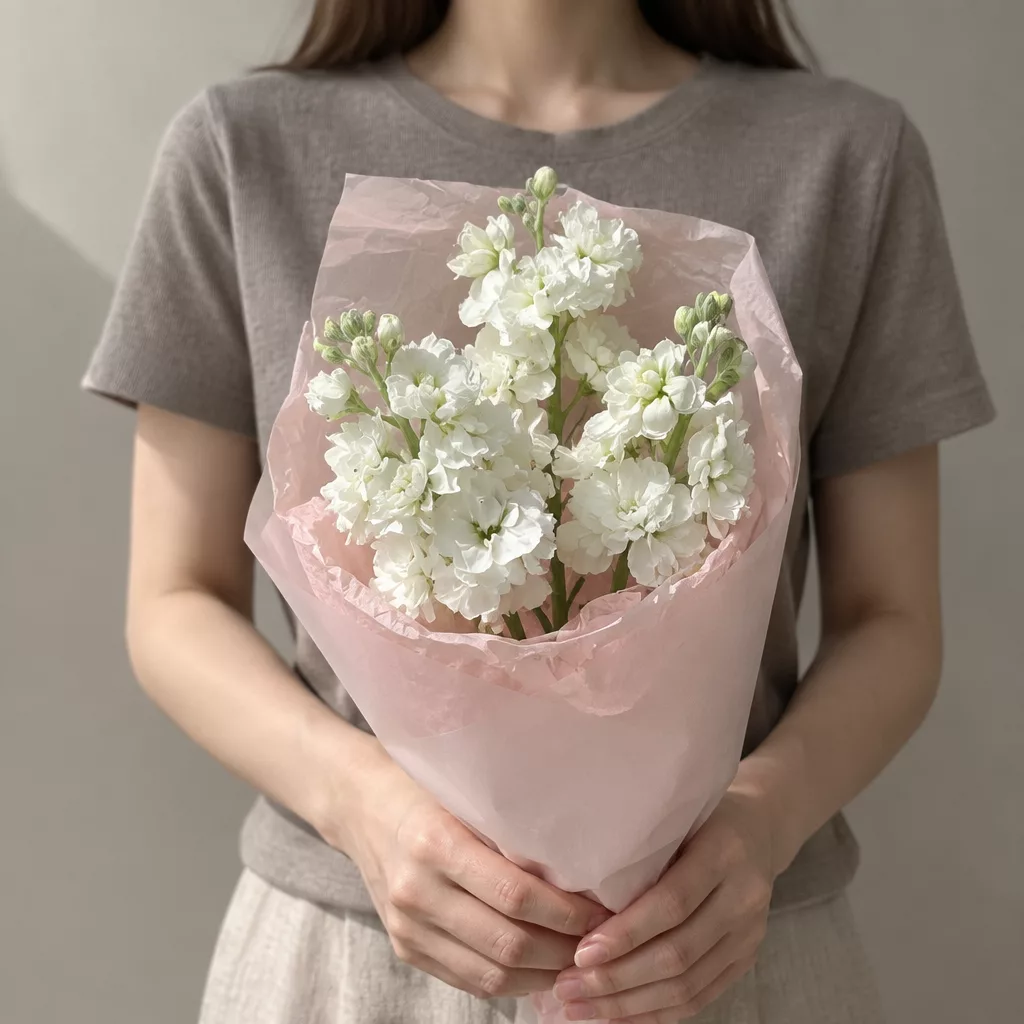
Yes, blue for a boy and pink for a girl exists as a convention in Russia, but florists apply it with a much lighter hand than you might imagine. A bouquet for a newborn boy does not need to be blue — it needs to feel fresh, gentle, and celebratory. Pale blue hydrangea, lavender lisianthus, or white matthiola with a blue ribbon already communicates the sentiment without turning the arrangement into a color chart.
For a girl, blush peonies, soft pink spray roses, pale pink tulips in spring, and ivory ranunculus are all reliable choices. A mix of two or three varieties in the same tonal family looks more considered than a single-color mass. Pink garden roses combined with white waxflower and a few stems of eucalyptus give depth and fragrance without overwhelming the palette.
When the gender is unknown — either because the parents chose not to find out or because you simply were not told — lean into neutrals with confidence. Ivory, pale peach, soft green, and white make a genuinely beautiful arrangement that carries no awkward assumptions. White lisianthus, peach ranunculus, and green trick dianthus together look intentional and elegant, not like a compromise.
One practical note: avoid flowers dyed artificially in vivid blue or vivid pink. These are sometimes offered as novelty items, but the dye can affect water quality and the flowers tend to have a shorter vase life. Natural color always photographs better and lasts longer, which the parents will appreciate days after the initial excitement has settled.
Which Flowers Are Safe to Send Around a Newborn
Fragrance is the first thing to consider. A newborn's environment should be as scent-neutral as possible — pediatricians in Russia routinely advise parents to avoid strong perfumes and heavily scented cleaning products in the first weeks. The same logic applies to flowers. Lilies, especially Oriental and Stargazer varieties, produce an intense fragrance that can be overwhelming in a closed room and also carry pollen that stains and irritates. They are best kept out of the delivery entirely.
Freesia has a lovely scent but it is potent enough to be problematic in a hospital ward or a small apartment with a sleeping infant. Hyacinth is similarly intense. Tuberose, while beautiful, is one of the strongest-scented flowers available and should be avoided entirely for this occasion.
The better choices are lightly scented or unscented. Ranunculus, lisianthus, spray roses, tulips, hydrangea, matthiola in small quantities, and waxflower all work well. Chrysanthemums and carnations are virtually scentless and have excellent vase life — a practical advantage when the parents are too exhausted to change water every day.
Allergen risk is a separate consideration. Flowers with exposed stamens and heavy pollen — sunflowers, open lilies, some daisy varieties — are worth avoiding on principle. If you are unsure, ask your florist to remove stamens before assembly. Turboflora does this as a standard step for newborn arrangements.
Keep the arrangement compact rather than dramatic. A large, sprawling bouquet is harder to place safely in a space that suddenly contains a bassinet, a changing table, and a very tired mother.
Choosing the Right Arrangement by Budget and Relationship
The relationship between the giver and the family shapes the appropriate scale of the arrangement. Close friends and immediate family typically bring something substantial — a composed bouquet of fifteen to twenty stems, possibly with a complementary plant like a small potted orchid or a succulent that will outlast the cut flowers. A colleague or acquaintance might send a smaller, equally thoughtful arrangement of seven to ten stems that does not overwhelm.
For a more modest budget, a monobouquet works beautifully for this occasion. Five to seven stems of the same variety — all blush peonies, or all white lisianthus — wrapped simply and tied with a ribbon looks deliberate and refined. It is far more impressive than a mixed bouquet where stems were chosen to fill a price point rather than to create a coherent image.
At a mid-range budget, combinations shine. Blush spray roses with white ranunculus and dusty miller leaves is a perennial favourite. Pale lavender lisianthus with white matthiola and soft green eucalyptus reads as sophisticated without being cold. For a boy, white hydrangea with pale blue delphiniums and white waxflower is fresh and modern.
At a higher budget, consider adding a preserved or dried element — a few stems of dried bunny tail grass or bleached ruscus give the arrangement texture and extend its decorative life well beyond the fresh flowers. Parents often keep a small portion of the arrangement as a keepsake from the first days, and something that dries gracefully adds lasting value to your gift.
Delivering to the Hospital: Timing and Russian Maternity Ward Rules
Russia has a specific system for maternity care that affects flower delivery directly. Mothers typically stay in the postnatal ward for three to five days after a standard birth, and the discharge day — called vypiski — is the most important moment in the entire celebration. This is when the father, grandparents, and close friends gather outside the maternity hospital to welcome the mother and baby home, and flowers are central to that scene.
Many Russian maternity hospitals do not allow visitors into the ward itself during the stay, which means flowers sent to the hospital before discharge often cannot be brought to the mother's room. Some hospitals accept deliveries at the reception desk and pass them along, but this varies by facility and is not guaranteed. The safest approach is to confirm the hospital's policy before placing an order.
Turboflora can coordinate timing so that a bouquet arrives at the hospital entrance precisely when the family is gathering for vypiski. This requires knowing the expected discharge time, which the father or a family member usually has by the morning of the day. A two-hour delivery window means you can place the order once you receive confirmation and the flowers will arrive fresh and on schedule.
If you cannot confirm the discharge time in advance, delivering to the home address on the same day is equally valid. The family will arrive to find flowers already waiting, which creates its own warm welcome. Keep the delivery note warm and specific — a generic message feels impersonal on a day this significant.
Home Delivery After Discharge: Making the Arrangement Last
Once the flowers are in the home, their vase life becomes a practical matter for people who are not sleeping much. The good news is that the varieties best suited to newborn environments also happen to be among the longest-lasting cut flowers available. Lisianthus holds for ten to fourteen days with basic care. Spray roses and carnations easily reach seven to ten days. Chrysanthemums can last two weeks or more. These are not coincidentally the same varieties that carry little fragrance — hardiness and discretion often go together.
The single most important instruction to pass along is water temperature. Fresh flowers in a warm apartment need cool water changed every two days. Room-temperature tap water left unchanged turns cloudy within three days and shortens vase life significantly. A clean vase, cool water, and stems cut at an angle before placing in water — this is the whole routine, and it takes two minutes.
Keep the arrangement away from direct sunlight and away from any heat source, including radiators. Russian apartments in autumn and winter are often very warm, and central heating accelerates wilting. A windowsill in winter is actually a good spot — cool glass, indirect light, away from the radiator below.
Avoid placing the bouquet near a fruit bowl. Ripening fruit releases ethylene gas, which accelerates petal drop in roses and tulips noticeably. This is a detail most people do not know, and sharing it in your delivery note or card adds a small, useful touch that the parents will appreciate once they are past the initial exhaustion.
Coordinating the Order When You Are Sending from Another City
Many people sending flowers for a new baby are not in Saint Petersburg — they are in Moscow, Novosibirsk, or abroad, relying on a delivery service to handle the logistics. The challenge is coordinating something time-sensitive and emotionally significant without being physically present. A few practical steps make this straightforward.
First, establish a contact in the city who can confirm the discharge time and address on the day. This is usually the father or a sibling. You need a current phone number and the correct full address including apartment number and entry code, because Russian residential buildings typically have coded entrance doors. A delivery that cannot enter the building is a frustrating outcome for everyone.
Place your order with enough lead time to allow for composition. A same-day order is possible and Turboflora handles them regularly, but if you know the approximate discharge date in advance, ordering the evening before gives the florist time to source the specific varieties you want rather than working from whatever is immediately available.
Include a personal message in Russian if you can, or ask for help translating one. A card in Russian from a sender abroad is a touching detail — it shows effort. If you are writing in English, that is also fine; the family will appreciate the warmth regardless of language.
Finally, request a delivery photo. Knowing that the flowers arrived, seeing the arrangement at the door, gives you the same moment of satisfaction that being there in person would have provided. It closes the loop on a gesture you planned carefully from a distance.
Flowers for a new baby are one of the most personal deliveries a florist makes. The mother has just done something extraordinary, the family is running on very little sleep, and a bouquet that arrives at the right moment — outside the hospital at discharge, or waiting at home when they walk through the door — becomes part of the memory of those first days. The choices that matter most are not complicated: gentle fragrance or none, soft colors chosen with intention, varieties that last without demanding attention, and timing coordinated so the flowers are there exactly when they should be. Get those things right, and the stems and ribbon will do the rest. We deliver bouquets across Russia in 1–2 hours.
Frequently asked questions
Can I send flowers directly to a Russian maternity hospital?
Many Russian maternity hospitals restrict ward access for visitors, so flowers sent to the hospital may be held at reception rather than reaching the mother's room. The most reliable approach is to time delivery for the discharge day, when the family gathers outside. Confirm the hospital's policy and the expected discharge time before placing your order.
Are there flowers I should never send for a newborn in Russia?
Avoid strongly scented flowers like Oriental lilies, hyacinth, freesia, and tuberose — their fragrance can be overwhelming for a newborn and in enclosed spaces. Flowers with heavy open pollen, such as sunflowers and fully open lilies, are also worth skipping. Stick to lisianthus, ranunculus, spray roses, hydrangea, or chrysanthemums for a safe, lasting arrangement.
What if I do not know whether the baby is a boy or a girl?
Neutral palettes work beautifully and require no apology. Ivory, pale peach, soft green, and white together look intentional rather than cautious. White lisianthus with peach ranunculus and eucalyptus is a specific combination that photographs well and suits any family. Avoid artificially dyed blue or pink flowers — natural color is always more elegant and lasts longer.
How long in advance should I order a newborn bouquet for delivery in Russia?
Same-day orders are handled regularly, but if you know the approximate discharge date, ordering the evening before gives more flexibility to source specific varieties. For delivery timed to the hospital discharge moment, you need the confirmed time by morning of that day. Providing a local contact number helps resolve any last-minute address or timing questions quickly.
What is the best way to make the flowers last when the parents are exhausted and busy?
Choose long-lasting varieties — lisianthus, spray roses, carnations, or chrysanthemums — that do not need daily attention. Cool water changed every two days, stems cut at an angle, no direct sunlight or heat sources nearby, and keeping the bouquet away from ripening fruit are the key steps. Include these tips on the card so the parents have them without needing to search.
Ready to send flowers?
Pick the city, choose the bouquet, and a local florist takes it from there.
Choose a city →