Sending Business Flowers in Russia? Here Is What Actually Signals Respect
A bouquet handed to the wrong person in the wrong colour can quietly undo an hour of careful negotiation. Russian business culture reads flowers with a literacy that surprises many foreign visitors — the number of stems, the palette, the wrapping, even the temperature at which they arrive all carry meaning. If you are preparing a corporate gift for a Russian partner, director, or senior colleague, the choices below will help you land exactly the message you intend: appreciation, respect, and serious professional standing.
Why Flowers Still Matter in Russian Professional Life
In many Western offices, flowers feel informal or even out of place in a business context. In Russia the opposite is true. Presenting a well-chosen bouquet to a director, a senior negotiating partner, or the head of a delegation is a recognised gesture of esteem, and its absence can register as indifference. This is not merely tradition for tradition's sake. Russian professional culture places high value on visible generosity and personal attention to detail. A beautifully composed arrangement tells the recipient that you researched their position, invested real thought, and understand the weight of the relationship.
The custom is especially alive in Saint Petersburg and Moscow, where business entertaining retains a ceremonial quality. Flowers are presented at the opening of meetings, at the close of successful negotiations, on professional anniversaries, and on national occasions such as the eighth of March or the New Year period. For a foreign company entering the Russian market, participating in this ritual correctly is a form of cultural fluency that earns genuine goodwill. Getting it wrong — yellow flowers to a romantic partner, an even number of stems, or cheap supermarket carnations in a boardroom — signals that you did not bother to learn. Getting it right signals that you did.
Bouquets we can deliver


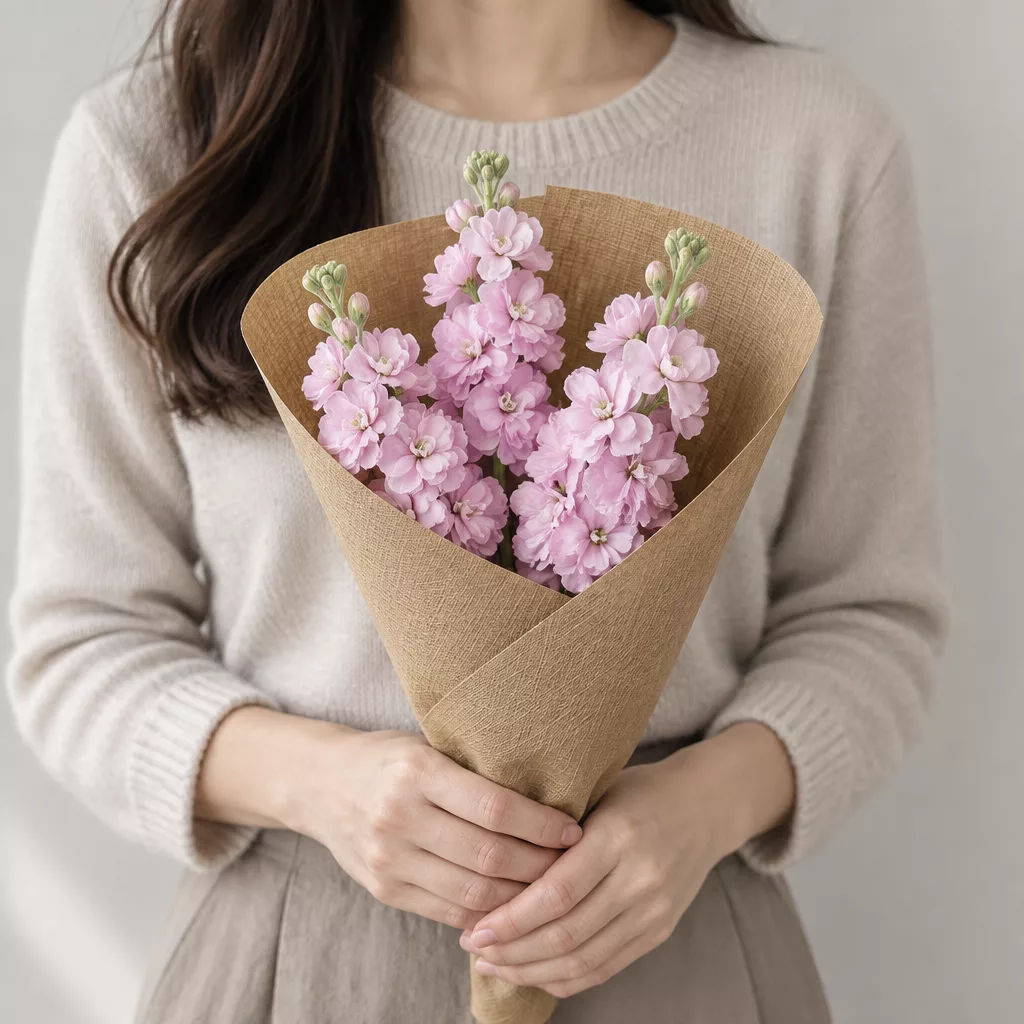
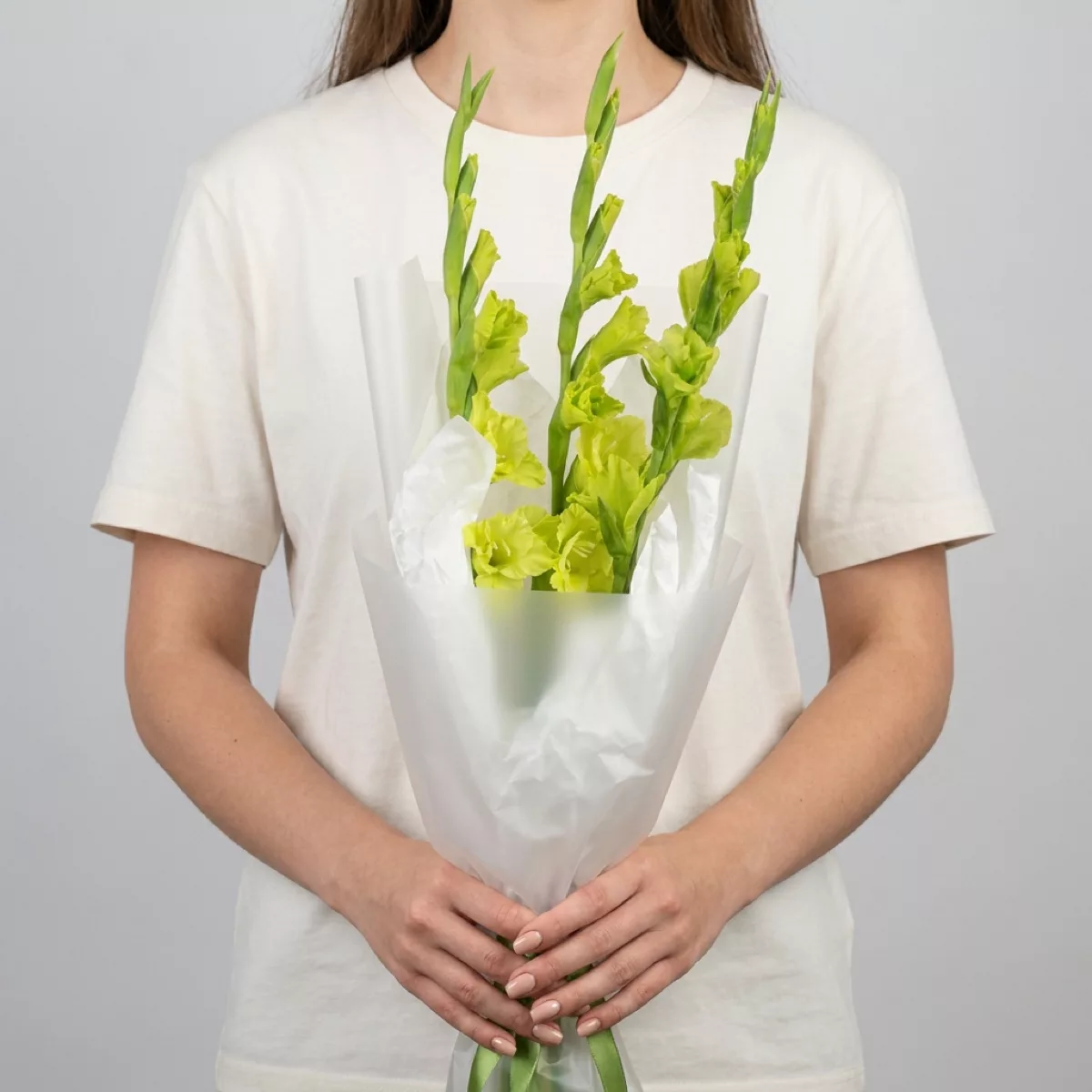
The Varieties That Carry Prestige in a Corporate Setting
Not every flower reads as professional. Daisies, sunflowers, and wildflower mixes feel cheerful and personal — they belong at a birthday lunch with a friend, not at a boardroom presentation. For business gifting, the varieties that consistently communicate gravitas are roses, orchids, calla lilies, and premium peonies when in season.
Large-headed garden roses — varieties such as David Austin or high-grade Ecuadorian roses with a head diameter above five centimetres — are the default prestige choice. Their scale and density of petals read as generous rather than token. A single-variety arrangement of twelve or fifteen of these roses, tightly bunched and wrapped in structured kraft or linen paper, is universally understood as a serious gift.
Phalaenopsis orchids in a pot are increasingly popular for long-term business relationships because they last four to eight weeks, sitting on the recipient's desk as a continuing reminder of the gesture. Cut orchid stems in a mixed arrangement, however, wilt faster than roses and are best avoided unless delivery is same-day and conditions are controlled.
Calla lilies project clean architectural elegance and work especially well for recipients in design, architecture, or finance — fields that prize precision. Peonies, available fresh from late May through July, carry a sense of abundance and are considered very auspicious. Outside their natural season, peonies are imported and expensive, which itself communicates investment.
Colour Choices That Communicate the Right Message
Colour is where foreign buyers make the most costly mistakes, and the rules in Russia differ meaningfully from those in Western Europe or North America. The single most important rule: never send yellow flowers in a romantic or deeply personal context, as yellow is culturally associated with separation and jealousy. In a purely corporate setting — a large mixed arrangement for an office reception, for instance — yellow can appear as part of a palette without causing offence, but as the dominant colour in a personal gift to an individual, it is a serious misstep.
White is the colour of elegance and sincerity in Russian business culture. White roses or white calla lilies in a business bouquet communicate respect without any romantic overtone, making them ideal when the recipient is a senior executive of any gender. Ivory and cream tones carry the same reading and pair beautifully with deep green foliage for a composed, expensive-looking result.
Deep red roses remain the most powerful prestige signal, but they carry romantic weight and should generally be reserved for situations where you know the recipient well or the relationship explicitly calls for warmth alongside respect. For a first meeting or a formal presentation, burgundy — a shade darker than classic red — threads the needle perfectly: it reads as rich and intentional without crossing into romantic territory.
Soft blush and dusty rose tones are becoming increasingly accepted in corporate contexts, particularly in creative industries and for female recipients. They feel refined without being cold. Avoid bright fuchsia, orange, or mixed rainbow palettes for business gifting — they read as casual.
The Number of Stems and What It Means
This is the rule that surprises foreign buyers most consistently. In Russia, an even number of flowers is associated with mourning and is brought to funerals. An odd number is for the living — for celebration, gratitude, and joy. This is not a minor or fading convention; it is observed across generations and regions. Sending a bouquet of ten roses to a Russian business partner will, at best, create a moment of awkwardness and, at worst, cause genuine offence.
The correct approach is straightforward: always choose an odd number. Eleven, fifteen, nineteen, or twenty-five stems are all excellent choices for a business context. Avoid nine, which in some interpretations carries a specific funerary association. Eleven is a clean, generous-feeling number that works for most professional occasions. Fifteen and above signal significant investment and are appropriate for senior executives, major deal closings, or formal delegations.
For potted orchids or arrangements in a vase, the stem-count rule is less rigidly applied because the presentation reads as a plant rather than a cut bouquet. Still, if you are composing a mixed arrangement with an odd number of feature blooms as the focal point, you are on safe ground.
Florists who work regularly with corporate clients in Saint Petersburg will know this rule automatically and apply it without being asked. If you are ordering remotely or through an unfamiliar supplier, it is worth confirming explicitly that the final count will be odd. A brief note in your order instructions removes any ambiguity.
Presentation, Wrapping, and the Detail That Sets You Apart
The wrapping of a business bouquet is nearly as important as the flowers inside it. A loosely assembled bunch in cellophane wrap reads as a last-minute purchase. Structured packaging in matte kraft paper, linen ribbon, or a minimal branded box reads as considered and premium. For the highest-prestige occasions — a signing ceremony, a formal welcome for a visiting delegation — a hatbox or rigid floral box in a neutral tone elevates the presentation to a gift-level experience.
Include a handwritten card rather than a printed label whenever possible. In Russian business culture, the handwritten note signals personal involvement. Even a short phrase — a congratulation, an expression of gratitude for the partnership — carries more weight when it is clearly written by a person rather than generated by an order system. If you are writing in Russian, keep the language formal: use the full name and patronymic of the recipient on the envelope.
Temperature matters more than most people expect. Flowers that have been left in a warm car or a heated lobby for an hour before presentation will already be showing stress — slightly limp petals, accelerated opening. Quality delivery services transport arrangements in temperature-controlled conditions and time the arrival so the bouquet is at its peak when it reaches the recipient's hands. A wilting arrangement at a business meeting sends a message you do not want to send.
Finally, consider scale relative to the occasion. A modest seven-stem arrangement is appropriate for a working colleague. A major negotiating partner or company president warrants something architecturally impressive — tall, structured, and visually commanding when placed on a desk or conference table.
Timing Your Delivery for Maximum Impact
Timing a flower delivery in a business context requires more thought than a personal gift. Arriving at the start of a meeting is ideal: the bouquet is present throughout the conversation, it softens the atmosphere, and it gives the recipient a natural moment to acknowledge the gesture before business begins. Arriving after the meeting has concluded loses most of this effect.
For formal occasions — a company anniversary, the opening of a new office, the conclusion of a major contract — morning delivery to the office is the standard approach. This ensures the arrangement is fresh and in place before guests or colleagues arrive. For a dinner or evening event, delivery in the late afternoon, between four and six, gives the recipient time to place the flowers before the event begins without the arrangement sitting in an office overnight.
In Saint Petersburg, same-day delivery within one to two hours is practical and removes the logistical anxiety of pre-scheduling. However, if you are sending from abroad or coordinating across time zones, placing the order the evening before with a scheduled morning delivery window gives you a reliable buffer. Confirm the recipient's office address carefully — many Saint Petersburg business addresses include building numbers, entrance numbers, and floor details that are essential for smooth delivery.
Avoid delivering on Russian public holidays when offices are closed. The major holiday blocks to be aware of are the New Year period from the first to the eighth of January, the eighth of March, and the ninth of May. Sending flowers on these dates is entirely appropriate — but send them to a home address or arrange delivery the working day before the holiday begins.
Vase Life and Care Instructions for the Recipient
A business flower gift that wilts within two days reflects poorly on the sender even after the gesture has been made. Choosing varieties with strong vase life is part of getting the gift right. Premium Ecuadorian roses, kept in clean water at room temperature away from direct sunlight and radiators, will hold beautifully for seven to ten days. Calla lilies last five to seven days in a tall vase with a small amount of water — they do not need to be submerged deeply. Phalaenopsis orchid plants, as noted earlier, can bloom for four to eight weeks with minimal care.
If your bouquet includes mixed varieties, the vase life of the shortest-lived flower sets the practical limit for the whole arrangement. Gypsophila and eucalyptus, commonly used as filler, last well. Tulips and ranunculus are beautiful but shorter-lived — around four to five days — and are better choices for personal or seasonal gifts than for formal business presentations where longevity signals quality.
A good florist will include basic care instructions with any business delivery: trim stems at an angle, change the water every two days, keep away from fruit bowls (ethylene from ripening fruit accelerates petal drop). These are small details, but including them shows professionalism and extends the life of the gift.
For recipients who are travelling or who have a busy schedule, a potted arrangement is more forgiving than cut flowers. A well-chosen potted orchid or a compact succulent arrangement in a ceramic pot requires watering once a week and will outlast any cut flower by weeks or months — a quiet, lasting reminder of your company's attention to the relationship.
Russian business culture rewards the kind of attention to detail that a well-chosen bouquet demonstrates. The variety, the colour, the number of stems, the wrapping, and the timing all contribute to a single impression: that you took the relationship seriously enough to learn its language. For a foreign company building partnerships in Russia, this is not a small thing. Flowers are one of the fastest ways to communicate respect in a form that every person in the room will understand without a word of translation. When the choices are right, the gesture lands exactly as intended — and that is worth every minute of preparation. We deliver bouquets across Russia in 1–2 hours.
Frequently asked questions
Is it appropriate for a foreign company to send flowers to a Russian business partner?
Absolutely. Presenting flowers to a senior Russian partner or director is a well-established sign of respect and is generally welcomed. The key is choosing the right variety, colour, and number of stems. A foreign company that follows these conventions signals cultural awareness, which itself builds trust and goodwill in a professional relationship.
Can flowers be sent to a male executive in a Russian business context?
Yes, and this surprises many Western visitors. In Russia it is entirely normal to present flowers to a male director or senior colleague on a significant professional occasion. White roses, calla lilies, or a structured arrangement in deep tones are appropriate choices. The gesture reads as respectful rather than personal, provided the composition and presentation are formal.
What is the safest colour palette for a business bouquet when you are unsure of the recipient's preferences?
White and ivory are the safest and most universally respected choices for a Russian business bouquet. They communicate sincerity and elegance without any romantic or cultural ambiguity. A monochrome arrangement of white roses or white calla lilies with deep green foliage looks premium, works for any gender, and carries no unintended cultural message.
How far in advance should a business flower delivery be ordered?
For same-day delivery in Saint Petersburg, ordering two to three hours ahead is usually sufficient. For a timed delivery at the start of a specific meeting or event, placing the order the evening before gives you more control. If you are coordinating from abroad across time zones, next-day scheduling with a confirmed morning delivery window is the most reliable approach.
Are there occasions in the Russian business calendar when sending flowers is especially expected?
The eighth of March — International Women's Day — is the single most important date for flower gifting in Russian professional life. Female colleagues and partners almost universally receive flowers on this day. The New Year period and company anniversaries are also common occasions. Ignoring the eighth of March entirely in an office with female colleagues or partners can register as an oversight.
Ready to send flowers?
Pick the city, choose the bouquet, and a local florist takes it from there.
Choose a city →