Sending Birthday Flowers to a Child in Russia: What to Choose by Age
A birthday bouquet for a child is not a smaller version of an adult arrangement. It is something the child will actually look at, touch, and remember. In Russia, flowers at a child's birthday are a genuine tradition — brought by guests, sent by grandparents from another city, or ordered by parents to arrive before the party starts. Getting it right means thinking first about the child: their age, their sense of wonder, and what will make them feel celebrated rather than handed something meant for a grown-up.
Why Age Matters More Than You Think When Choosing Children's Flowers
A five-year-old and a fifteen-year-old are both children by some definitions, but they experience a bouquet in completely different ways. The younger child responds to colour, shape, and softness. The older one is already forming aesthetic opinions and may feel patronised by something too playful. Matching the arrangement to the child's age is not overthinking — it is the difference between a gift that lands and one that gets quietly set aside.
In Russian birthday culture, flowers are expected to arrive fresh and full. A wilting bouquet, even a small one, reads as an afterthought. This is why timing matters as much as selection. If the party starts at noon, the flowers should arrive by eleven, not because of any rule but because a child notices when something arrives after the celebration has already begun.
Another thing worth knowing: Russian tradition holds that bouquets given as gifts should have an odd number of stems. Even numbers are associated with mourning. For children's bouquets this is rarely a strict concern, but if you are choosing between seven and eight sunflowers, choose seven. It is a small detail that parents and grandparents will notice and appreciate.
Finally, think about who will actually be holding the flowers. A very young child cannot manage a large, heavy arrangement. A bouquet that is too big becomes a prop for a photo rather than a gift the child can carry. Proportion to the recipient is the first rule of children's floristry.
Bouquets we can deliver


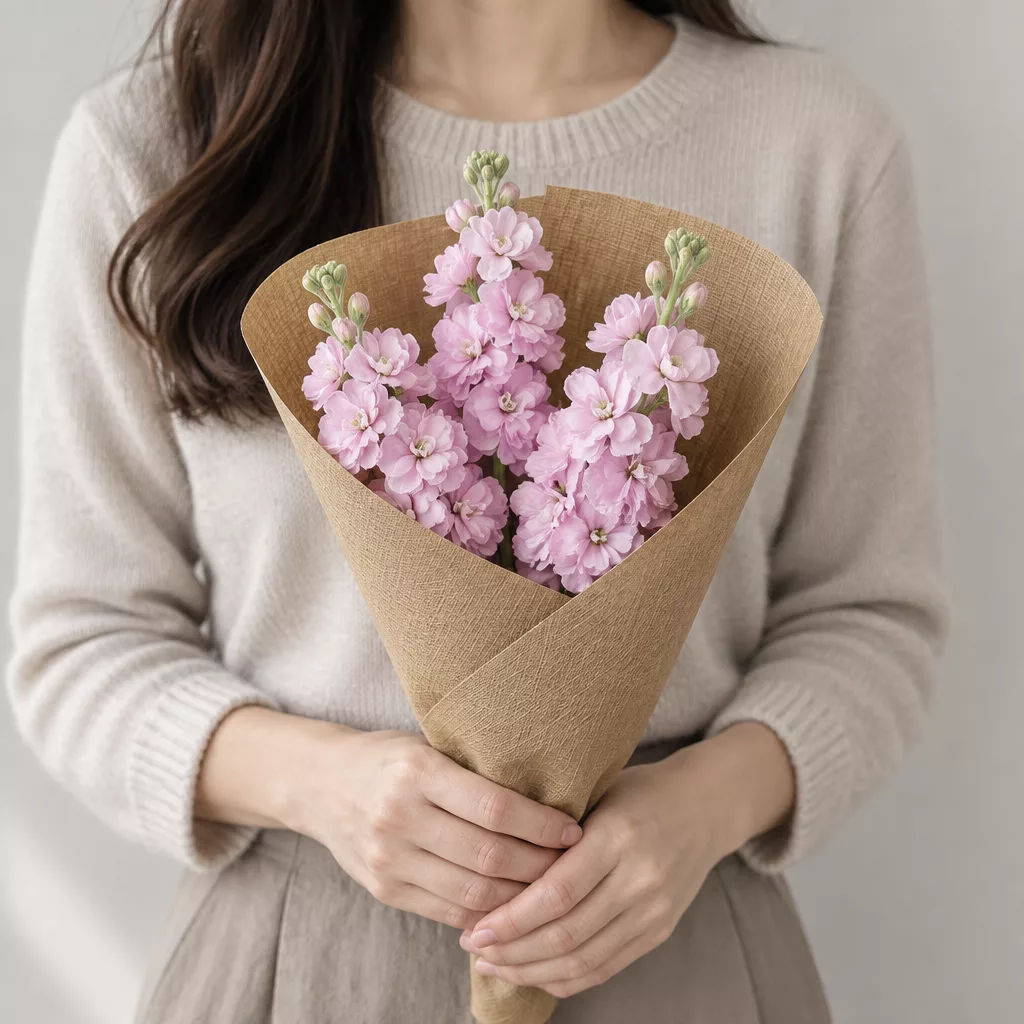
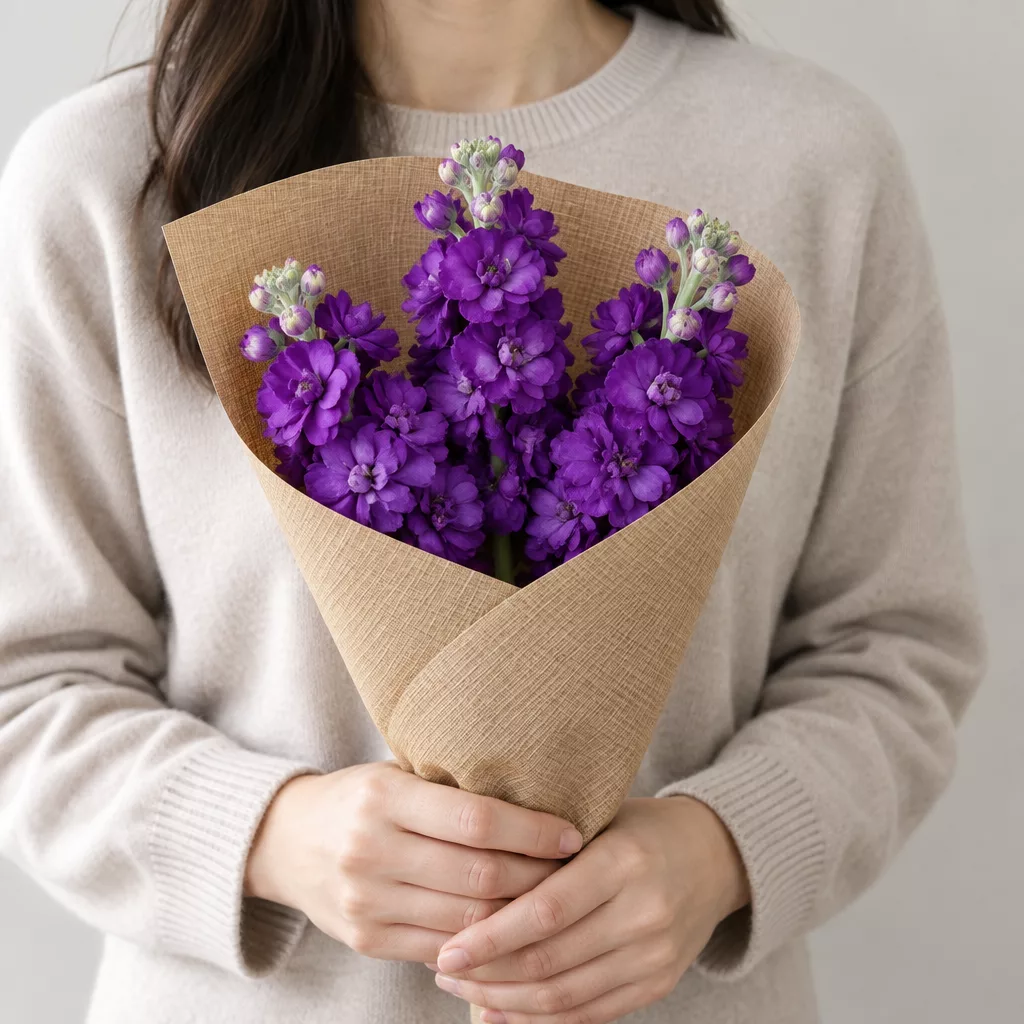
Toddlers and Preschoolers Turning 1 to 4: Bright, Simple, and Touchable
For the very youngest birthdays, the bouquet is really for the room and the parents' camera, but that does not mean it should be generic. Children at this age are drawn to strong, saturated colours — sunflowers, gerberas, and large ranunculus in red, orange, and yellow hold their attention in a way that pale roses simply do not. A small bunch of five to seven gerberas in mixed warm tones, wrapped in kraft paper with a wide ribbon, is exactly the right scale and spirit.
Avoid anything with thorns at this age. Roses are beautiful but require stem trimming before they go anywhere near a toddler. If roses are the right choice for the family's taste, ask for them to be fully dethorned and wrapped so the stems are not exposed. Lilies are another flower to approach carefully — some varieties have pollen that stains clothing and can irritate small children's skin. Asiatic lilies are lower-risk than Oriental varieties, but it is worth mentioning the recipient's age when you place an order so the florist can make appropriate choices.
Compositions with sunflowers and decorative kale, or gerberas paired with waxflower, work well at this age because the textures are interesting without being fragile. Keep the arrangement compact — no taller than the child's torso. A bouquet that towers over a three-year-old is impressive in a photograph but awkward in real life. Bright cellophane or a coloured wrap adds to the festive feeling that this age group responds to most.
Starting School: Flowers for Children Turning 5 to 7
At five, six, and seven, children begin to have opinions. They might have a favourite colour, a favourite cartoon character, or a strong preference for anything pink. This is the age to start asking parents for a small piece of information before ordering — even knowing that the child loves purple or is obsessed with butterflies gives you something to work with.
Bouquets for this age group can be slightly larger than for toddlers, but the character should still feel playful rather than formal. Spray roses in lilac or coral, mixed with chamomile-type flowers like matricaria or white santini chrysanthemums, create a soft and charming composition that feels child-appropriate without being babyish. Adding a few stems of decorative grass or eucalyptus gives the arrangement movement, which children at this age find genuinely exciting.
In Russia, children entering first grade at age six or seven receive flowers on the first day of school — 1 September — and this tradition shapes how parents think about flowers for children generally. A bouquet that looks like a school-day gift, with gladioli or formal lilies, will feel out of place at a birthday. Keep the mood festive and personal rather than ceremonial.
For boys at this age, blue delphiniums, white lisianthus, and touches of yellow create a composition that feels celebratory without defaulting to the pink palette that many arrangements for girls assume. Boys deserve a thoughtful bouquet too, and a confident colour choice makes all the difference. Wrap in a bold, solid-colour paper rather than floral print for a cleaner look.
The Middle Years: Getting Flowers Right for Ages 8 to 11
Children between eight and eleven are at an interesting stage — they are past the purely sensory response to bright colours but not yet into the self-conscious territory of early adolescence. They can appreciate a beautiful arrangement for what it is, and they often remember specific flowers from a birthday for years. This is the age where a slightly more composed bouquet starts to feel appropriate.
Mixed bouquets with a clear focal flower work well here. A central cluster of garden roses — varieties like spray roses or David Austin-style blooms — surrounded by lisianthus, veronica, and soft foliage creates something that looks thoughtful and special without being adult or stiff. Colours can be more nuanced at this age: dusty pink, lavender, peach, and cream combinations are appreciated by children who have started to develop a sense of style.
For boys in this age range, consider arrangements built around sunflowers or large-headed chrysanthemums in warm amber and rust tones. These feel bold and generous rather than decorative, which suits the way many boys at this age relate to gifts. A round, compact shape wrapped in dark green or navy paper reads as confident and considered.
One practical note: children this age are often at school when deliveries arrive, so the flowers need to last well into the afternoon or evening. Request blooms that have been properly hydrated and conditioned before dispatch. Flowers that have spent several hours in a warm delivery vehicle without preparation will show it by party time. Ordering from a florist who prepares stems correctly before sending is not a luxury — it is the difference between a beautiful gift and a disappointing one.
Early Teens: Flowers for 12 to 14 Year Olds That Do Not Feel Childish
Twelve, thirteen, and fourteen are the years when children become acutely aware of how things look to their peers. A bouquet that reads as too young — big gerberas, primary colours, oversized ribbon bows — will be appreciated privately but may cause a flicker of embarrassment if friends are around. This does not mean the flowers need to be austere. It means they need to feel considered and age-appropriate.
For girls at this age, a monochromatic bouquet in a single colour family is a strong choice. All-white lisianthus and white spray roses with silver brunia berries and eucalyptus looks genuinely sophisticated. An all-pink arrangement using different shades — blush, hot pink, and dusty rose — has energy and personality without being juvenile. The key is to use fewer colours with more intention rather than mixing everything together.
For boys, this is the age where a small, well-chosen arrangement of seasonal flowers — tulips in spring, sunflowers in summer, chrysanthemums in autumn — wrapped simply and cleanly, will be received far better than something elaborate. Boys at this age often feel uncomfortable with flowers as a gift category, and a straightforward, unfussy bouquet removes that discomfort entirely.
Avoid very large arrangements for this age group. A compact bouquet of fifteen to seventeen stems that a teenager can carry in one hand is more appropriate than an enormous display that requires two hands and a vase immediately. The goal is a gift they feel good holding, not a centrepiece they have to manage.
Older Teens Turning 15 to 17: When Flowers Become a Real Gift
By fifteen, sixteen, and seventeen, young people are forming genuine aesthetic preferences, often influenced by social media, fashion, and the world around them. A birthday bouquet for an older teenager can be as considered and beautiful as one for an adult — and in many cases, that is exactly what they want. The key shift at this age is moving away from anything that signals childhood and toward flowers that feel personal and stylish.
For older teenage girls, garden-style arrangements with a loose, organic structure are particularly popular. Peonies in season, ranunculus, anemones, and sweet peas create a romantic, abundant look that photographs beautifully and feels genuinely special. If peonies are out of season, garden roses with similar full-petalled shapes make an excellent substitute. Wrap in soft tissue paper rather than cellophane for a more grown-up presentation.
For older teenage boys, a small, architectural arrangement — perhaps three or five stems of a single dramatic flower like an anthurium, a large protea, or bold sunflowers — can work well if you know the recipient has an artistic or design-oriented sensibility. For boys who are less interested in flowers as a category, a plant in a nice pot is often better received than a cut bouquet, though that is a separate conversation.
Colour palettes for this age can follow the same logic as adult floristry: think about what the person wears, what their room looks like, what they respond to visually. Burgundy, terracotta, and deep plum tones feel current and sophisticated. Pale lavender and white feel clean and elegant. Neon or very saturated colours work if that is genuinely the person's style, but should not be the default assumption for a teenager.
Keeping Birthday Flowers Fresh: Care Tips That Actually Work
A child's birthday bouquet often sits in a warm room, near a sunny window, surrounded by the heat of a party. Without proper care, even the freshest flowers will begin to decline within hours. Giving the family a few simple instructions when the flowers arrive makes a genuine difference to how long the bouquet lasts.
The first step is cutting the stems at an angle under running water before placing them in a clean vase. This is not decorative advice — it opens the stem's water-absorbing surface and prevents air pockets from blocking hydration. Use lukewarm water rather than cold, which can shock flowers that have been in a warm environment. Change the water every day, or every other day at minimum.
Keep the vase away from direct sunlight, radiators, and fruit bowls. Ripening fruit releases ethylene gas, which accelerates flower ageing — a detail that surprises most people but makes a measurable difference. In a warm party room, move the flowers to a cooler spot overnight to extend their life.
Different flowers have different vase lives. Gerberas and sunflowers typically last five to seven days with good care. Roses and lisianthus can reach ten days if the water is changed regularly and the stems are re-cut every two or three days. Spray chrysanthemums are among the longest-lasting cut flowers, often holding for two weeks. If the birthday bouquet contains a mix, the shorter-lived flowers will fade first — remove them promptly so they do not affect the rest of the arrangement.
For very young children, place the vase somewhere out of reach. A beautiful bouquet is not worth a spill or a broken vase during a birthday party.
Choosing flowers for a child's birthday in Russia is one of the more personal decisions in floristry — because the recipient is someone who will genuinely notice, remember, and feel something about what they receive. Whether you are sending a small bunch of bright gerberas to a five-year-old across the city or a sophisticated garden-style bouquet to a sixteen-year-old who loves beautiful things, the principle is the same: think about the child first, then choose flowers that match who they are right now. Turboflora delivers fresh, properly prepared bouquets across Russia within one to two hours, so the flowers arrive in time for the party, not after it. We deliver bouquets across Russia in 1–2 hours.
Frequently asked questions
Is it appropriate to give flowers to a young boy at his birthday in Russia?
Yes, absolutely. In Russia it is common to give flowers to boys as well as girls at birthdays. The key is choosing colours and a style that feel bold rather than delicate — sunflowers, large chrysanthemums, or a confident monochromatic arrangement work well. Avoid anything too ornate or pastel, and keep the presentation clean and simple.
How many flowers should a child's birthday bouquet contain?
Russian tradition favours an odd number of stems for celebratory bouquets. For younger children, five to seven stems is a practical and proportionate amount — easy to hold and not overwhelming. For older children and teenagers, nine to seventeen stems is appropriate. The focus should be on quality and freshness rather than sheer quantity.
Which flowers should I avoid for a very young child's birthday?
Avoid roses with thorns unless they are fully dethorned before wrapping. Be cautious with Oriental lilies, as their pollen can stain clothing and irritate skin. Very fragrant flowers like tuberose or gardenia can be overwhelming in an enclosed room. Stick to robust, low-pollen, and unscented or lightly scented varieties for children under five.
Can I order a birthday bouquet for a child in another Russian city for same-day delivery?
Turboflora delivers fresh flowers across Russia within one to two hours of ordering. You can place an order online and specify a delivery time that works around the party schedule. It is worth ordering at least two to three hours before the event begins to ensure the flowers arrive looking their best and before the celebration starts.
What is the best way to make a child's birthday bouquet last through the party and beyond?
Place the bouquet in a clean vase with fresh lukewarm water as soon as it arrives, cutting stems at an angle first. Keep it away from direct sun, radiators, and fruit. Change the water daily. Move the vase to a cooler room overnight. Most well-conditioned bouquets will last five to ten days with this basic care routine.
Ready to send flowers?
Pick the city, choose the bouquet, and a local florist takes it from there.
Choose a city →