Congratulating a Russian Woman on Her Promotion: Flowers That Feel Right
She has worked hard, navigated real pressure, and earned something she deserved. The flowers you send in the next few hours will either land with the weight that moment calls for — or they will feel like an afterthought. Choosing well is not complicated, but it does require thinking about her role, her workplace, and what the bouquet will say when it arrives at her office or front door.
Why the Professional Context Changes Everything
In Russia, flowers are given far more freely in professional settings than in many Western countries. It is entirely normal for colleagues, managers, and clients to send bouquets to mark a promotion, a successful project, or a significant work anniversary. This means the gesture itself carries no awkward subtext — it is expected and appreciated. What matters is tone.
A bouquet sent to an office is read differently from one sent to a home. At work, the arrangement will be seen by colleagues, placed on a desk or reception table, and quietly assessed. Something overly romantic — deep red roses in a tight, close-cut style, for instance — can create the kind of attention she may not want in a professional environment. Something too casual, like a loose handful of garden flowers, can undercut the seriousness of the achievement.
The sweet spot is a bouquet that communicates genuine respect and warmth without veering into either territory. Think structured but not stiff, celebratory but not frivolous. Colours that read as confident — ivory, white, soft coral, warm peach, or a clear and saturated purple — work well in this context. The arrangement should look considered, not assembled in a hurry. When the delivery arrives at her workplace, it should make her feel seen for the right reasons: her competence, her persistence, and her success.
Bouquets we can deliver

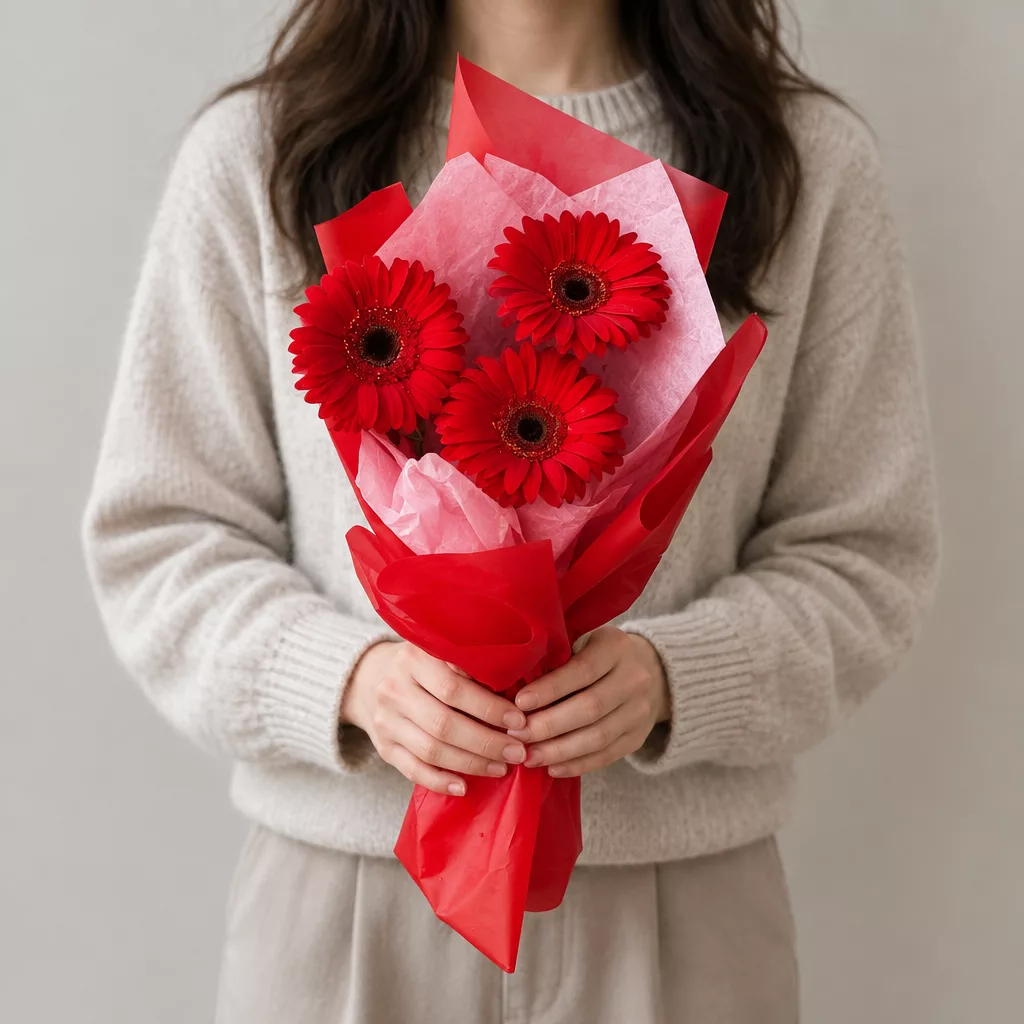
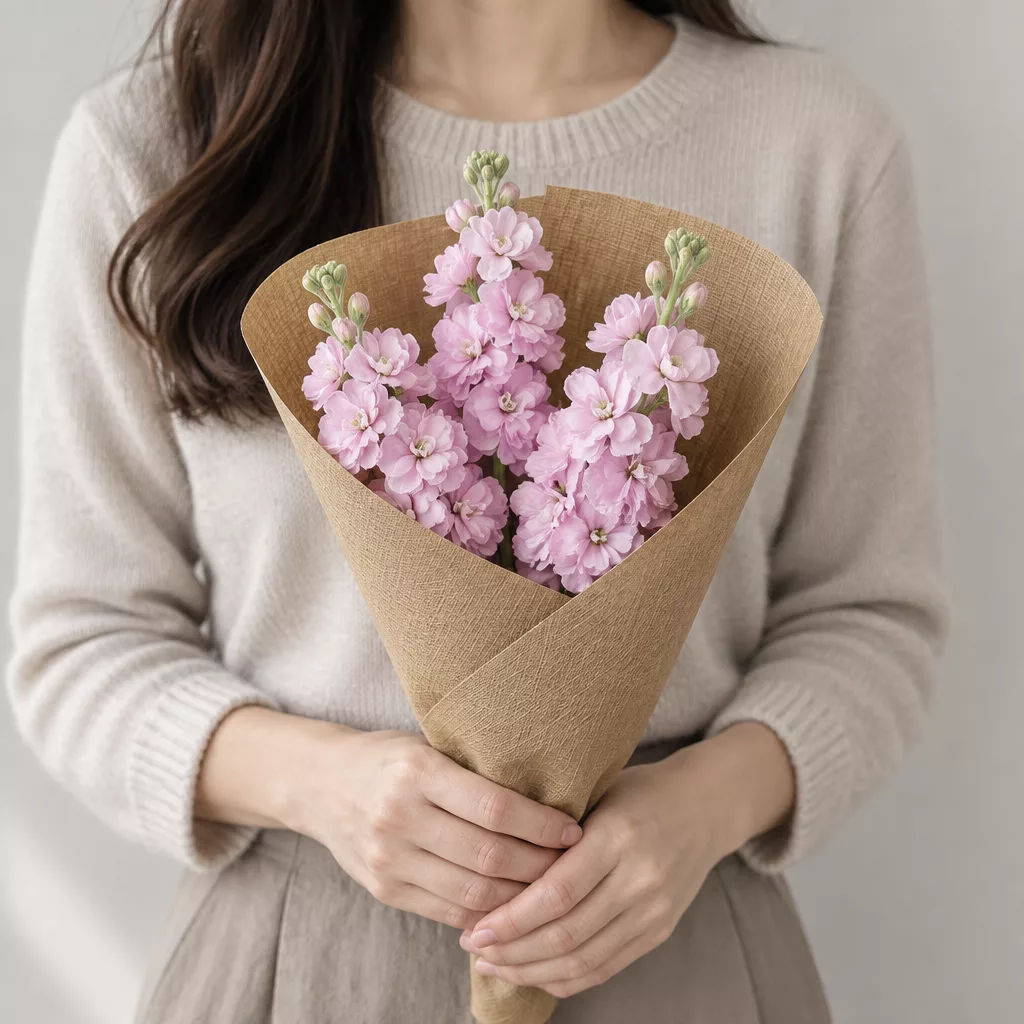
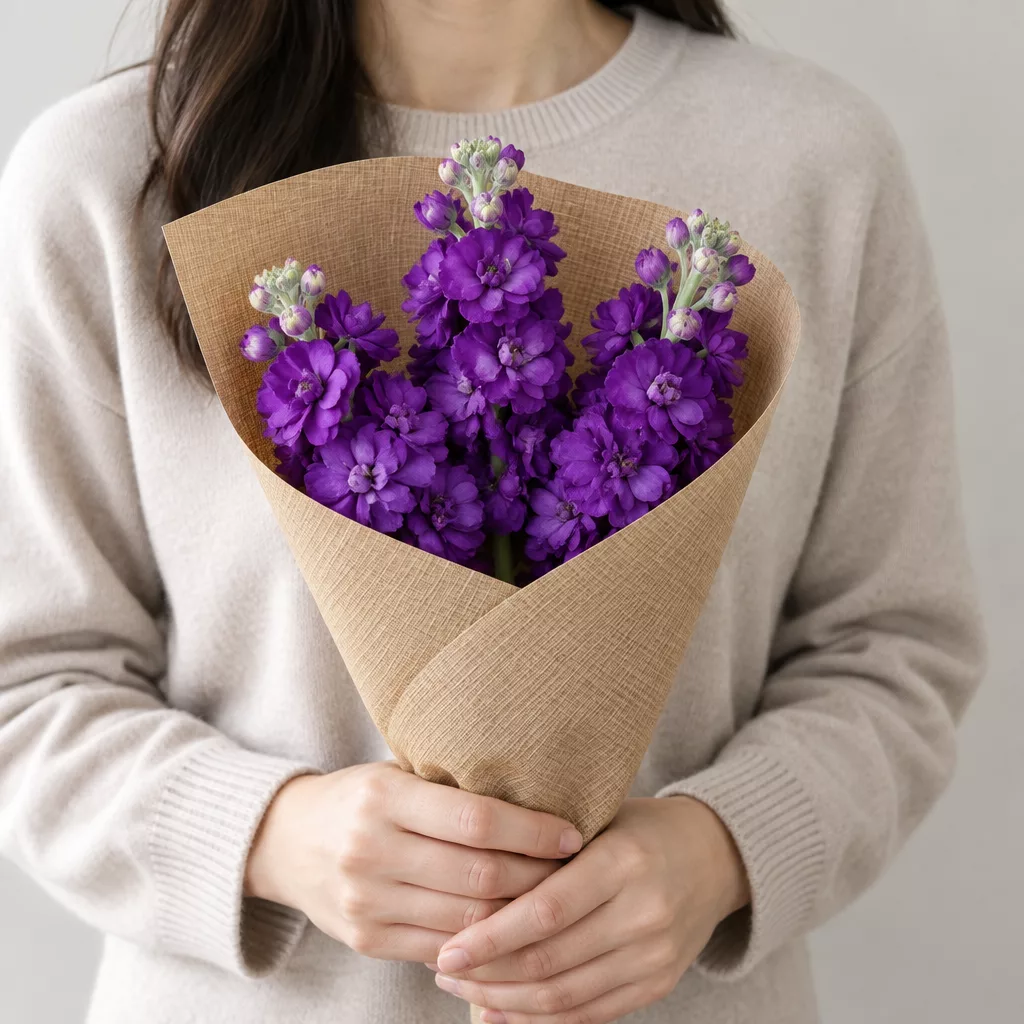
Reading Her Personality Before You Order
Before settling on varieties and colours, spend a moment thinking about who she actually is. A woman who runs a creative department and fills her Instagram with bold interiors will respond very differently to a bouquet than a lawyer who prefers clean lines and understatement. Flowers are not one-size-fits-all, and a florist who pretends otherwise is not being honest with you.
For someone with a classic, polished aesthetic, white or cream peonies combined with eucalyptus or dusty miller give a bouquet that looks expensive and intentional without being loud. For someone expressive and confident, a mix of deep violet lisianthus, coral spray roses, and burgundy hypericum berries reads as bold and distinctive. For someone who tends toward simplicity, a single-variety bouquet of long-stemmed white tulips or garden roses — presented in a clean wrap — can feel more personal than a complex arrangement.
If you are not certain of her taste, a safe direction is to anchor the bouquet in one neutral or white bloom and add one or two accent colours that feel celebratory rather than romantic. Peach ranunculus alongside white freesia, for example, gives warmth and festivity without any of the overtones that red roses would carry. When in doubt, ask the florist to build toward elegance rather than drama. The goal is a bouquet she will be proud to have sitting on her desk for the rest of the working week.
Varieties That Communicate Congratulations Clearly
Certain flowers carry associations in Russian culture that make them particularly well-suited to professional occasions. Peonies are universally beloved and read as generous and celebratory — a large, fully open peony in blush or white is one of the most reliably appreciated choices you can make. Their season runs roughly from late spring through early summer, so if you are ordering outside that window, your florist will be working with imported stems, which still perform beautifully when handled well.
Freesia is another strong choice. Its fragrance is light and clean rather than heavy, which matters in an office environment where strong scents can be unwelcome. Freesia comes in white, yellow, pink, and purple, and it adds an airy quality to any arrangement. Lisianthus, sometimes called eustoma in Russian floristry, is particularly popular in professional bouquets because its ruffled petals suggest luxury without the romantic weight of a rose.
Spray roses — smaller-headed roses that grow in clusters — work better than hybrid tea roses in this context. They feel less formally romantic and add texture and volume naturally. Chrysanthemums, though sometimes associated with mourning in some European traditions, carry no such association in Russia and are widely used in celebratory arrangements. Alstroemeria is long-lasting and comes in a wide range of colours, making it a practical and attractive filler that extends the life of the bouquet considerably. Avoid anything that reads as exclusively bridal — stephanotis and lily of the valley, for instance — as they can feel mismatched to the occasion.
Choosing by Budget Without Losing the Gesture
The size and composition of the bouquet will naturally reflect what you are able to spend, but the key is ensuring that whatever you choose looks intentional and complete rather than sparse. A smaller bouquet of five or seven stems, when those stems are chosen well and presented in quality wrapping, can feel more thoughtful than a large, loosely assembled bundle of mixed fillers.
At a modest budget, focus on a single hero variety. Seven long-stemmed white lisianthus wrapped in kraft paper with a wide satin ribbon is a clean, professional-looking arrangement that costs relatively little but delivers real impact. Adding one complementary element — a few stems of eucalyptus or some white waxflower — gives it depth without inflating the price significantly.
At a mid-range budget, you can build a proper mixed bouquet with a clear focal flower, a secondary bloom, and a foliage element. Blush peonies with white freesia and silver brunia berries is a combination that photographs well and holds up beautifully over several days. At a more generous budget, consider a larger arrangement with three or four varieties, or a box arrangement rather than a hand-tied bouquet — a flat box of roses or ranunculus laid in rows has become a very fashionable presentation for professional occasions in Russian cities and photographs extremely well, which she may appreciate if she tends to share milestones on social media.
In every case, the wrapping and presentation matter as much as the flowers themselves. A beautifully wrapped modest bouquet will always outperform a generous one handled carelessly.
Timing the Delivery for Maximum Effect
When you send the flowers is almost as important as what you send. For a promotion or career milestone, the ideal moment is the same day the news becomes official — or within twenty-four hours. Flowers that arrive a week later, however beautiful, lose some of their meaning because the emotional peak of the moment has passed. If you hear the news on a Friday afternoon, it is worth sending that evening or first thing Saturday morning rather than waiting until Monday.
For office deliveries, mid-morning is the best window. Arriving between ten and noon means she is settled at her desk, colleagues are present, and the bouquet gets the attention it deserves. Very early morning deliveries can arrive before she does, leaving flowers sitting at reception unattended. Late afternoon deliveries risk her having left for the day, particularly if she is celebrating elsewhere.
In Saint Petersburg, summer temperatures in offices can climb significantly, and flowers left in direct sunlight near a window will fade quickly. When placing the order, it is worth noting in the delivery instructions that the bouquet should be kept away from direct sun and heat sources. Flowers travel better in the cooler months, but a well-conditioned bouquet in a temperature-controlled delivery will arrive in good condition year-round. If she works from home, the timing is more flexible — but the same principle applies: the sooner after the milestone, the more the gesture lands.
What to Write in the Card
In Russian professional culture, the card that accompanies a bouquet is taken seriously. A vague or generic message — something like 'congratulations' with nothing else — can feel impersonal and slightly lazy, especially if the sender knows the recipient well. A short, specific message that acknowledges what she has actually achieved will be remembered long after the flowers have faded.
You do not need to write at length. Three or four sentences that feel genuine are far better than a paragraph of hollow superlatives. Something that names the achievement specifically — the promotion, the project, the new role — and then says something about the person rather than just the outcome will land much better. 'You have been working toward this for a long time and you absolutely deserve it' is warmer and more memorable than 'Wishing you continued success in your career.'
If you are a colleague or manager, a note that acknowledges her specific contribution to the team adds real weight. If you are a friend or family member, something more personal about watching her grow into this role will feel right. Avoid anything that infantilises the achievement or frames it as surprising — phrases like 'we always knew you could do it' can unintentionally suggest that others doubted her.
In terms of language: if you are writing in English for a Russian recipient, that is perfectly fine and will often feel charming and distinctive. If you want to write in Russian, the florist can sometimes assist with transliteration or phrasing — do not hesitate to ask when placing the order.
Keeping the Flowers Fresh After Delivery
A well-chosen bouquet should last five to seven days with basic care, and some varieties — alstroemeria, chrysanthemums, and lisianthus in particular — can hold for up to ten days if handled correctly. Sharing a few care notes alongside the delivery is a thoughtful touch, especially if she is likely to be busy celebrating and may not think immediately about putting the flowers in water.
The most important step is a clean diagonal cut at the base of each stem, made with a sharp knife rather than scissors, before placing them in a vase. Scissors crush the stem tissue and reduce water uptake significantly. The vase should be filled with cool, clean water — not cold, not warm. Flower food sachets, which are often included with a delivery, genuinely extend vase life and are worth using rather than discarding.
Keep the bouquet away from fruit bowls. Ripening fruit releases ethylene gas, which accelerates the ageing of cut flowers noticeably. A windowsill that gets afternoon sun may look like a beautiful spot, but the heat will shorten the life of the arrangement by several days. A cool room, away from radiators and direct light, is ideal.
Change the water every two days and re-cut the stems at the same time. Remove any leaves that sit below the waterline, as they decay quickly and cloud the water. Peonies, if they arrive in tight bud, will open beautifully at room temperature over one to two days — this is normal and expected, not a sign that the flowers were underripe when they left the shop.
Sending flowers to mark a woman's professional achievement is one of the most straightforward and genuinely appreciated gestures you can make in Russian culture — but it works best when the bouquet has been chosen with her in mind rather than assembled by habit. Think about where the flowers will arrive, who she is, and what the moment means to her. Choose varieties that feel celebratory and respectful, write a card that says something real, and get the delivery there while the achievement is still fresh. Done well, a bouquet sent today will be remembered long after the petals have dropped. We deliver bouquets across Russia in 1–2 hours.
Frequently asked questions
Is it appropriate to send flowers to a Russian woman's workplace for a promotion?
Absolutely. In Russia, sending flowers to a colleague or employee's workplace for a career milestone is entirely normal and warmly received. It is far more common than in many Western countries. The key is choosing an arrangement that looks professional and celebratory rather than romantic, so the gesture lands the way you intend.
Should I avoid red roses for a professional congratulations bouquet?
It is generally better to avoid a bouquet composed entirely of red roses, as they carry strong romantic associations in Russian culture. A few red or deep rose-toned blooms within a mixed arrangement can work, but anchoring the bouquet in white, ivory, peach, or purple reads as more appropriate for a professional context and avoids any unintended messages.
How many flowers should a congratulations bouquet contain?
In Russian tradition, bouquets given for celebrations should contain an odd number of stems — this is a genuine and widely observed custom. Even numbers are associated with mourning. So seven, nine, eleven, or fifteen stems are all appropriate. Most florists follow this automatically for celebratory orders, but it is worth confirming when you place yours.
What if I do not know her taste in flowers?
When in doubt, build around white or ivory as the base. White peonies, white lisianthus, or white freesia are universally appreciated and read as elegant rather than generic. Add one warm accent colour — soft peach or blush — to make the arrangement feel celebratory. This combination works across almost every personal style and office environment.
Can I send a bouquet to a city outside Saint Petersburg?
Turboflora delivers fresh flowers across Russia within one to two hours, so you can send a same-day congratulations bouquet to most major Russian cities. Place the order as early in the day as possible to give the best chance of a mid-morning delivery, which is the ideal arrival window for an office or workplace.
Ready to send flowers?
Pick the city, choose the bouquet, and a local florist takes it from there.
Choose a city →