Flowers Russians Tend Not to Give as Gifts — and Why
Choosing flowers for someone in Russia is not just about picking what looks beautiful. There are quiet rules, shaped by decades of tradition and superstition, that most Russians follow without thinking twice. If you are sending a bouquet from abroad or simply not familiar with local customs, it is easy to make a choice that leaves the recipient uneasy — even if the flowers themselves are stunning. This list will help you avoid those moments and choose something that genuinely delights.
Yellow Flowers: Beautiful to Look At, Tricky to Give
Yellow is one of the most loaded colours in Russian gift-giving culture. Many Russians — especially older generations — associate yellow flowers with separation, betrayal, or the end of a romantic relationship. A bouquet of yellow tulips or yellow roses sent to a partner can land very differently than intended, no matter how cheerful the arrangement looks on your screen.
This does not mean yellow is banned entirely. Yellow flowers given in a mixed bouquet, where they are balanced with white, cream, or deep burgundy tones, tend to read as joyful rather than ominous. A single-colour arrangement of pure yellow, though, is a risk worth avoiding unless you know the recipient well and are confident they are relaxed about the tradition.
Sunflowers are a partial exception. Because they carry such strong associations with summer, warmth, and Russian countryside aesthetics, a bunch of sunflowers is often received warmly — particularly for birthdays in late summer or early autumn. Even so, pairing them with something else, a few stems of white lisianthus or pale green chrysanthemum, softens any lingering doubt and makes the bouquet feel more considered. When in doubt, ask the florist to work yellow into a composition rather than lead with it.
Bouquets we can deliver

Even Numbers of Stems: the Rule That Surprises Most Foreigners
In Russia, flowers given in even numbers are traditionally associated with mourning and are brought to graves or offered at memorial services. This is one of the most consistent rules across all regions and age groups. Giving a recipient twelve roses or ten tulips can make them feel genuinely uncomfortable, even if they cannot immediately explain why.
Odd numbers — three, five, seven, nine, fifteen, twenty-five — are the standard for celebratory gifts. When you order a bouquet, a professional florist will automatically count stems to keep the number odd. If you are selecting flowers yourself from a market or building a custom order, it is worth counting before you hand anything over.
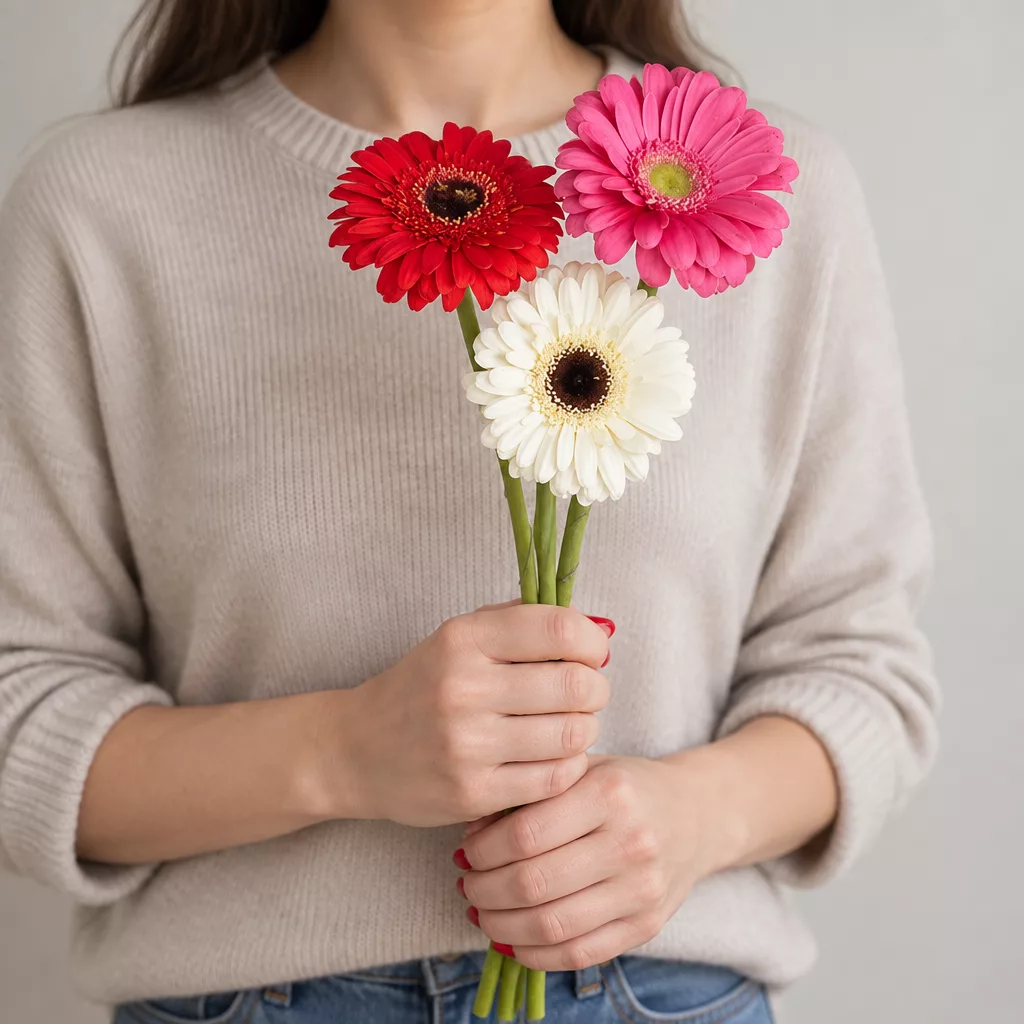
The rule applies most strongly to smaller bouquets where individual stems are easy to count. A large, lush arrangement of fifty or more stems is so abundant that the number becomes invisible, and most recipients will not count. But a neat bouquet of six gerberas or eight tulips tied with ribbon? That will be noticed. Keeping bouquets at odd numbers is one of the simplest ways to show cultural awareness, and recipients — especially those who were not expecting you to know — genuinely appreciate the attention.
White Chrysanthemums: Elegance That Carries the Wrong Weight
Chrysanthemums are complicated in Russia. The flower itself is not the problem — spray chrysanthemums in warm tones, or large-headed varieties in rust, terracotta, and deep pink, appear regularly in celebratory bouquets and are well received. The specific issue is white chrysanthemums, particularly when given alone or in a single-colour arrangement.
White chrysanthemums are strongly associated with memorial occasions in many parts of Russia and across Eastern Europe more broadly. A recipient who receives a bunch of white chrysanthemums as a birthday or anniversary gift may feel a jolt of discomfort that takes the warmth out of the moment entirely, even if they know you meant well.
The practical solution is straightforward. If chrysanthemums are the right choice for the occasion — they are long-lasting, handle courier delivery well, and look full and generous — choose them in colour. Pale lilac, warm yellow, or deep burgundy varieties work beautifully. Alternatively, use white chrysanthemums as a supporting element in a mixed bouquet, where they provide texture and volume without dominating. A single white chrysanthemum stem nestled among pink peonies and eucalyptus reads completely differently from a wrapped bunch of white chrysanthemums on their own. Composition changes everything.
Sharp or Thorny Stems Presented Without Care
Roses are among the most beloved flowers in Russia, given constantly and across every occasion. But there is a quiet expectation around how they are prepared. Presenting roses with thorns fully intact — especially when the stems are long and the thorns are prominent — is associated in folk tradition with conflict and difficult relationships. Many florists remove thorns as a matter of course, but it is worth confirming this when ordering.
This belief is not universal, and younger urban recipients are unlikely to attach meaning to it. But for a recipient whose grandmother taught her to check, or for a more traditional household, the detail matters. A beautifully arranged bouquet of garden roses with thorns stripped and stems cleanly cut arrives feeling considered and safe to handle. The same roses left thorny can feel rushed.
The broader principle here is about presentation. Russians tend to place high value on how a bouquet is wrapped and finished. Flowers handed over in a plastic sleeve from a petrol station carry a very different message from the same flowers in craft paper with a ribbon. When the bouquet is being delivered, the packaging is the first thing the recipient sees before she even touches a petal. Investing in careful presentation — clean stems, appropriate wrapping, a handwritten card — signals that the gesture was intentional, which matters more than the specific flower chosen.
Cacti and Succulents as Romantic Gifts
This one surprises people because succulents and cacti have become genuinely fashionable across Russia in recent years. As houseplants, they are everywhere. As gifts between friends or for a housewarming, they are perfectly acceptable. The problem arises specifically when they are given in a romantic context.
The folk association is simple: a cactus is prickly, and giving something prickly to a romantic partner implies that the relationship is uncomfortable, difficult, or that you find the person hard to be around. It sounds almost too literal, but the association is real and widely held. A man who gives his girlfriend a succulent arrangement on her birthday may find the joke does not land the way he hoped.
For platonic gifts — a colleague moving into a new flat, a friend who travels constantly and needs something low-maintenance — a well-chosen succulent in a nice pot is a thoughtful and practical gesture. The context changes everything. If you are uncertain about the nature of the relationship or how the recipient might read the gift, cut flowers remain the safer and more universally warm choice. A bouquet of seasonal blooms — ranunculus in spring, dahlias in late summer, tulips in March — will always feel celebratory in a way that a potted plant, however beautiful, simply does not.
Wilting or Out-of-Season Flowers That Cannot Last
This is less about superstition and more about the strong Russian expectation that a flower gift should look fresh and last. Giving flowers that are already past their peak — petals beginning to soften, stems slightly bent, leaves yellowing at the edges — is read as carelessness rather than generosity. The value of the gesture drops immediately, regardless of how much was spent.
Out-of-season flowers that have been cold-stored for too long present a similar problem. Peonies in December, for instance, are available but they have typically been in cold storage since summer. They open quickly and unevenly, sometimes within hours of delivery, and a recipient who knows her flowers will notice. If you want peonies, May and June are when they are at their best and will last five to seven days in a cool room. Choosing flowers that are genuinely in season is the single biggest quality upgrade you can make.
For delivery specifically, flowers need to be chosen with travel in mind. Delicate open blooms — fully open garden roses, or ranunculus at peak bloom — can bruise in transit. A skilled florist will select stems at the right stage: open enough to look generous, closed enough to survive the journey and continue opening beautifully once the recipient places them in a vase. Water temperature matters too: cool water, around fifteen to eighteen degrees Celsius, extends vase life significantly compared to warm water, which speeds decay. Passing this tip along with the bouquet is a small touch that recipients genuinely remember.
Sending flowers to someone in Russia is a warm and meaningful gesture, and getting it right is simpler than it might seem from the outside. Stick to odd numbers, lean toward mixed or colourful arrangements rather than single-colour white, and choose flowers that are genuinely fresh and in season. Pay attention to presentation — the wrapping, the card, the condition of the stems — because these details communicate care before a single word is spoken. When you order through a florist who understands these customs, most of this happens automatically. The goal is always the same: the recipient opens the door, sees the bouquet, and feels genuinely celebrated.
Frequently asked questions
Are yellow flowers always a bad gift in Russia?
Not always. Yellow flowers in a mixed arrangement with white or burgundy tones are generally well received and feel celebratory. The concern applies mainly to single-colour yellow bouquets, particularly in romantic contexts. Sunflowers are widely considered a warm, positive gift on their own, especially in summer and early autumn.
Does the even-number rule apply to large bouquets too?
The rule is most noticeable in smaller bouquets where stems are easy to count. Very large arrangements of fifty or more stems are abundant enough that the number becomes irrelevant in practice. For everyday bouquets of ten to thirty stems, keeping the count odd is a simple and meaningful sign of cultural awareness that recipients appreciate.
Can I send white flowers at all, or should I avoid them completely?
White flowers are perfectly appropriate when combined with other colours or used as accent stems in a mixed bouquet. White roses, white lisianthus, and white freesia all appear regularly in celebratory arrangements. The caution applies specifically to all-white single-variety bouquets, particularly white chrysanthemums, which carry stronger memorial associations in Russian tradition.
What flowers are considered genuinely safe and celebratory across all occasions?
Roses in pink, red, or coral tones are universally positive in Russia. Tulips — especially in spring — are beloved and festive. Peonies in season carry strong associations with joy and femininity. Mixed seasonal bouquets that combine two or three complementary varieties in warm or soft tones are almost always received warmly, regardless of the occasion or the recipient's age.
How do I make sure delivered flowers arrive in good condition?
Choose a florist who selects stems at the right stage of bloom for travel — open enough to look full, closed enough to survive the journey. Ask that thorns be removed from roses and that stems are freshly cut before dispatch. Once received, cool water at around fifteen to eighteen degrees Celsius and a clean vase significantly extend how long the arrangement stays beautiful.
Ready to send flowers?
Pick the city, choose the bouquet, and a local florist takes it from there.
Choose a city →