Freesias in Russia: Scent, Season, and the Art of the Pairing
There is a moment when a bouquet arrives and the fragrance reaches the room before anyone even unwraps the paper. That is almost always freesia at work. Delicate, arching stems carrying small trumpet-shaped flowers, freesias carry one of the most recognisable scents in the florist's vocabulary — honeyed, slightly citrusy, clean without being sharp. In Russia they are a year-round presence in good flower shops, though the quality shifts with the seasons, and knowing when to order them makes a real difference to what lands on the doorstep.
Why Freesias Feel Different from Other Flowers
Most flowers ask you to look at them. Freesias ask you to stop moving entirely and breathe. The scent comes from the lower florets first — the ones already open — and intensifies gently as the upper buds open over the following days. This staged opening is one of the things that makes freesias so satisfying to receive: the bouquet keeps changing, keeps releasing fragrance for up to ten days if cared for well.
The flowers grow on a single arching stem, with buds arranged in a row and the lowest ones opening first. This architecture is elegant but also practical for a florist — the stem curves naturally, which gives mixed arrangements a sense of movement that upright flowers like roses or tulips cannot provide on their own.
In Russia, freesias carry a particular emotional weight at celebrations. They are associated with trust and thoughtfulness rather than grand romantic gestures, which makes them a confident choice for a colleague's birthday, a teacher's gift, or a thank-you to someone who helped during a difficult time. They do not shout. They arrive quietly and stay in the memory.
Colour matters here too. White and cream freesias read as refined and calm. Yellow and orange varieties bring warmth and energy. Pink and lilac sit comfortably in romantic arrangements without the weight of red roses. Purple freesias, especially the variety known as Blue Heaven, have a slightly deeper, muskier scent than their paler relatives.
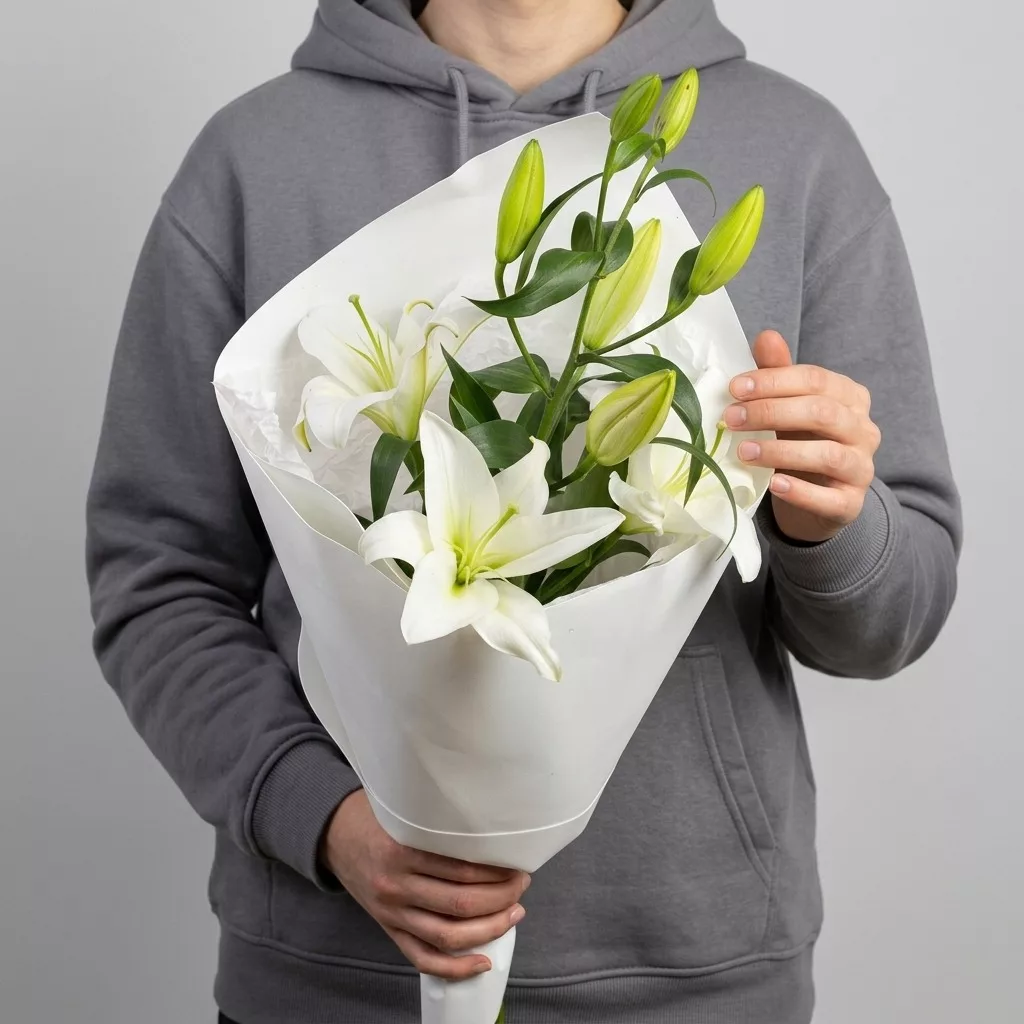
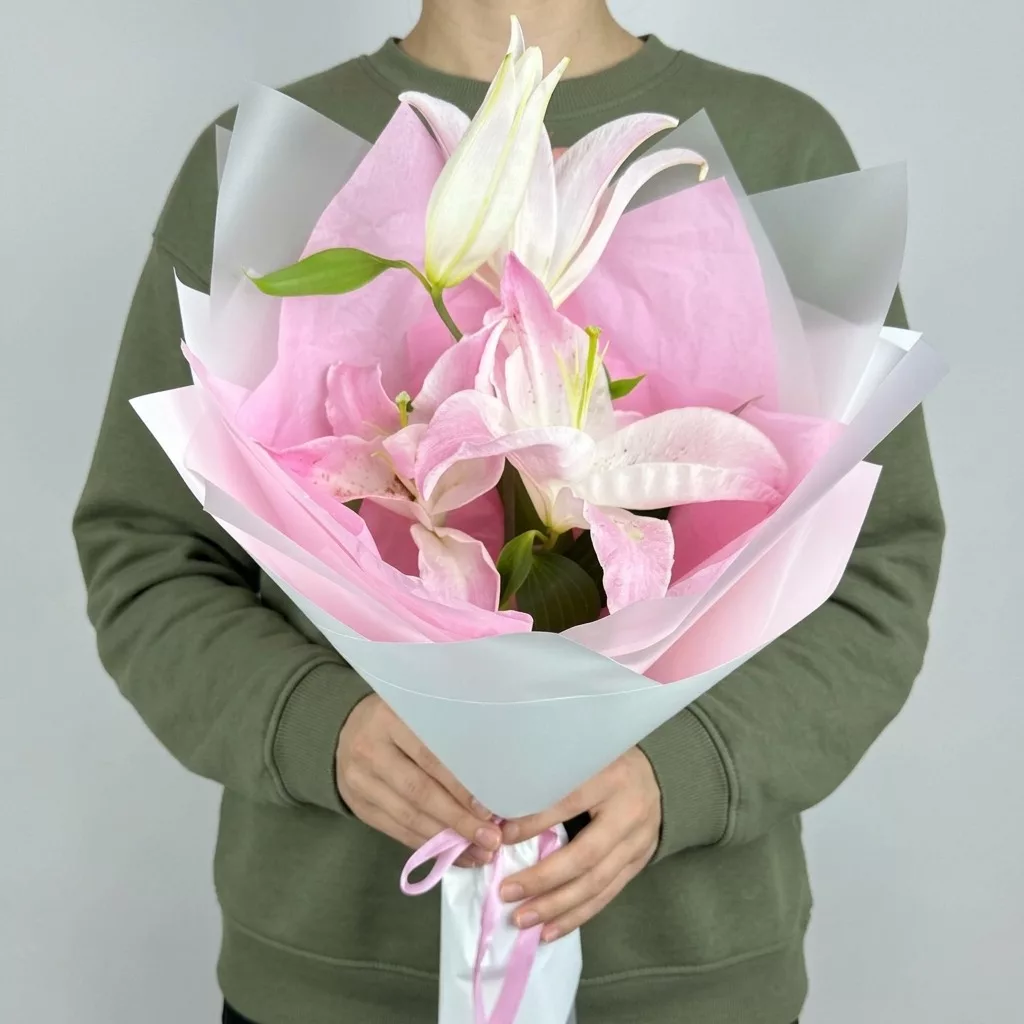
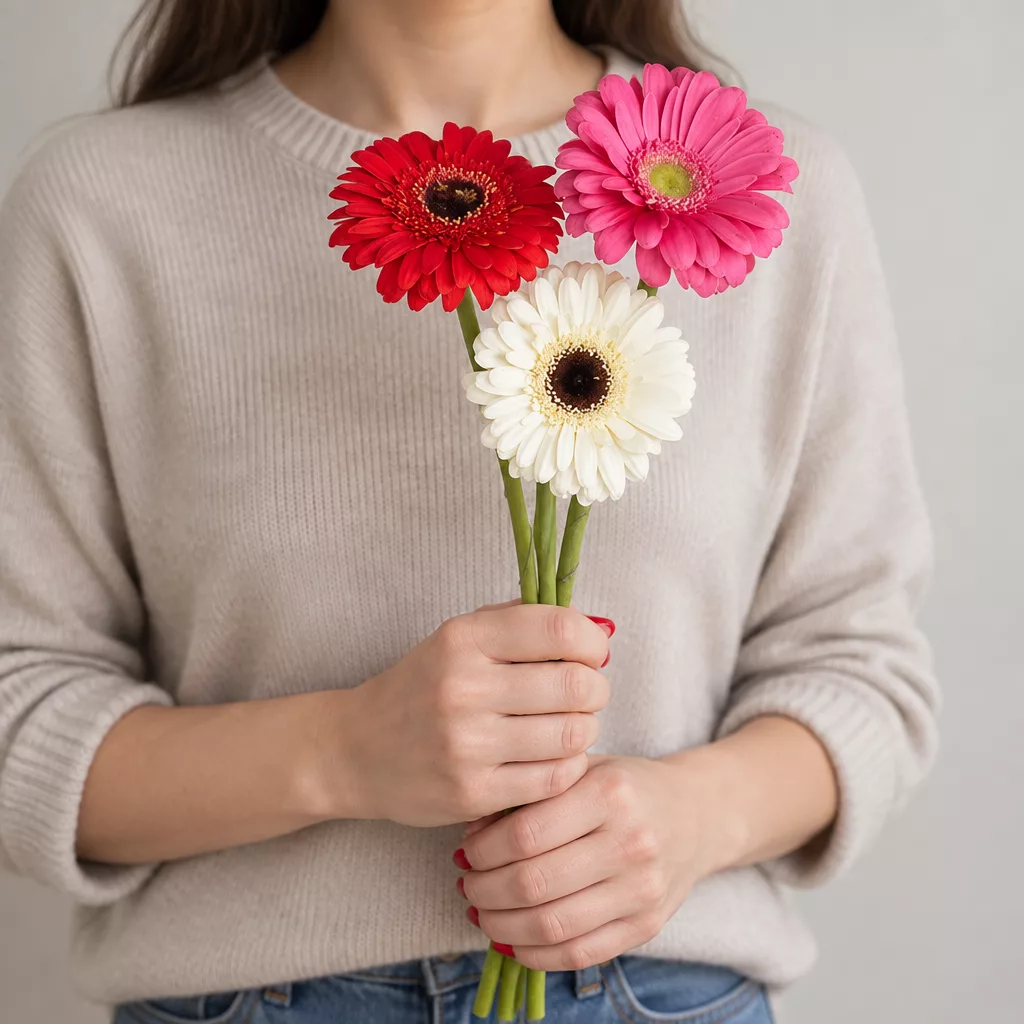
Bouquets we can deliver

When Freesias Are Available Across Russia
Freesias are not a seasonal flower in the way peonies or lilacs are. Russian flower shops receive them throughout the year, primarily imported from the Netherlands, Kenya, and Colombia. However, the quality is not uniform across all twelve months, and an experienced florist notices the difference immediately.
The peak window for Dutch-grown freesias runs roughly from October through April. During these months the growing conditions in the Netherlands are controlled, the stems are longer and more robust, and the fragrance is at its fullest. If you are ordering a bouquet where freesias are the centrepiece rather than an accent, this is the period when they will perform best.
From May through September, much of the Dutch supply shifts to outdoor crops and other flowers. Freesias during this period are more likely to arrive from African growers, and while they are perfectly presentable, the stems can be slightly shorter and the scent occasionally lighter. A skilled florist compensates by choosing complementary flowers that carry the arrangement visually.
Temperature during transit matters enormously for freesias. They travel best at two to four degrees Celsius and suffer if they experience wide temperature swings — a common risk during Russian winters when flowers move from a cold van into a warm hallway rapidly. Turboflora's couriers in Saint Petersburg work with insulated packaging precisely to protect against this, keeping flowers at stable temperature from the moment they leave the shop until they reach the recipient's hands.
Choosing Freesias for the Occasion and the Person
Before you think about colour or budget, think about who is receiving the bouquet and what the moment calls for. Freesias are versatile but they are not neutral — their fragrance makes them a presence in any room, which is worth considering for someone with scent sensitivities or for a workspace where strong fragrance might not be welcome.
For a birthday, freesias work beautifully when you want something that feels considered rather than conventional. A bunch of white freesias tied simply with eucalyptus reads as sophisticated and modern. The same freesias mixed with ranunculus and soft garden roses feel abundant and celebratory without being formal.
For a romantic occasion that is not quite Valentine's Day — an anniversary, a first date marked with flowers, a reconciliation — pink or coral freesias paired with spray roses create warmth without the weight of an all-red arrangement. The fragrance does a great deal of the emotional work here.
For professional relationships, yellow freesias with white lisianthus and a few stems of white waxflower make an arrangement that is cheerful, generous, and entirely appropriate for a colleague or a business contact. In Russian professional culture, flowers are given far more commonly than in many Western countries — teachers, doctors, managers, and mentors all receive bouquets regularly, and freesias fit this context well.
If the recipient loves fragrance specifically, consider asking for a bouquet built around scent: freesias, hyacinths in season, and sweet peas create a layered fragrance experience that is extraordinary.
How Florists Use Freesias as Accents in Mixed Bouquets
A professional florist rarely uses freesias as the sole flower in a large arrangement. Their value is in what they contribute to a composition — fragrance, movement, and a delicacy of texture that heavier flowers cannot provide. Understanding this helps you order more confidently.
When placed alongside garden roses, freesias soften the structure of the bouquet. Roses have a strong geometric presence; freesias curve and trail slightly, breaking the rigidity and making the arrangement feel gathered rather than constructed. This is particularly effective in hand-tied bouquets where the spiral binding technique allows each stem to find its natural angle.
With tulips, freesias add fragrance that tulips entirely lack. A spring bouquet of pale pink tulips and white freesias is a classic pairing in Russian florist practice, especially in March and April when both are at good quality simultaneously. The two flowers share a similar scale and neither overwhelms the other.
Freesias also work exceptionally well with greenery-forward arrangements. Eucalyptus, ruscus, and pittosporum all provide a slightly resinous, fresh backdrop that contrasts beautifully with the sweet freesia scent. This kind of bouquet photographs well and feels contemporary — it has become increasingly popular in Saint Petersburg over the past several years as bouquet aesthetics have shifted toward more natural, less symmetrical styles.
One pairing to approach carefully is freesias with strongly scented lilies. Both flowers are generous with fragrance, and together they can compete rather than complement. If lilies are in the arrangement, ask your florist to use a single freesia stem as an accent rather than a full bunch.
Bouquet Options Across Different Budgets
Freesias are one of the more accessible flowers in terms of price, which means they appear across a wide range of bouquet budgets without compromising the overall impression.
At the more modest end, a small hand-tied bouquet of mixed freesias in two or three colours — say, white, yellow, and pink — with minimal greenery is a genuinely lovely gift. It is honest and fragrant and requires no apology. For a student thanking a teacher, or a friend marking a small milestone, this format is exactly right.
In a mid-range bouquet, freesias typically appear as supporting flowers alongside a focal flower like a garden rose, a peony in season, or a ranunculus. Here the florist might use four to six freesia stems to add fragrance and movement while the focal flower carries the visual weight. This is the most common way freesias appear in everyday gifting in Russia.
In a more generous arrangement, freesias can be used in greater volume — ten to fifteen stems — mixed with premium flowers such as David Austin roses, anemones, or sweet peas. The result is a bouquet that fills a room with fragrance and has a loose, abundant quality that photographs beautifully. This format suits significant birthdays, celebrations of achievements, or occasions where the giver wants to make a strong impression.
What does not change with budget is care and freshness. A small bouquet of perfectly fresh freesias will always outperform a large arrangement where the flowers were cut several days earlier. Freshness is the variable that matters most.
Keeping Freesias Fresh: Vase Life and Care at Home
Freesias are not difficult flowers to keep, but they do have specific preferences that are worth knowing. Handled correctly, they will last seven to ten days in a vase — and the fragrance will be present for most of that time.
Water temperature matters from the start. Freesias prefer cool water, around fifteen to eighteen degrees Celsius. Warm water accelerates opening and shortens vase life. When the bouquet arrives, trim the stems at a forty-five degree angle under running water before placing them in a clean vase. This angle maximises the surface area for water uptake and prevents the cut end from sitting flat against the bottom of the vase.
Keep freesias away from direct sunlight and heat sources — a windowsill in summer sun will exhaust them within two days. A cool room, ideally below twenty degrees Celsius, is where they perform best. In Russian apartments, which are often kept very warm in winter due to central heating, placing freesias in a cooler hallway or near a window (but not a draughty one) extends their life noticeably.
Change the water every two days and re-trim the stems each time. Remove any leaves that fall below the waterline, as they rot quickly and cloud the water with bacteria that block stem uptake.
One common mistake is placing freesias next to a bowl of fruit. Ripening fruit releases ethylene gas, which causes flowers to age faster. This affects freesias more than many other flowers. Keep them in a separate part of the room and they will reward you with fragrance and colour far longer than you might expect.
Freesias are one of those flowers that remind you why fresh flowers exist as a gift at all. They are not just visual — they change the air in a room, they open slowly over days, they reward the recipient with something that continues long after the delivery courier has left. In Russia, where flowers mark so many everyday moments of gratitude and celebration, freesias fit naturally into the culture: thoughtful, generous, and quietly memorable. Whether they are the centrepiece of an arrangement or a fragrant accent threaded through roses and greenery, they elevate whatever they touch.
Frequently asked questions
Are freesias available in Russia all year round?
Yes, freesias are imported year-round, mainly from the Netherlands, Kenya, and Colombia. Quality is at its highest between October and April when Dutch-grown stems are longest and most fragrant. Summer availability is reliable but stems may be slightly shorter and fragrance occasionally lighter depending on the source.
Do freesias have a strong enough scent to fill a room?
A bunch of five or more freesias will fragrance a medium-sized room noticeably, especially as the upper buds open over the first few days. The scent is sweet and slightly citrusy rather than heavy. People with strong fragrance sensitivities should be considered, but for most recipients freesias are a very welcome choice.
What flowers pair best with freesias in a mixed bouquet?
Garden roses, ranunculus, tulips, and lisianthus all pair beautifully with freesias. Eucalyptus and pittosporum greenery complement the fragrance well. Avoid combining freesias with strongly scented Oriental lilies, as the two fragrances compete rather than layer. Sweet peas and hyacinths work if a fully fragrant arrangement is the goal.
How long will freesias last in a vase at home?
With good care — cool water, regular stem trimming, water changes every two days, and a room below twenty degrees Celsius — freesias typically last seven to ten days. Keep them away from fruit bowls and direct sunlight. Russian apartments with strong central heating in winter can shorten vase life, so a cooler spot helps significantly.
Are freesias an appropriate gift in Russian culture?
Absolutely. In Russia flowers are given far more broadly than in many Western countries — to teachers, doctors, colleagues, and friends, not only romantic partners. Freesias read as thoughtful and refined rather than overly romantic, making them suitable for professional relationships, birthdays, and expressions of gratitude across many different social contexts.
Ready to send flowers?
Pick the city, choose the bouquet, and a local florist takes it from there.
Choose a city →