Sending Flowers to a Russian Client You Have Never Met? Start Here
You have closed a deal, signed a contract, or simply want to say thank you — and your client is sitting in an office in Russia, a city away or a continent away from you. You have never shaken their hand, never seen their desk, and you are not sure what a bouquet means in their culture. That uncertainty is completely normal, and it is also completely solvable. A well-chosen arrangement delivered to the right address at the right moment says more than a follow-up email ever could. This article walks you through every decision, from the symbolism of individual flowers to the practicalities of same-day office delivery across Russia.
Why a Bouquet Works When You Have No Personal History
In Russian business culture, a physical gift carries weight that a digital gesture simply does not. Flowers in particular signal that you invested real attention, not just a few seconds clicking a button. For a client you have never met in person, that signal is especially powerful because it creates a moment of warmth before any face-to-face relationship exists.
Russian offices receive flowers on specific occasions — the signing of a major contract, a company anniversary, a key employee's birthday, International Women's Day on the eighth of March, or the New Year period running through early January. If you can time your delivery to one of these moments, the gesture lands naturally inside a cultural framework your client already understands. It does not feel like a foreign custom being imposed; it feels like you know how things are done.
The other reason flowers work well for a first contact is that they are not personal in a presumptuous way. A bouquet does not imply intimacy. It says respect, appreciation, and professionalism. Unlike a branded gift or a bottle of wine, it requires no knowledge of the recipient's tastes, habits, or home life. A beautiful arrangement of seasonal blooms is universally readable, and that universality is exactly what you need when you are building a relationship from zero.
For foreign senders, the key is to let the florist guide the composition rather than defaulting to whatever is familiar at home. What reads as elegant in one country can read as plain or even inappropriate in another. Trust local expertise and focus your energy on the timing and the message.
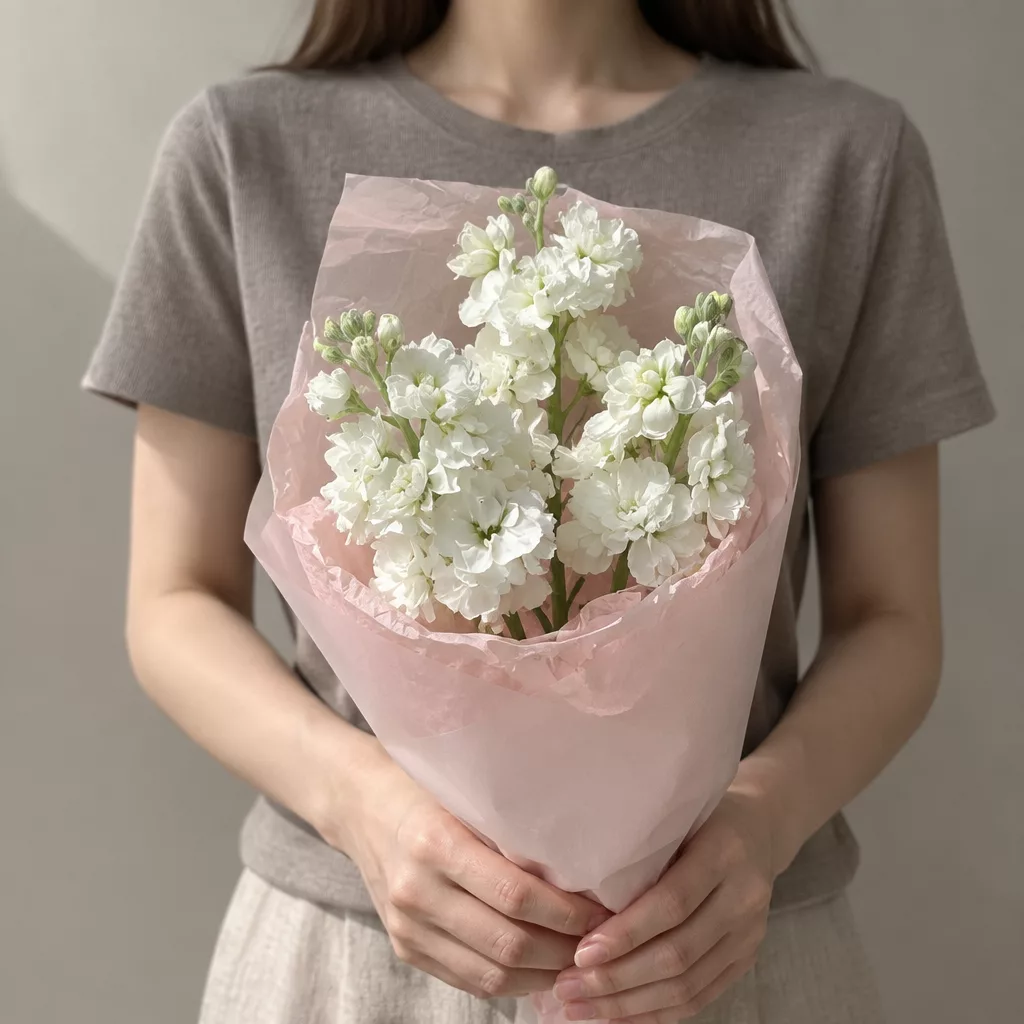
Bouquets we can deliver



Flowers That Carry the Right Meaning in a Russian Office
Roses are the dominant flower in Russian gifting culture, and they work well in a professional context when chosen carefully. Deep red roses read as romantic, so for a business bouquet you want to move toward cream, champagne, peach, or soft pink varieties. Garden roses such as David Austin types add a sense of luxury without formality. White spray roses mixed with larger focal blooms create a composition that feels generous and polished rather than stiff.
Eustoma, known in many markets as lisianthus, is a reliable choice for professional bouquets. Its layered petals resemble a peony or a poppy but it holds in a vase for ten to fourteen days, which matters when the recipient may not be in the office every day. Chrysanthemums are widely loved in Russia and carry no negative symbolism in a business setting — unlike in some Western European countries where they are associated with mourning. Spray chrysanthemums in white, yellow, or burgundy are cost-effective and long-lasting.
Alstroemeria adds volume and a cheerful note without overwhelming the arrangement. Freesias bring fragrance, which is appreciated but should be used in moderation in a shared office space. Peonies are deeply beloved in Russia and signal generosity; if they are in season between May and July, including even two or three stems elevates the entire bouquet immediately.
Avoid flowers with very strong scent in large quantities — an office is a shared space and some colleagues may be sensitive. Also avoid single-variety bundles that look more like a market purchase than a considered gift. Combinations always read as more intentional.
Numbers, Colors, and the Details That Matter Culturally
The most important rule for gifting flowers in Russia is the odd-number convention. Bouquets for living recipients are always given in odd numbers — one, three, five, seven, nine, eleven, and so on. Even numbers of flowers are reserved for funerals and mourning. This is not a superstition that only older generations follow; it is observed across age groups and in professional settings. A foreign sender who delivers twelve roses, however beautiful, may create an uncomfortable moment for the recipient.
This rule applies to the main focal flowers, not necessarily to every stem in a mixed arrangement. A composition of nine roses with filler greenery and accent blooms is perfectly correct. When in doubt, ask the florist to confirm the count before the order is placed.
Color carries meaning too, though it is more flexible than the number rule. Yellow flowers were once associated with separation or jealousy in Soviet-era folklore, but this association has faded considerably among younger urban professionals. In Saint Petersburg and Moscow, yellow tulips and yellow roses appear regularly in contemporary bouquets without issue. That said, if you want to be safe and you do not know the recipient's age or background, a palette of whites, creams, and soft pinks is universally neutral and elegant.
Wrapping and presentation matter as much as the flowers themselves. In Russia, bouquets are typically presented with the stems wrapped in craft paper or a structured box, with the blooms visible and facing outward. A ribbon and a small card with a printed message in Russian adds a finishing touch that shows genuine care. Even a simple phrase of thanks in Russian, written correctly, is remembered.
Choosing a Composition by the Occasion and the Message
If you are sending flowers to mark a contract signing or the start of a partnership, aim for a composition that feels celebratory but restrained. A hand-tied bouquet of cream eustoma, white alstroemeria, and eucalyptus greenery communicates professionalism and warmth without veering into excessive display. The size should be generous enough to be noticed when it arrives at a reception desk but not so large that it becomes inconvenient for the recipient to carry or store.
For a birthday delivery to a client's office, you have more room to be expressive. Roses become more appropriate here, particularly in a mix of two or three complementary shades. A round, densely packed arrangement in a hat box is a popular format in Russian cities right now — it travels well, sits neatly on a desk, and photographs beautifully, which matters because recipients often share such moments on social media or internal messaging channels. That secondary visibility is a quiet bonus for your brand.
International Women's Day on the eighth of March is the single biggest flower-gifting date in Russia. If your client is a woman or if you are gifting to a team that includes women, sending flowers on this date is not just appropriate — it is expected. Tulips are the traditional flower of this holiday. Red, pink, and purple tulips in a simple tied bunch are classic. Mixing them with white ranunculus or white freesia adds refinement to a well-known format.
For New Year greetings, which in Russia extend through the seventh of January due to the Orthodox calendar, a bouquet with deep green foliage, red berries, and white blooms echoes the season without relying on decoration or props.
How to Handle Delivery to an Office You Have Never Visited
Office delivery without prior personal contact requires a little more information at the order stage, but it is entirely routine. The most important details are the full street address including the office number or floor, the recipient's full name, and a contact phone number. In Russia, building addresses sometimes include a corpus number — a secondary building identifier within the same address — so confirm the full address carefully with your client's assistant or from a business card or email signature.
Timing is worth thinking about. Russian business hours typically run from nine in the morning to six in the evening, Monday through Friday. Deliveries between ten and four are the most reliable for reaching the recipient at their desk rather than in a meeting or at lunch. If you are ordering from a different time zone, factor in Moscow Standard Time, which is UTC plus three and does not observe daylight saving.
A delivery note or card is essential when you have no personal contact. Write a short, clear message that identifies who the flowers are from and why. If possible, include a line in Russian — a florist can help you phrase a simple thank-you or congratulation correctly. The card should carry your company name so there is no confusion at the reception desk about who sent the gift.
If the recipient is unexpectedly out of the office, a reliable florist will contact you before leaving the bouquet with a colleague or receptionist. Confirm this policy when you place the order. Flowers left unattended without a call can end up in the wrong hands or, worse, wilting in a corridor.
Keeping the Flowers Fresh From Our Door to Their Desk
Fresh flowers are a perishable gift, and the gap between a florist's cooler and a recipient's office is where quality is won or lost. In Russia, temperature matters enormously. Saint Petersburg winters can drop well below freezing, and a bouquet exposed to minus fifteen degrees Celsius for even ten minutes will suffer visible damage — petals blacken, stems weaken, and the arrangement loses its shape. A professional delivery service uses insulated packaging and routes that minimize exposure time.
In summer, the challenge reverses. Temperatures above twenty-five degrees accelerate the aging of cut flowers significantly. Roses and eustoma are particularly sensitive. A delivery completed within one to two hours of the bouquet being assembled and packed is the practical solution — the flowers spend almost no time outside controlled conditions.
Once the bouquet arrives at the office, the recipient will appreciate a few care instructions included with the card. Cut stems at an angle under running water before placing them in a clean vase. Change the water every two days. Keep the arrangement away from direct sunlight, radiators, and air conditioning vents, all of which are common in Russian offices. Remove any leaves that fall below the waterline to prevent bacterial growth.
With proper care, eustoma and alstroemeria last ten to fourteen days. Roses last seven to ten. Chrysanthemums can go two weeks or longer. Tulips are shorter-lived at five to seven days but open beautifully during that time. Knowing the vase life of what you have sent helps you choose a composition that remains presentable for as long as the goodwill behind it.
Writing the Card and Following Up After the Delivery
The card is the part of the gift that speaks directly, and for a first-contact business relationship it deserves as much thought as the flowers themselves. Keep the message short and sincere. State who you are, name the occasion or reason briefly, and express a genuine sentiment. A card that reads like a marketing slogan undermines the warmth of the gesture; a card that sounds human reinforces it.
If you want to include a phrase in Russian, here are a few that work well in a professional context. For a thank-you: 'Blagodarim vas za sotrudnichestvo' means 'Thank you for your cooperation.' For a congratulation: 'Pozdravlyaem s' followed by the occasion. A florist can print these correctly in Cyrillic, which looks far more considered than a transliterated version in Latin letters.
After the delivery is confirmed, a brief follow-up message from your side — an email or a message in whatever channel you already use with this client — completes the gesture. You do not need to ask whether they liked the flowers. Something simple like 'I hope the flowers arrived safely and brought a little colour to your day' is enough. It shows you were paying attention without putting them in an awkward position if they missed the delivery.
This combination of a physical gift and a personal follow-up message creates a two-touch moment that is remembered. In a business relationship that exists mainly through screens and contracts, a bouquet that someone can see, smell, and touch on their desk is a genuinely distinctive gesture — and the follow-up message ties your name to that memory in a way that no email alone ever achieves.
Gifting flowers to a Russian client you have never met is less complicated than it sounds once you understand a handful of cultural fundamentals — odd numbers, appropriate color palettes, and timing tied to real occasions. The rest is about choosing a composition that feels generous and considered, getting the address details right, and letting a florist who knows the local context handle the execution. When the bouquet arrives at that office desk, it does not matter that you have never been in the same room. The flowers do the introduction for you, and they do it in a language that needs no translation. We deliver bouquets across Russia in 1–2 hours.
Frequently asked questions
Is it appropriate to send flowers to a male Russian business client?
Yes, though it is less common than gifting to women. For a male recipient, keep the arrangement structured and unfussy — think deep tones, clean lines, and a compact format. Avoid anything that reads as overly decorative or romantic. A simple composition of roses, greenery, and one or two accent blooms in a neutral palette works well and is received as a mark of respect.
What is the safest occasion to send flowers to a Russian client without it seeming unusual?
International Women's Day on the eighth of March is the most universally accepted occasion in Russian business culture — almost every company sends flowers to female colleagues and clients on this date. New Year is the second safest. A contract signing or company anniversary also works well. Avoid sending flowers with no stated reason, as this can create confusion about the sender's intent.
Can I send flowers to a Russian client if I do not know their exact office address?
You need a full address including street, building number, corpus if applicable, floor or office number, and a contact phone. Without a phone number, delivery becomes unreliable — the courier needs to reach the recipient or a receptionist directly. Check the client's email signature, business card, or company website for the correct address, and confirm it before placing the order.
How far in advance should I order for a time-sensitive delivery like a birthday or Women's Day?
For standard business days, ordering by midday for an afternoon delivery is usually sufficient. For major dates like the eighth of March, demand across Russia peaks sharply and florists process a much higher volume of orders. Placing your order two to three days ahead is strongly recommended for those peak dates to guarantee both the composition you want and the delivery window you need.
Should the card message be written in Russian or English?
A message in Russian is always more appreciated because it signals that you made an extra effort. Even a single sentence in correct Russian carries more weight than a full paragraph in English. Ask the florist to help with phrasing and Cyrillic printing. If you include English as well, place the Russian first. Avoid machine-translated text — errors in a formal card can create an unintended impression.
Ready to send flowers?
Pick the city, choose the bouquet, and a local florist takes it from there.
Choose a city →