Sending a Graduation Bouquet in Russia? Here Is What to Know
Graduation day in Russia is loud, colourful, and almost theatrical in its flower culture. Graduates walk out of ceremonies carrying armfuls of blooms — not a single stem, not a modest posy, but a proper, generous bouquet that photographs beautifully and signals that someone important in their life was thinking of them. If you are ordering from another city or from abroad, knowing what that expectation looks like is the difference between a gift that lands perfectly and one that feels like an afterthought.
Why Graduation Bouquets in Russia Look the Way They Do
In Russia, flowers at graduation are not simply a gift — they are a public statement. The ceremony itself, called a vypusknoj, is a milestone that families treat with the same weight as a wedding. Guests, parents, and even classmates arrive with bouquets, and the graduate ends the evening holding everything they have received, often in both arms.
This shapes what a bouquet needs to be. A small arrangement that might be perfectly appropriate at a European graduation would read as modest to the point of awkward here. The expectation is volume: a bouquet that has presence from a few metres away, that reads well in photographs, and that feels abundant rather than restrained.
Colour matters too. Bright, saturated palettes — deep reds, vivid pinks, coral, sunny yellows — are far more common than muted or neutral arrangements. White is used, but usually combined with another colour rather than alone. Pastel combinations work well for younger graduates, especially school leavers around age seventeen or eighteen, while university graduates often appreciate something a little more sophisticated in its structure even if the colours remain bold.
Presentation wrapping is part of the gift. Kraft paper, soft fabric wrapping, or layered tissue with a ribbon are all standard. A bouquet handed over in plain cellophane alone would feel unfinished. When you order remotely, make sure the florist treats the wrapping as seriously as the flowers themselves.
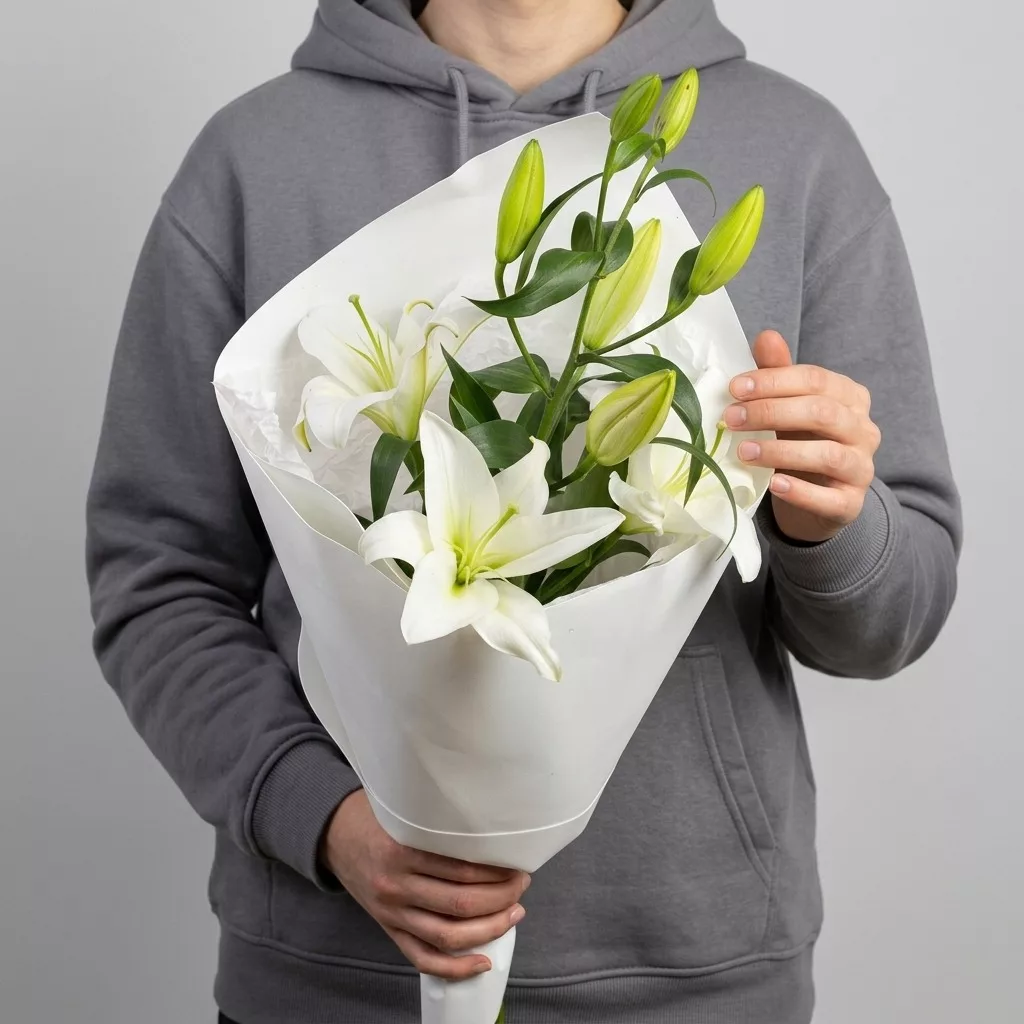
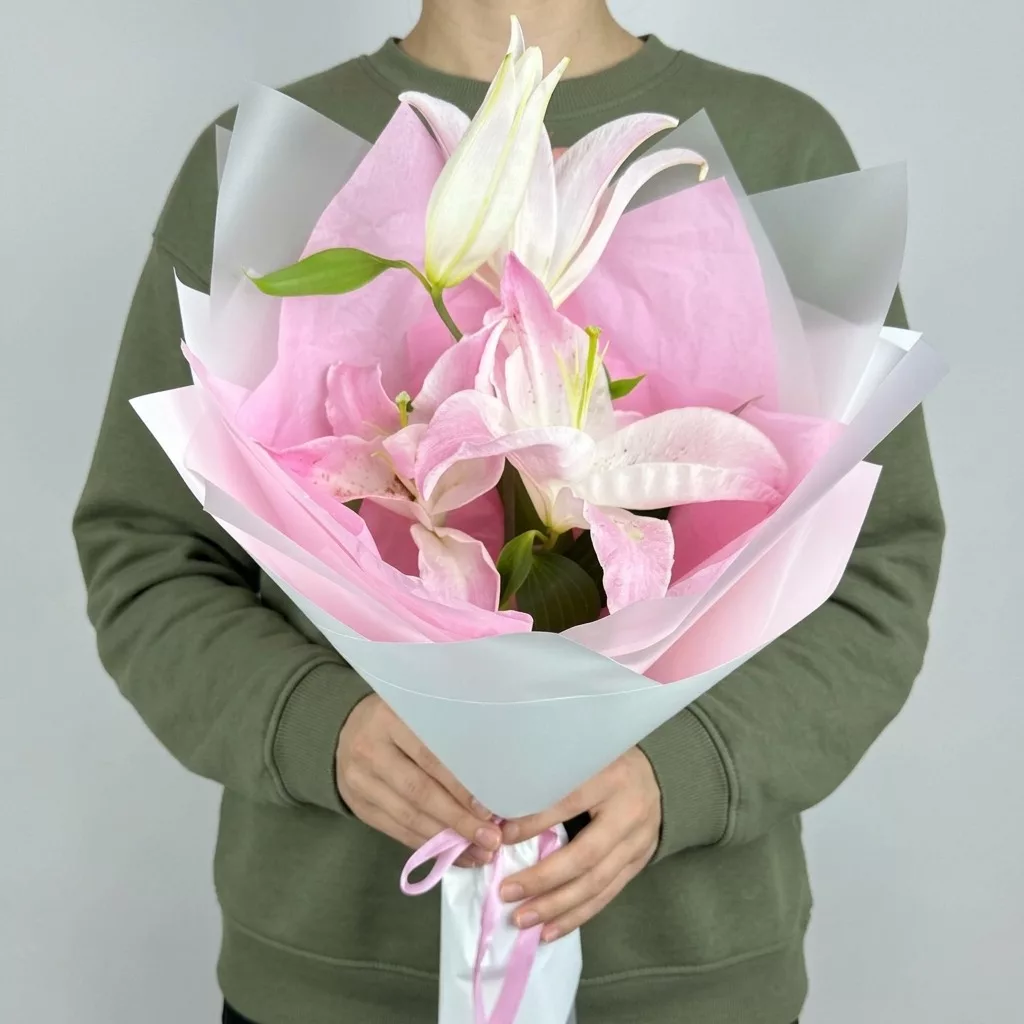
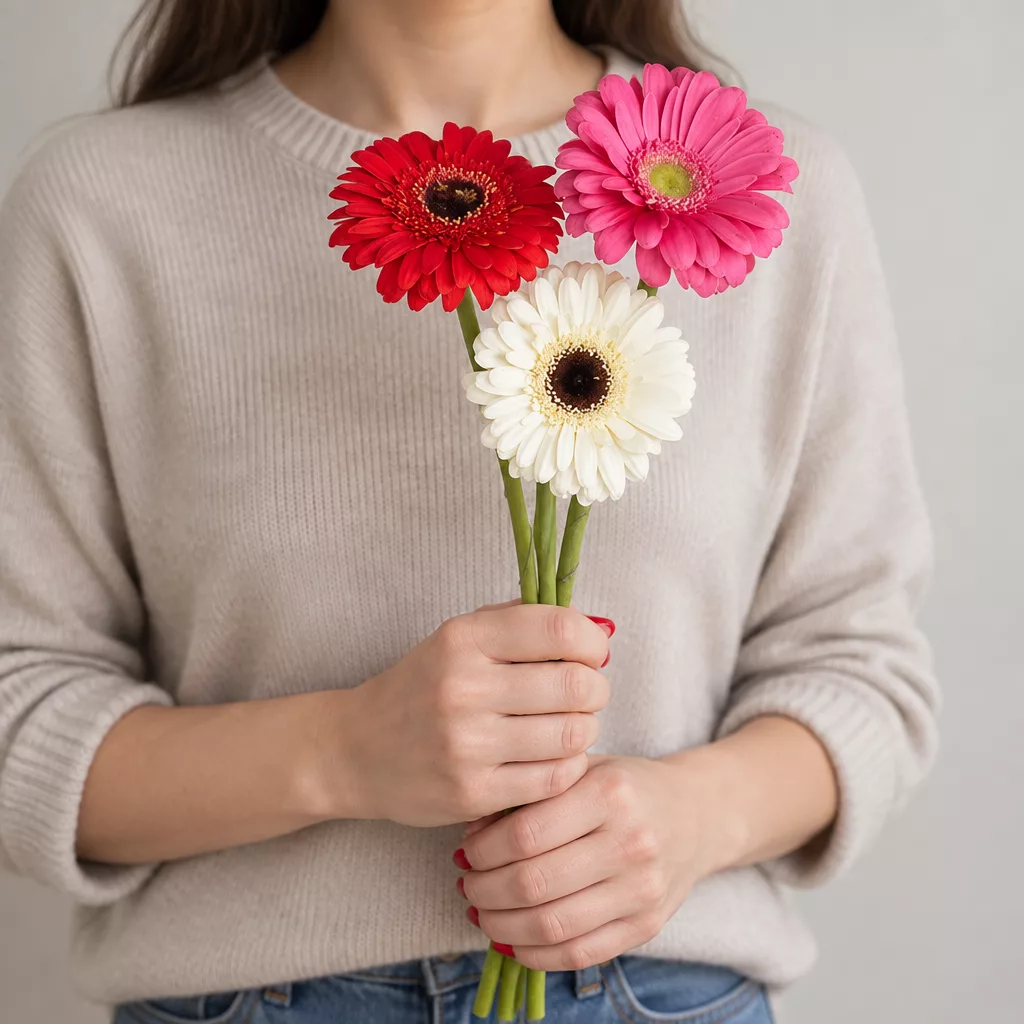
Bouquets we can deliver

Choosing Flowers That Will Actually Last the Day
Graduation ceremonies in Russia happen in late May and late June for schools, and in late June through early July for universities. These are warm months, and in cities like Saint Petersburg temperatures regularly reach twenty-five degrees Celsius or higher by afternoon. That temperature context matters enormously when choosing flowers.
Roses are the backbone of most graduation bouquets and hold up well in heat if they have been properly hydrated before delivery. Garden roses, with their layered petals and soft fragrance, add a romantic texture that spray roses alone cannot achieve. Peonies are at their absolute peak in late May and early June — if the graduation falls in that window, they are a natural first choice. Their full, heavy heads look spectacular in photographs and carry well even in warm air for several hours.
Eustoma, sometimes called lisianthus, is an excellent supporting flower. Its ruffled petals resemble a smaller peony and it holds structure without wilting quickly. Matthiola, with its fragrant spires, adds vertical interest and scent. Alstroemeria fills volume reliably and lasts days in a vase, which matters once the graduate gets home.
Avoid flowers that are genuinely heat-sensitive for outdoor ceremonies: sweet peas wilt within an hour in direct sun, and garden dahlias, beautiful as they are, struggle in transit on a warm day. Chrysanthemums are durable but carry associations in Russia that make them unsuitable for celebratory occasions — a working florist will steer you away from them automatically, and you should too.
Getting the Size Right When You Cannot See It in Person
Ordering remotely means you are trusting a description and a photograph to represent something three-dimensional. Size is the most common place where expectations and reality diverge, and it almost always diverges in the same direction — the recipient receives something smaller than the sender imagined.
When ordering a graduation bouquet for Russia, think in terms of stem count and diameter rather than abstract sizes like small, medium, or large. A bouquet that reads as genuinely generous at a graduation typically has at least twenty-five to thirty stems when you include focal flowers, supporting flowers, and greenery. A very large, statement bouquet — the kind a parent brings to a child graduating university — might have forty stems or more.
Diameter is another useful measure. Held naturally in two hands, a proper graduation bouquet should be at least forty centimetres across at its widest point. Anything narrower starts to look like a gift for a different occasion.
If you are ordering for someone else's child and you are unsure of the graduate's preferences, lean toward more rather than less. A bouquet that is slightly larger than expected creates a moment of delight. One that is smaller than expected creates a quiet disappointment that nobody mentions but everyone notices.
When placing your order remotely, describe the occasion explicitly and ask the florist to build for a graduation, not a birthday or anniversary. The framing changes the proportions. At Turboflora, we treat graduation orders as their own category precisely because the visual weight required is different from almost any other occasion.
Timing the Delivery Around the Ceremony
Graduation ceremonies in Russia run on tight, sometimes unpredictable schedules. The formal part — the handing over of diplomas, the speeches, the official photographs — might finish at noon or stretch into mid-afternoon. The evening party, the vypusknoj ball, often starts separately and runs late into the night.
For a bouquet to feel like a real gift rather than a logistical afterthought, it needs to arrive before the graduate leaves for the ceremony, or be waiting at the venue if that is possible. Delivery to a home address in the morning, between nine and eleven, gives the graduate time to receive the flowers, photograph them, and carry them to the event if they choose.
If you are not certain of the exact ceremony time, aim for morning delivery. A bouquet sitting in a cool indoor space for two hours before the graduate leaves is far better than one that arrives while they are already at the venue. Flowers delivered in the evening, after the main event, lose most of their emotional impact — they are received when the graduate is tired, and they miss the public moment entirely.
One-to-two hour delivery windows, like the ones Turboflora operates across Russia, make it possible to time this precisely even when you are ordering from a different time zone. If you are in Europe or further, calculate the time difference carefully. Saint Petersburg is UTC+3, and many Russian cities are even further ahead. Placing your order the evening before and scheduling delivery for the next morning is almost always the safest approach.
Combinations That Work and Ones That Do Not
A graduation bouquet needs to do several things at once: look abundant, hold together visually, survive a warm day, and feel appropriate to the person receiving it. The combinations that achieve all four tend to follow a simple logic — one or two focal flowers, one or two supporting flowers, and greenery that frames rather than dominates.
A classic and reliable combination for a school graduation is garden roses paired with eustoma and eucalyptus. The roses provide the focal drama, the eustoma softens the edges, and the eucalyptus adds fragrance and a silvery-green that photographs cleanly. For a May or early June graduation, replacing the roses with peonies and adding matthiola for height creates something that feels genuinely seasonal and special.
For university graduates, particularly those in their mid-twenties, a more structured combination works well. Protea, if available, adds an architectural quality that feels mature. Ranunculus layered with spray roses creates a dense, jewel-like texture. Deep burgundy tones mixed with blush and ivory read as sophisticated without being sombre.
Combinations to avoid: mixing flowers with very different vase lives in a single bouquet means some will look tired long before others. Pairing heat-sensitive flowers with robust ones creates an uneven result by the time photographs are taken. And avoid adding too many filler flowers — baby's breath, for instance, used in large quantities, can make a bouquet look dated and inexpensive regardless of what else is in it. A small amount used intentionally is different from using it to pad volume.
Caring for the Bouquet After the Celebration
The ceremony lasts hours. The bouquet, if it is cared for properly, can last a week or more in a vase — a daily reminder of the achievement and the people who marked it. Giving the graduate a few simple instructions alongside the flowers makes a real difference.
As soon as the bouquet arrives home, the stems should be cut at an angle under running water or submerged in a bowl, removing about two centimetres. This reopens the stem ends that seal during transit. Remove any leaves that would sit below the waterline in the vase, as submerged foliage decays quickly and clouds the water.
The vase should be filled with cool, clean water — not cold, which can shock the stems, but noticeably cooler than room temperature. Change the water every two days and recut the stems each time. Keep the bouquet away from direct sunlight, heating vents, and fruit bowls. Ripening fruit releases ethylene gas, which accelerates petal drop in roses and eustoma faster than almost anything else.
Peonies, if they arrive as tight buds — which they often do when delivered in warm weather to slow their opening — will open fully within twenty-four to forty-eight hours at room temperature. This is not a flaw; it is how they travel best. Placing them in a warm room speeds the process if the graduate wants them open for photographs.
With proper care, roses and eustoma typically last seven to ten days. Peonies are shorter at five to seven days but are spectacular while they last. Alstroemeria, if included, will often outlast everything else at ten days or more.
A graduation in Russia is one of those occasions where the flowers are genuinely part of the memory — not background decoration but something the graduate holds, carries, and photographs. Getting it right from a distance is entirely possible when you understand what the occasion calls for: generous size, flowers that survive a warm day beautifully, timing that puts the bouquet in the graduate's hands before the celebration begins, and wrapping that makes the whole thing feel considered. Order with the ceremony schedule in mind, describe the occasion clearly, and trust that the details — stem count, colour, texture, presentation — all add up to something that feels like you were there.
Frequently asked questions
How far in advance should I order a graduation bouquet for delivery in Russia?
For same-day delivery, placing your order at least three to four hours before the desired arrival time is ideal. For a morning ceremony, ordering the evening before and scheduling a morning delivery window gives the best result. During peak graduation season in late May and June, earlier is always safer as demand for peonies and garden roses is high.
Is it acceptable to send flowers to a Russian graduation if I cannot attend in person?
Absolutely — sending flowers when you cannot be present is a well-understood and warmly received gesture in Russian culture. A bouquet delivered to the graduate's home before they leave for the ceremony carries real emotional weight. Including a handwritten card message with the delivery makes it feel personal even across a long distance.
What colours are considered appropriate for a graduation bouquet in Russia?
Bright, celebratory colours are the norm — reds, pinks, corals, and yellows are all excellent choices. White works well but is usually combined with another colour. Avoid arrangements that are predominantly dark or muted, as these can feel mismatched with the festive mood. For older graduates, deep jewel tones like burgundy paired with blush read as sophisticated and appropriate.
Why should I avoid chrysanthemums in a Russian graduation bouquet?
In Russia, chrysanthemums are strongly associated with funerals and mourning. Presenting them at a celebratory occasion like a graduation would feel jarring and inappropriate to most Russian recipients, even if the giver meant nothing by it. Any experienced florist building for a Russian celebration will avoid them automatically — it is a firm cultural convention.
Can I request a specific delivery time slot for a graduation bouquet?
Yes. When ordering through Turboflora, you can specify a delivery window that aligns with the graduate's schedule. If you know the ceremony starts at noon, a delivery between nine and eleven in the morning ensures the flowers are received before departure. Sharing the ceremony time when you place your order helps us recommend the best window.
Ready to send flowers?
Pick the city, choose the bouquet, and a local florist takes it from there.
Choose a city →