What to Write on a Card When Sending Flowers to Russia
You have chosen the bouquet, confirmed the delivery address in Moscow or Novosibirsk, and then the card field appears on the screen — and you go blank. What do you write to someone you love when you are thousands of kilometres away and the language feels unfamiliar? The message on a small card matters more than most people expect. In Russia, reading the card aloud in front of the bouquet is a genuine moment, not a formality. Getting the tone right — warm, personal, never stiff — is the final touch that makes the flowers feel as though you handed them over yourself. Below you will find ten phrases organised by occasion, each given in natural English and in transliterated Russian so you can type or copy them exactly, plus the context that will help you choose the one that fits.
Why the Card Text Feels Different When Flowers Cross Borders
When you send flowers within the same city you grew up in, the card is almost a shorthand — a few words that land in a shared emotional vocabulary. Sending flowers to Russia from abroad adds a small but real layer of distance, and the card is your chance to close it. Russian recipients tend to read card messages as a measure of care and thought, not just a label on the gift. A generic printed message can feel like a missed opportunity, while even a short personal phrase in Russian — however imperfect — is almost always received with warmth and surprise.
You do not need to know the Cyrillic alphabet to include a Russian phrase. Transliteration, writing Russian sounds in Latin letters, is widely understood, especially among people who receive messages from abroad. A message that reads 'Pozdravlyayu tebya s dnem rozhdeniya' is immediately recognisable to any Russian speaker even if the spelling is not textbook-perfect.
One practical note: keep the card short. Russian florists and delivery staff type messages into a small printed card, usually no more than two or three lines. Long paragraphs get cut off or reformatted. The phrases below are all designed to fit comfortably within that space while still carrying real feeling. Think of the card as the first sentence of a conversation you will continue by phone or message — it opens the moment rather than trying to contain everything you feel.
Bouquets we can deliver

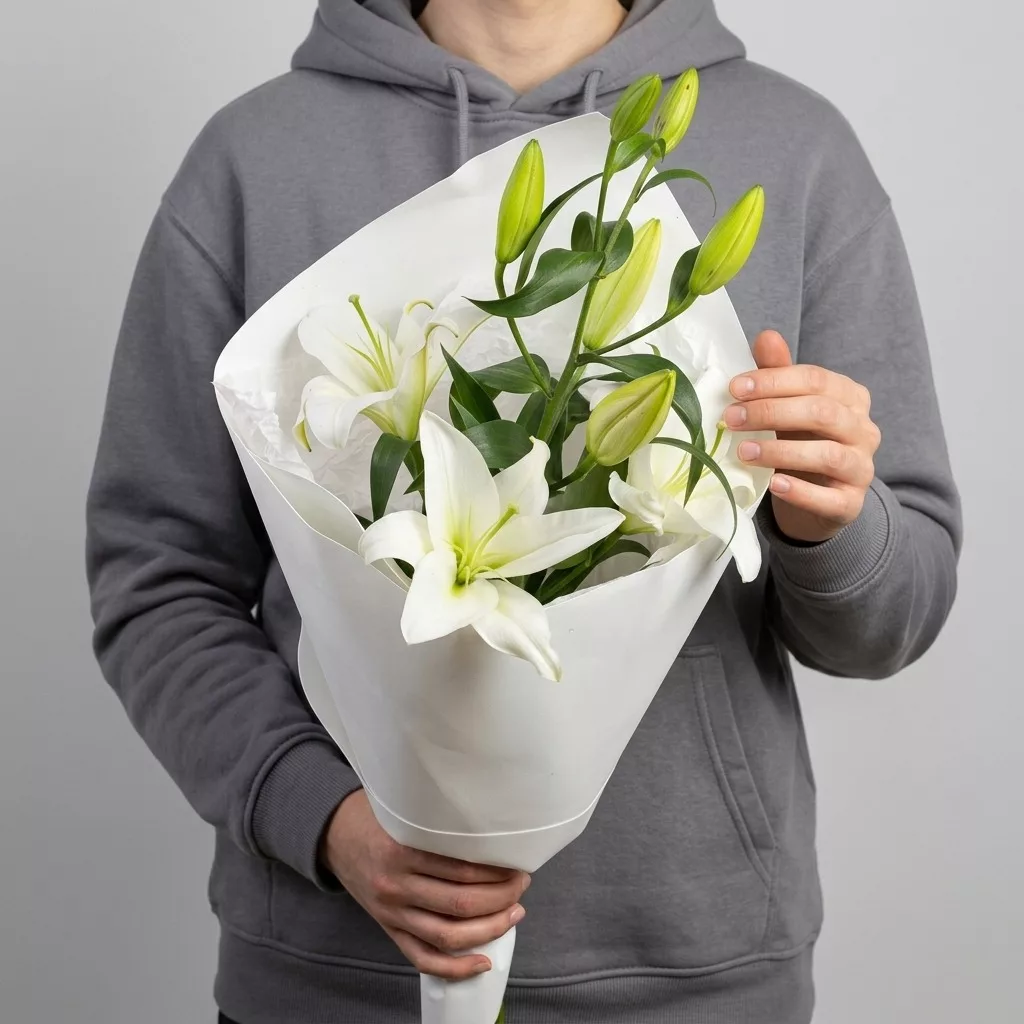
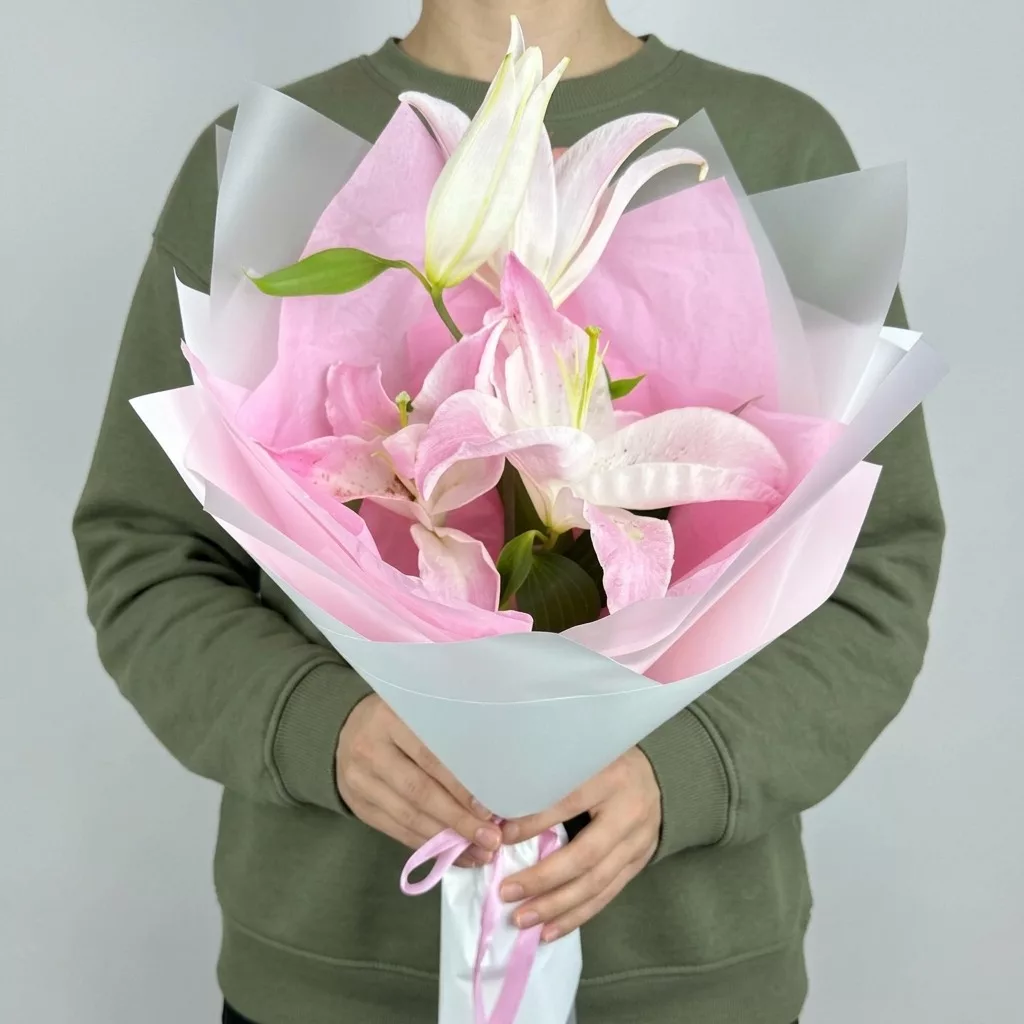
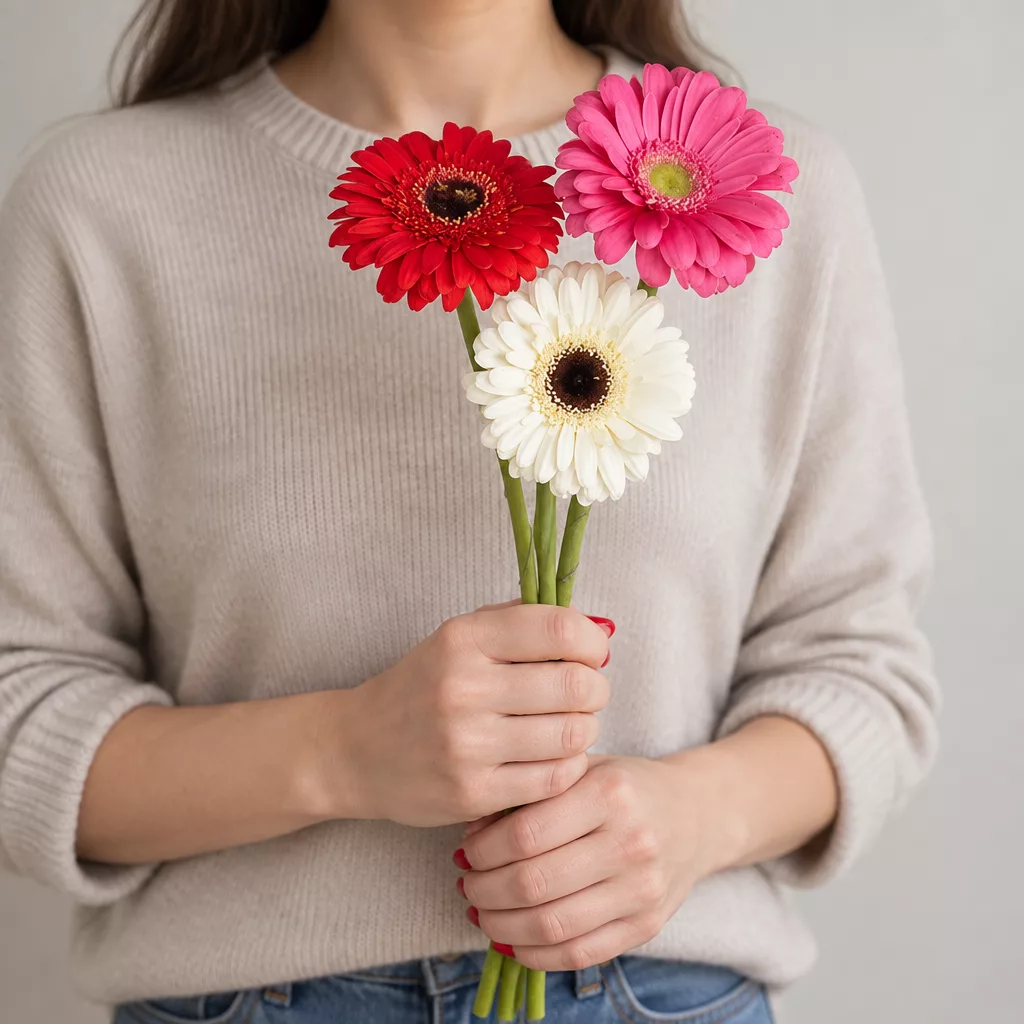
Three Phrases for Birthdays: Warm Without Being Predictable
Birthdays are the single most common occasion for flower delivery across Russia, and a bouquet of coral charm peonies or garden roses in soft peach tones suits almost any age. The card, though, is where you can move beyond the expected.
Phrase one: 'Wishing you a day as bright as you are — with all my love.' In transliterated Russian: 'Zhelayu tebe dnya takogo zhe yarkogo, kak ty — s lyubovyu.' This works well for close friends and sisters, and pairs naturally with a bouquet that has sunflowers or yellow ranunculus in the mix.
Phrase two: 'Happy birthday. You deserve every single flower in this bouquet.' Transliterated: 'S dnem rozhdeniya. Ty zasluzhivaesh kazhdyy tsvetok v etom bukete.' The directness of this lands particularly well for someone who tends to put others first — it is a small, deliberate act of making them the centre of attention.
Phrase three, for a more playful register: 'Another year wiser, still just as wonderful.' Transliterated: 'Eshchyo odin god mudrosti, i vsyo takaya zhe zamechatelnaya.' Adjust the adjective ending for a man — 'zamechatelnyy' — and the phrase works across genders. Russian adjectives agree with the subject, and getting this small detail right will genuinely impress the recipient. When in doubt, mention the recipient's name in the card rather than relying on pronouns — it is always safe and always personal.
Two Phrases for Anniversaries: Saying Something That Lasts
Anniversary flowers in Russia tend to be more considered than birthday bouquets. Couples often choose deeper colours — burgundy roses, dark violet lisianthus, or a mono-bouquet of garden roses in cream — and the card is expected to match that weight. A light, jokey message can feel misaligned with the occasion, while something too formal feels cold.
Phrase four: 'Every year with you is the one I would choose again.' Transliterated: 'Kazhdyy god s toboy — eto tot, kotoryy ya by vybrala snova.' For a male sender, change 'vybrala' to 'vybral.' This phrase works especially well when the flowers are going to a partner rather than being sent on behalf of someone else, because it speaks in the first person with quiet certainty rather than celebration.
Phrase five: 'To the years behind us and every one still to come.' Transliterated: 'Za gody, kotorye pozadi, i za vse, chto eshchyo vperedi.' This is a toast-like phrase, and Russians will recognise the register immediately — it echoes the warmth of a spoken toast at a dinner table, which is a deeply familiar cultural form. If the bouquet includes white freesia, its clean fragrance and the phrase together suggest something that has lasted and will continue to last. Freesia holds well in Russian indoor temperatures, typically between eighteen and twenty-two degrees Celsius in a heated apartment, and the recipient will enjoy it for seven to ten days with a clean vase and daily water changes.
Two Phrases for New Arrivals and Celebrations: Light and Joyful
When flowers mark a new baby, a graduation, a new job, or a housewarming, the mood should feel like sunlight — uncomplicated and generous. In Russia, welcoming a new baby with flowers is a well-established tradition, though the bouquet typically goes to the mother rather than being placed in a hospital room. Soft white or pale pink arrangements of spray roses, white tulips in season, or single-variety hyacinth bouquets are common choices.
Phrase six: 'What wonderful news. Sending all my happiness to you.' Transliterated: 'Kakaya zamechatelnaya novost. Posylayu tebe vsyu svoyu radost.' The simplicity of this is deliberate. When the occasion is genuinely joyful, the card does not need to work hard — it just needs to confirm that you know, you care, and you are celebrating from wherever you are.
Phrase seven, specifically for a new baby: 'Welcome to the world, little one. Your family already loves you so much.' Transliterated: 'Dobro pozhalovat v mir, malysh. Tvoya semya uzhe tak tebya lyubit.' This phrase is written to the baby, which is a small creative choice that the mother will almost certainly read aloud and remember. Avoid white flowers for new baby deliveries if you know the family holds traditional views — in some older Russian households white is associated with formal occasions — and opt instead for pale yellow mimosa in late winter or soft pink spray roses year-round.
Two Phrases for Thank You and Appreciation: Specific Beats Generic
Sending flowers to say thank you is less common in Russia than in some Western countries, which is precisely why it lands with particular force when you do it. A recipient who receives an unexpected bouquet of garden roses or white hydrangea with a genuine thank-you message will remember it for a long time. The key is specificity — a vague 'thanks for everything' feels like a placeholder, while naming the thing you are grateful for makes the flowers feel earned.
Phrase eight: 'You helped me more than you know. These flowers are a small attempt to say it.' Transliterated: 'Ty pomogla mne bolshe, chem dumayesh. Eti tsvety — moya malen'kaya popytka skazat eto.' Adjust 'pomogla' to 'pomog' for a male recipient. The phrase acknowledges that flowers cannot fully express the feeling, which paradoxically makes the gesture feel more sincere rather than less.
Phrase nine: 'Thank you for being exactly who you are.' Transliterated: 'Spasibo za to, chto ty takaya, kakaya est.' Change 'takaya' to 'takoy' for a man. This phrase works when the gratitude is less about a specific act and more about a person's consistent presence — a mentor, a long-standing colleague, a parent. Pair it with a bouquet that has texture and depth, such as a combination of white lisianthus, eucalyptus, and pale lavender roses, which reads as considered rather than impulsive and suits the tone of the message well.
One Phrase for Just Because: The Most Underrated Card Message
The most powerful flower delivery is often the one with no occasion at all. Sending flowers to Russia on an ordinary Tuesday — no birthday, no anniversary, no event — is still relatively unusual, and that unusualness is the point. The card message for a just-because bouquet needs to do something specific: it needs to explain that there is no reason, and make that feel like the reason.
Phrase ten: 'No special occasion. I just wanted you to have flowers today.' Transliterated: 'Nikakogo osobogo povoda. Prosto khotel, chtoby u tebya segodnya byli tsvety.' Change 'khotel' to 'khotela' if the sender is a woman. This is the most conversational phrase in this list, and it works because it mirrors exactly how you would say it in person. There is no flourish, no poetry — just the honest admission that you thought of someone and acted on it.
For this kind of delivery, choose a bouquet that feels spontaneous rather than formal. A loose arrangement of seasonal flowers — tulips in spring, sunflowers in summer, chrysanthemums in autumn — reads as genuinely unplanned in the best possible way. Chrysanthemums, worth noting, are sometimes associated with mourning in older Russian tradition, so if the recipient is older or more traditional, opt for roses or gerbera daisies instead. A just-because bouquet delivered within the hour, with a card that says exactly what it means, is one of the simplest and most effective things you can do for someone far away.
The ten phrases above are starting points, not scripts. The best card message is the one that sounds like you — your rhythm, your relationship with the person, your particular reason for sending flowers on this particular day. If you take one of these phrases and change a word to make it more accurate to what you actually feel, that is exactly the right instinct. Russian recipients read cards carefully and with generosity. A message that is slightly imperfect in grammar but clearly genuine will always land better than a polished phrase that could have been written by anyone. Write the card as though you are standing in the room when the flowers arrive, because in a very real sense, through the bouquet and those few words, you are.
Frequently asked questions
Can I write my card message in English even if the recipient speaks Russian?
Yes, and many recipients find an English message charming, especially from a sender abroad. If you want to include a Russian phrase, use the transliterated versions in this article — they are written in Latin letters, so you can type them without knowing the Cyrillic alphabet. A short bilingual card, English first and Russian below, is a warm and practical choice.
Is there a maximum length for a card message on a Russian flower delivery?
In practice, most printed flower cards hold between two and four short lines comfortably. Longer messages may be truncated when staff type them onto the card. Keep your message to forty words or fewer for the cleanest result. If you have more to say, follow up with a personal message by phone or text after the bouquet arrives — the card opens the moment, and you continue it.
Are there any phrases or topics I should avoid on a flower card sent to Russia?
Avoid anything that could read as political, and steer clear of humour that relies on cultural references the recipient may not share. Overly formal language can feel cold, while very casual slang may not translate well. Stick to warmth and sincerity. If the recipient is older or more traditional, avoid white flowers paired with sombre phrasing, as white carries formal connotations in some contexts.
How do I know which Russian adjective ending to use when the phrase refers to the recipient?
Russian adjectives change their ending depending on gender. For a female recipient, endings like '-aya' or '-ola' are standard; for male, use '-oy' or '-ol.' Each phrase in this article notes the adjustment needed. When you are unsure of the grammar, simply include the recipient's name in the card — using a name is always correct and always personal, removing the need to rely on gendered adjective forms.
Can Turboflora deliver flowers with a personalised card message to cities outside Moscow and Saint Petersburg?
Yes. Turboflora delivers fresh flowers with personalised card messages across Russia, not only to the two major cities. Delivery typically takes one to two hours from the moment your order is confirmed. Enter the recipient's full address at checkout, add your card text in the message field, and the bouquet arrives with your words printed on the accompanying card.
Ready to send flowers?
Pick the city, choose the bouquet, and a local florist takes it from there.
Choose a city →