Guernsey lelie: identifying, growing and giving the Guernsey lily
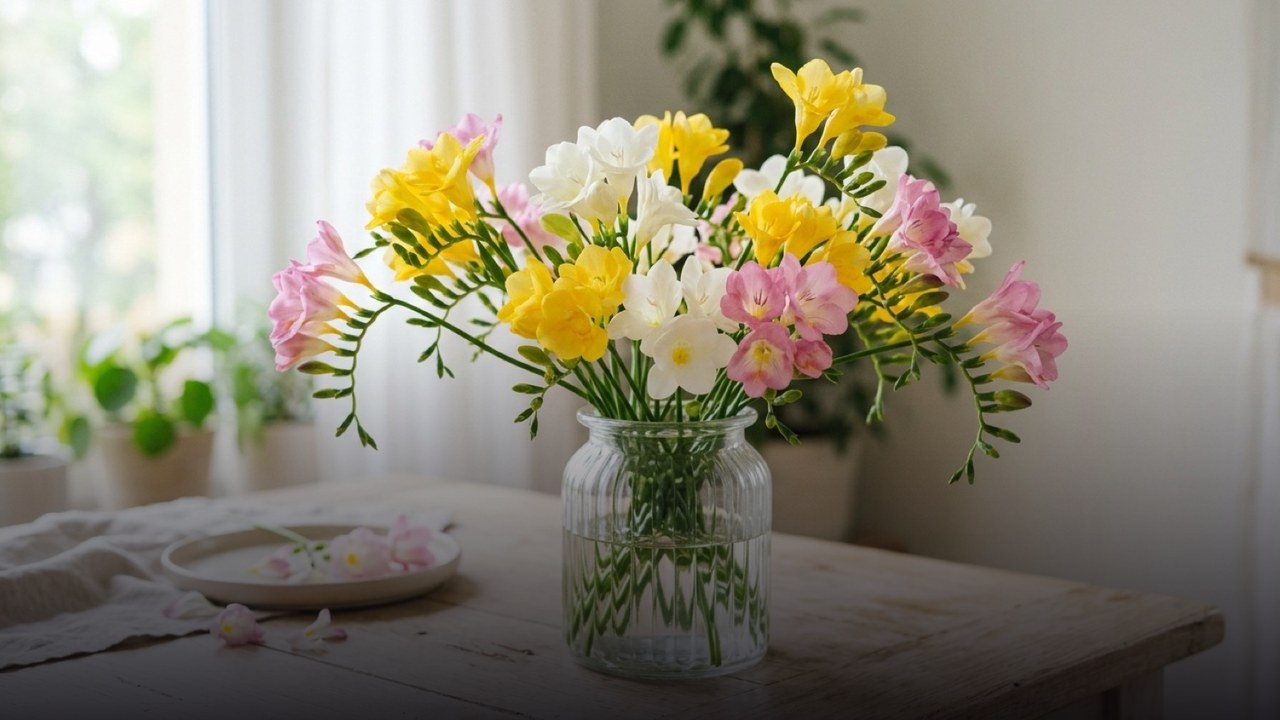
“Guernsey lelie” is a Dutch search term for the Guernsey lily, a bulbous flowering plant most closely associated with Nerine sarniensis. Despite its common name, it is a nerine in the amaryllis family, rather than a true lily of the genus Lilium. Its flowers have narrow, curling petals and stand in clusters at the top of slender stems.
If you are trying to identify a plant, grow a bulb or choose flowers for someone, the useful next step is to check the botanical name. Several nerines appear under similar common names, and their growing requirements differ. For a gift, keep two questions separate: whether you want this particular flower and whether a bouquet with a similar airy shape would also suit the occasion.
What flower does “guernsey lelie” refer to?
Nerine sarniensis is the plant traditionally called the Guernsey lily, although it originates in South Africa. The island name can therefore mislead you about its natural growing conditions. Look for a rounded cluster of flowers with six narrow segments, often with wavy or recurved edges, rather than the large trumpet or bowl you might expect from a true lily.
Nerine bowdenii is another species you may encounter when searching for Guernsey lilies. It commonly has pink flowers and is widely grown as an autumn garden bulb. Colour alone cannot reliably distinguish the species, especially among cultivated varieties and hybrids. A label giving the full botanical name is more useful than a photograph or a common name on a sales page.
For a closer look at the species behind the name, read our guide to Nerine sarniensis. If you already have a plant, retain its label and note when its leaves appear and die back. Those observations help you choose a watering routine; applying the same calendar to every plant sold as a Guernsey lily can lead to poor growth.
When Guernsey lilies flower and what to expect
Nerines are associated with autumn flowering, but the precise timing depends on the species, climate and growing conditions. A calendar date is therefore a guide rather than a promise. Flower stems may rise before the foliage becomes prominent, creating the striking impression of flowers standing on bare stalks. This can be normal, so check the plant’s seasonal cycle before treating it as a problem.
The distinction between species matters after flowering too. Nerine sarniensis typically grows its leaves through the cooler part of the year and rests in summer, whereas Nerine bowdenii generally makes its leafy growth in spring and summer. If you have lost the label, observe the plant through a full cycle before imposing a strict dormant period or sharply changing its watering.
For a gift tied to a birthday or anniversary, do not assume an autumn flowering season means cut nerines will be available for that date. Garden flowering and bouquet availability are different questions. If the flower itself is essential, ask about it before choosing the rest of the arrangement; if the occasion is the priority, decide which colours and shapes you would be happy to consider.
Bouquets we can deliver




How to care for a Guernsey lily in a pot or garden
Start with the species name, then choose a bright position and a growing medium that drains freely. A container needs drainage holes: water left around a bulb can encourage rot. Avoid burying a nerine deeply; the neck is generally kept at or just above the surface. Check the planting guidance for your particular bulb, especially if you are moving it from a nursery pot.
Water according to active growth, checking the compost rather than following a fixed weekly schedule. During the leafy growing period, water and allow excess moisture to drain away. Reduce watering as the plant enters its natural rest. Do not force a leafy Nerine sarniensis into a dry winter rest simply because that routine suits another bulb you grow.
Keep healthy leaves until they yellow naturally, because they help replenish the bulb for future flowering. Avoid repeatedly lifting or dividing an established clump without a reason; disturbance can delay flowering. Outdoor suitability depends on the species and your conditions. If winters are cold or wet, check species-specific advice and consider a container that you can move to a suitable protected position.
Caring for cut nerines in a bouquet
Prepare a clean vase before unwrapping the bouquet. Trim the stem ends with a clean, sharp tool and remove any foliage that would sit below the waterline. Add fresh water and, if you have cut-flower food, follow its packet instructions. Choose a vase that supports the stems while leaving enough room for the flower heads to sit without pressing against one another.
Place the arrangement away from radiators, direct sun and ripening fruit. Check the water daily, top it up as needed and replace it if it becomes cloudy, washing the vase at the same time. Remove fading individual flowers carefully so you do not damage neighbouring buds. The vase life will vary with the flowers’ condition and the room, so avoid relying on a fixed number of days.
For a mixed bouquet, consider the needs of every flower in the vase. Nerines have a delicate outline, and a crowded arrangement can hide their curved petals or cause them to catch on neighbouring stems. If you rearrange the bouquet at home, handle stems gently and give the flower heads space. Keep bulbs and cut flowers out of reach of children and pets that might chew them.
Meaning, gift etiquette and choosing the right arrangement
There is no single universally accepted meaning for the Guernsey lily. You may find symbolic associations in flower guides, but these vary across traditions and should not determine your message. Its curling petals and open clusters make it a distinctive choice for someone who enjoys unusual flowers. If a personal memory connects you to the plant, explain that connection in the card.
Think about the recipient’s setting as well as their favourite colour. A bouquet for a desk needs a manageable footprint; flowers for a dinner table should leave room for conversation and serving dishes. Ask whether they enjoy caring for plants before choosing a bulb instead of cut flowers. A living plant brings an ongoing watering and seasonal-care task that a recipient may or may not welcome.
If you are sending flowers to Russia, use the bouquets catalogue as a starting point and check any essential flower request before placing the order. Describe what matters most: the specific nerine, a colour preference or an open, delicate shape. A free card with your text is included, so you can make the occasion and your connection clear without depending on flower symbolism.
How to arrange a flower delivery to Russia
Turboflora delivers flowers across Russia. City delivery costs 500 RUB; for remote districts and suburbs, the operator confirms the price when confirming the order. Contact a manager on WhatsApp for help choosing a bouquet and agreeing the address, time and card text. You can also ask for a photo of the bouquet before delivery and check whether your particular flower request can be met.
In large cities, express delivery is available in 1–2 hours after the order is confirmed. Other timing options are an exact time with a tolerance of plus or minus 30 minutes, or the windows 09–12, 12–15, 15–18 and 18–21. You can pre-order 1–30 days ahead. When arranging a gift from abroad, state the date and time intended at the recipient’s address so the details can be agreed clearly.
Delivery is anonymous by default: the courier does not name the sender. Sign the card if you want the recipient to know who sent it. The courier calls about 15 minutes before arrival. If the recipient is absent, we agree a second delivery the same day or, with the sender’s consent, hand the flowers to a neighbour or concierge. Consider which option suits the recipient when agreeing the details.
Online checkout uses CloudPayments. If you are paying from abroad, check the options displayed at checkout; acceptance of every foreign card cannot be guaranteed. Review the delivery and payment information alongside your order details. Before completing checkout, check the recipient’s phone number, delivery address and card wording, especially if you have entered them in a language different from your own.
Frequently asked questions
Is “guernsey lelie” the same as a Guernsey lily?
Yes, it is a Dutch term used for the Guernsey lily, most closely associated with Nerine sarniensis. Check the botanical name because other nerines, including Nerine bowdenii, may appear under similar common names.
Why has my Guernsey lily produced leaves but no flowers?
Possible causes include insufficient light, recent disturbance or growing conditions that do not suit the species. Confirm its identity, review its planting depth and seasonal care, and let healthy foliage die back naturally.
Can I order a bouquet containing Guernsey lilies for Russia?
Ask the manager whether the specific flower can be included before ordering. Availability is not established by a catalogue search term, so explain whether a different flower with a similar colour or shape would suit you.
Will the recipient know who sent the flowers?
The courier does not name the sender because delivery is anonymous by default. If you want to identify yourself, include your name in the text for the free card.
Can I pay for flowers to Russia with a foreign card?
Online checkout uses CloudPayments, and you should check the payment options displayed there. Acceptance of every foreign card cannot be guaranteed.
Ready to send flowers?
Pick the city, choose the bouquet, and a local florist takes it from there.
Choose a city →